
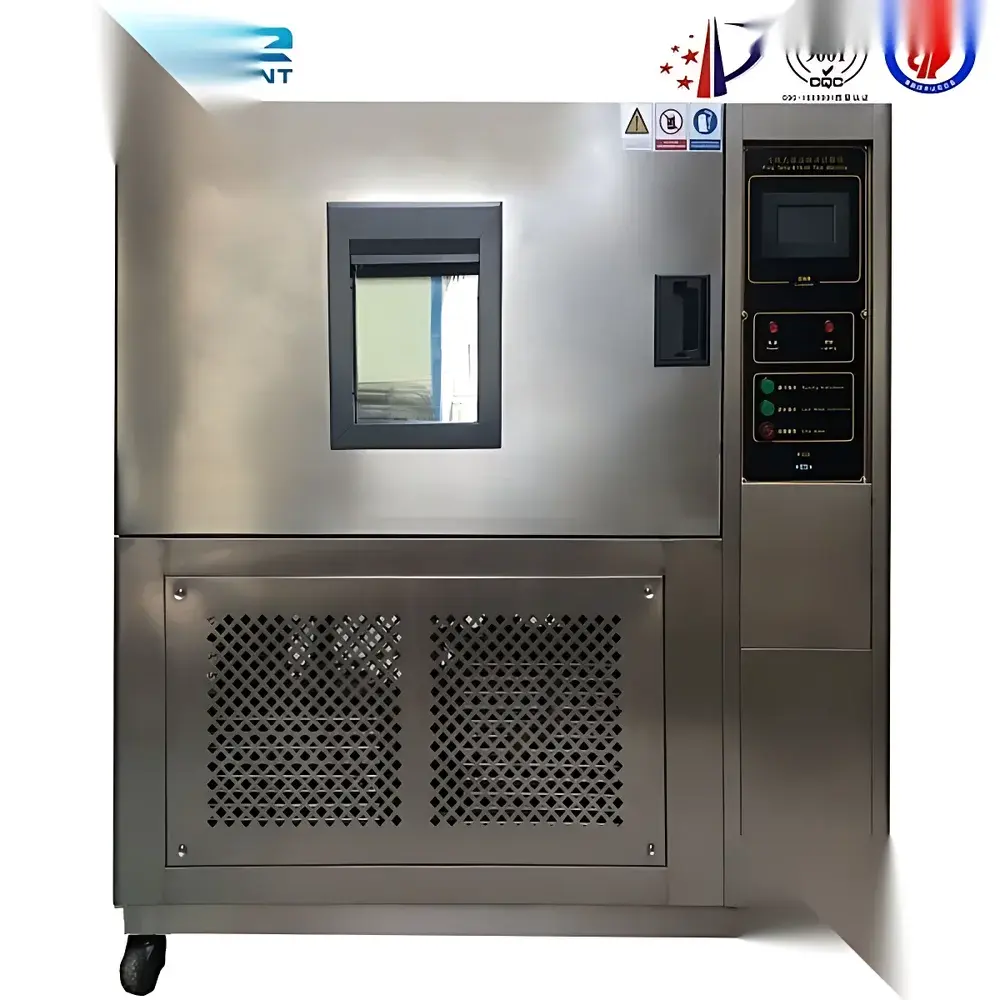
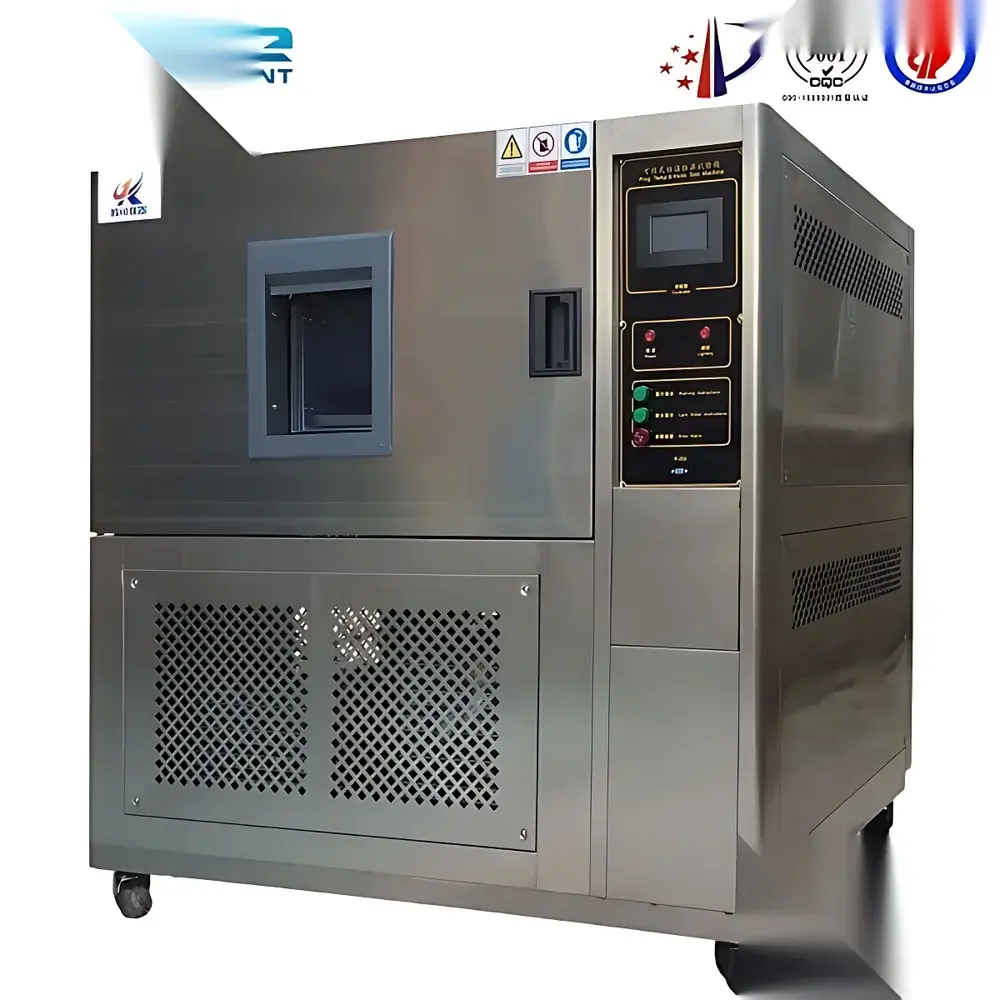
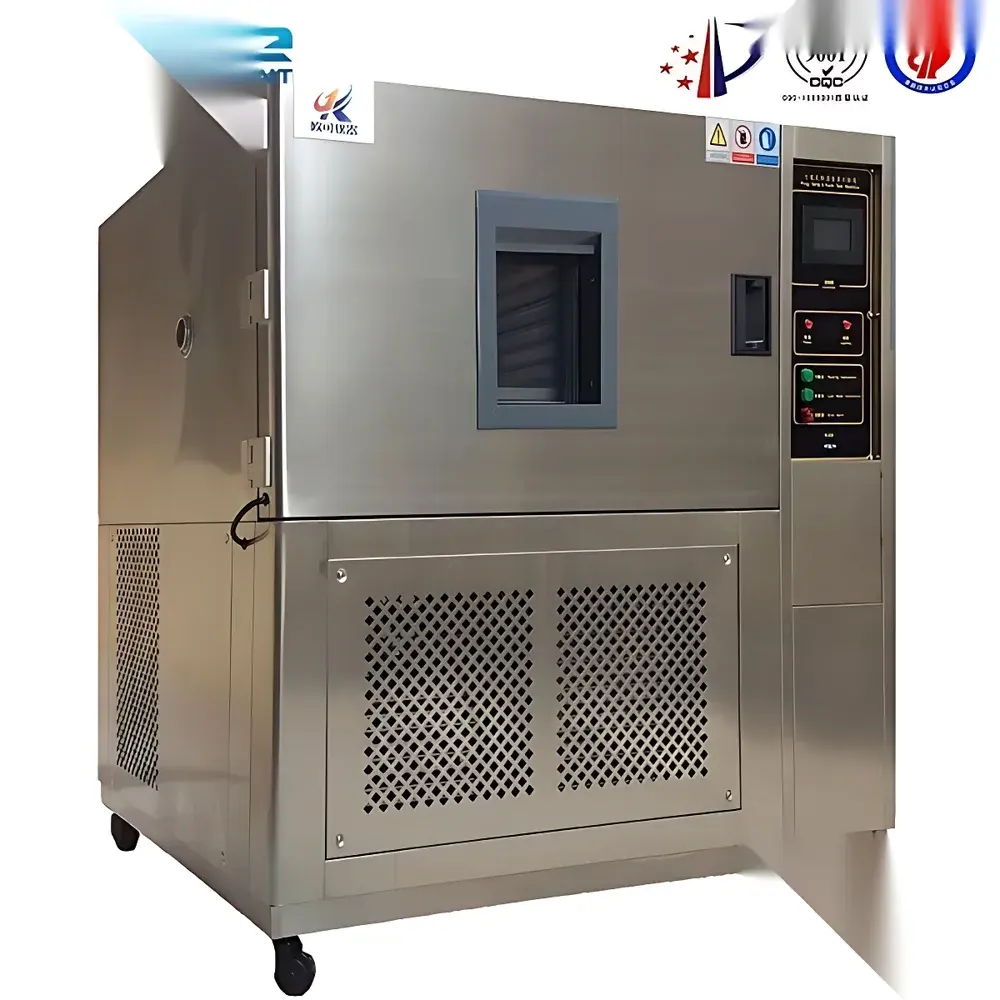
English Product Name
| Brand | OEM / Private Label |
|---|---|
| Origin | Imported |
| Manufacturer Type | Authorized Distributor |
| Pricing | USD 2,600 (FOB) |
| Compliance | GB/T 2423.1–1989, GB/T 2423.2–1989, IEC 60068-2-1, GJB 1032–1990, MIL-STD-2164A |
| Refrigerant | R404A (CFC-free) |
| Noise Level | <60 dB(A) |
| Cooling Water Requirement | 10–28°C, 0.1–0.3 MPa |
| Control System | PID-based BTHC (Balanced Temperature & Humidity Control) |
| Power Optimization | ~30% energy reduction vs. conventional designs |
| Calibration | NIST-traceable third-party metrology certificate included |
Overview
The Low-Temperature Pharmaceutical Temperature and Humidity Controlled Chamber is a precision-engineered environmental test system designed specifically for stability testing, accelerated aging, and stress screening of pharmaceutical products, active pharmaceutical ingredients (APIs), excipients, and packaging materials under rigorously controlled low-temperature and high-humidity conditions. Built upon the principles of thermodynamic equilibrium and psychrometric control, the chamber employs a balanced temperature and humidity control (BTHC) architecture—where heating, cooling, humidification, and dehumidification subsystems operate in dynamic coordination via PID-regulated SSR outputs. This ensures long-term stability of setpoints with minimal overshoot or drift, critical for ICH Q1–Q5 compliant stability studies. Unlike general-purpose environmental chambers, this unit integrates pharmaceutical-grade safety logic—including dry-heater protection, refrigerant high-pressure cutoff, compressor overcurrent/overheat monitoring, and leak-current detection—meeting essential risk-mitigation requirements outlined in EU Annex 15 and FDA Guidance for Industry on Stability Testing of Drug Substances and Products.
Key Features
- Robust dual-refrigeration circuit design featuring hermetically sealed Copeland/Tecumseh compressors and capillary tube expansion technology—enabling rapid, uniform temperature transitions without thermal shock to sensitive drug formulations.
- Distilled water recovery and recirculation system for humidification, reducing consumable usage by up to 40% and eliminating frequent manual refills during extended stability protocols.
- Auto-filtering municipal water intake module—eliminates dependency on pre-purified or deionized water, lowering operational cost and simplifying facility integration.
- Touchscreen controller with intuitive GUI, multi-language support (English, German, French, Japanese, Chinese), programmable ramp-soak profiles, and real-time deviation alarms with event logging.
- Acoustically optimized enclosure with vibration-dampened mounting and insulated refrigerant lines—operating noise maintained below 60 dB(A) at 1 m distance, suitable for shared laboratory environments.
- Structural modularity supports custom interior dimensions, shelf configurations, and sensor port placements—fully adaptable to USP , ICH Q5C, and WHO TRS 992 Annex 7 spatial requirements.
Sample Compatibility & Compliance
The chamber accommodates standard pharmaceutical sample formats including vials (2–50 mL), blister packs, sachets, syringes, and primary/secondary packaging assemblies. Internal airflow distribution conforms to ISO 14644-1 Class 8 (100,000) cleanroom-equivalent laminar patterns, minimizing localized condensation and ensuring uniform exposure across all test positions. All control firmware and data logs comply with ALCOA+ principles (Attributable, Legible, Contemporaneous, Original, Accurate, Complete, Consistent, Enduring, Available) and support 21 CFR Part 11 audit trails when paired with optional validated software packages. The unit is certified to meet GB/T 2423.1–1989 (Cold Test Method A), GB/T 2423.2–1989 (Cold Test Method B), IEC 60068-2-1, GJB 1032–1990 (Environmental Stress Screening), and MIL-STD-2164A—making it suitable for GMP-aligned qualification (IQ/OQ/PQ) and regulatory submission documentation.
Software & Data Management
The embedded controller includes built-in data logging (1-second resolution, 30-day buffer), USB export capability, and optional Ethernet/Wi-Fi connectivity for remote monitoring via web-based SCADA interfaces. Raw temperature/humidity traces are stored in CSV-compliant format with timestamped metadata (setpoint, actual, deviation, alarm status). Optional validation-ready software modules provide electronic signature workflows, user role-based access control (RBAC), automated report generation per ICH M4Q(R2), and seamless integration with LIMS platforms via OPC UA or RESTful API. All calibration events—including third-party NIST-traceable verification—are digitally recorded and retained for full GLP/GMP traceability.
Applications
- ICH Q1A(R2) long-term and accelerated stability testing of small-molecule APIs and biologics at ≤25°C/60% RH and ≤5°C/ambient RH conditions.
- Stress screening of cold-chain packaging systems per ASTM D4169 and ISTA 7E protocols.
- Moisture permeation analysis of barrier films and aluminum-plastic blisters under sub-zero dew point conditions.
- Qualification of lyophilized product storage envelopes under variable humidity cycling (e.g., 0°C/30% RH ↔ 5°C/75% RH).
- Environmental stress screening (ESS) of medical device components per MIL-STD-2164A and GJB 234–1992.
FAQ
What is the minimum operating temperature supported, and how is low-temperature uniformity verified?
The chamber achieves stable operation down to –40°C with ±0.5°C temperature uniformity (±1.5°C at corners) across the working volume, verified per IEC 60068-3-5 using 9-point sensor mapping during PQ execution.
Does the system support humidity control below 0°C, and what is the lowest achievable dew point?
Yes—relative humidity is controllable from 20% to 98% RH across the full temperature range; at –20°C, the system maintains dew points as low as –45°C using integrated desiccant-assisted dehumidification.
Is the controller compliant with 21 CFR Part 11 for electronic records and signatures?
The base controller meets ALCOA+ data integrity requirements; full 21 CFR Part 11 compliance requires installation of the optional validated software suite with audit trail, electronic signature, and password policy enforcement modules.
Can the chamber be integrated into an existing facility monitoring system (FMS)?
Yes—via Modbus TCP, OPC UA, or analog 4–20 mA outputs for temperature and humidity signals, enabling real-time telemetry and alarm forwarding to centralized FMS platforms.
What documentation is provided for GMP validation?
Standard delivery includes Factory Acceptance Test (FAT) report, IQ/OQ protocol templates, third-party metrology certificate (NIST-traceable), electrical safety certification (CE/UL), and material declarations per RoHS/REACH.



