
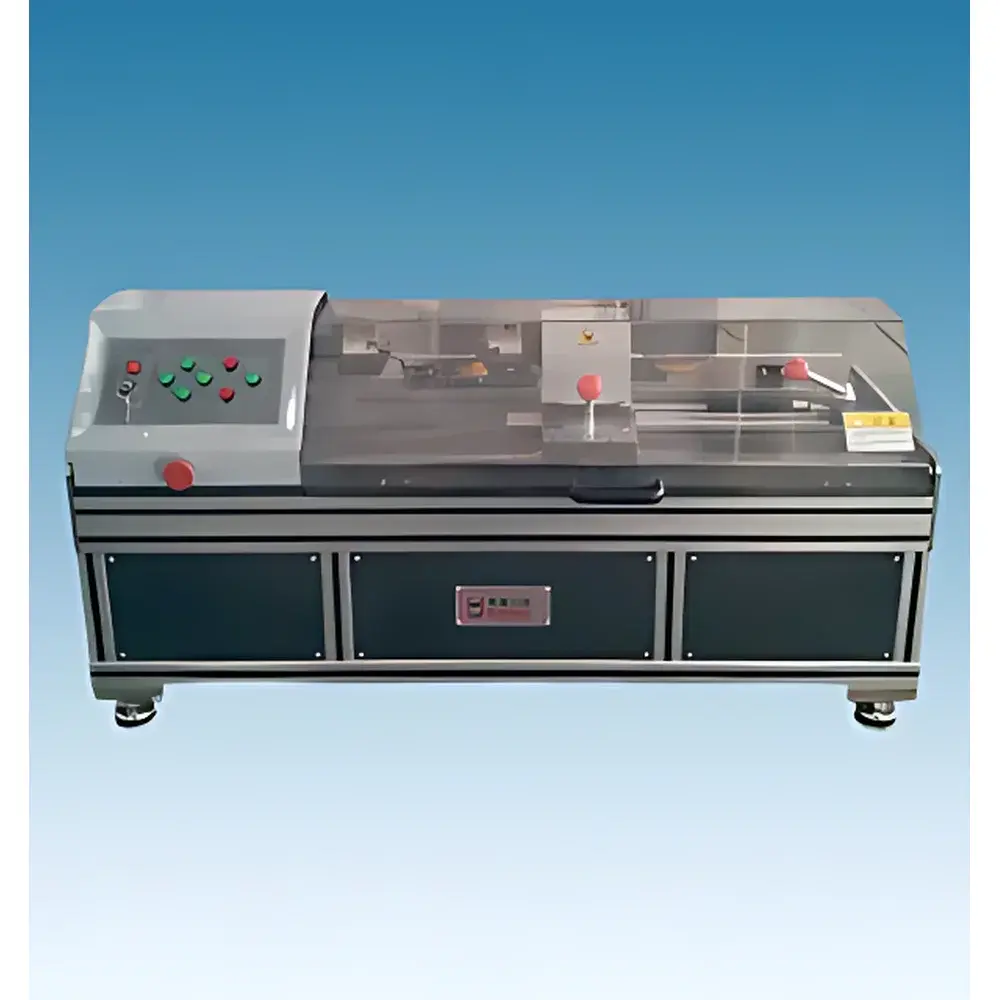
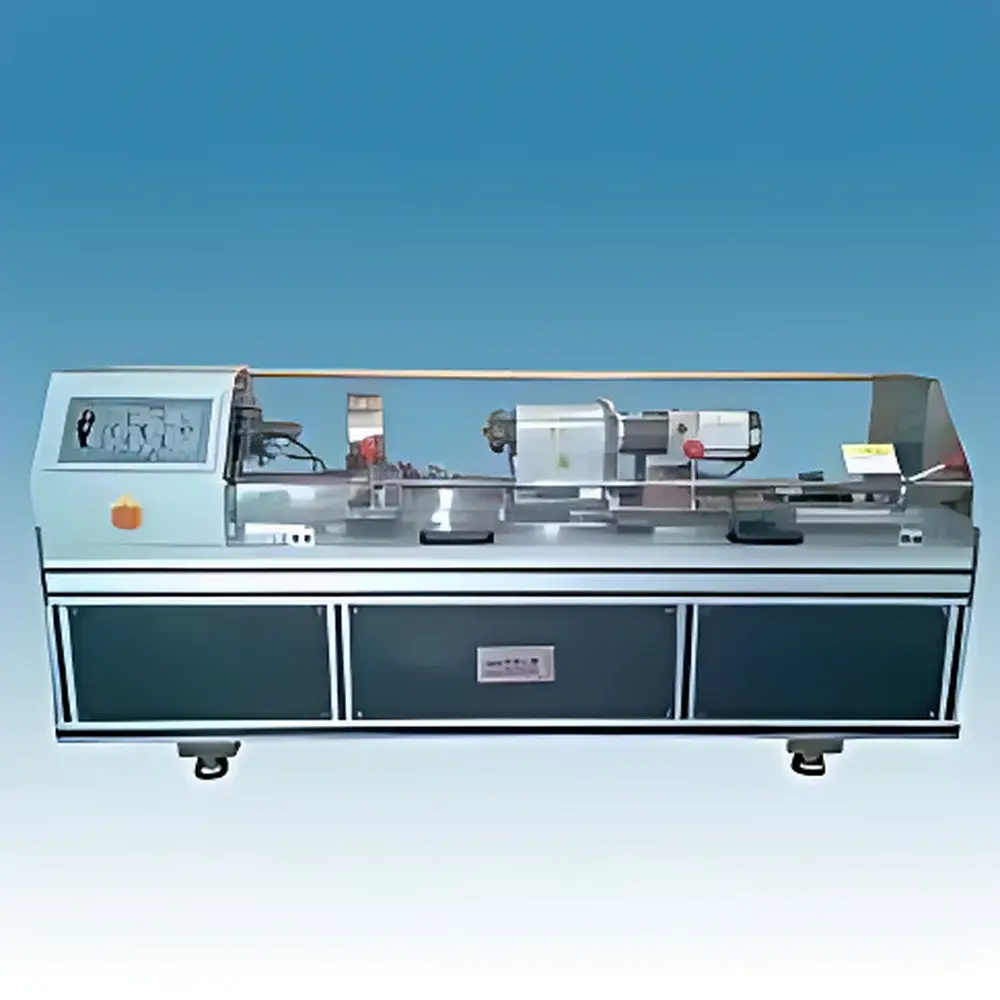
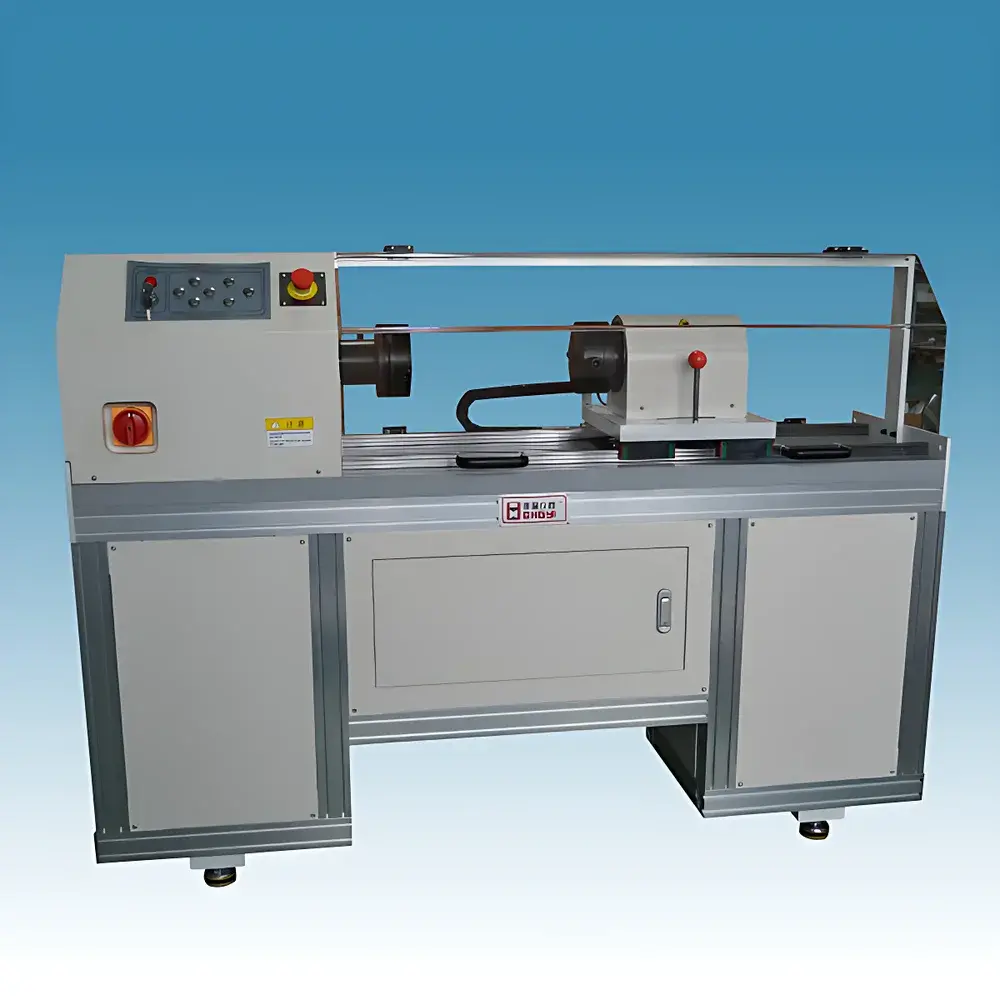
Hengyi HY-50N·m Biological Bone Static Torsion Testing Machine
| Brand | Hengyi |
|---|---|
| Origin | Shanghai, China |
| Manufacturer Type | Direct Manufacturer |
| Model | HY-50N·mUIMMJ |
| Max Torque | 50 N·m |
| Torque Measurement Range | 0.1–50 N·m |
| Torque Resolution | 1/500,000 FS |
| Torsion Angle Range | 0–100,000° (or continuous rotation) |
| Motor Power | 0.4 kW |
| Torque Accuracy | ±0.5% FS |
| Angular Accuracy | ±0.5% FS |
| Angular Resolution | 0.0045° |
| Torsion Speed | 0–1000°/min |
| Specimen Grip Diameter | Φ1–Φ5 mm (customizable) |
| Gauge Length Adjustment | Up to 200 mm |
| Host Dimensions | ~1000 × 420 × 500 mm |
| Weight | 200 kg |
Overview
The Hengyi HY-50N·m Biological Bone Static Torsion Testing Machine is a precision-engineered, horizontally configured electromechanical torsion tester designed specifically for static torsional characterization of biological and biomaterial specimens. It operates on the principle of controlled angular displacement under calibrated torque loading, enabling quantitative evaluation of mechanical integrity, structural rigidity, and failure behavior in skeletal tissues and orthopedic implants. The system conforms to fundamental torsion mechanics theory—applying pure moment load to a cylindrical or prismatic specimen while simultaneously measuring applied torque (via high-stability strain-gauge-based torque transducer) and angular deformation (via high-resolution optical encoder). Its architecture supports quasi-static and low-speed dynamic torsion protocols, making it suitable for ISO 5832-1 (metallic surgical implants), ASTM F543 (surgical screws), and ISO 14801 (dental implant fatigue) compliant testing when paired with appropriate fixtures and calibration traceability.
Key Features
- High-fidelity torque measurement with ±0.5% full-scale accuracy and 1/500,000 FS resolution—enabling reliable detection of micro-yield phenomena in cortical bone and composite scaffolds.
- Precision angular measurement via imported optical encoder with 0.0045° resolution and ±0.5% linearity—critical for accurate determination of shear modulus (G) and non-proportional shear stress (τp).
- Dual-directional servo-controlled actuation using Panasonic AC servo drive (speed range: 0–1000°/min; speed control accuracy: ±0.5%), ensuring repeatable loading profiles and hysteresis-free unloading.
- Modular fixture system accommodating specimens from Φ1 mm to Φ5 mm diameter—including custom mandrels for irregular anatomical geometries (e.g., femoral neck segments, vertebral bodies, cranial bone plates).
- Robust horizontal frame with electrostatically coated steel enclosure—optimized for vibration damping and long-term dimensional stability in shared laboratory environments.
- Integrated real-time data acquisition at 100 Hz sampling rate, synchronized across torque, angle, time, and derived parameters (e.g., torque-rate, angular acceleration).
Sample Compatibility & Compliance
The HY-50N·m system is validated for use with human and animal skeletal tissues (cortical, cancellous, and osteotomized segments), metallic and polymeric orthopedic implants (intramedullary nails, locking plates, spinal rods), biodegradable fixation devices (Mg-alloy screws, PLLA pins), and tissue-engineered constructs (hydrogel-reinforced scaffolds, decellularized bone matrices). Fixture adaptability extends its utility to small-diameter mechanical components such as dental abutments, suture anchors, and micro-implant prototypes. The machine supports test method alignment with ISO 7206-4 (tibial component torsion), ASTM F1839 (rigid polyurethane foam analogs), and GB/T 1040.5 (plastics—tensile properties of films and sheets), with optional calibration certificates traceable to CNAS-accredited standards.
Software & Data Management
The proprietary Hengyi TorsionControl v4.x software—built on a 32-bit ARM microprocessor platform—delivers deterministic real-time control and multi-channel waveform visualization. It enables simultaneous plotting of torque–time, angle–time, torque–angle, and torque–rotation curves, with user-defined region-of-interest zooming and local extremum extraction (peak torque, yield angle, fracture twist). All test sequences are timestamped and stored with metadata including operator ID, environmental conditions (optional sensor input), and calibration history. Audit trails comply with GLP documentation requirements; raw binary data exports support post-hoc analysis in MATLAB, Python (NumPy/Pandas), or third-party biomechanics toolkits. Optional FDA 21 CFR Part 11 compliance package includes electronic signatures, role-based access control, and immutable record archiving.
Applications
- Quantification of torsional stiffness and ultimate torsional strength in fresh-frozen human femoral diaphyses under simulated physiological loading.
- Evaluation of fatigue resistance in titanium alloy pedicle screws subjected to cyclic torsion per ISO 14801 Annex C.
- Shear modulus (G) derivation from linear elastic region slope in bovine cortical bone specimens—correlating with histomorphometric porosity indices.
- Comparative torsional performance assessment of bioresorbable polymer composites versus stainless-steel controls in standardized rod configurations.
- Validation of finite element model boundary conditions through direct torque–rotation response mapping of cadaveric vertebral body–pedicle complexes.
- Quality assurance testing of serially manufactured orthopedic fasteners in ISO 13485-certified production facilities.
FAQ
What standards does this torsion tester support?
It natively supports test protocols aligned with ASTM F543, ISO 5832-1, ISO 14801, ISO 7206-4, and GB/T 1040.5. Custom method scripting allows implementation of institution-specific or regulatory agency–mandated procedures.
Can the system measure torsional creep or stress relaxation?
Yes—using the built-in hold-and-monitor function, users can impose constant-torque or constant-angle holds for durations up to 72 hours, with automated logging of time-dependent angular drift or torque decay.
Is calibration traceability provided?
Each unit ships with a factory calibration report referencing national metrology institute–certified torque and angular standards. Optional annual recalibration services include CNAS-accredited certification.
What specimen mounting options are available?
Standard configurations include collet chucks for cylindrical specimens and flat-face grips for planar bone sections. Custom fixtures—such as vertebral endplate clamps or cranial bone adapters—are developed per client specifications.
Does the software support automated pass/fail reporting?
Yes—threshold-based logic rules can be defined for torque limits, angular displacement envelopes, or slope-derived yield criteria, generating PDF reports with embedded pass/fail indicators and statistical summaries.
Related Products



