
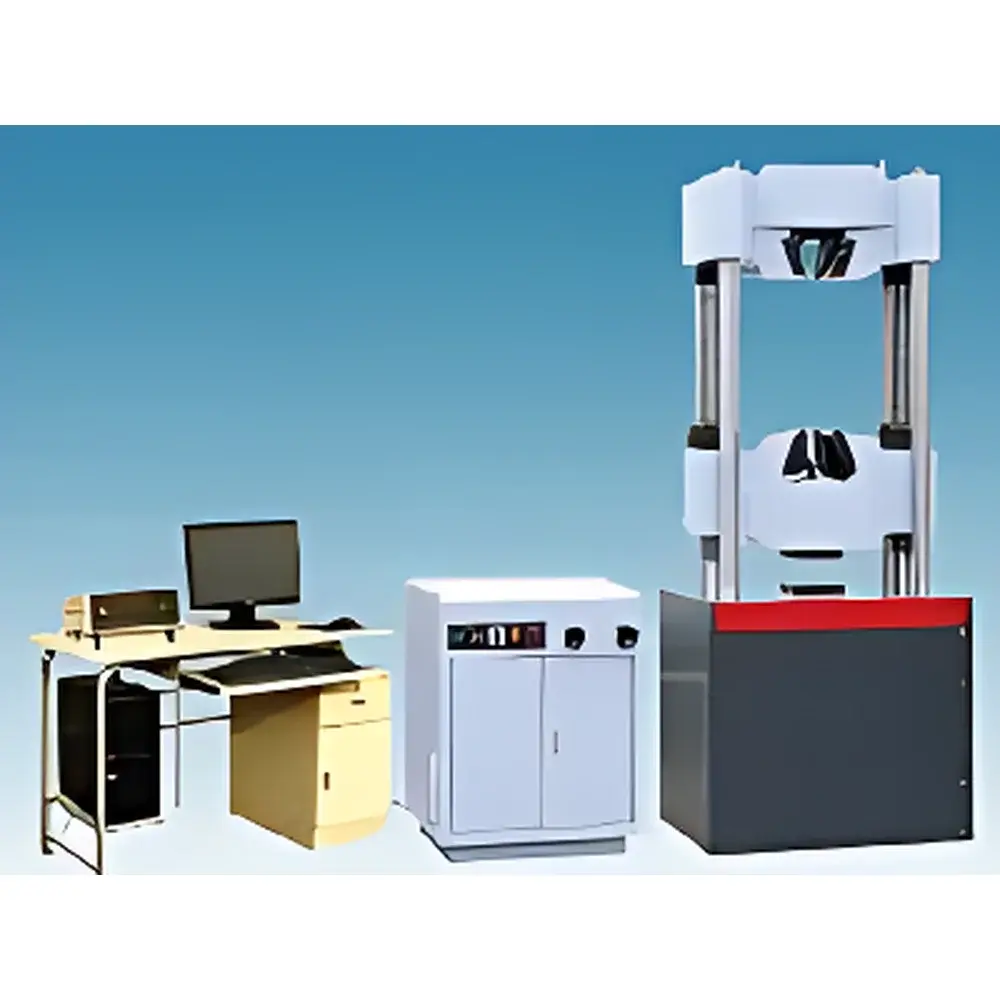
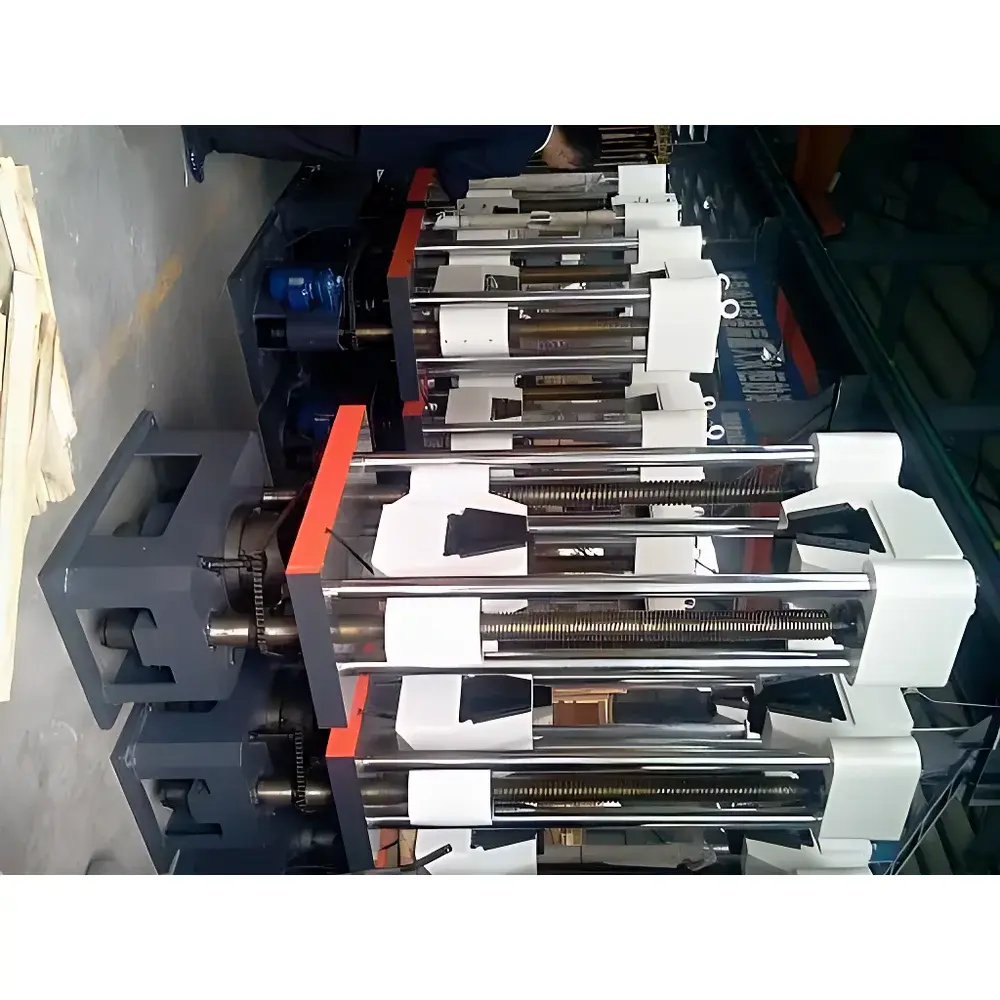
Hengyi HY(WE)100060 Hydraulic Universal Testing Machine
| Brand | Hengyi |
|---|---|
| Origin | Shanghai, China |
| Manufacturer Type | Direct Manufacturer |
| Regional Classification | Domestic (China) |
| Model | HY(WE)100060UIOKM |
| Instrument Type | Hydraulic Universal Testing Machine |
| Max Load Capacity | 0–1000 kN |
| Load Accuracy | ±0.5% of reading |
| Resolution | ≤0.5% of full scale |
| Compression Space | 600 mm |
| Tensile Space | 600 mm |
| Round Specimen Grip Range | Φ20–Φ60 mm |
| Flat Specimen Thickness Capacity | 0–40 mm |
| Piston Stroke | 150 mm |
| Bend Support Span Adjustment | 100–600 mm |
| Shear Specimen Diameter | Φ10 mm |
| Deformation Measurement Accuracy | ±0.5% of reading |
| Displacement Measurement Error | ±0.5% of reading |
| Stress Rate Control Range | 1–60 N/mm²/s |
| Strain Rate Control Range | 0.00025–0.0025 s⁻¹ |
| Closed-Loop Control Accuracy (Constant Load/Deformation/Displacement) | ±1% of setpoint |
| Dimensions (W×D×H) | 880 × 580 × 2260 mm |
| Motor Power | 1.5 kW, 3-phase |
| Weight | 3500 kg |
Overview
The Hengyi HY(WE)100060 Hydraulic Universal Testing Machine is a high-capacity, microprocessor-controlled electro-hydraulic servo system engineered for precision mechanical property evaluation of metallic and non-metallic materials under static loading conditions. Based on the classical principles of axial force application via hydraulic actuation and load cell feedback, this machine conforms to standardized test methodologies defined in ASTM E4, ASTM E8/E8M, ISO 6892-1, ISO 7500-1, GB/T 228.1, and EN 10002-1. Its dual-zone test space—configurable for tensile, compression, bending, and shear tests—enables full compliance with multi-standard mechanical testing workflows across R&D, quality assurance, and third-party certification laboratories.
Key Features
- Hydraulic actuation with bottom-mounted cylinder and adjustable test zone height—optimized for specimen flexibility and operator ergonomics.
- Full-digital closed-loop control system based on electro-hydraulic proportional valves, supporting precise stress-, strain-, and displacement-rate regulation per ISO 5893 and ASTM E2309 requirements.
- High-stiffness, four-column load frame with reinforced base and crosshead assembly—designed to minimize deflection and ensure load path integrity up to 1000 kN.
- Imported high-accuracy load cell (±0.5% FS accuracy), linear variable differential transformer (LVDT)-based displacement transducer, and extensometer-compatible deformation measurement interface.
- Real-time dynamic curve plotting (load vs. displacement, stress vs. strain, etc.) with auto-scaling, zoom, and overlay functions during active testing.
- Integrated safety interlocks including overload protection, emergency stop circuitry, hydraulic pressure monitoring, and mechanical limit switches compliant with ISO 13857 and EN 60204-1.
Sample Compatibility & Compliance
This testing system accommodates a broad spectrum of standardized and custom specimens, including but not limited to: metal plates and bars (ASTM A370), fasteners (ISO 898-1), wire ropes and cables (ISO 3154), structural steel sections (EN 10025), weldments (AWS D1.1), castings and forgings (ASTM A27/A668), concrete cylinders (ASTM C39), ceramic tiles (ISO 10545-4), and geotechnical specimens (ASTM D698). All hardware and software components meet CE marking requirements for machinery safety (2006/42/EC) and electromagnetic compatibility (2014/30/EU). Data acquisition modules are traceable to national metrological standards and support calibration documentation per ISO/IEC 17025.
Software & Data Management
The proprietary Hengyi TestMaster™ control and analysis suite provides full GLP-compliant operation, including user-level access control, electronic signature capability, audit trail logging (per FDA 21 CFR Part 11), and automatic report generation in PDF, Excel, and XML formats. Test sequences can be pre-programmed using script-based templates or guided wizards aligned with ISO 17025 internal procedure documentation. Raw data—including time-stamped load, displacement, and strain values at ≥1 kHz sampling—is stored in vendor-neutral binary archives with embedded metadata (test standard, operator ID, calibration certificate ID, environmental conditions). Export interfaces support integration with LIMS platforms via OPC UA or TCP/IP protocols.
Applications
- Mechanical property validation of carbon steels, alloy steels, stainless steels, and aluminum alloys per tensile strength, yield strength, elongation, and reduction of area metrics.
- Compression testing of concrete, cementitious composites, and refractory materials per ASTM C39, C109, and EN 12390-3.
- Bending performance assessment of beams, rails, and structural profiles per ASTM E290 and ISO 7438.
- Shear strength determination of rivets, pins, and bolted joints per ASTM F606 and ISO 898-1 Annex B.
- Quality conformance verification in automotive OEM supply chains (e.g., IATF 16949 clause 8.5.1.2) and aerospace component manufacturing (AS9100 Rev D clause 8.5.2).
- Teaching and research applications in university materials science labs requiring repeatable, standards-aligned mechanical characterization.
FAQ
What standards does the HY(WE)100060 comply with for tensile testing?
It supports ASTM E8/E8M, ISO 6892-1, GB/T 228.1, and EN ISO 6892-1 for metallic materials, with configurable test parameters to match each standard’s strain rate, gauge length, and extensometer requirements.
Can the system perform closed-loop strain control for low-cycle fatigue pre-characterization?
Yes—the electro-hydraulic proportional control architecture enables stable strain-rate control from 0.00025 s⁻¹ to 0.0025 s⁻¹, meeting preliminary cyclic loading protocol needs per ASTM E606 Annex A3.
Is third-party calibration and traceability documentation provided?
Each unit ships with a factory calibration certificate traceable to CNAS-accredited reference standards; optional UKAS or DAkkS-certified calibration services are available upon request.
Does the software support automated pass/fail evaluation against specification limits?
Yes—custom acceptance criteria can be defined per test method, triggering real-time alerts and flagging nonconforming results directly in the report output.
What maintenance intervals are recommended for hydraulic system integrity?
Oil filtration and system pressure checks are advised every 500 operational hours; full hydraulic fluid replacement and seal inspection are scheduled at 2,000-hour intervals per the maintenance logbook included with delivery.



