
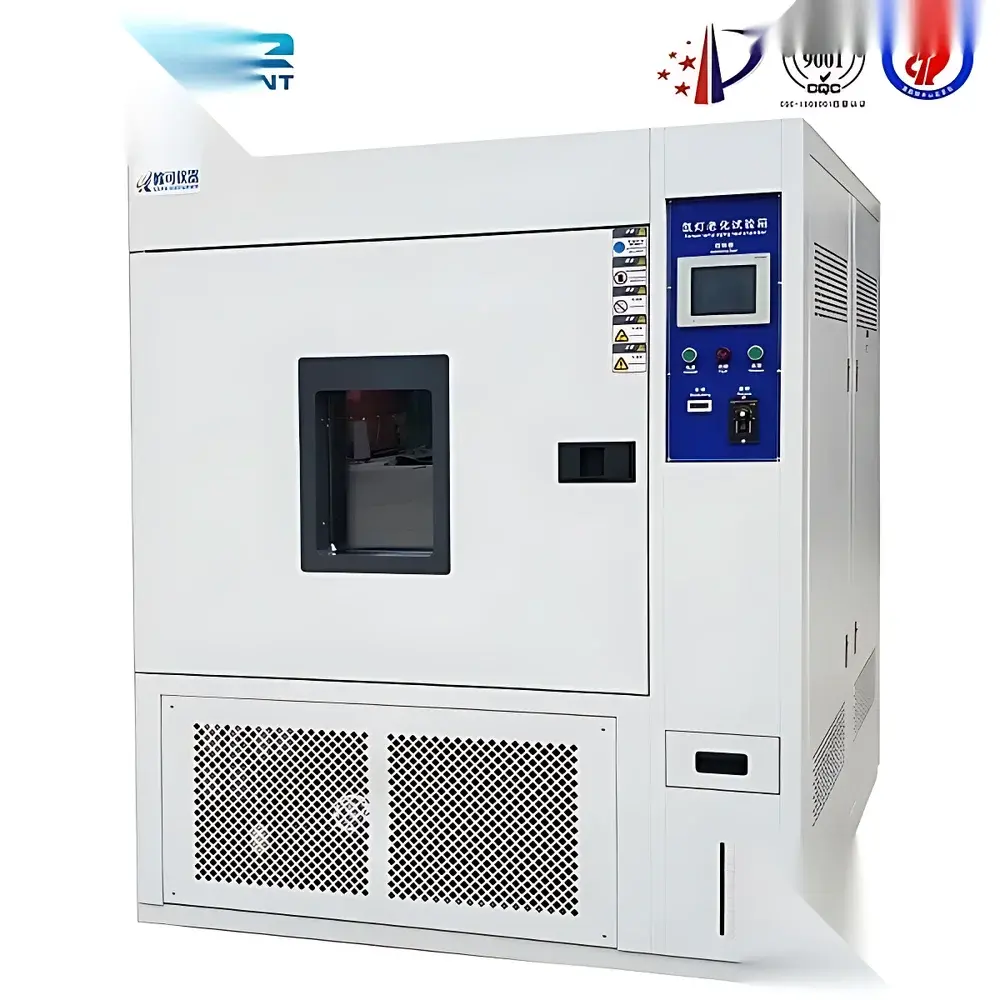
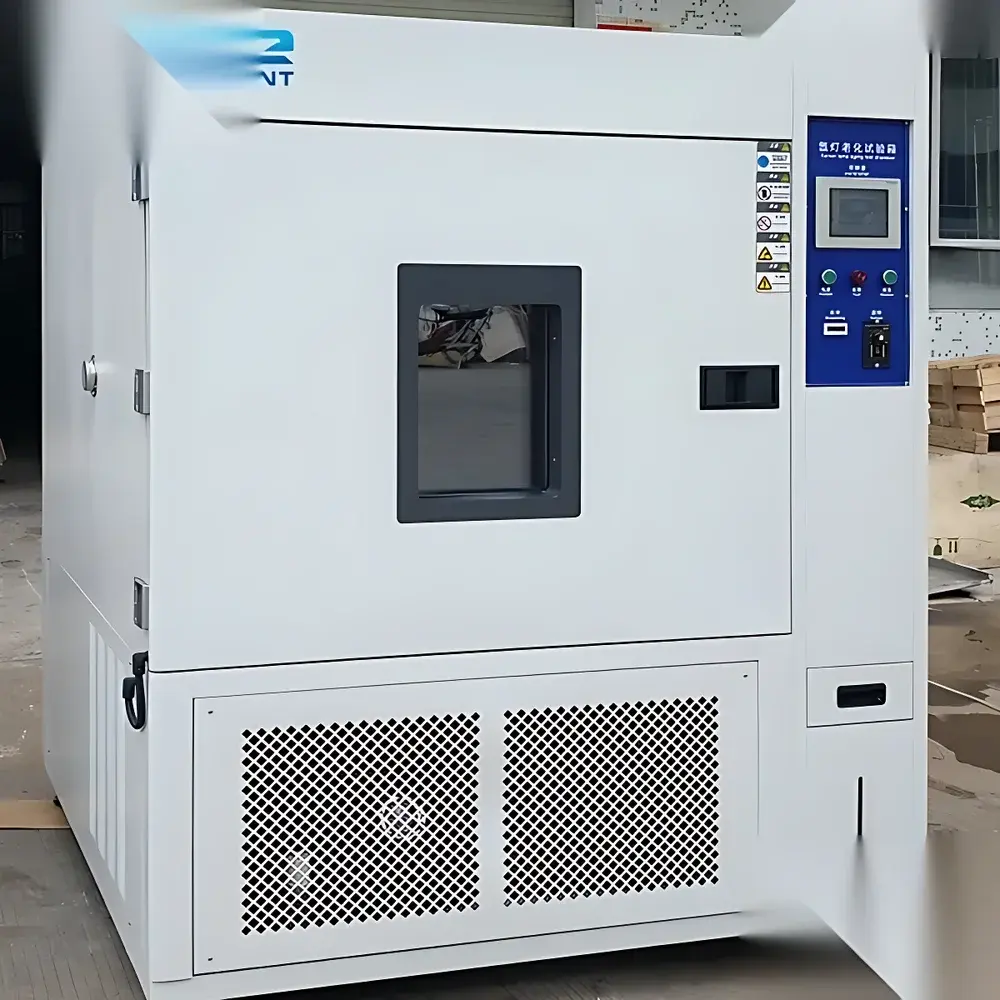
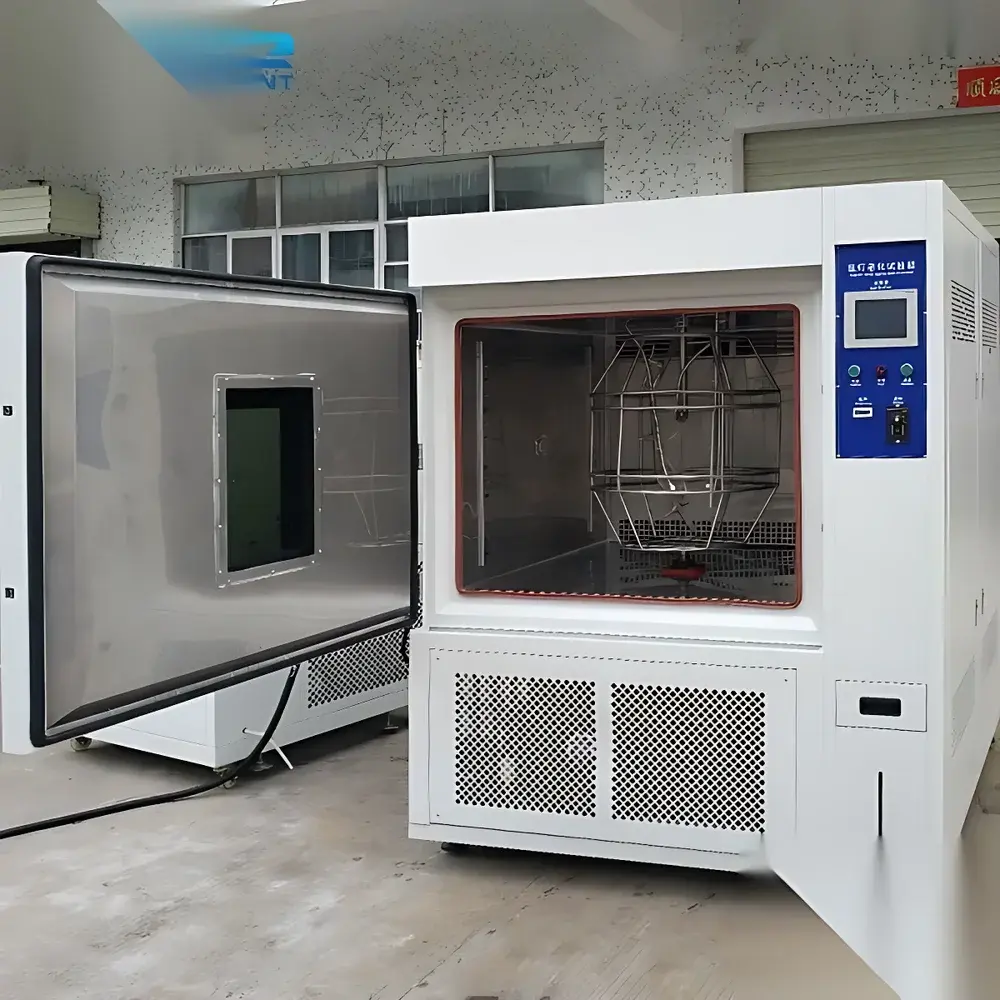
OK-XD Series Xenon Arc Weathering Test Chamber
| Brand | OK Instruments |
|---|---|
| Origin | Imported |
| Manufacturer Type | Authorized Distributor |
| Price | USD 5,300 (excl. tax & shipping) |
| Temperature Range | RT+10°C to 70°C |
| Humidity Range | ≥95% RH |
| UV Spectrum | 290–400 nm (UV-A/B/C selectable) |
| Lamp Power | 40 W |
| Lamp Life | Up to 6,000 h |
| Sample-to-Lamp Distance | 50 mm |
| Lamp Spacing | 35 mm |
| Light Source | Imported Xenon Arc Lamp |
| Cooling | Patented Forced-Air Thermal Management |
| Exposure Modes | Radiant Illumination + Condensation Humidity Cycling |
| Black Panel Temperature Monitoring | Dual-Metal Thermometer |
| Control System | LED-display PID + SSR Microcomputer Controller with Programmable Timer |
| Heating | Nickel-Chromium Alloy Resistive Heater |
| Humidification | Stainless Steel Surface-Evaporation Humidifier |
| Safety Protections | Overtemperature, Leakage Current, Short Circuit, Overcurrent, Low-Water Cut-off |
Overview
The OK-XD Series Xenon Arc Weathering Test Chamber is an engineered environmental simulation system designed to replicate full-spectrum solar irradiation—including ultraviolet (UV), visible, and near-infrared (NIR) wavelengths—under controlled temperature and humidity conditions. Based on the principle of xenon arc radiation, it delivers continuous spectral output closely matching natural sunlight (CIE No. 85, ISO 4892-2, ASTM G155), enabling accelerated weathering, photostability, and material degradation studies. Unlike narrow-band mercury or fluorescent UV sources, this chamber provides spectrally stable, broadband irradiance across 290–400 nm (UV-A/B/C), with optional filtering to isolate specific regions. Its design supports both radiant exposure and condensation-based moisture cycling—critical for simulating real-world outdoor aging mechanisms such as photooxidation, hydrolysis, and thermal-mechanical stress synergism.
Key Features
- Imported long-life xenon arc lamp (rated up to 6,000 hours), coupled with a patented forced-air thermal management system to maintain consistent spectral output and minimize thermal drift.
- High-efficiency electro-optical conversion yielding stable irradiance distribution; optical path optimized for uniform beam profile at sample plane (50 mm working distance).
- Modular optical interface supporting interchangeable filter sets (e.g., Daylight-Q, Window Glass-Q, UV-Block), standard SMA fiber coupling, and 360° rotatable irradiation head for oblique or multi-angle exposure configurations.
- Dual-mode exposure control: programmable radiant illumination cycles synchronized with condensation-driven humidity cycling (≥95% RH) using stainless steel surface-evaporation humidification.
- Independent climate control architecture: PID-regulated heating (nickel-chromium alloy resistive elements) and microprocessor-driven humidity management ensure repeatability within ±0.5°C and ±3% RH over extended test durations.
- Integrated black panel temperature monitoring via dual-metal thermometer, compliant with ISO 4892-2 requirements for specimen surface temperature tracking during irradiation.
Sample Compatibility & Compliance
The OK-XD chamber accommodates flat-panel specimens up to 200 × 200 mm (standard fixture), with optional custom holders for irregular geometries or multi-sample trays. It meets core international standards for accelerated weathering testing including ISO 4892-2 (Plastics — Methods of exposure to laboratory light sources — Part 2: Xenon-arc lamps), ASTM G155 (Standard Practice for Operating Xenon Arc Light Apparatus for Exposure of Non-Metallic Materials), and AATCC TM16 (Colorfastness to Light). All electrical and thermal safety systems comply with IEC 61000-6-2/6-4 (EMC) and UL 61010-1 (Laboratory Equipment Safety). Data logging and parameter traceability support GLP/GMP-aligned workflows when integrated with validated software protocols.
Software & Data Management
The chamber integrates a microcomputer-based controller with LED digital display, offering 10-segment programmable time/temperature/humidity profiles and real-time event logging. Optional Ethernet-enabled data acquisition modules enable remote monitoring, CSV export, and audit-trail generation compliant with FDA 21 CFR Part 11 requirements (when deployed with validated electronic signature and user access control layers). All operational parameters—including irradiance setpoint (W/m²), black panel temperature, chamber humidity, and elapsed exposure time—are timestamped and stored locally for post-test correlation with material property changes.
Applications
This instrument serves laboratories engaged in polymer durability assessment (automotive coatings, architectural sealants, packaging films), textile colorfastness validation, pharmaceutical photostability testing per ICH Q1B, photocatalytic material screening (TiO₂, g-C₃N₄), environmental photocatalysis (pollutant degradation, water treatment), and solar cell encapsulant aging. Its broad spectral fidelity makes it suitable for comparative studies between UV-only and full-spectrum solar simulation—enabling researchers to decouple wavelength-specific degradation pathways from thermal-humidity synergies.
FAQ
What spectral range does the OK-XD chamber cover, and how is UV selection achieved?
The xenon arc source emits continuously from 290 nm to >1100 nm. UV-selective operation (290–400 nm) is enabled via optical bandpass filters mounted in the beam path; UV-A (315–400 nm), UV-B (280–315 nm), and UV-C (200–280 nm) variants are available upon order specification.
Is the chamber compatible with ISO 4892-2 calibration procedures?
Yes—the chamber includes calibrated black panel temperature sensors and supports irradiance monitoring using NIST-traceable UV radiometers (e.g., ILT950UV); users may perform in situ spectral irradiance mapping per Annex B of ISO 4892-2.
Can the system operate unattended for extended cycles (e.g., 1,000-hour tests)?
Yes—integrated safety interlocks (overtemperature, low-water, overcurrent) and non-volatile program memory ensure robust autonomous operation; scheduled maintenance intervals are defined per lamp manufacturer guidelines (typically every 1,500–2,000 h for optimal spectral stability).
Does the controller support external data integration (e.g., LabVIEW or SCADA platforms)?
The standard RS-485 Modbus RTU interface enables bidirectional communication with third-party SCADA or LIMS systems; optional TCP/IP gateway modules provide native Ethernet connectivity for enterprise-level integration.
What is the recommended calibration frequency for routine compliance?
Black panel temperature sensors and chamber humidity transducers should be verified quarterly against NIST-traceable references; irradiance calibration is recommended prior to each new test campaign or after lamp replacement, using a calibrated reference detector.



