
JRY Z06 Fully Automatic Tumbling Agitator for Solid Waste Toxicity Leaching
| Brand | JRY |
|---|---|
| Origin | Hunan, China |
| Manufacturer Type | Direct Manufacturer |
| Country of Origin | China |
| Model | Z06 |
| Price | ¥26,000 |
| Oscillation Frequency | 0–60 rpm (adjustable) |
| Timer Range | 0–99 h |
| Sample Bottle Capacity | 6 / 8 / 10 / 12 positions (2 L per bottle) |
| Temperature Range | Ambient to 65 °C |
| Temperature Control Accuracy | ±1 °C |
Overview
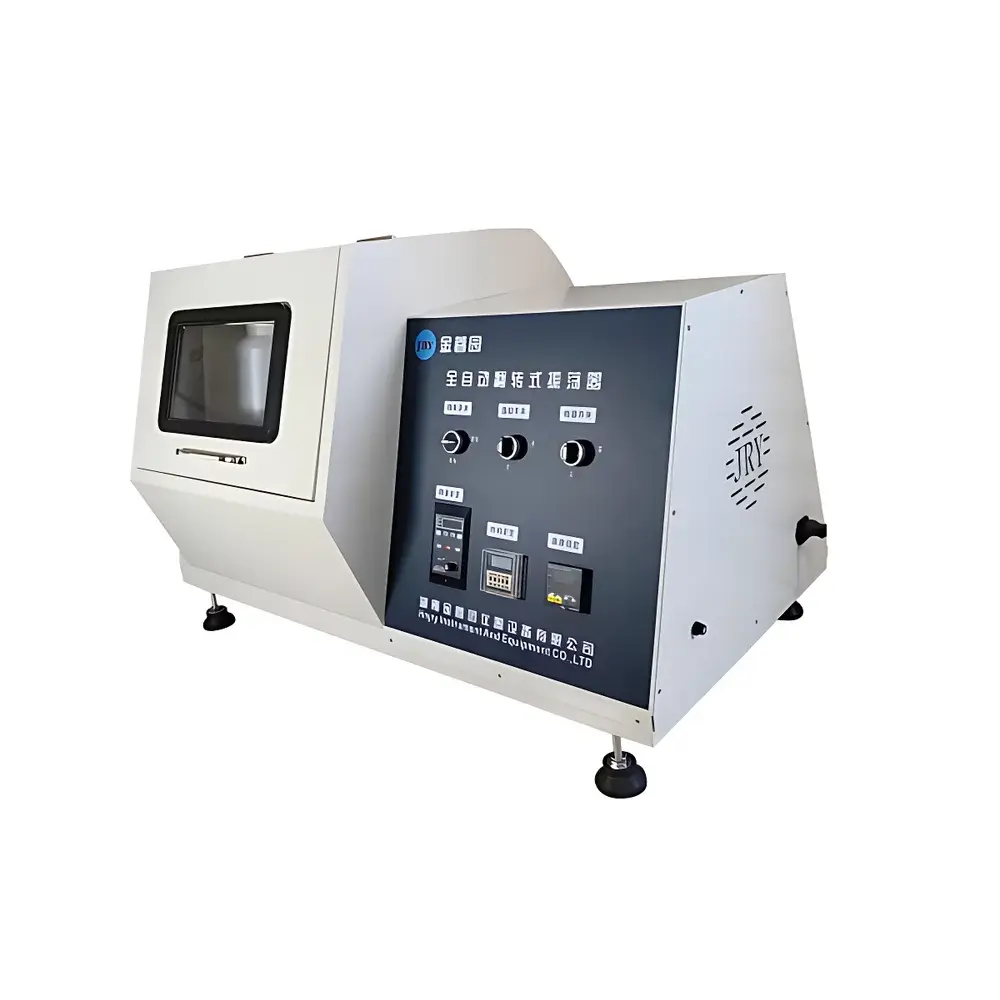
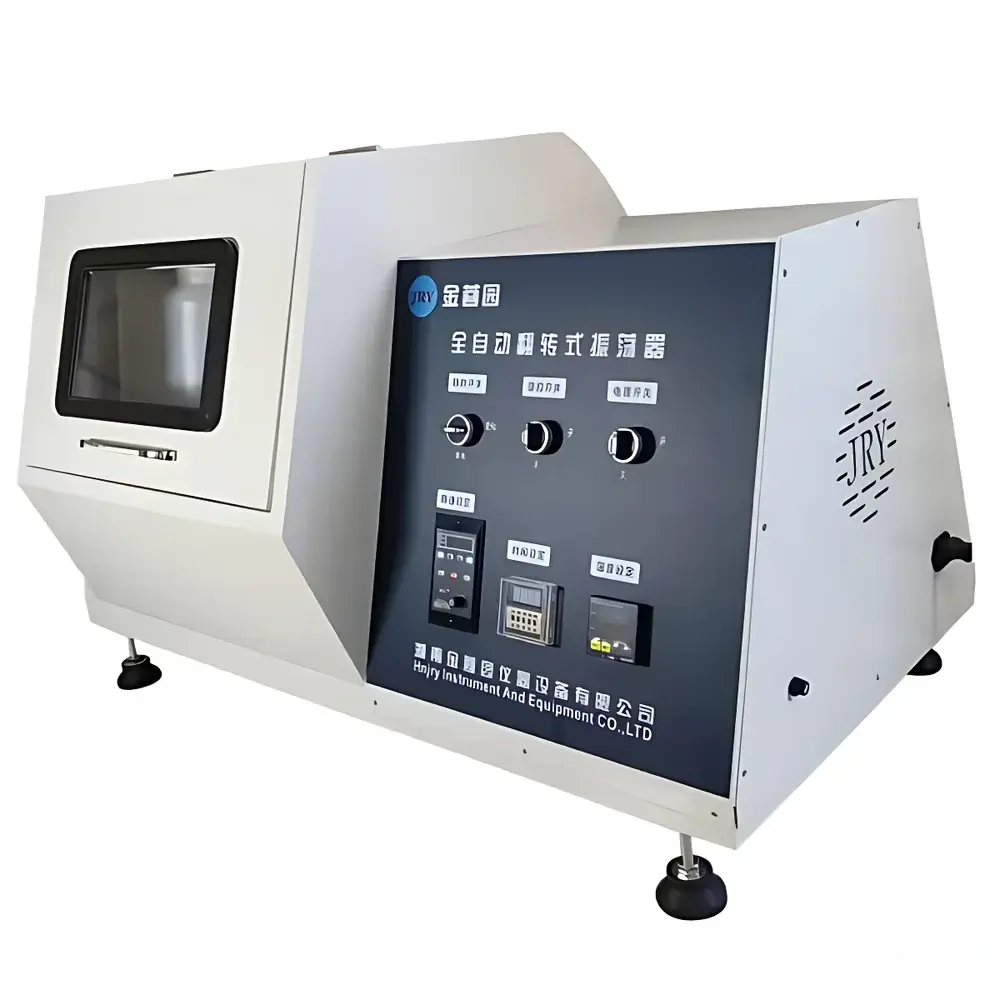
The JRY Z06 Fully Automatic Tumbling Agitator is a precision-engineered laboratory instrument designed specifically for regulatory-compliant toxicity characteristic leaching procedures (TCLP) of solid waste matrices. It operates on the tumbling (rotational inversion) principle—where sample containers are rotated end-over-end along a horizontal axis—to simulate physical leaching conditions under controlled temperature, time, and rotational dynamics. This method ensures uniform contact between solid-phase waste and extraction fluid, minimizing sedimentation bias and maximizing mass transfer efficiency. The device conforms strictly to multiple national and international standard protocols, including China’s HJ/T 299–2007 (Sulfuric-Nitric Acid Extraction Method), HJ/T 300–2007 (Acetic Acid Buffer Extraction Method), GB 16889–2008 (leachate control limits for municipal solid waste landfills), and U.S. EPA Method 1311. Its mechanical architecture is optimized for long-duration, unattended operation in environmental testing laboratories performing hazardous waste characterization, regulatory compliance verification, and landfill leachate risk assessment.
Key Features
- Fully automatic bidirectional tumbling motion with programmable forward/reverse/stop intervals—enabling precise replication of standardized leaching cycles per HJ/T 299–2007 and EPA 1311.
- High-strength stainless-steel enclosure (AISI 304 grade) providing corrosion resistance, structural rigidity, and ease of decontamination—critical for handling acidic or buffered extraction media.
- Integrated push-pull safety shield with interlocked power cutoff: motor stops instantly upon cover displacement, satisfying IEC 61000-6-2 electromagnetic compatibility and lab safety requirements.
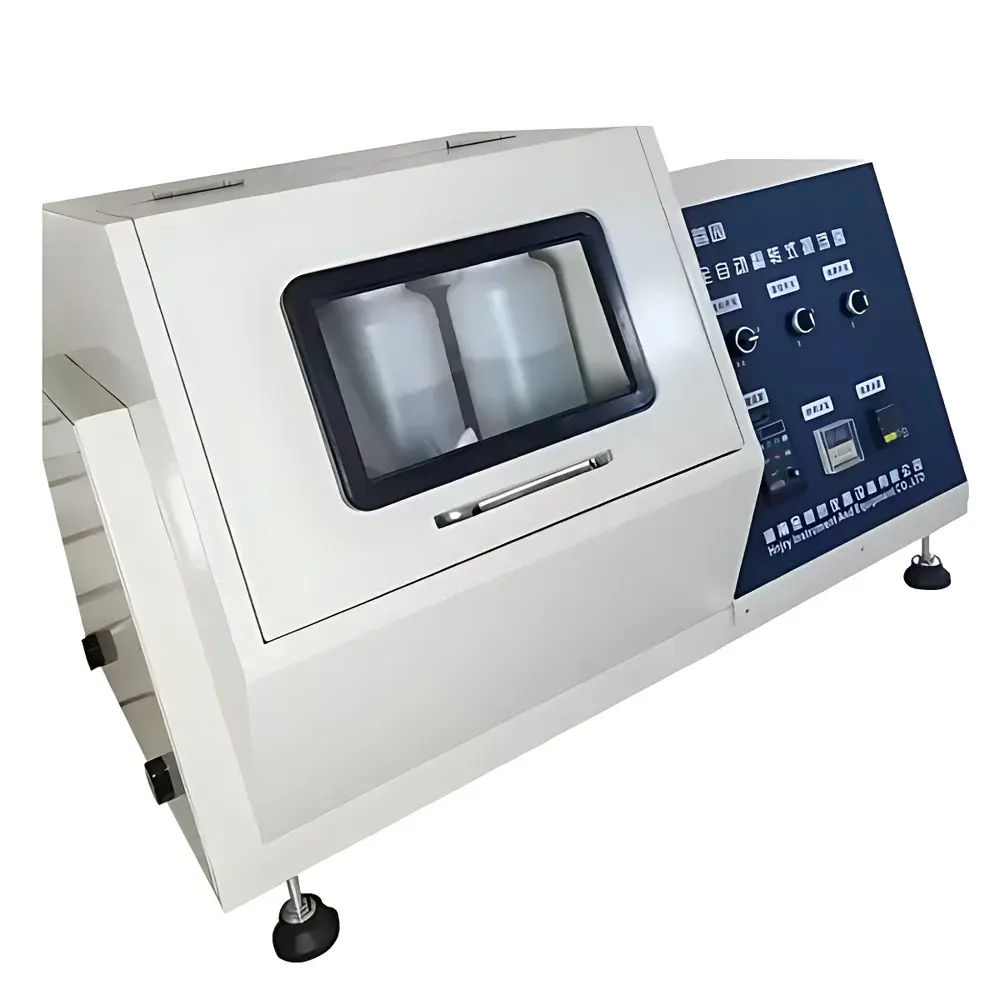
- Optically transparent polycarbonate viewing window enabling real-time visual monitoring without interrupting operation or compromising containment integrity.
- Digital PID temperature controller with ±1 °C accuracy across ambient to 65 °C range—ensuring thermal stability during extended extractions (e.g., 18–24 h cycles).
- Microprocessor-based timer supporting up to 99 hours of continuous or segmented operation, with independent settings for rotation duration, pause intervals, and direction sequencing.
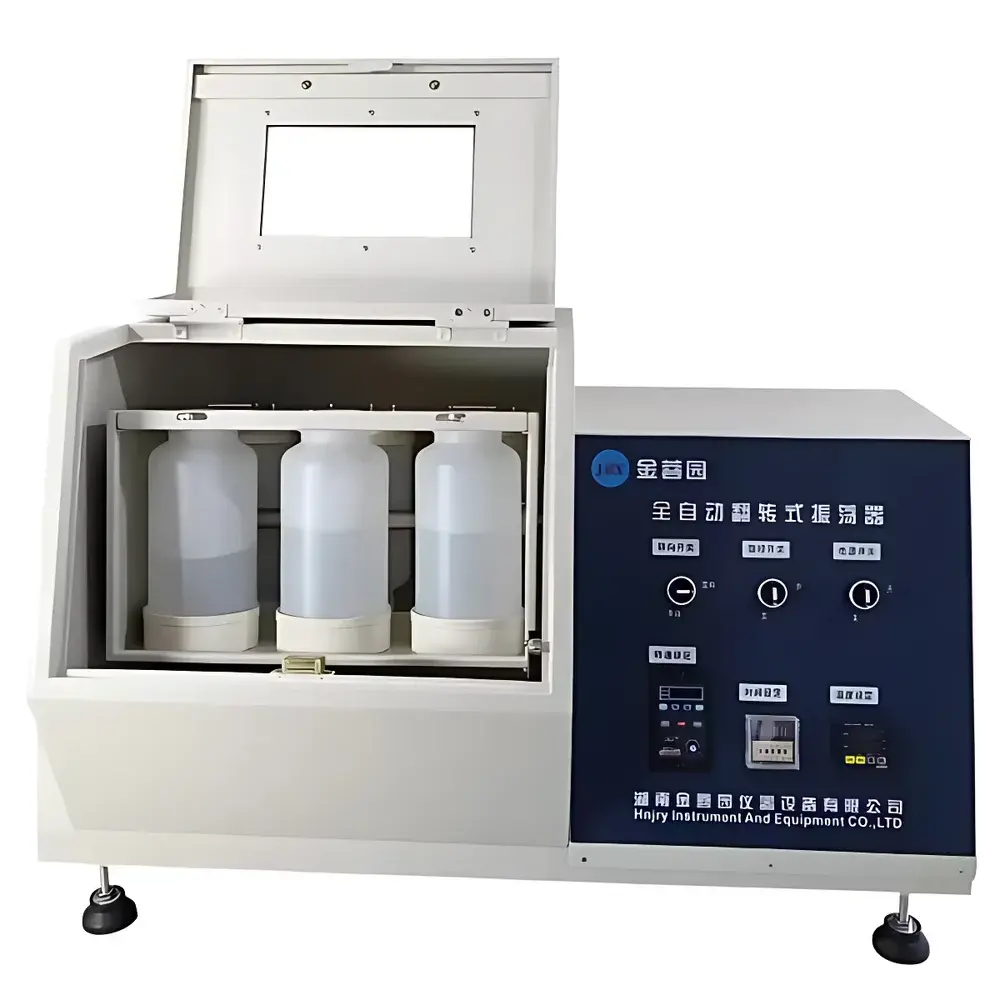
- Modular disc-type clamping system accommodating standard 2 L extraction vessels—including borosilicate glass, HDPE, PTFE-lined, and zero-headspace extraction (ZHE) containers—without slippage or vibration-induced fatigue.
- Leak-containment design featuring recessed drip trays and sloped base channels to prevent cross-contamination and facilitate spill recovery in accordance with ISO/IEC 17025:2017 environmental testing laboratory requirements.
Sample Compatibility & Compliance
The JRY Z06 supports standardized 2 L extraction bottles used in TCLP and related regulatory frameworks. Its mechanical configuration complies with the geometric and kinematic constraints defined in HJ/T 299–2007 and HJ/T 300–2007, including minimum rotation radius, angular velocity tolerance, and container orientation consistency. The instrument meets functional equivalency criteria for EPA Method 1311 when operated at 30 ± 2 rpm for 18 h at 23 ± 2 °C. All electrical components conform to GB/T 14048.1–2012 (low-voltage switchgear and controlgear standards), and the unit is CE-marked for industrial equipment safety (EN 61000-6-3, EN 61000-6-4). For GLP/GMP-aligned labs, audit-ready operation logs—including start/stop timestamps, temperature setpoints, actual chamber readings, and rotation mode history—can be exported via optional RS-232 or USB interface.
Software & Data Management
While the base Z06 model features an embedded digital control panel with LED display and tactile keypad navigation, optional firmware upgrades enable data logging and export capabilities compliant with FDA 21 CFR Part 11 requirements. Logged parameters include real-time temperature, elapsed time, cumulative rotation count, and user-defined phase transitions (e.g., “forward → pause → reverse”). Exported CSV files retain ISO 8601-formatted timestamps and are compatible with LIMS integration (e.g., LabWare, Thermo Fisher SampleManager). Audit trails record operator ID, parameter changes, and system events—supporting traceability in accredited environmental testing facilities operating under CNAS-CL01:2018 or ISO/IEC 17025:2017 accreditation scopes.
Applications
- Toxicity characteristic leaching procedure (TCLP) for heavy metals (Pb, Cd, Cr, Hg), cyanide, and volatile organic compounds (VOCs) from industrial sludge, fly ash, contaminated soils, and construction debris.
- Regulatory screening of landfill leachate potential per GB 16889–2008 and EU Landfill Directive 1999/31/EC Annex II test criteria.
- Research-scale optimization of leaching kinetics, pH-dependent metal solubility, and chelating agent efficacy in remediation studies.
- Quality assurance in waste treatment facilities verifying stabilization/solidification (S/S) performance prior to disposal.
- Method validation and interlaboratory comparison exercises conducted by provincial EPBs, NIMTT, and third-party certification bodies (e.g., SGS, BV, Intertek).
FAQ
Does the JRY Z06 meet U.S. EPA Method 1311 requirements?
Yes—the Z06 achieves the required 30 ± 2 rpm tumbling rate, maintains temperature within ±2 °C of setpoint, and provides consistent 18-h cycle timing, fulfilling core operational criteria of EPA Method 1311.
Can the instrument accommodate non-standard bottle sizes or custom fixtures?
Standard configuration supports only 2 L containers; however, OEM mounting adapters and custom clamping plates are available upon request for validated alternative vessel geometries.
Is remote monitoring or network connectivity supported?
The base unit does not include Ethernet or Wi-Fi; however, RS-232 serial output enables integration with SCADA systems or centralized lab automation platforms using Modbus RTU protocol.
What maintenance intervals are recommended for long-term reliability?
Motor brushes should be inspected every 5,000 operating hours; bearing lubrication is required annually; temperature sensor calibration is advised quarterly per ISO/IEC 17025 Clause 6.4.6.
How is temperature uniformity verified across the sample chamber?
Calibration is performed using NIST-traceable PT100 probes placed at three spatially distributed locations (front/mid/rear) within the chamber during thermal soak testing at 25 °C and 60 °C.







