
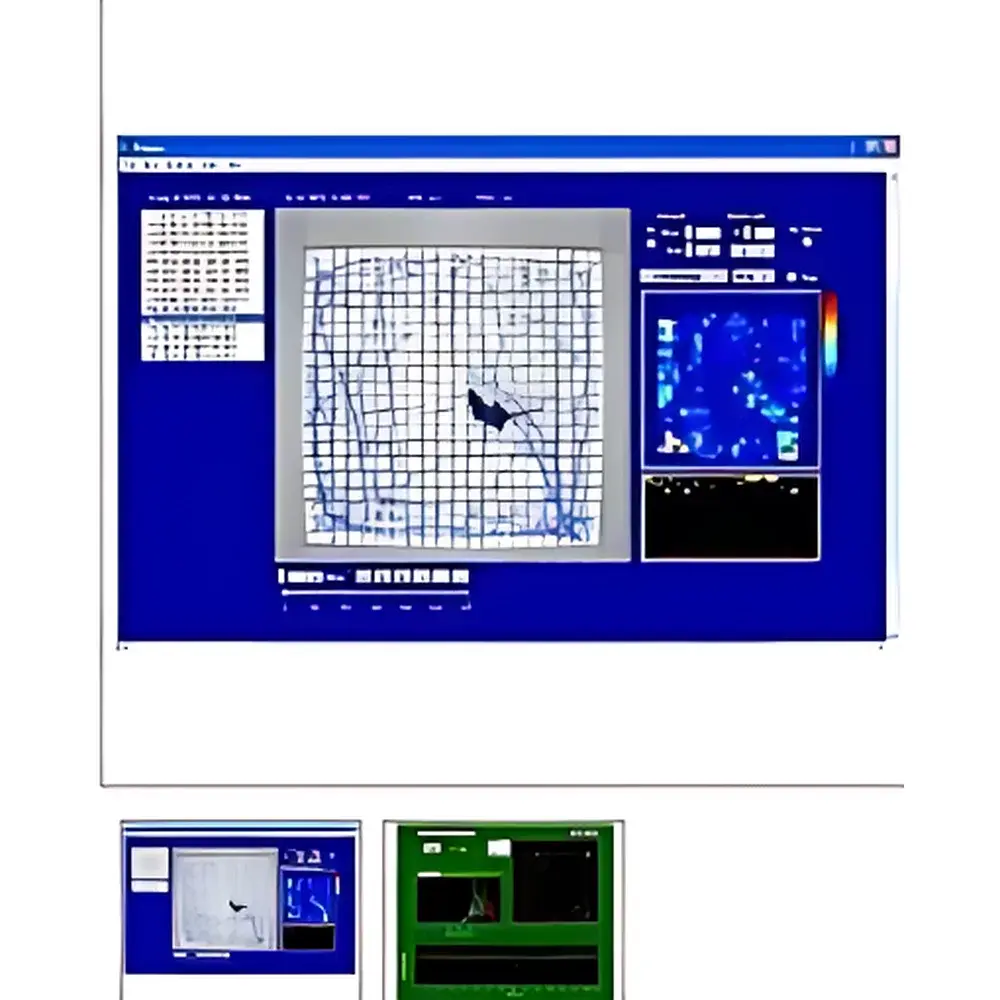
COULBOURN ACT-300A Spontaneous Activity Recording and Behavioral Analysis System
| Brand | COULBOURN |
|---|---|
| Origin | USA |
| Model | ACT-300A |
| Application | Video-based automated tracking for open field, elevated plus maze, radial arm maze, zero maze, conditioned place preference, and custom arena designs |
| Tracking Capacity | Up to 4 animals simultaneously |
| Frame Rate | 15 fps per animal (7 fps when tracking 4 animals) |
| Animal Detection | Robust real-time detection of black or white rodents regardless of size |
| Data Output | Time-in-zone (s/%), zone entries/crossings, path length (cm), body length (mm), orientation angle, mean distance from center, trajectory coordinates, and exportable CSV/Excel reports |
| Software | Limelight v5.x with GLP-compliant audit trail, batch processing, group-wise statistical summary (mean ± SEM), QuickTime movie export, and customizable zone/grid/maze-arm segmentation |
Overview
The COULBOURN ACT-300A Spontaneous Activity Recording and Behavioral Analysis System is a validated, high-fidelity video tracking platform engineered for objective quantification of rodent locomotor activity and ethologically relevant behavioral phenotypes. Based on real-time centroid-based motion detection and sub-pixel interpolation algorithms, the system captures spatial-temporal dynamics without reflective markers or physical tethering—enabling true non-invasive assessment under standard laboratory lighting conditions. It operates on the principle of differential contrast analysis between subject and background, supporting both dark- and light-phase subjects across diverse arena configurations including open field, elevated plus maze, radial arm maze, zero maze, and user-defined custom geometries. Designed for longitudinal and high-throughput preclinical studies, the ACT-300A meets foundational requirements for reproducible behavioral pharmacology, neurodevelopmental disorder modeling, and CNS drug screening protocols.
Key Features
- Real-time multi-animal tracking: Simultaneously monitors up to four rodents at 15 frames per second (fps) per subject—or 7 fps during concurrent 4-animal acquisition—ensuring temporal resolution sufficient for detecting subtle gait or hesitation patterns.
- Lighting-agnostic operation: Requires no infrared illumination, UV filters, or controlled ambient conditions; compatible with standard overhead fluorescent or LED lab lighting.
- Hardware-robust architecture: Industrial-grade camera mount, shielded cabling, and vibration-dampened enclosure ensure stability across repeated daily sessions in vivarium environments.
- Comprehensive parameter extraction: Computes >25 standardized behavioral metrics—including time-in-zone (absolute seconds and relative %), zone transitions, total path length (cm), instantaneous velocity, body length (mm), angular orientation, and radial distance from geometric center—all traceable to raw pixel coordinates.
- Scalable data management: Supports batch import of hundreds of video files; auto-synchronizes metadata (subject ID, dose, session date, experimenter) via CSV template ingestion.
- Regulatory-ready software: Limelight v5.x includes full 21 CFR Part 11–compliant audit trail, electronic signature support, version-controlled protocol templates, and locked analysis logs for GLP/GMP-aligned studies.
Sample Compatibility & Compliance
The ACT-300A is validated for use with mice (C57BL/6, BALB/c, CD-1, FVB), rats (Sprague-Dawley, Wistar, Long-Evans), and other small mammals (e.g., gerbils, hamsters) within standard weight and size ranges. Its contrast-based detection algorithm accommodates natural coat color variation without threshold recalibration. The system complies with ASTM E2578–22 (Standard Guide for Behavioral Assessment in Preclinical Research) and supports experimental alignment with NIH OD Guide for the Care and Use of Laboratory Animals. All behavioral paradigms—including open field, elevated plus maze, and radial arm maze—are implemented per published consensus protocols (e.g., Crawley, 2007; Walf & Frye, 2007). Raw video archives and processed datasets are stored in FAIR-compliant formats (DICOM-compatible AVI + annotated CSV) for third-party validation and meta-analysis.
Software & Data Management
Limelight software provides an integrated environment for experiment design, acquisition control, offline replay, and statistical reporting. Users define zones via polygonal drawing tools or import DXF/SVG maze schematics; all regions retain geometric fidelity across resolutions. Batch analysis generates group-level summaries with descriptive statistics (mean ± SEM), ANOVA-ready output tables, and publication-quality trajectory overlays. Export options include time-stamped CSV (with millisecond precision), Excel workbooks, and compressed QuickTime (.mov) clips embedded with real-time metric overlays—directly importable into PowerPoint, GraphPad Prism, or MATLAB. Data integrity is preserved through immutable file hashing, timestamped log files, and role-based access controls aligned with ISO/IEC 17025 documentation standards.
Applications
- Neuropsychopharmacology: Quantifying dose-dependent effects of anxiolytics (e.g., diazepam), psychostimulants (e.g., amphetamine), antipsychotics (e.g., haloperidol), and novel CNS therapeutics on exploratory drive, thigmotaxis, and risk-assessment behavior.
- Genetic model characterization: Phenotyping transgenic, knockout, or CRISPR-edited lines for hyperactivity, perseveration, or spatial working memory deficits using radial arm maze or conditional place preference assays.
- Toxicology screening: Detecting subtle motor impairments or anxiety-like responses following subchronic exposure to environmental toxins or industrial compounds.
- Developmental neuroscience: Tracking age-dependent emergence of locomotor coordination, social investigation, and habituation profiles across postnatal weeks.
- Behavioral core facility operations: Enabling standardized, cross-laboratory data collection across multi-site consortia (e.g., IMPC, ENIGMA) via shared Limelight protocol libraries and QC dashboards.
FAQ
Does the ACT-300A require special arena flooring or background contrast treatment?
No. The system uses adaptive background subtraction and dynamic thresholding, eliminating the need for painted floors, textured substrates, or chroma-key backdrops.
Can Limelight software analyze videos acquired with third-party cameras?
Yes—provided input files are uncompressed AVI or MOV (H.264 baseline profile) with consistent frame rate and resolution; calibration parameters must be manually entered if not captured via COULBOURN hardware.
Is zone definition limited to rectangular grids?
No. Users may draw freeform polygons, import CAD files, or define concentric rings, annuli, or irregular maze arms—each assigned independent behavioral logic (e.g., “entry” vs. “center dwell”).
How does the system handle overlapping animals during close-proximity interactions?
While optimized for individual tracking, Limelight includes collision-resolution heuristics (e.g., velocity persistence, size-weighted centroid assignment) that maintain identity continuity during brief (<200 ms) occlusions—validated against manual scoring in ≥92% of standard open field trials.
What level of IT infrastructure is required for large-scale deployment?
A dedicated Windows 10/11 workstation (i7 CPU, 32 GB RAM, NVIDIA GTX 1060 or better) suffices for up to 20 concurrent arenas; network-attached storage (NAS) is recommended for centralized archive retention exceeding 5 TB.
Related Products





