
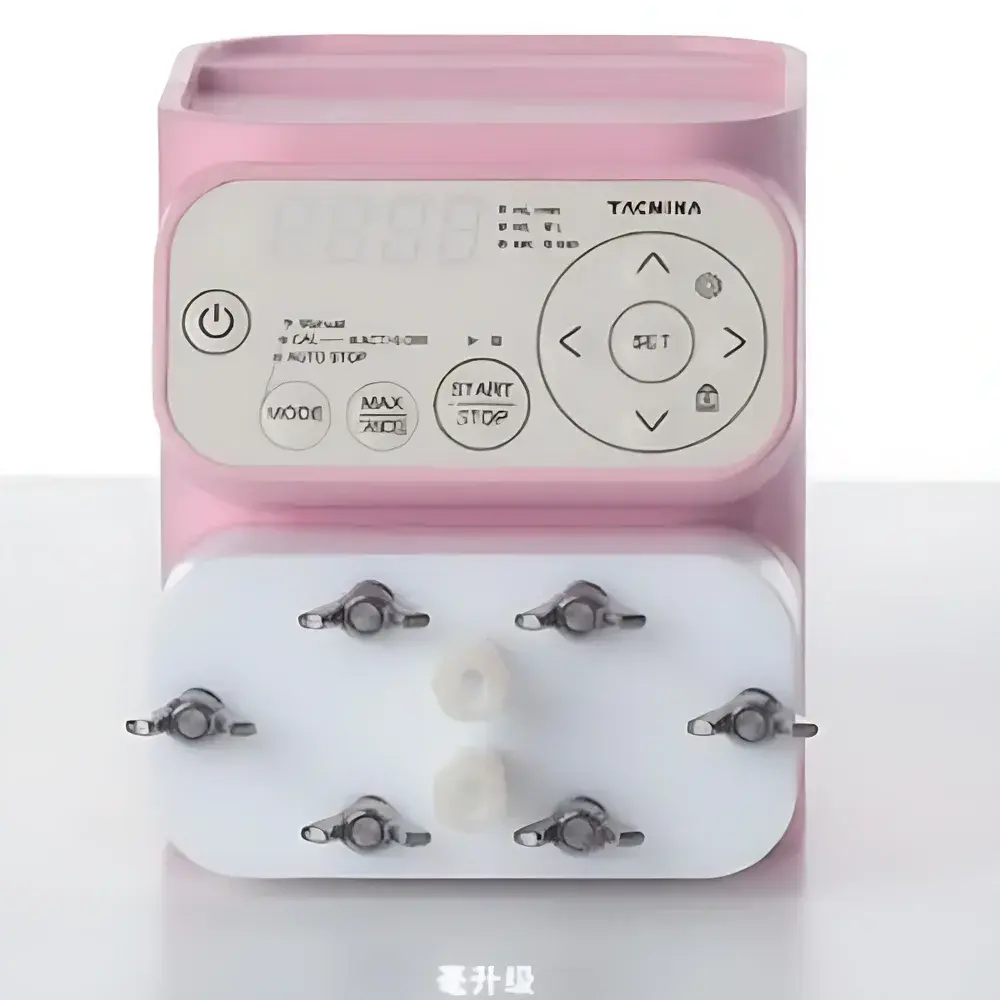
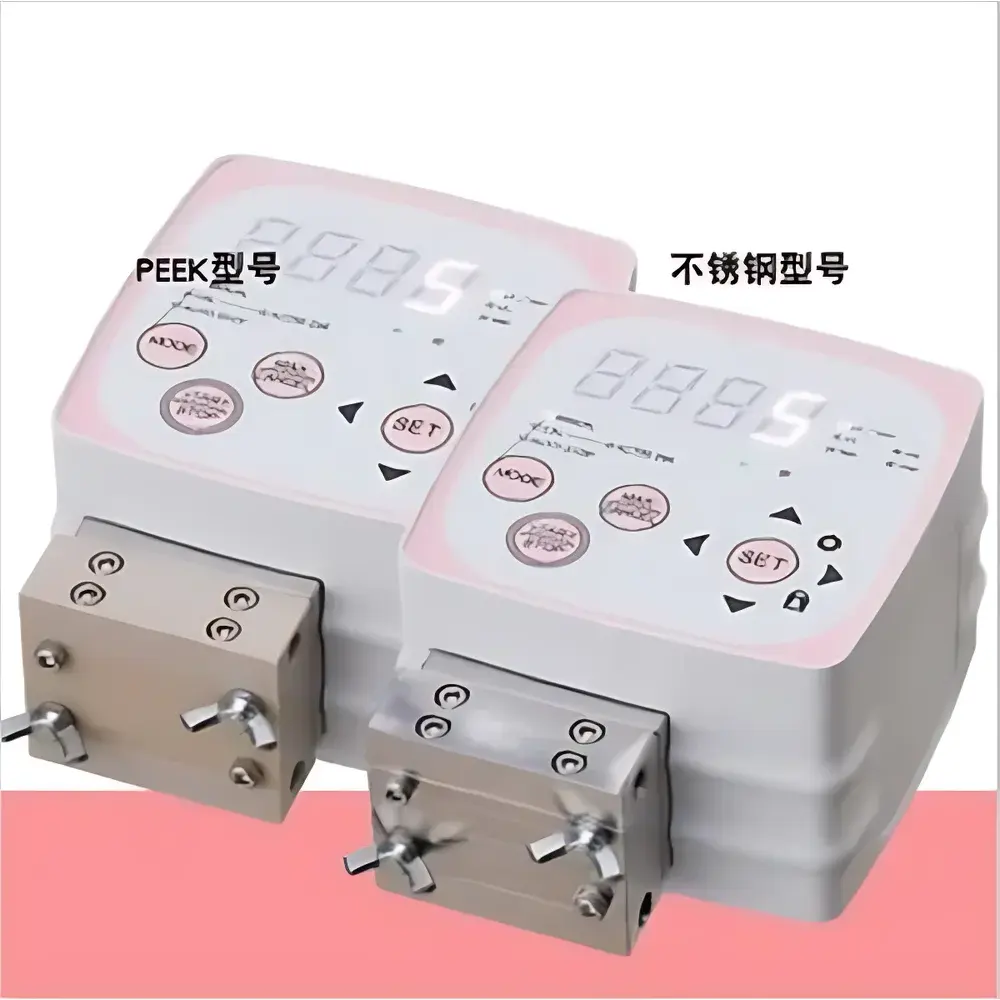
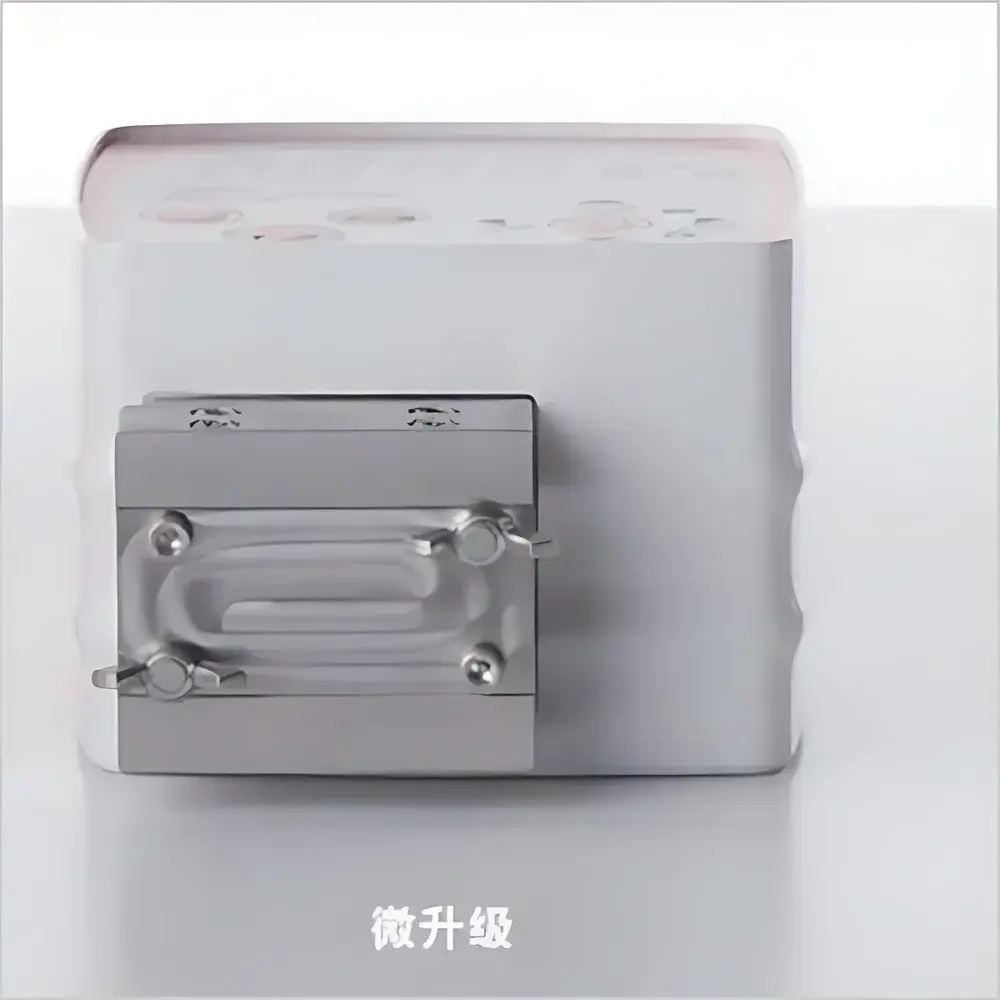
TACMINA Smoothflow Q Series Precision Diaphragm Pump
| Origin | Japan |
|---|---|
| Manufacturer Type | Authorized Distributor |
| Origin Category | Imported |
| Model | Q Series |
| Price Range | USD 2,800 – 7,000 (FOB) |
| Flow Rate | 0.005–100 mL/min |
| Maximum Discharge Pressure | 3.0 MPa |
Overview
The TACMINA Smoothflow Q Series is a high-precision, positive displacement diaphragm pump engineered for laboratory-scale and pilot-line applications requiring continuous, pulseless, and chemically resistant fluid delivery. Based on TACMINA’s proprietary non-contact, sliding-free pumping mechanism—where the diaphragm isolates the drive mechanism from the process fluid—the pump achieves true constant flow without mechanical wear at the wetted interface. Unlike peristaltic or piston-based systems, the Smoothflow Q operates via controlled flexure of a PTFE-reinforced elastomeric diaphragm actuated by compressed air or electric servo drive (model-dependent), eliminating seal friction, lubricant contamination, and pulsation artifacts. This architecture enables stable micro-dosing down to 0.005 mL/min (5 µL/min) with full pressure capability up to 3.0 MPa—making it suitable for high-backpressure applications such as HPLC sample introduction, catalyst slurry metering, electrochemical cell feeding, and sterile bioprocess fluid transfer under ISO Class 5 cleanroom conditions.
Key Features
- Pulseless Constant Flow: Achieves laminar, non-pulsating discharge across the entire flow range via synchronized diaphragm actuation—critical for sensitive analytical instrumentation and low-volume reaction systems.
- Exceptional Metrological Stability: Flow reproducibility ≤ ±1% of full scale (FS) over time; resolution down to 0.01 mL/min (Q-100) or 1 µL/min (Q-5), verified per ASTM D3417 and ISO 5725-2 guidelines for precision liquid delivery systems.
- Zero-Sliding Wetted Path: No dynamic seals, bearings, or shaft penetrations in contact with fluid—eliminating particle generation, thermal degradation, and air exposure risks. Fully sealed construction prevents oxidation, hydrolysis, or moisture-induced decomposition of air-sensitive reagents (e.g., organometallics, anhydrous solvents).
- Intrinsic Overpressure & Dry-Run Safety: Integrated mechanical pressure limiter halts actuation at preset thresholds (configurable up to 3.0 MPa); no external pressure transducers or PLC logic required. Dry-run operation causes no diaphragm abrasion or thermal damage due to absence of metal-on-metal contact.
- Modular Fluid Path Design: Quick-release bolted head assembly allows full disassembly in <60 seconds without tools; interchangeable pump heads support material-specific compatibility (e.g., PTFE/PFA/FFKM wetted surfaces for aggressive acids, bases, and halogenated solvents).
Sample Compatibility & Compliance
The Smoothflow Q accommodates Newtonian and mildly non-Newtonian liquids—including aqueous buffers, organic solvents (THF, DMF, chloroform), concentrated acid/base solutions (up to 98% H₂SO₄, 50% NaOH), and low-viscosity slurries (<200 cP). All wetted materials comply with USP Class VI, FDA 21 CFR Part 11 (when paired with validated control software), and EU Regulation EC No. 1935/2004 for food-contact applications. Sterilizable variants (autoclavable at 121°C, 20 min, 2 bar) meet ISO 13485 requirements for medical device manufacturing environments. Optional GMP-compliant documentation packages include Factory Acceptance Test (FAT) reports, material traceability certificates, and calibration records traceable to NIST standards.
Software & Data Management
The Q-series supports standalone analog (4–20 mA) and digital (pulse input/output) interfaces for integration into SCADA, LIMS, or PLC-controlled workflows. Optional TACMINA FlowManager™ software (Windows-based) provides audit-trail-enabled calibration logging, real-time flow verification, and electronic signature functionality compliant with FDA 21 CFR Part 11 Annex 11. All parameter changes—including flow setpoints, auto-stop volume thresholds, and gradient profiles—are timestamped and user-authenticated. Firmware updates preserve historical calibration coefficients and maintain metrological continuity across device lifecycles.
Applications
- HPLC and UHPLC mobile phase delivery for method development and column equilibration
- Controlled reagent addition in flow chemistry reactors (e.g., Grignard, lithiation, nitration)
- Cell culture media perfusion and pH-adjustment dosing in bioreactor auxiliary loops
- Calibration standard delivery for ICP-MS, AAS, and TOC analyzers
- Microfluidic chip priming and solvent exchange in lab-on-a-chip platforms
- High-pressure cleaning validation in pharmaceutical equipment qualification (IQ/OQ)
FAQ
What is the minimum detectable flow rate for the Q-5 model?
The Q-5 delivers stable flow down to 5 µL/min with ±1% FS accuracy; lower rates are achievable with extended dwell-time protocols but fall outside certified metrological range.
Can the pump handle abrasive slurries?
Yes—when equipped with optional ceramic-coated diaphragm housings and sapphire-reinforced valve seats, the Q-series meters slurries containing particles ≤25 µm at concentrations up to 15 wt%.
Is autoclave sterilization supported across all models?
Only designated “S” suffix variants (e.g., Q-100S) feature fully autoclavable wetted assemblies rated for 121°C, 20 minutes, 2 bar saturated steam per ISO 17665-1.
How is flow calibration performed in the field?
Users perform gravimetric calibration using a certified balance and timer: enter measured mass/time data into the front-panel interface or FlowManager™ software, which automatically updates internal gain coefficients and stores revision history.
Does the pump require periodic recalibration per GLP standards?
Per ISO/IEC 17025:2017, annual calibration verification is recommended; however, built-in stability monitoring (via integrated flow pulse counters and pressure diagnostics) extends calibration intervals when operated within specified environmental and fluid parameters.



