
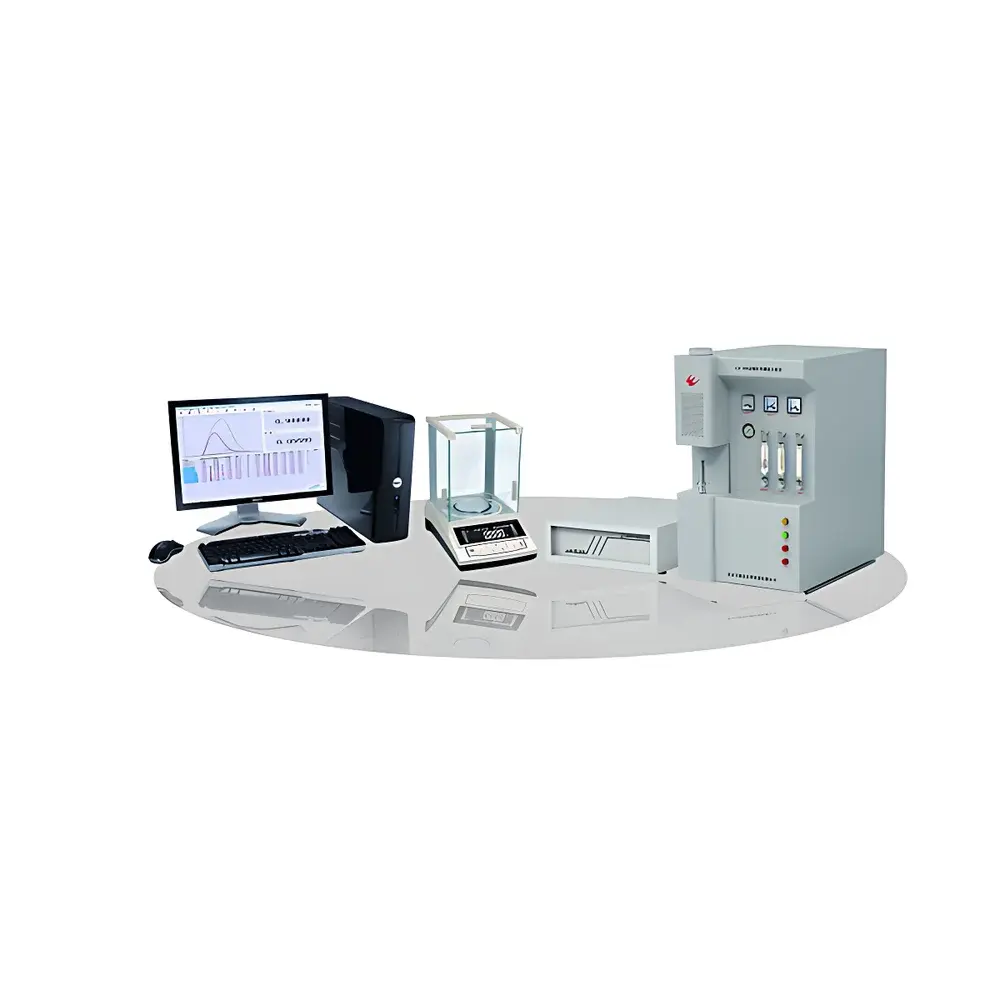
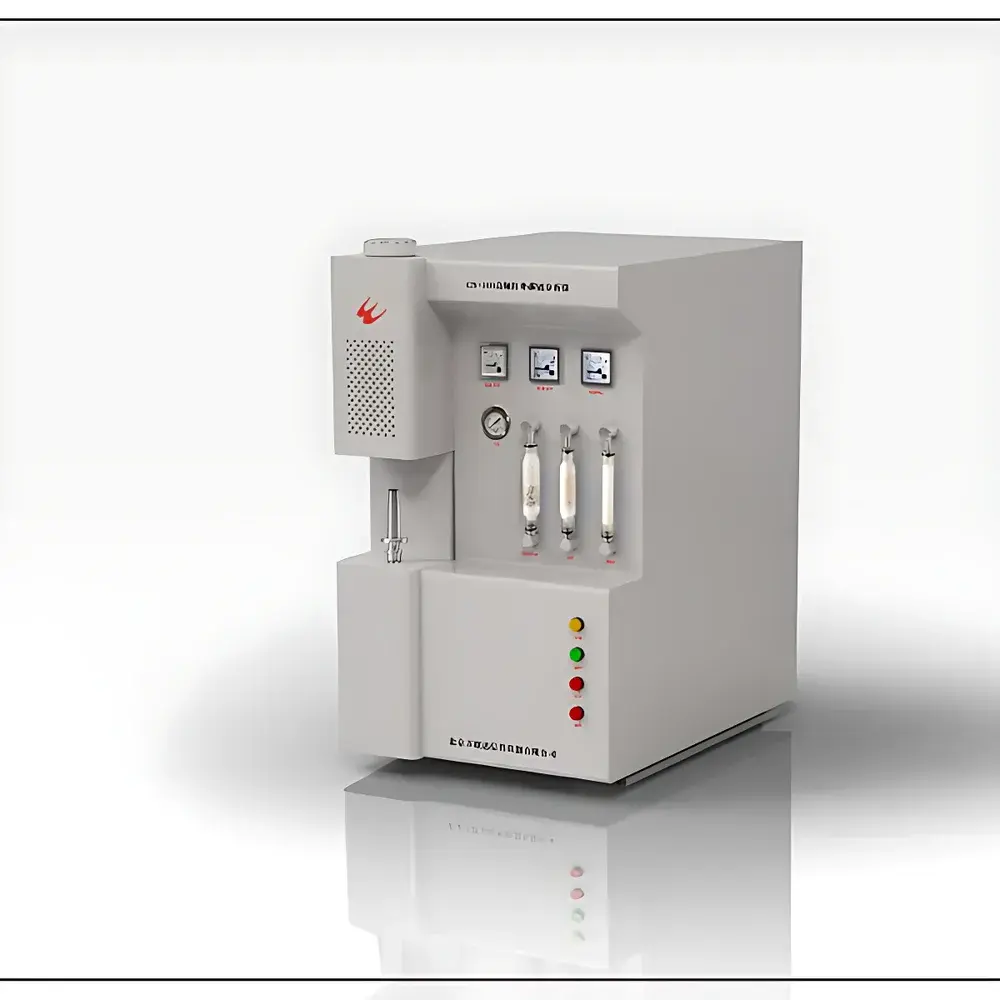
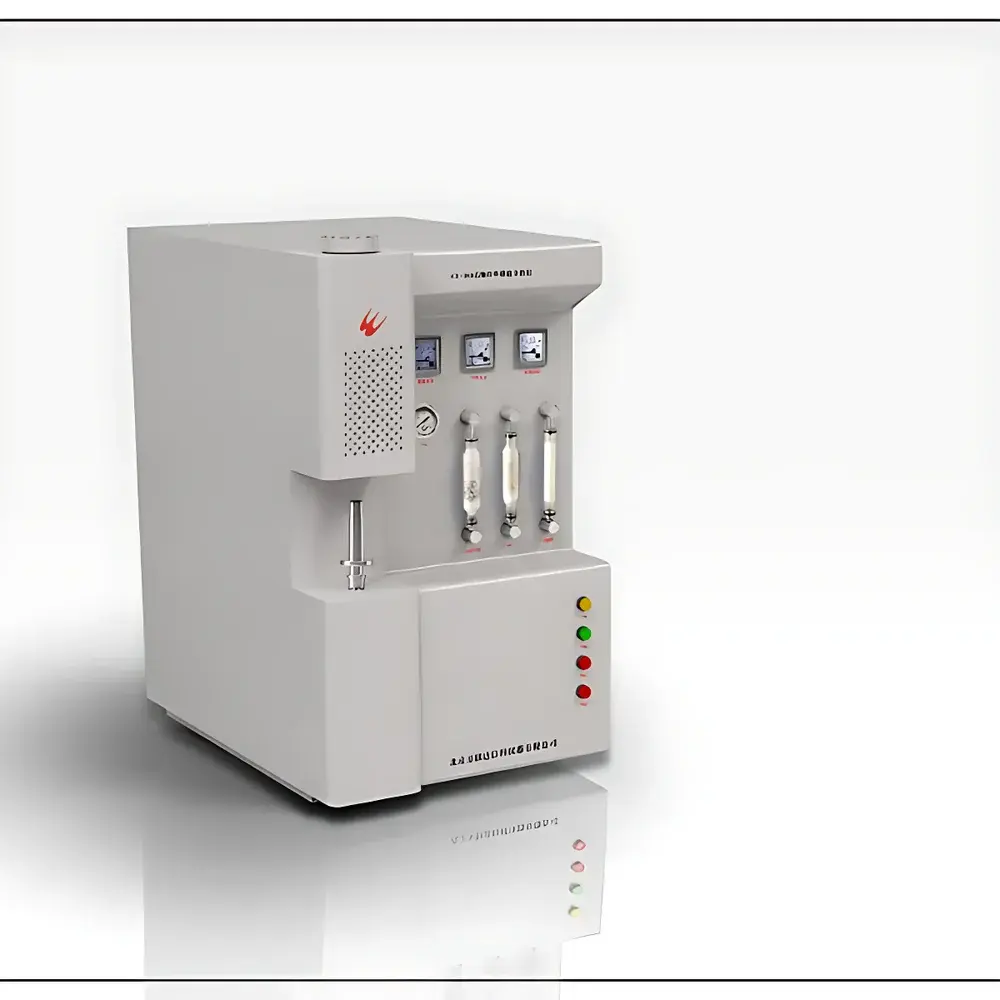
Wanlianda CS-300 High-Frequency Infrared Carbon-Sulfur Analyzer
| Brand | Wanlianda |
|---|---|
| Origin | Beijing, China |
| Model | CS-300 |
| Measurement Principle | Infrared Absorption Spectroscopy |
| Heating System | High-Frequency Induction Furnace |
| Carbon Range | 0.00002–10 wt% |
| Sulfur Range | 0.00002–5 wt% |
| Sensitivity | 0.1 ppm |
| Precision | ±1% RSD (C: ≤0.6%, S: ≤1.5%) |
| Analysis Time | 40 s |
| Furnace Output Power | 2.5 kW |
| Compliance | GB/T 20123–2006 |
Overview
The Wanlianda CS-300 High-Frequency Infrared Carbon-Sulfur Analyzer is a dedicated elemental combustion analyzer engineered for precise, routine quantification of total carbon (C) and sulfur (S) in solid metallic and inorganic materials. It operates on the principle of high-frequency induction combustion followed by non-dispersive infrared (NDIR) spectroscopic detection. In this method, a weighed sample is combusted at temperatures exceeding 1,700 °C in a pure oxygen atmosphere within a high-frequency induction furnace. The resulting CO₂ and SO₂ gases are swept through a dust-removal and drying system before entering dual-channel NDIR cells—each tuned to the characteristic absorption bands of CO₂ (4.26 µm) and SO₂ (7.35 µm). Signal intensity is linearly correlated to gas concentration via Beer–Lambert law, enabling quantitative determination with trace-level sensitivity. Designed for metallurgical QC labs, foundries, and raw material testing facilities, the CS-300 delivers robust performance across diverse matrices without requiring matrix-matched calibration for each sample type.
Key Features
- Modular architecture: Physically separated high-frequency combustion unit and infrared detection module enhance thermal stability, reduce cross-talk, and simplify maintenance.
- High-reliability combustion system: 2.5 kW high-frequency induction furnace with automatic power regulation ensures consistent ignition and complete oxidation—even for refractory alloys and low-conductivity samples such as rare-earth metals and ferroalloys.
- Dual independent optical paths: Separate NDIR detectors for carbon and sulfur channels eliminate spectral interference and support simultaneous dual-element reporting.
- Advanced gas handling: Stainless steel ultra-microporous dust filter (≤0.5 µm pore size), SMC solenoid valves, and digital mass flow controllers (MFCs) ensure long-term gas flow stability (<±0.2% drift over 8 h) independent of ambient temperature or line pressure fluctuations.
- Proprietary back-flush mechanism: Automatically purges residual ash and condensates from the combustion tube after each analysis, enabling uninterrupted operation for >1,000 consecutive samples without manual cleaning.
- J-grade optical design: Integrated photoelectric detector assembly—developed in-house—features hermetically sealed optics, vibration-damped mounting, and military-spec thermal compensation for signal stability under variable lab conditions.
Sample Compatibility & Compliance
The CS-300 is validated for use with ferrous and non-ferrous solids including carbon steels, stainless steels, cast irons, nickel-based superalloys, aluminum and copper alloys, manganese and silicon ferroalloys, iron ores, limestone, slag, and rare-earth oxides. Sample mass ranges from 0.1 g to 1.0 g depending on expected C/S content and required detection limit. All measurements conform to the repeatability and accuracy requirements of GB/T 20123–2006, which aligns technically with ISO 15350:2000 (Steel — Determination of total carbon and sulfur content — Infrared absorption method after combustion in an induction furnace). While not pre-certified to FDA 21 CFR Part 11, the system supports audit-ready data logging when paired with compliant LIMS integration and user-access controls.
Software & Data Management
The embedded Windows-based software provides full control of combustion parameters, calibration management, and real-time spectral visualization. It supports up to 20 user-defined calibration curves per element, each with polynomial or multi-point linear fitting. Dynamic compensation algorithms correct for variations in combustion temperature, carrier gas flow rate, and peak width—minimizing drift-induced bias. Data output includes raw absorbance values, integrated peak areas, calculated concentrations (wt%), RSD per batch, and pass/fail flags against configurable specification limits. Results export via serial RS-232 or UDP/IP to external databases, ERP systems, or centralized QA servers. Optional integration with balance interfaces (Sartorius, Mettler Toledo, Ohaus, and A&D) enables automated mass entry and stoichiometric correction.
Applications
- Quality control of incoming raw materials (e.g., scrap metal, ferroalloys, fluxes) in steelmaking and casting operations.
- In-process verification of desulfurization efficiency during ladle refining and secondary metallurgy.
- Verification of low-carbon specifications in austenitic stainless steels and nuclear-grade zirconium alloys.
- Geochemical screening of sulfide-bearing ores and environmental soil samples per ASTM D7348–15 (Standard Test Method for Total Sulfur in Solid Recovered Fuels).
- R&D applications requiring high-precision C/S ratio monitoring in advanced battery cathode precursors and catalyst supports.
FAQ
What sample types require special preparation prior to analysis?
Powdered or granular samples must be homogenized and pressed into pellets using binder-free graphite or tungsten carbide dies. Non-conductive samples (e.g., ceramics, oxides) require addition of a high-purity iron or tungsten flux to ensure efficient coupling with the high-frequency field.
Is helium required as a carrier gas?
No—high-purity oxygen (≥99.995%) is the standard combustion and carrier gas; helium is neither required nor recommended for routine operation.
Can the CS-300 be integrated into a GLP-compliant laboratory environment?
Yes—when deployed with role-based user accounts, electronic signature workflows, and enabled audit trail logging (via optional software module), it meets core GLP data integrity expectations for regulated metallurgical testing.
What maintenance intervals are recommended for the infrared cell?
The NDIR cells require no routine optical alignment or internal cleaning under normal operating conditions; annual verification of zero/gain stability using certified reference gases (NIST-traceable CO₂/SO₂ standards) is advised.
Does the system support ASTM E1019 compliance?
While optimized for GB/T 20123 and ISO 15350, method adaptation for ASTM E1019 (Standard Test Methods for Determination of Carbon, Sulfur, Nitrogen, and Oxygen in Steel, Iron, Nickel, and Cobalt Alloys) is achievable via custom parameter configuration and validation per Section 9 of the standard.





