
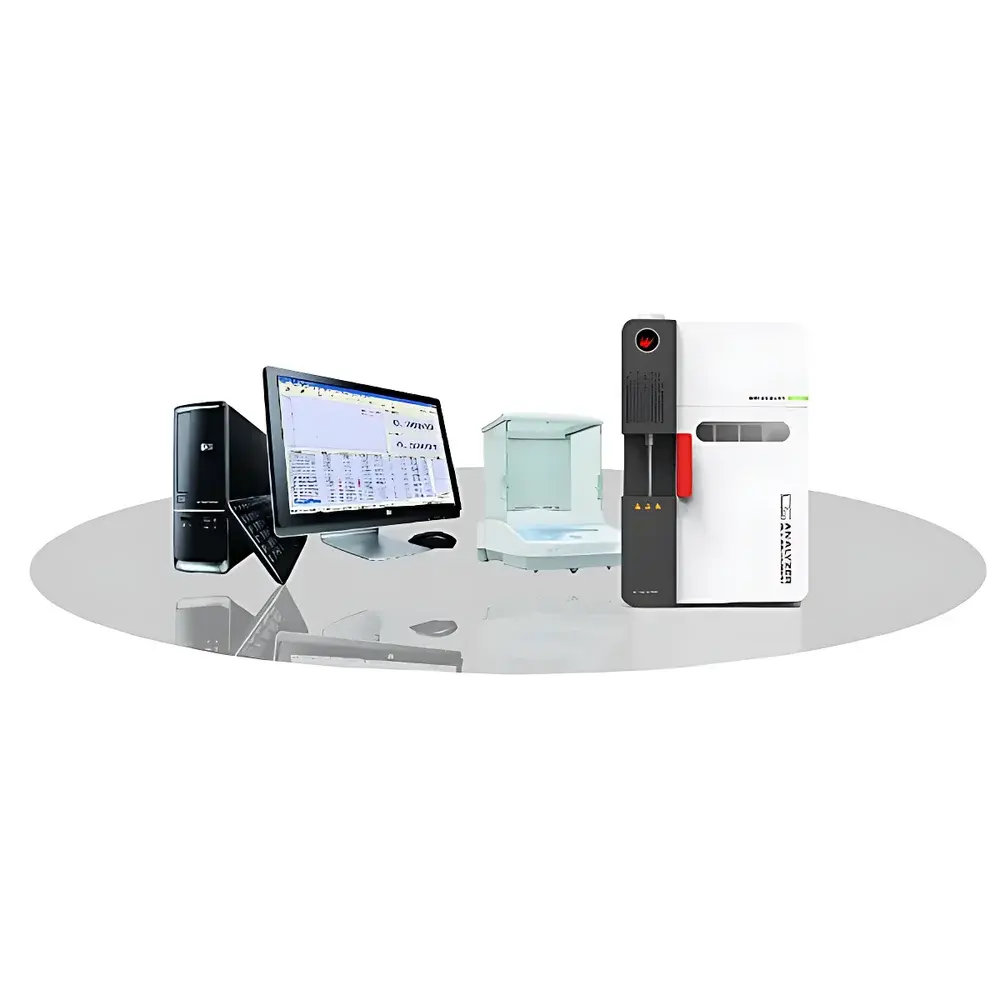
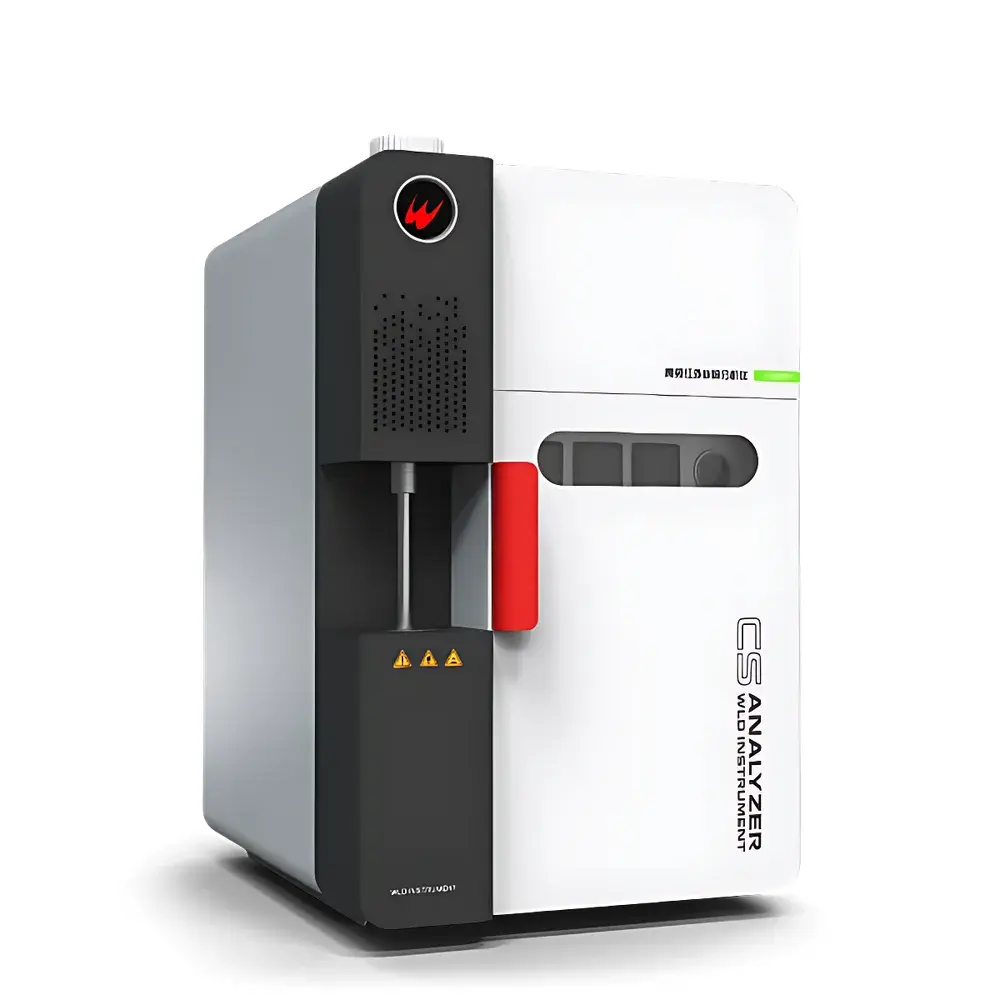
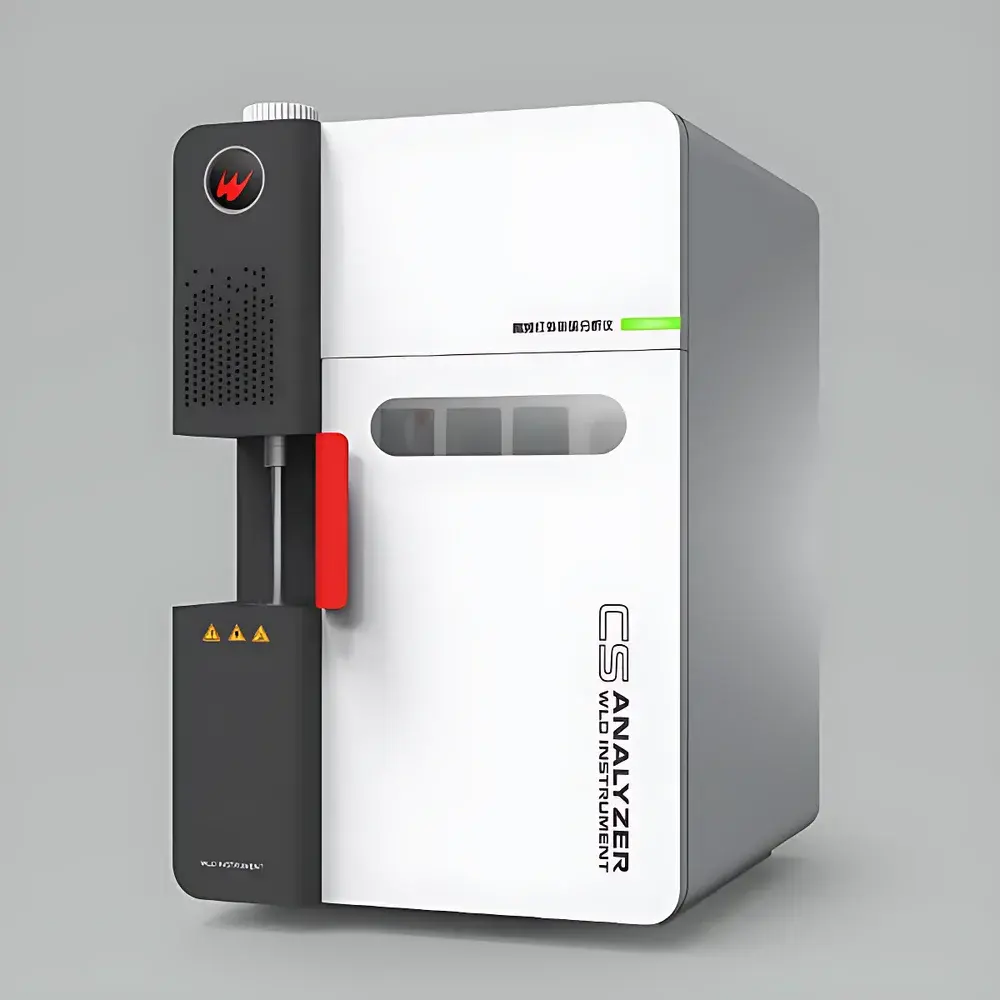
Wanlianda CS-902G High-Frequency Infrared Carbon-Sulfur Analyzer
| Brand | Wanlianda |
|---|---|
| Origin | Beijing, China |
| Model | CS-902G |
| Measurement Principle | Infrared Absorption Spectroscopy |
| Heating System | High-Frequency Induction Furnace (2.5 kW Output Power) |
| Carbon Range | 0.00002–30% (expandable) |
| Sulfur Range | 0.00002–5% (expandable) |
| Sensitivity | 0.1 ppm |
| Precision | Carbon RSD ≤ 0.5%, Sulfur RSD ≤ 1.5% |
| Analysis Time | 40 s |
| Detection Systems | Dual-channel CO₂ and SO₂ infrared cells + CO-specific infrared cell |
Overview
The Wanlianda CS-902G High-Frequency Infrared Carbon-Sulfur Analyzer is an integrated combustion-infrared instrument engineered for precise, routine quantification of total carbon (C) and sulfur (S) in solid metallic and inorganic materials. It operates on the principle of high-frequency induction combustion followed by non-dispersive infrared (NDIR) absorption spectroscopy. Solid samples are combusted quantitatively in a pure oxygen atmosphere at temperatures exceeding 1,700 °C using a 2.5 kW high-frequency furnace, converting all carbon to CO₂ and sulfur to SO₂ (with trace CO monitored separately). The resulting gases pass through optimized optical cells where dual-wavelength NDIR detectors measure absorbance at characteristic vibrational bands—2350 cm⁻¹ for CO₂ and 740 cm⁻¹ for SO₂—enabling simultaneous, interference-compensated quantification. Designed for laboratory environments requiring compliance with metallurgical and geological testing standards, the CS-902G delivers robust performance across diverse sample matrices without manual gas switching or external calibration gas cylinders.
Key Features
- Monolithic combustion-analyzer architecture eliminates inter-unit gas transfer losses and pressure fluctuations, improving measurement reproducibility.
- Triple infrared detection system: independent CO₂, SO₂, and CO channels enable accurate correction for incomplete oxidation and matrix-dependent combustion behavior.
- High-frequency induction furnace with digital power regulation ensures stable thermal output and rapid temperature ramping (0–1,800 °C in <8 s), minimizing carryover and enabling consistent ash-free combustion of refractory alloys.
- Optimized gas handling train includes stainless-steel reaction tube, ceramic crucible holder, and multi-stage desiccant and catalyst traps (CuO, Co₃O₄, and Mg(ClO₄)₂) to remove moisture, NOₓ, and halogens prior to IR detection.
- Embedded microprocessor controls all operational sequences—including oxygen flow modulation, furnace timing, and detector zero/baseline stabilization—reducing operator dependency and supporting unattended batch analysis.
Sample Compatibility & Compliance
The CS-902G accommodates a broad spectrum of conductive and semi-conductive solid samples, including carbon steels, low-alloy steels, stainless steels, cast irons, ferroalloys (e.g., Fe-Mn, Fe-Si), non-ferrous metals (copper, aluminum, titanium alloys), ores, slags, refractories, and rare-earth oxides. Sample mass ranges from 0.2 to 1.0 g, adjustable via calibrated weighing protocols. The analyzer meets or exceeds the performance criteria specified in ISO 15350:2022 (Steel — Determination of total carbon and sulfur content — Infrared absorption method after combustion in high-frequency induction furnace), ASTM E1019-22 (Standard Test Methods for Determination of Carbon, Sulfur, Nitrogen, and Oxygen in Steel, Iron, Nickel, and Cobalt Alloys), and GB/T 20123–2006 (Steel and iron — Determination of total carbon and sulfur content — Infrared absorption method after high-frequency induction combustion). Its design supports GLP-compliant workflows through hardware-level audit trail logging and user-accessible calibration history.
Software & Data Management
The instrument is operated via Windows-based CS-Analyzer software featuring intuitive workflow navigation, real-time spectral monitoring, and automated peak integration. Calibration curves are generated using certified reference materials (CRMs) traceable to NIST or national metrology institutes; up to 12-point polynomial fits are supported per element. All analytical results include timestamped metadata (sample ID, operator, furnace parameters, gas flow rates, detector voltages), stored in encrypted SQLite databases compliant with FDA 21 CFR Part 11 requirements for electronic records and signatures. Data export options include CSV, PDF reports (with customizable templates), and direct integration into LIMS via ODBC drivers. Software updates are delivered via secure HTTPS channels with SHA-256 signature verification.
Applications
- Quality control laboratories in steel mills verifying carbon equivalency (CE) and sulfur segregation limits for weldability assessment.
- Research institutions analyzing trace sulfur in high-purity nickel alloys used in aerospace turbine blades.
- Mineral processing facilities quantifying carbon interference in iron ore concentrate assays prior to blast furnace feed optimization.
- Recycling facilities screening scrap metal streams for residual sulfur contamination affecting secondary aluminum smelting efficiency.
- Geochemical labs determining organic carbon content in carbonate-rich sedimentary rocks using acid pretreatment protocols compatible with the CS-902G’s extended low-range sensitivity.
FAQ
What types of calibration standards are required for routine operation?
Certified reference materials (CRMs) with certified C and S values covering the expected concentration range—such as NIST SRM 1261a (low-alloy steel), BCS CRM 324/4 (stainless steel), or IRMM-027 (ferromanganese)—are recommended. At least three CRMs spanning the working range must be analyzed daily for calibration verification.
Can the CS-902G analyze non-metallic samples such as ceramics or polymers?
Yes, provided the sample is electrically conductive or blended with a high-purity iron flux (e.g., 1:5 sample-to-flux ratio) to ensure efficient coupling with the high-frequency field. Pre-treatment protocols for organics (e.g., controlled pyrolysis under inert gas) must be validated per application.
Is the instrument compatible with automated sample introduction systems?
The CS-902G features RS-232 and Ethernet interfaces supporting integration with third-party autosamplers (e.g., CETAC ASX-560 or equivalent) via Modbus TCP or ASCII command protocol. Hardware handshaking signals (READY/BUSY) are implemented for synchronized operation.
How is system performance verified between calibrations?
A daily system suitability test (SST) is performed using a mid-range CRM. Acceptance criteria include RSD ≤ 0.5% for carbon and ≤ 1.5% for sulfur across six consecutive injections, plus detector signal stability (baseline drift < 0.5% full scale over 30 min).
Does the analyzer support regulatory audit readiness?
Yes. All user actions (login/logout, method edits, calibration events, result overrides) are time-stamped and logged in a write-protected audit trail. Electronic signatures, role-based access control, and password complexity enforcement align with 21 CFR Part 11 and EU Annex 11 requirements.



