
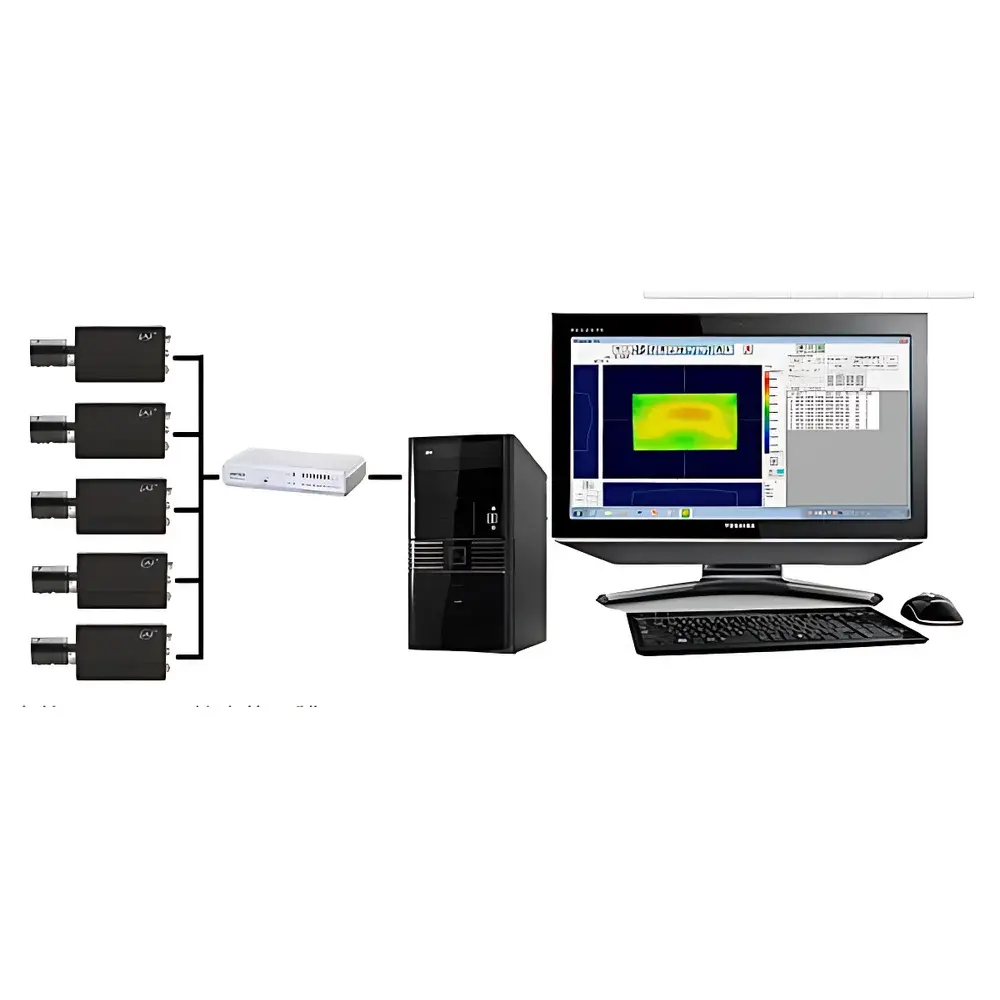
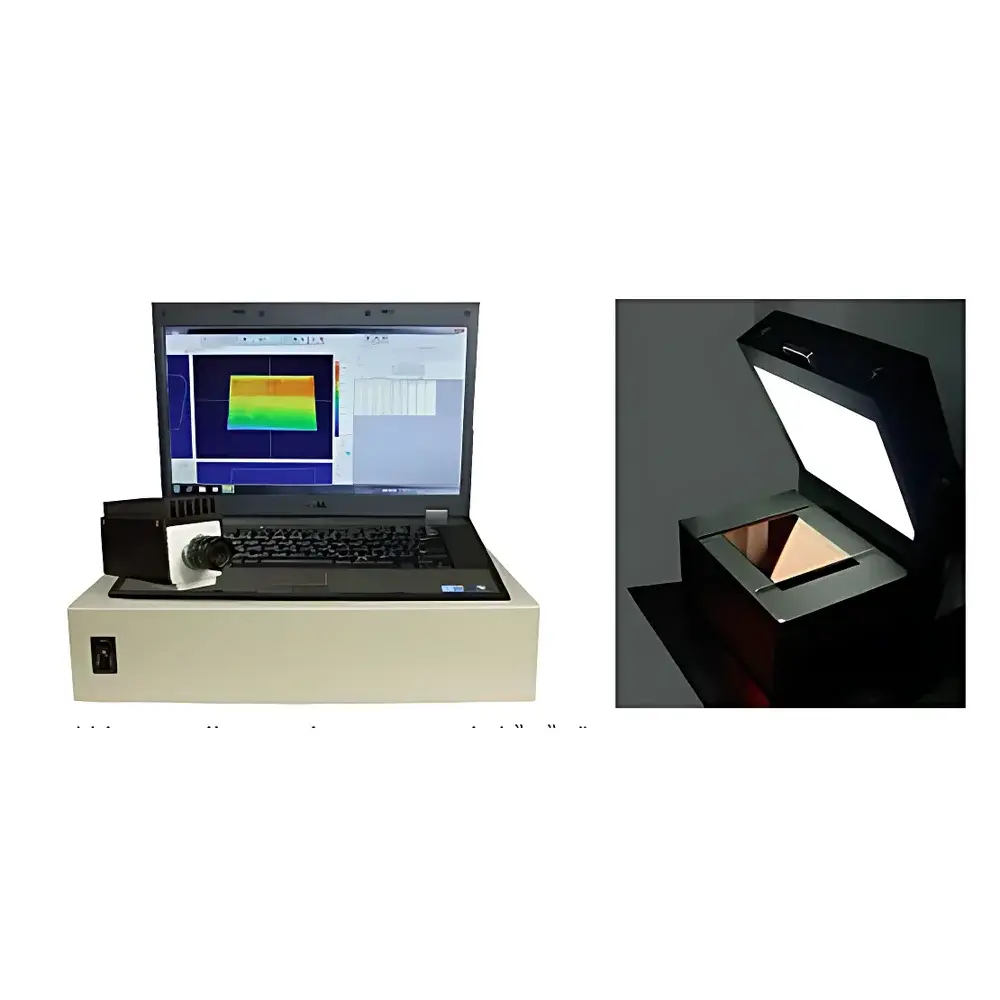
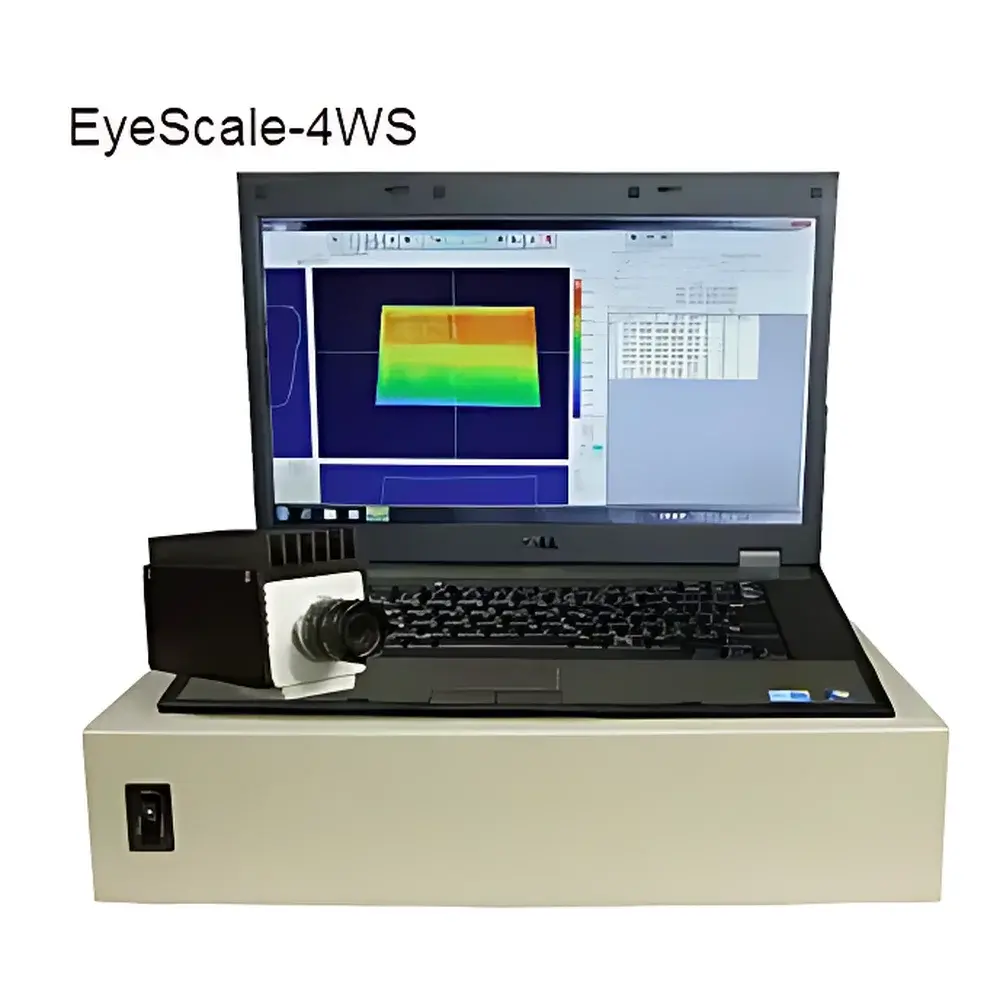
EyeScale Series Uniformity Imaging Photometers and Colorimetric Analyzers
| Origin | Japan |
|---|---|
| Supplier Type | Authorized Distributor |
| Import Status | Imported |
| Model | EyeScale-One, EyeScale-Two, EyeScale-Three, EyeScale-Four, EyeScale-4W, EyeScale-IP, Tester-21 |
| Pricing | Upon Request |
Overview
The EyeScale Series is a family of high-precision, CCD-based imaging photometers and colorimeters engineered for quantitative two-dimensional (2D) spatial evaluation of luminance, chromaticity, and uniformity across illuminated surfaces. Unlike traditional spot-measurement instruments—such as single-point luminance meters or tristimulus colorimeters—the EyeScale platform captures full-field radiometric and photometric data in a single exposure using calibrated XYZ-filtered CCD sensors. Each system operates on the principle of spectral responsivity matching to the CIE 1931 standard observer, enabling traceable, ISO/CIE-compliant measurement of brightness distribution (cd/m²), chromaticity coordinates (CIE x,y or u’v’), and Δu’v’ uniformity deviation. Designed specifically for R&D labs, display manufacturing QC lines, automotive HMI validation, and lighting design studios, the EyeScale Series bridges the gap between human visual perception and objective metrology—delivering spatially resolved metrics that correlate directly with perceptual uniformity assessments required under ISO 9241-307 (display ergonomics) and ISO 13406-2 (visual comfort).
Key Features
- Full-field 2D imaging photometry and colorimetry with XYZ-filtered CCD sensor architecture
- Simultaneous acquisition of luminance (Y), chromaticity (x,y), and correlated color temperature (CCT) maps at pixel-level resolution
- Real-time uniformity analysis including min/max ratio, standard deviation, and Δu’v’ spatial deviation heatmaps
- Configurable ROI (Region of Interest) definition for targeted evaluation of display sub-regions, automotive instrument clusters, or backlight zones
- Integrated USB interface compatible with standard industrial PCs; no proprietary frame grabbers required
- Modular hardware variants optimized for distinct use cases: EyeScale-One (basic uniformity), EyeScale-Two (high-speed acquisition), EyeScale-Three (XYZ-filtered high-dynamic-range imaging), EyeScale-Four/4W (wide-angle lens support for large-area panels), EyeScale-IP (automotive-grade IP65 enclosure with tilt-adjustable mounting for dashboard testing), and Tester-21 (dedicated multi-point exposure verification for LCD/LED backlights)
- Factory-calibrated against NIST-traceable standards; calibration certificates provided per unit
Sample Compatibility & Compliance
The EyeScale Series supports direct imaging of emissive and transmissive light sources including OLED, microLED, LCD, TFT, automotive LED indicators, instrument cluster displays, HUDs, and architectural LED panels. It complies with international photometric standards including CIE S 014-2/E:2020 (photometer performance requirements), ISO/CIE 11664-4:2019 (colorimetry—CIE 1931 color space), and IEC 62341-6-3:2021 (OLED display measurement methods). For regulated environments—such as automotive Tier-1 supplier labs operating under IATF 16949 or medical display facilities adhering to FDA 21 CFR Part 11—the system supports audit-ready data export with timestamped metadata, operator ID tagging, and immutable measurement logs. All models meet CE, RoHS, and JIS Z 8722 (luminance measurement accuracy) requirements.
Software & Data Management
The bundled EyeScale Analysis Suite (v5.x) provides native support for Windows 10/11 and includes modules for real-time image preview, automated uniformity reporting (PDF/CSV), comparative delta-E mapping, pass/fail thresholding per ISO 13406-2 Class II criteria, and batch processing of sequential measurements. The software enables GLP/GMP-compliant operation through electronic signatures, user role management (admin/operator/viewer), and full audit trail functionality—including parameter change history, calibration event logging, and raw image hash verification. Optional API integration (DLL and Python SDK) allows embedding into automated test sequences via LabVIEW, MATLAB, or custom MES platforms. Free firmware and software updates are provided for the duration of hardware support (minimum 7 years from date of shipment).
Applications
- Display manufacturing: Luminance and chromaticity uniformity validation of smartphone, tablet, and TV panels during final QA
- Automotive HMI development: Night-mode readability assessment of digital instrument clusters, center consoles, and touch-sensitive controls per UNECE R121 and SAE J1757-2
- Lighting design: Spatial CCT and CRI homogeneity analysis of LED troffers, downlights, and façade modules
- Backlight engineering: Hotspot detection, edge-lit uniformity optimization, and diffuser film performance evaluation
- Research laboratories: Human vision modeling input generation, perceptual uniformity correlation studies, and spectral power distribution (SPD) reconstruction from XYZ-filtered data
- Ergonomic compliance testing: Verification of display luminance range (1–500 cd/m²), contrast ratio (>10:1), and chromaticity shift under viewing angle variation
FAQ
What distinguishes EyeScale from conventional spot photometers?
EyeScale replaces point-by-point scanning with single-shot 2D imaging—reducing measurement time from minutes to seconds while preserving spatial correlation between adjacent pixels. This eliminates interpolation errors inherent in grid-based sampling and enables detection of localized non-uniformities (e.g., mura, vignetting, driver-induced banding) invisible to spot tools.
Is calibration traceable to national standards?
Yes. Each unit ships with a factory calibration certificate traceable to NIST via JCSS-accredited Japanese metrology laboratories. On-site recalibration services are available globally through authorized service centers.
Can EyeScale measure non-Lambertian emitters such as microLED arrays?
Yes. The system supports cosine-corrected lens options and optional goniometric stage integration for angular luminance profiling per CIE 127:2007.
Does the software support automated report generation for ISO-compliant audits?
Yes. Reports include full metadata (instrument ID, calibration date, operator, environmental conditions), statistical summaries, annotated heatmaps, and digital signature fields compliant with 21 CFR Part 11 and ISO/IEC 17025.



