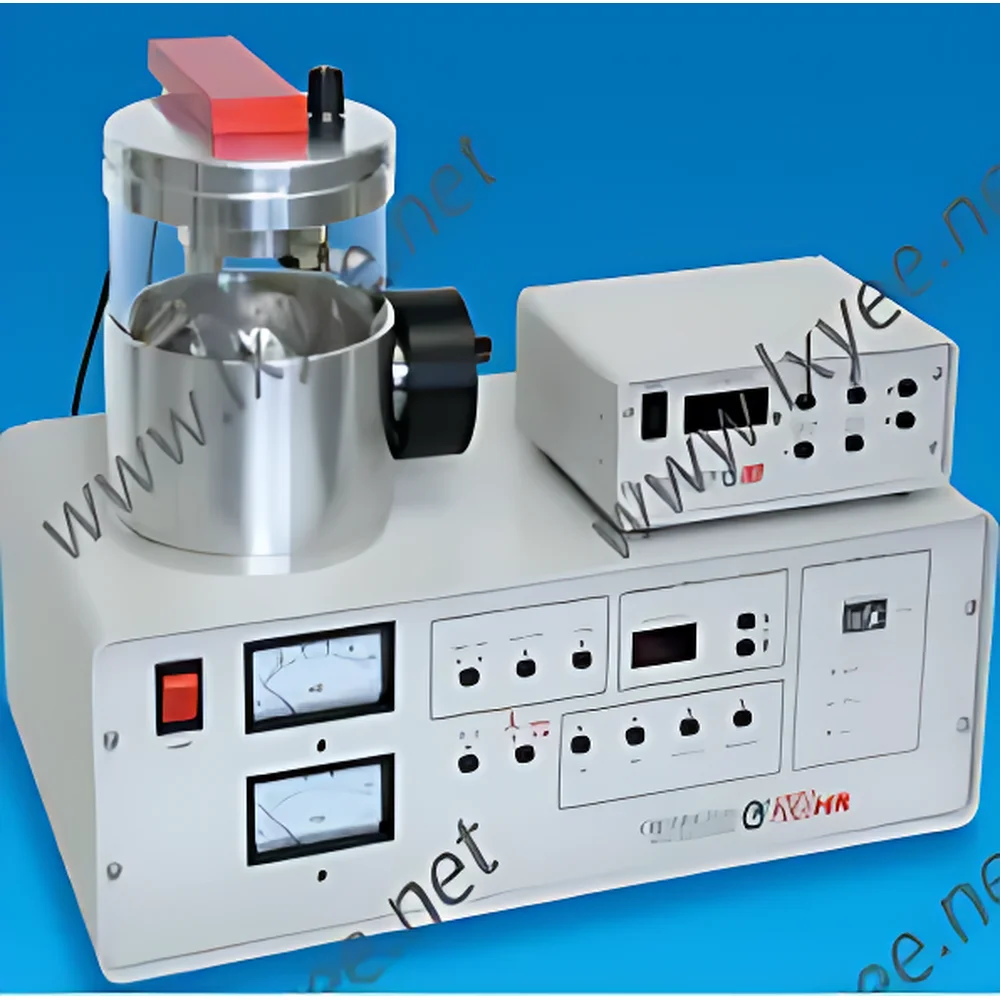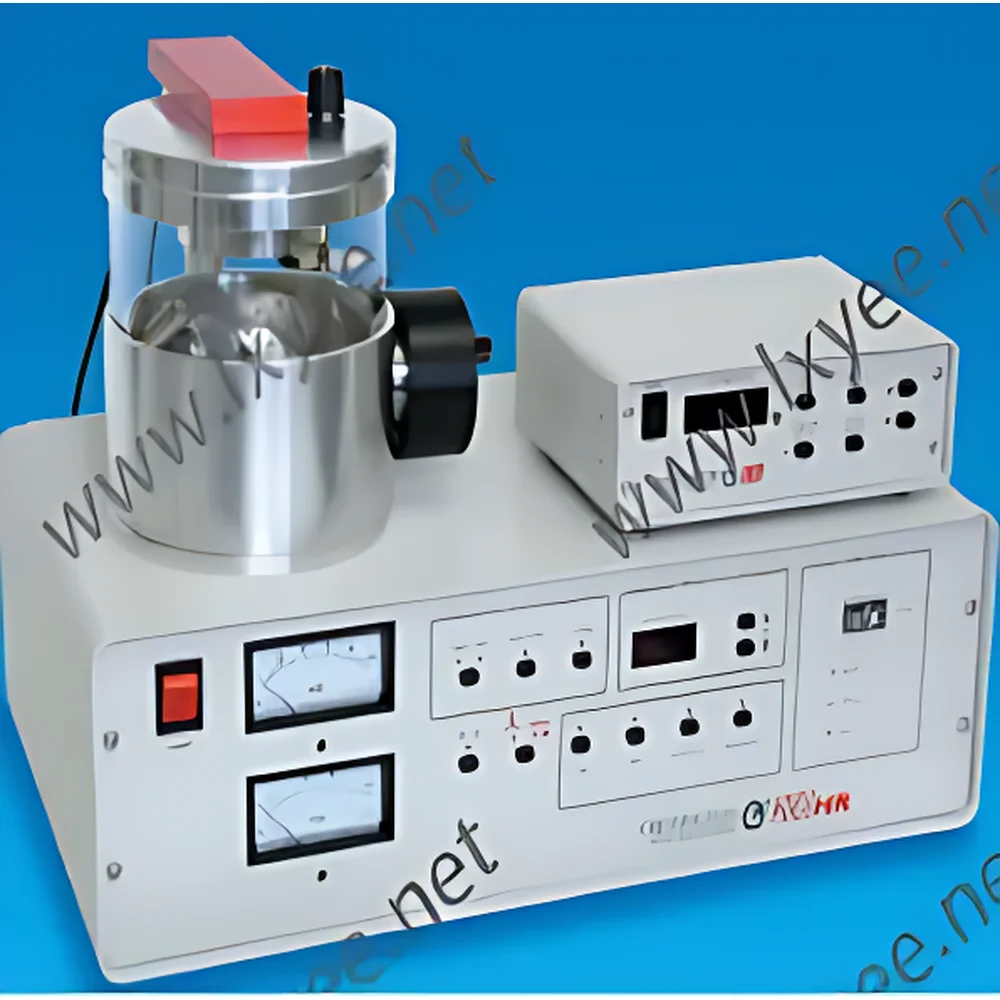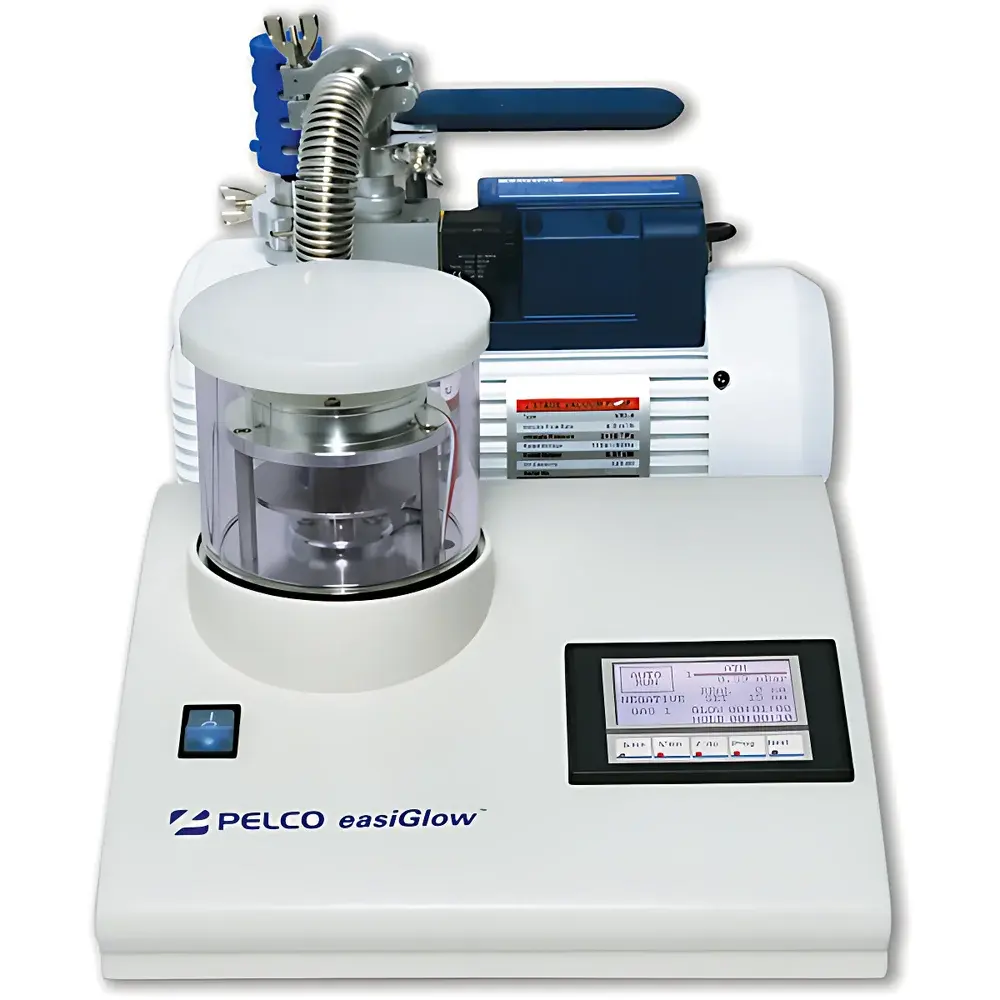
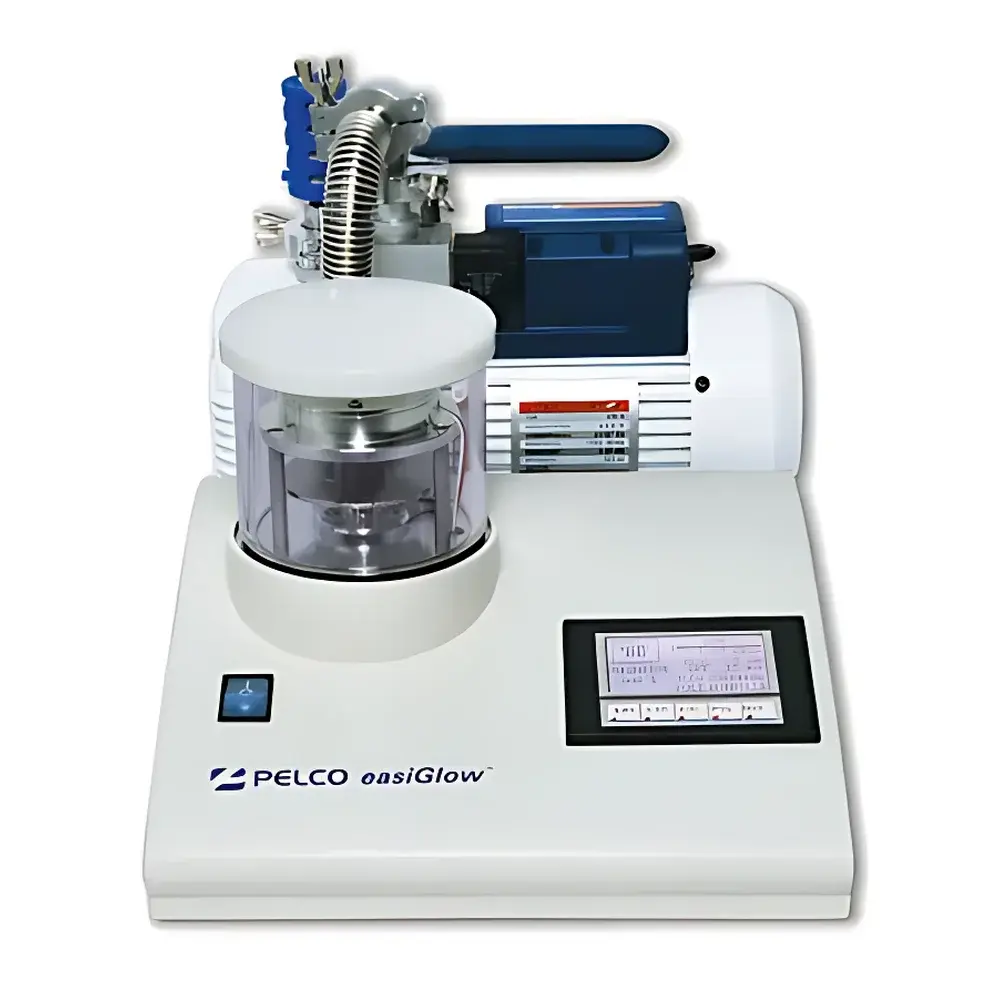
Ted Pella Glow Discharge 91000 System for TEM Grid and Support Film Treatment

| Brand | Ted Pella |
|---|---|
| Origin | USA |
| Model | Glow Discharge 91000 |
| Plasma Current | 0–30 mA |
| Power | 30 W |
| Polarity | Adjustable (Positive/Negative) |
| Sample Stage Diameter | 75 mm |
| Stage Height Adjustment | 1–25 mm |
| Processing Delay Time | 0–14,400 s |
| Processing Duration | 0–900 s |
| Chamber Dimensions | Ø120 × 100 mm |
| Inlet Ports | 2 × Ø6 mm |
| Vacuum Control | Pirani gauge, range: atmospheric pressure to 0.01 mbar |
| Operating Vacuum Range | 0.20–1.1 mbar |
| Touchscreen Display | 3-inch LED-backlit with 5 function keys |
| Control Modes | Automatic (4 programmable user protocols) and Manual |
| Safety Interlocks | Dual hardware + software vacuum interlock |
| Dimensions (Main Unit) | 305 × 292 × 230 mm |
| Weight (Main Unit) | 6.26 kg |
| Optional GD4 Vacuum Pump | 337 × 138 × 244 mm, 11 kg, pumping speed 2.5 m³/hr, ultimate vacuum 0.03 mbar |
| Power Supply | 230 V, 50 Hz, 10 A |
Ask about pricing, availability and specifications.
Overview
The Ted Pella Glow Discharge 91000 System is a precision-engineered plasma surface treatment instrument designed specifically for transmission electron microscopy (TEM) sample preparation. It utilizes low-pressure direct-current (DC) glow discharge plasma to modify the surface energy and charge characteristics of TEM support films—most commonly carbon-coated copper grids—and other electron-transparent substrates. By exposing hydrophobic carbon films to controlled argon, air, or oxygen plasma, the system introduces polar functional groups (e.g., –OH, –COOH) that render the surface hydrophilic and negatively charged—critical prerequisites for uniform aqueous dispersion of biological macromolecules, nanoparticles, or colloidal suspensions during grid blotting and vitrification. The instrument operates within a defined pressure window (0.20–1.1 mbar), where stable, non-thermal plasma is sustained between parallel electrodes under regulated DC bias. This physical-chemical process avoids thermal degradation while ensuring reproducible, nanoscale surface functionalization—essential for high-resolution cryo-EM grid preparation and quantitative TEM analysis.
Key Features
- Precision-controlled vacuum environment via electrically actuated proportional valve—eliminating manual needle-valve calibration and enabling repeatable pressure setpoints across users and sessions.
- Dual independent gas inlets supporting sequential or simultaneous introduction of inert (Ar), oxidizing (O₂), or ambient (air) plasmas—enabling tailored surface chemistry for hydrophilicity, hydrophobicity, or amine-functionalization.
- Adjustable electrode gap (1–25 mm) and optimized pressure–distance operating curve ensure uniform plasma density across the 75 mm-diameter sample stage—critical for batch processing consistency.
- Programmable automation with four user-defined protocols, including delay initiation, polarity switching (±), current ramping, and stepwise venting—minimizing operator variability and supporting GLP-compliant workflow documentation.
- Integrated dual-safety architecture: hardware-based vacuum interlock prevents high-voltage activation unless chamber pressure is within safe operational range; software enforces real-time validation of pressure, current, and timer status.
- Compact benchtop footprint (305 × 292 × 230 mm) and lightweight design (6.26 kg) facilitate integration into shared EM core facilities without dedicated infrastructure.
Sample Compatibility & Compliance
The Glow Discharge 91000 accommodates standard 200–400 mesh TEM copper grids mounted on proprietary grid holders (two fixture options included), as well as custom substrates such as silicon nitride membranes, graphene oxide films, or glass coverslips (up to 25 × 75 mm). Its plasma parameters comply with established TEM preparation guidelines referenced in ASTM E2716 (Standard Guide for Electron Microscopy Sample Preparation) and ISO/IEC 17025-accredited laboratory practices. When paired with the optional GD4 two-stage rotary vane pump (ultimate vacuum: 0.03 mbar), the system meets vacuum integrity requirements for low-contamination processing environments. All firmware logic adheres to IEC 61508 functional safety principles for laboratory equipment, and audit-trail-capable operation logs—when exported via USB—support FDA 21 CFR Part 11–aligned data integrity frameworks.
Software & Data Management
Operation is managed through an embedded 3-inch LED-backlit touchscreen interface with five context-sensitive function keys. No external PC is required for routine use; however, protocol parameters (gas type, pressure setpoint, current limit, polarity, delay/processing times) are stored in non-volatile memory and can be exported as CSV files for traceability. Each user program includes timestamped execution history, including actual chamber pressure, measured plasma current, and final venting sequence confirmation. While the base system does not include network connectivity, its deterministic state-machine architecture allows seamless integration into centralized lab management systems via RS-232 or TTL-level serial triggers—enabling automated scheduling, remote status monitoring, and synchronization with downstream instruments such as plunge freezers or FIB-SEM workstations.
Applications
- Hydrophilization of carbon support films prior to negative-stain or cryo-EM grid preparation.
- Surface activation of hydrophobic substrates (e.g., PDMS, polystyrene) for microfluidic device bonding or cell-adhesion studies.
- Controlled oxidation of graphene or transition metal dichalcogenide monolayers to tune work function and carrier concentration.
- Removal of adventitious hydrocarbon contamination from electron-transparent windows used in in situ TEM holders.
- Pre-treatment of silica or alumina nanoparticles to enhance colloidal stability in aqueous suspension prior to TEM dispersion.
- Reproducible generation of positively charged surfaces using nitrogen or ammonia plasma for DNA or protein immobilization assays.
FAQ
What gases are compatible with the Glow Discharge 91000 system?
Argon, oxygen, air, nitrogen, and forming gas (N₂/H₂) are routinely used; compatibility with other dry, non-corrosive gases requires verification of chamber material compatibility and pressure–breakdown thresholds.
Can the system treat non-conductive samples such as polymer films or biological tissues?
Yes—provided samples are mounted on conductive substrates (e.g., metal stubs or doped silicon wafers) to prevent charge accumulation; insulating layers thicker than ~1 µm may require reduced current or pulsed mode operation.
Is the plasma generated in the system capacitive or inductive?
It is a DC-driven, parallel-plate glow discharge configuration—distinct from RF or microwave plasma sources—optimized for gentle, low-energy surface modification rather than bulk etching.
How frequently should the electrodes be cleaned or replaced?
Under typical usage (≤5 cycles/day), stainless-steel electrodes require cleaning every 3–6 months using isopropanol and lint-free wipes; no scheduled replacement is specified per manufacturer documentation.
Does the system meet electromagnetic compatibility (EMC) standards for installation in shielded EM rooms?
Yes—the unit complies with EN 61326-1:2013 for laboratory equipment and generates negligible RF emission beyond 30 MHz, making it suitable for proximity to sensitive electron optical columns.