
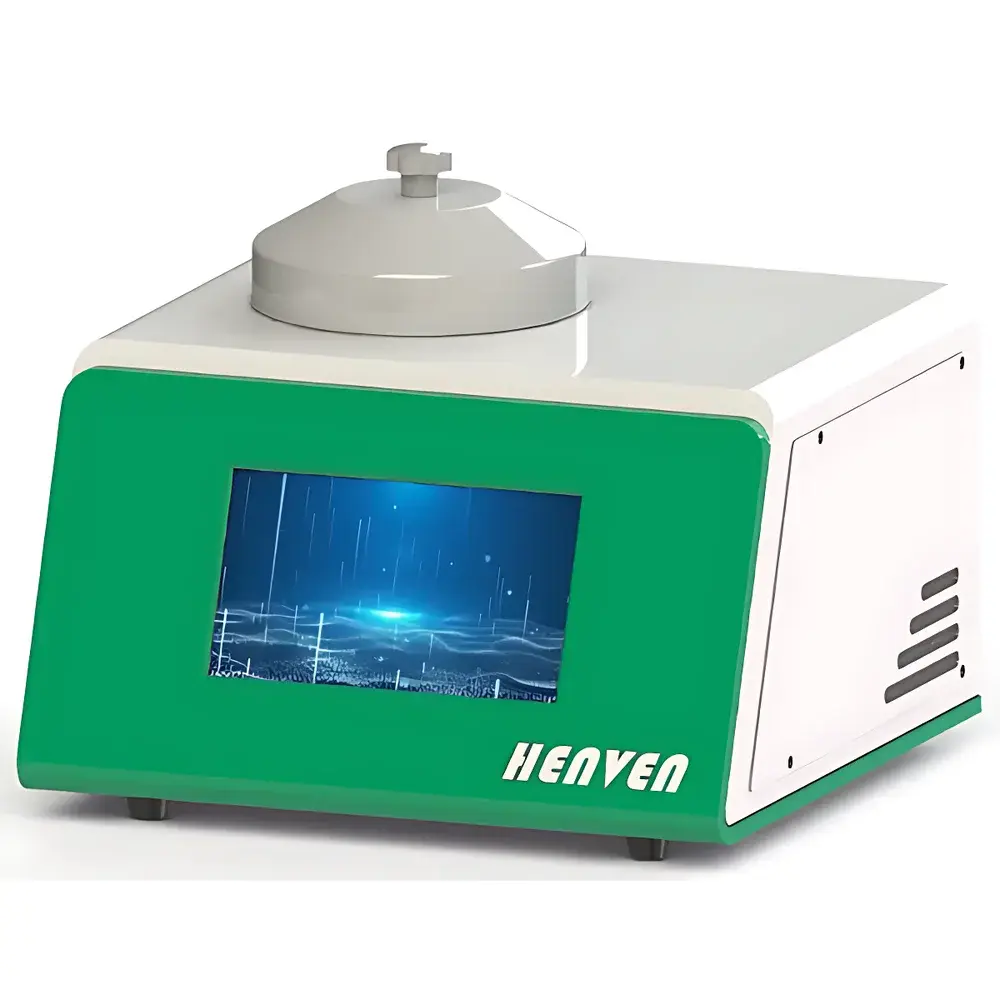
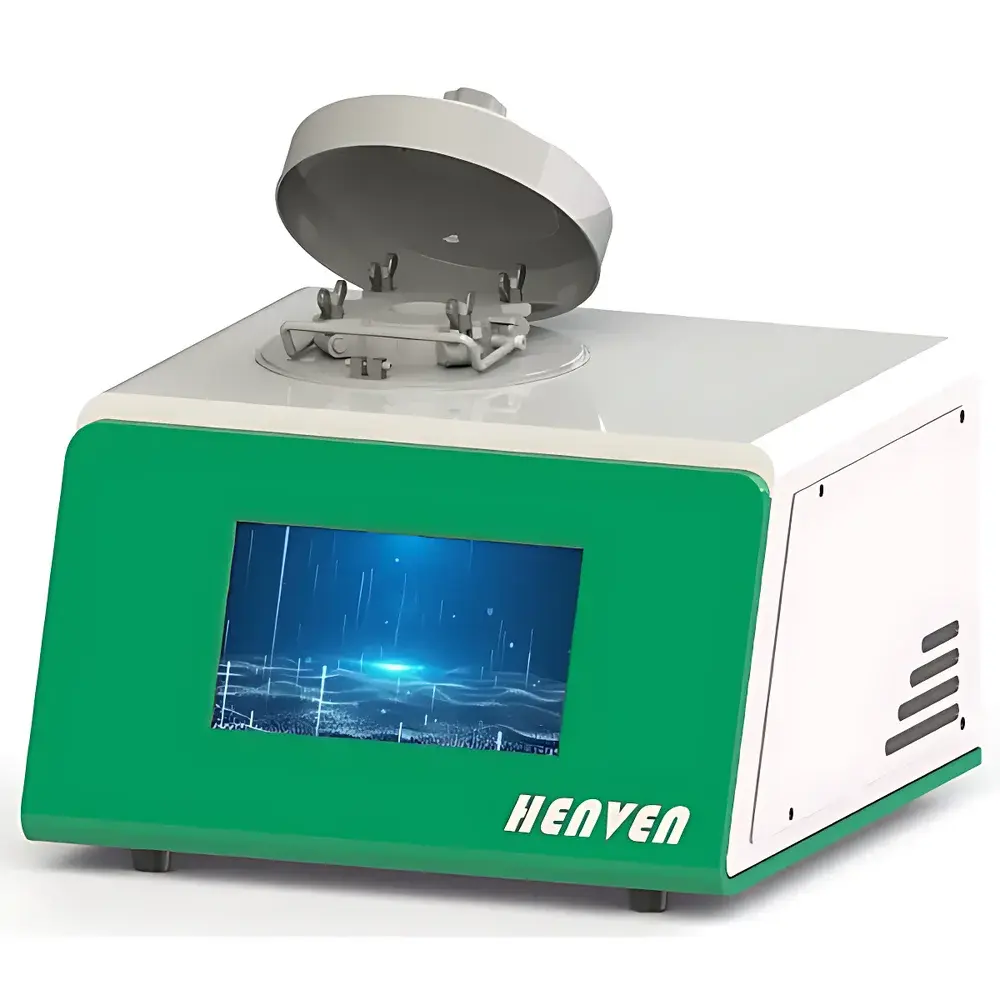
High-Pressure Dynamic Stability Tester (Henven HP-DST Series)
| Brand | Henven |
|---|---|
| Origin | Beijing, China |
| Manufacturer Type | Direct Manufacturer |
| Model | HP-DST Series |
| Temperature Range | Ambient to 150 °C |
| Temperature Control Accuracy | ≤ ±0.2 °C |
| Maximum Pressure Rating | 16 MPa |
| Pressure Monitoring Range | 0–600 kPa |
| Sample Basket Volume | 50 mL |
| Gas Purification Method | Vacuum-assisted absorption into chemical scrubbing solution |
| Alarm System | Multi-modal (audible buzzer, visual LED, GUI color flash & pop-up alert) |
| Control Architecture | ARM-based embedded system with integrated touchscreen HMI |
| Data Acquisition | Synchronized sampling of bath temperature, sample temperature, pressure, and alarm status |
| Online Gas Sampling Interface | Dedicated port for real-time effluent gas transfer to external analytical instruments (e.g., MS, GC-MS, FTIR) |
| Construction Material | 304 stainless steel (pressure vessel, heating chamber, gas path components) |
| Power Supply | 220 V AC, 2000 W |
| Compliance | Designed per GB/T 29875–2013 (Chinese standard for propellant thermal stability testing), compatible with ASTM E2070 and ISO 11270 methodologies for energetic material aging assessment |
Overview
The Henven HP-DST Series High-Pressure Dynamic Stability Tester is an engineered platform for accelerated thermal–pressure aging studies of energetic materials under controlled, reproducible conditions. It operates on the principle of dynamic isothermal decomposition monitoring—where solid propellants, initiators, or pyrotechnic formulations are subjected to elevated temperature and sustained hydrostatic pressure within a sealed, inert-atmosphere reaction chamber. This simulates long-term storage degradation pathways while compressing timeframes from months or years to hours or days. The system integrates precision oil-bath temperature regulation, high-integrity pressure containment, real-time parametric logging, and modular gas-phase effluent handling—all coordinated via a deterministic ARM-based embedded controller. Unlike static oven-based methods, the HP-DST enables active pressure modulation and continuous off-gas sampling, permitting correlation between evolved gas composition (e.g., NO₂, CO, N₂O, HCN) and kinetic decomposition parameters such as induction time, mass loss rate, and activation energy.
Key Features
- Robust 304 stainless steel construction ensures structural integrity at up to 16 MPa working pressure and sustained exposure to corrosive decomposition byproducts.
- Dual-stage temperature control: high-stability silicone oil bath (ambient to 150 °C) with PID algorithm delivering ≤ ±0.2 °C setpoint accuracy over 24-hour runs.
- Integrated vacuum-assisted gas scrubbing system routes reactive effluents through standardized absorption media (e.g., NaOH or KMnO₄ solutions), mitigating operator exposure and environmental release.
- Multi-sensor alarm architecture monitors real-time deviations in temperature, pressure, and system state—triggering simultaneous audible (buzzer), visual (LED strobe), and software-level alerts (GUI color inversion + pop-up notification).
- ARM-based embedded control core supports deterministic task scheduling, non-volatile parameter storage, and seamless USB/RS485 data export without host PC dependency.
- Standardized 6-mm Swagelok®-compatible gas outlet port enables direct coupling to external analytical instrumentation including quadrupole mass spectrometers, Fourier-transform infrared spectrometers, or micro-GC systems for time-resolved speciation.
Sample Compatibility & Compliance
The HP-DST accommodates solid-phase energetic samples—including single-base, double-base, and composite propellants; primary and secondary explosives (e.g., PETN, RDX); and pyrotechnic compositions—in standardized 50 mL stainless steel sample baskets. Its design conforms to the mechanical and procedural requirements of GB/T 29875–2013 (“Test method for thermal stability of propellants”) and aligns functionally with ASTM E2070 (“Standard Test Method for Determining Thermal Stability of Energetic Materials by Vacuum Stability”) and ISO 11270 (“Explosives — Determination of thermal stability”). While not certified to ATEX or IECEx standards, its 304 SS pressure boundary, grounded chassis, and fail-safe pressure relief pathway support operation in Class 1, Division 2 laboratory environments when installed per NFPA 495 and local fire codes. All firmware and data logs retain full traceability for GLP-compliant reporting.
Software & Data Management
The embedded touchscreen HMI provides intuitive access to test setup, live parameter visualization (temperature vs. time, pressure vs. time, alarm history), and post-run summary reports. Raw sensor data—including thermocouple readings, pressure transducer outputs, and event timestamps—are logged at 1 Hz resolution to internal flash memory and exportable via USB mass storage in CSV format. No proprietary drivers or cloud dependencies are required; exported datasets are fully compatible with MATLAB, Python (pandas), or commercial kinetics analysis tools (e.g., Kinetics Neo, Thermo-Calc). Audit trails record user login, parameter changes, and alarm activations—supporting 21 CFR Part 11 readiness when paired with institutional electronic signature policies.
Applications
- Accelerated aging studies of nitrocellulose- and nitroglycerin-based propellants under simulated long-term storage conditions.
- Comparative stability ranking of novel binder systems (e.g., GAP, BAMO, poly-NIMMO) in composite solid rocket motor formulations.
- Reaction gas profiling during thermal decomposition to identify early-warning markers (e.g., NO₂ onset temperature, CO/N₂O ratio shifts) predictive of autocatalytic behavior.
- QC/QA validation of lot-to-lot consistency for military-grade detonators and booster charges.
- Graduate-level experimental instruction in energetic materials chemistry, combustion kinetics, and safety-critical process engineering.
FAQ
What safety certifications does the HP-DST hold?
The system complies with GB/T 29875–2013 and incorporates mechanical safety features aligned with ISO 13857 (safe distances) and IEC 61000-6-2 (EMC immunity). It is not intrinsically safe-certified but may be operated in non-hazardous classified areas with appropriate ventilation and procedural controls.
Can the instrument operate unattended overnight?
Yes—its embedded controller maintains stable operation without host PC intervention. All alarms trigger automatic test suspension and persistent log entries. Remote monitoring requires optional Ethernet/Wi-Fi module integration.
Is calibration documentation provided with shipment?
Each unit ships with factory calibration certificates for the PT100 temperature sensor and piezoresistive pressure transducer, traceable to NIM (National Institute of Metrology, China) standards.
How is gas-phase sampling synchronized with thermal events?
The embedded controller triggers gas valve actuation at user-defined intervals (e.g., every 5 minutes) or upon detection of pressure rise thresholds (>0.5 kPa/min), ensuring temporal alignment between effluent composition and decomposition kinetics.
What maintenance intervals are recommended?
Oil bath fluid replacement every 12 months; O-ring inspection and replacement every 6 months; pressure transducer recalibration annually or after 500 test cycles—whichever occurs first.



