
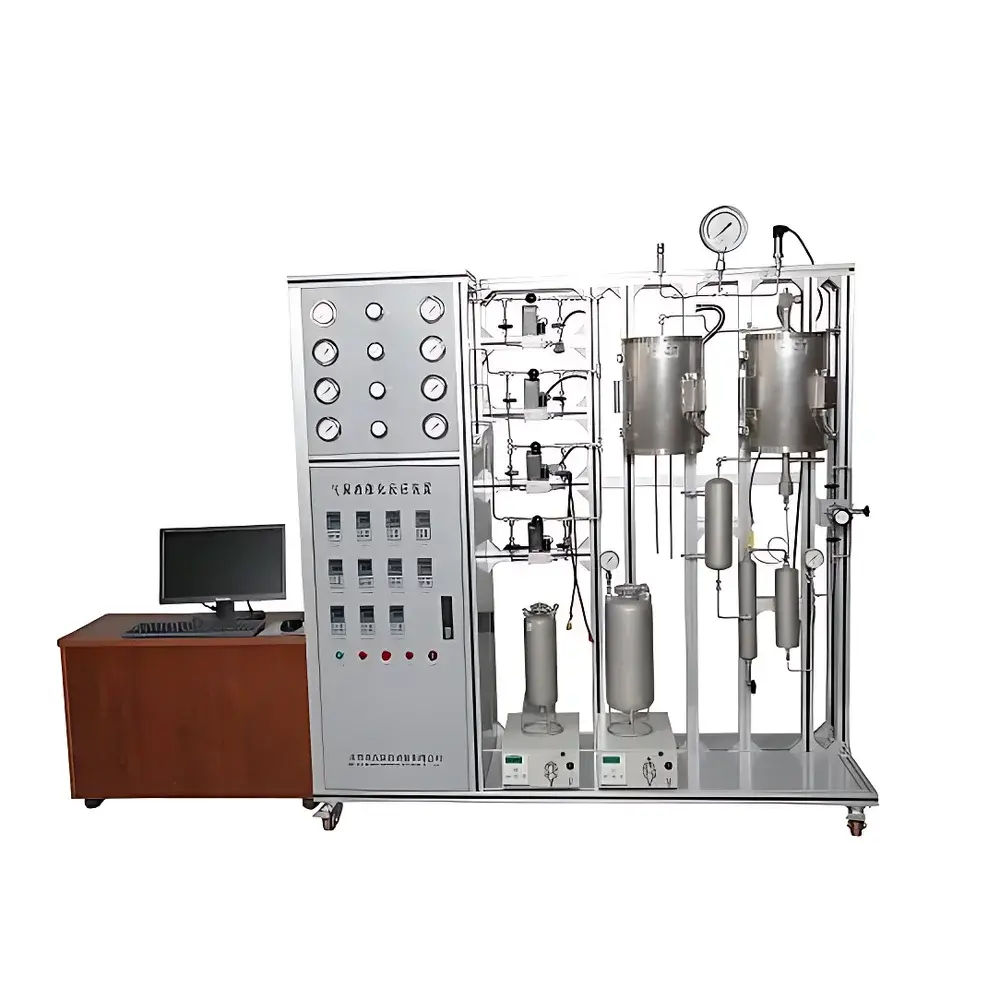
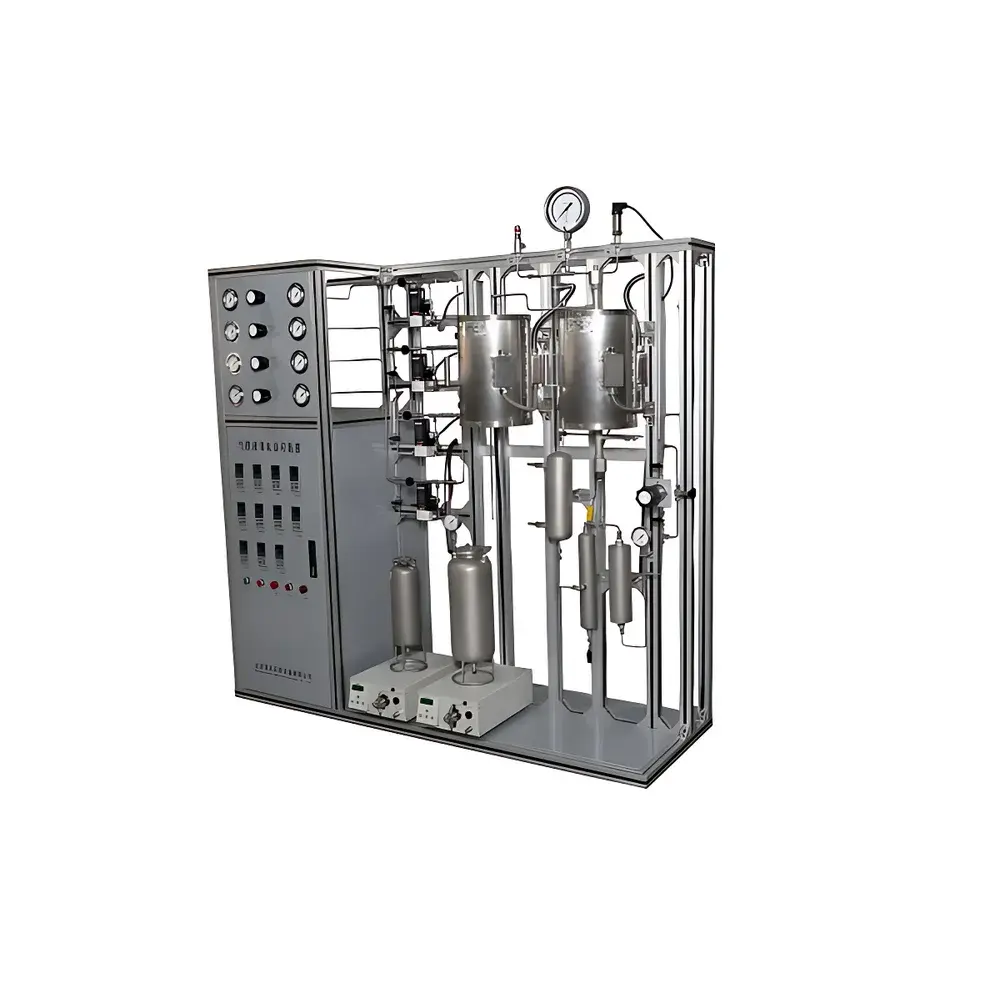
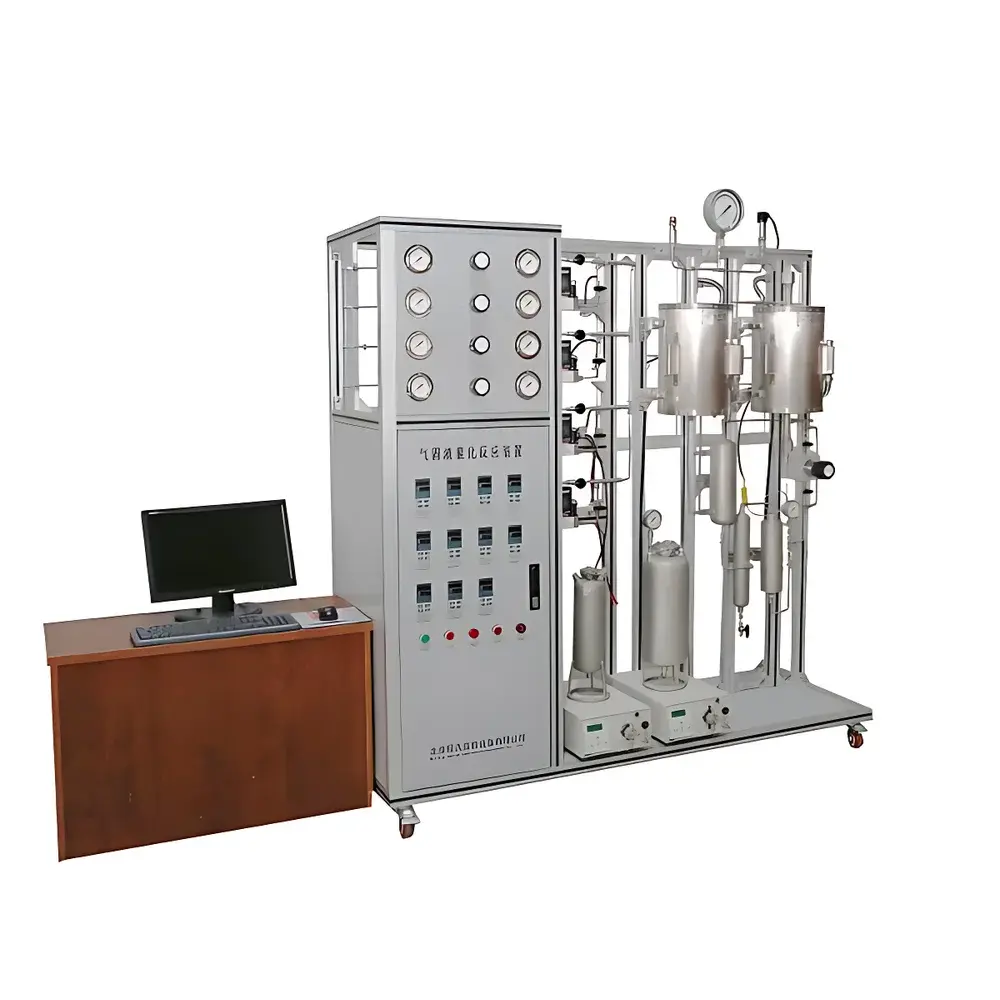
Hengjiu HJQGY Gas-Solid-Liquid Catalytic Reaction System
| Brand | Hengjiu (Henven) |
|---|---|
| Origin | Beijing, China |
| Manufacturer Type | Direct Manufacturer |
| Model | HJQGY |
| Reactor Catalyst Capacity | 10 mL |
| Maximum Design Temperature | 600 °C |
| Maximum Operating Pressure | 5.0 MPa |
| Control Interface | Integrated LCD Touchscreen with Embedded RuiMai Fluidized-Bed Control System |
| Temperature Control | Segmented Linear Ramp & High-Stability Isothermal Operation |
| Safety System | Independent Dual-Channel Temperature/Pressure Monitoring with Threshold-Based Alarm and Auto-Response Protocol |
| Structural Frame | Heavy-Duty Monolithic Stainless Steel |
| Compliance | Designed for GLP-aligned laboratory environments |
Overview
The Hengjiu HJQGY Gas-Solid-Liquid Catalytic Reaction System is an integrated bench-scale experimental platform engineered for mechanistic studies and process optimization of heterogeneous catalytic reactions involving simultaneous gaseous, solid (catalyst), and liquid-phase reactants. It operates on the fundamental principles of fixed-bed or fluidized-bed catalysis—where reaction kinetics, mass transfer limitations, and thermal management are rigorously controlled and monitored in real time. The system employs a modular reactor core housed within a rigid monolithic stainless steel frame, enabling stable operation under elevated temperature and pressure conditions up to 600 °C and 5.0 MPa. Its architecture supports both steady-state kinetic evaluation and dynamic transient response analysis, making it suitable for catalyst screening, deactivation studies, and reaction pathway validation under industrially relevant conditions.
Key Features
- Embedded high-resolution LCD touchscreen interface with intuitive navigation for full parameter configuration—including temperature ramp rates, pressure setpoints, gas/liquid flow profiles, and fluidization velocity thresholds.
- RuiMai fluidized-bed control algorithm integrated into the embedded PLC-based controller, enabling closed-loop regulation of bed expansion, differential pressure, and minimum fluidization velocity using real-time feedback from distributed pressure transducers and thermal mass flow meters.
- Segmented axial heating zones (up to three independently controlled sections) allow precise linear temperature ramping (0.1–10 °C/min) and long-duration isothermal operation (±0.5 °C stability over 72 h) across the catalyst bed.
- Dual-redundant temperature and pressure monitoring at critical nodes—reactor inlet, catalyst zone midpoint, and outlet—with independent analog signal conditioning and fail-safe interlock logic compliant with IEC 61508 SIL-2 functional safety guidelines.
- Stainless steel 316L wetted parts throughout main process lines, including Swagelok®-certified fittings, bellows-sealed valves, and Hastelloy-C276 pressure transmitters rated for corrosive service.
- Modular utility integration: standardized interfaces for external gas supply manifolds (with MFCs), liquid dosing pumps (HPLC-grade compatibility), condensate traps, and online GC/FID sampling ports.
Sample Compatibility & Compliance
The HJQGY system accommodates powdered, pelleted, or extruded catalysts with particle sizes ranging from 20 µm to 2 mm, supporting both trickle-bed and expanded-bed configurations. Liquid feedstocks include aqueous solutions, organic solvents (e.g., methanol, toluene, THF), and viscous feeds up to 500 cP. Gaseous streams may consist of H₂, CO, CO₂, NH₃, O₂, N₂, or custom mixtures with dew point control. All sensors meet NIST-traceable calibration requirements, and data acquisition complies with ALCOA+ principles (Attributable, Legible, Contemporaneous, Original, Accurate, Complete, Consistent, Enduring, Available). The system’s operational logs and parameter history support audit readiness for GLP and pre-GMP research environments.
Software & Data Management
The onboard control software provides synchronized timestamped logging of ≥16 analog channels (temperature, pressure, flow, valve position) at user-selectable intervals (100 ms–5 min). Raw data exports to CSV and HDF5 formats; optional OPC UA server enables integration with LabVIEW, MATLAB, or enterprise LIMS platforms. Audit trails record all parameter changes, user logins, alarm events, and system resets in accordance with FDA 21 CFR Part 11 requirements when paired with validated electronic signature modules. Remote monitoring via Ethernet/Wi-Fi is supported through TLS 1.2-secured HTTP API endpoints.
Applications
- Hydrogenation, hydrodeoxygenation (HDO), and hydrodesulfurization (HDS) kinetics under realistic partial-pressure conditions.
- Catalyst lifetime assessment via time-on-stream (TOS) monitoring of conversion selectivity drift and coke deposition modeling.
- Reaction calorimetry coupling—when integrated with external heat-flow sensors—for enthalpy-of-reaction determination.
- Process intensification studies comparing fixed-bed vs. fluidized-bed performance under identical thermodynamic constraints.
- Development of structure–activity relationships (SAR) for supported metal, metal oxide, and zeolitic catalysts.
- Training platform for chemical engineering pedagogy in transport phenomena, reactor design, and safety-critical automation.
FAQ
What catalyst forms are compatible with the HJQGY reactor?
Powdered, extruded, or spherical catalysts between 20 µm and 2 mm in diameter can be loaded directly into the 10 mL reactor volume; fluidization behavior is tunable via adjustable gas velocity and distributor plate design.
Does the system support automated pressure ramping during reaction?
Yes—pressure setpoints are programmable as time-dependent profiles, with rate limits and hold steps; the back-pressure regulator responds dynamically to maintain target values within ±0.02 MPa accuracy.
Can third-party analytical instruments be interfaced with the HJQGY?
All analog I/O channels are accessible via standard 4–20 mA / 0–10 V terminals; digital communication uses Modbus RTU over RS-485 or TCP/IP, enabling synchronization with GC, MS, or FTIR systems.
Is validation documentation available for regulatory submissions?
IQ/OQ protocols, sensor calibration certificates (NIST-traceable), and firmware version logs are provided upon request; full 21 CFR Part 11 compliance requires site-specific URS and computer system validation.



