
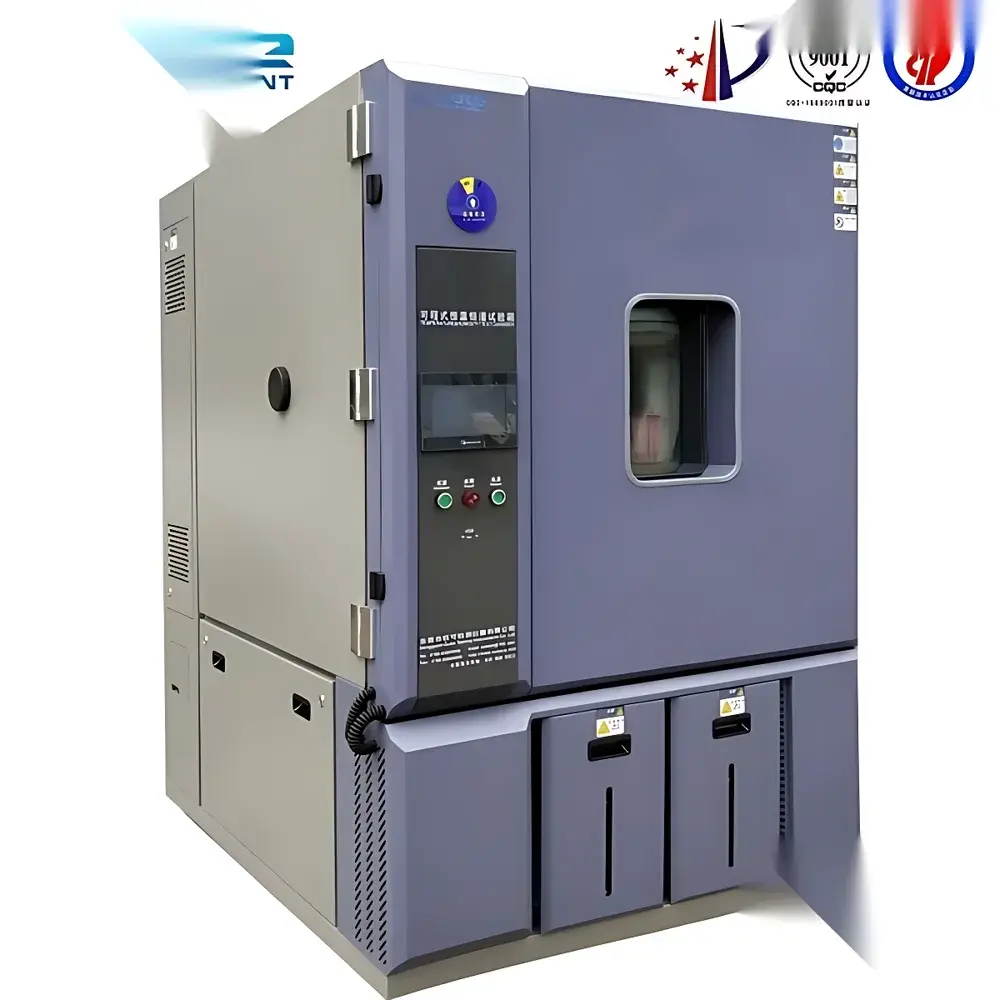
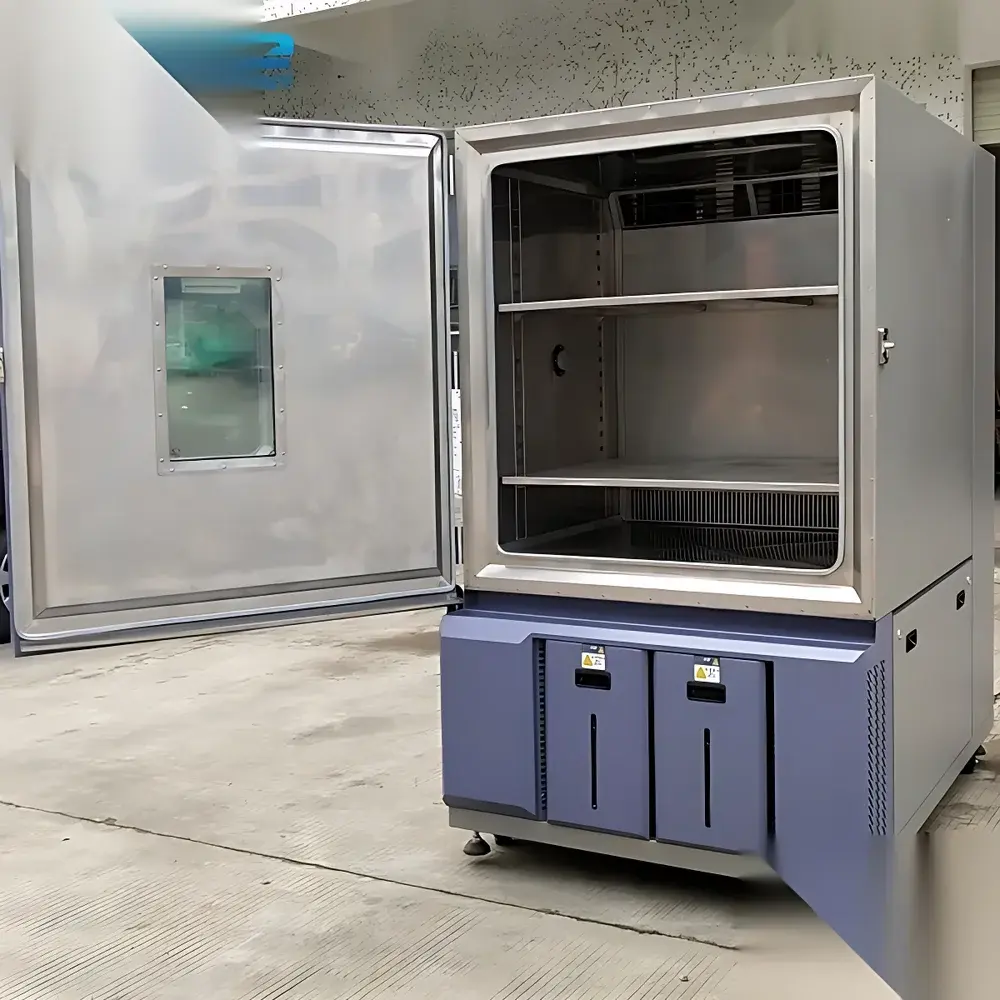
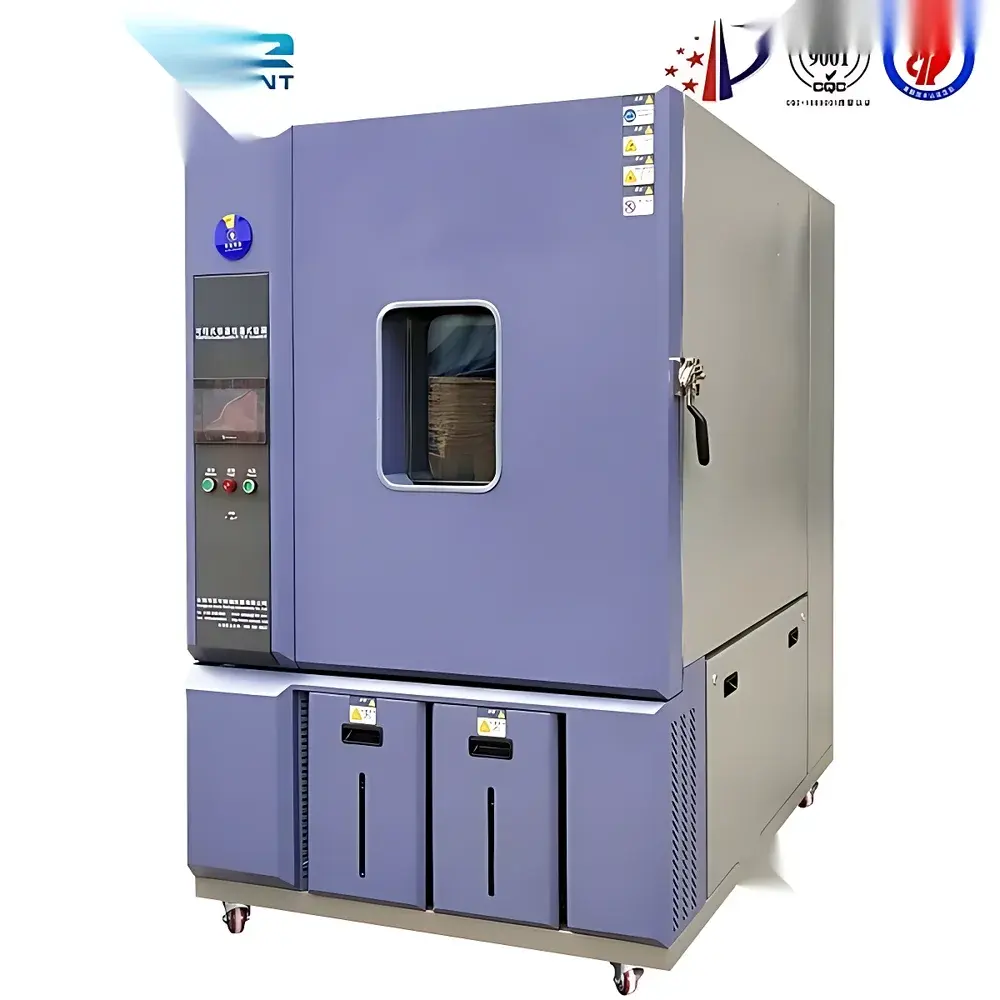
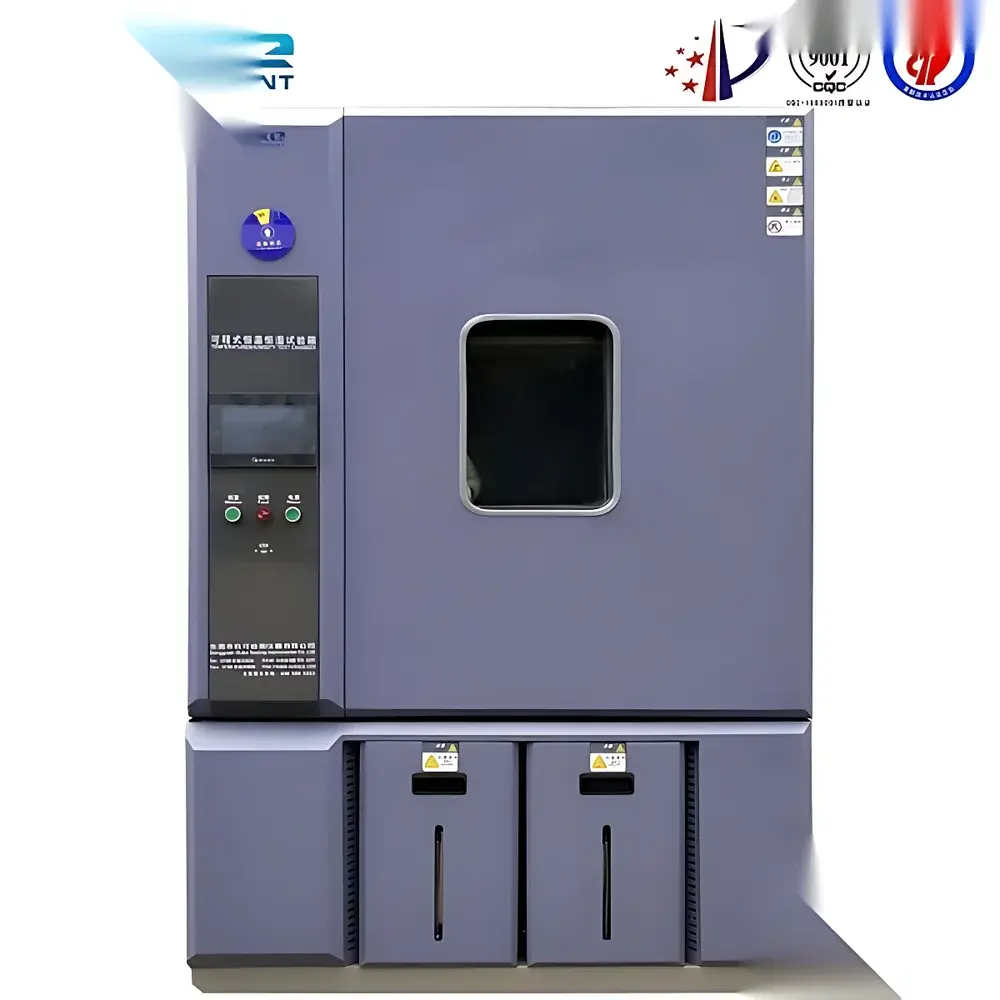
Environmental Test Chamber – Temperature and Humidity Controlled Aging Chamber (OEM/ODM Manufacturer Supply)
| Key | Brand: Other Brands |
|---|---|
| Origin | Imported |
| Manufacturer Type | Authorized Distributor |
| Price | USD 2,650 (excl. tax & shipping) |
Overview
The Environmental Test Chamber – Temperature and Humidity Controlled Aging Chamber is an engineered system designed for accelerated aging, reliability validation, and environmental stress screening (ESS) of electronic components, automotive parts, polymers, packaging materials, and aerospace assemblies. It operates on a dual-stress principle—precisely coupling controlled thermal energy transfer with regulated moisture diffusion—to simulate long-term ambient degradation mechanisms under reproducible laboratory conditions. The chamber employs a balanced temperature-humidity control (BTHC) architecture, wherein proportional-integral-derivative (PID) algorithms dynamically modulate solid-state relays (SSRs) to synchronize heating, humidification, and refrigeration outputs with real-time thermal and latent load demands. This closed-loop equilibrium ensures stable setpoint maintenance across wide operational ranges without overshoot or drift—critical for compliance-driven test protocols requiring traceable, repeatable environmental profiles.
Key Features
- Robust safety architecture: dry-run protection for steam humidifiers, independent overtemperature cut-off (dual-stage), low-water-level interlock, compressor overload/overheat/overcurrent monitoring, high-pressure refrigerant switch, molded-case circuit breaker, and residual-current device (RCD) for personnel and equipment protection.
- Optimized thermodynamic design: full-capillary tube expansion system (vs. conventional thermostatic expansion valves) enables finer refrigerant flow regulation, improved humidity recovery stability, and smoother ramp transitions—reducing thermal shock risk during rapid cycling.
- Human-centered interface: curved-profile stainless steel enclosure with non-slip, ergonomic flat-handle access; intuitive touchscreen controller supporting multi-segment programmable profiles, real-time trend logging, and user-level password protection.
- Modular scalability: standard chamber dimensions exclude protruding components (e.g., condensate drain lines, service ports); custom internal volume, door configuration, and mounting interface options available per customer engineering specifications.
- Thermal-hygrometric performance: rated cooling water supply range: 10–28°C at 0.1–0.3 MPa; all temperature ramp rates specified as air-volume average (per IEC 60068-3-5), not product-core response—ensuring metrological transparency in qualification reporting.
Sample Compatibility & Compliance
This chamber accommodates diverse sample geometries—including PCB assemblies, sealed enclosures, elastomeric gaskets, coated metal substrates, and medical device packaging—without compromising uniformity. Internal airflow distribution is validated per ISO 16750-4 (road vehicles) and IEC 60068-3-5 (environmental testing guidance) for ±2°C temperature uniformity and ±3% RH homogeneity across working volume. The system complies with multiple international standards for environmental stress screening and qualification testing, including GB/T 2423.1–2023 (cold test), GB/T 2423.2–2023 (dry heat), IEC 60068-2-1 (cold), IEC 60068-2-2 (dry heat), GJB 1032A–2021 (ESS methodology), MIL-STD-2164A (electronic equipment ESS), and GJB 234–2022 (quantitative ESS). All control firmware supports audit-ready event logging aligned with GLP/GMP documentation requirements.
Software & Data Management
The embedded controller records timestamped temperature and relative humidity values at user-configurable intervals (1s–60min), storing up to 10,000 hours of raw data internally. Export formats include CSV and PDF reports with digital signatures. Optional Ethernet/Wi-Fi connectivity enables remote monitoring via secure HTTPS interface and integration into centralized LIMS or MES platforms. Firmware conforms to FDA 21 CFR Part 11 principles: electronic signatures, role-based access control, immutable audit trails, and automatic backup to external USB storage. Calibration certificates are traceable to NIST or equivalent national metrology institutes.
Applications
- Accelerated life testing of polymer seals and adhesives under combined thermal cycling and humidity soak.
- Environmental stress screening (ESS) of avionics modules prior to HALT/HASS deployment.
- Validation of moisture barrier integrity in pharmaceutical blister packaging (per USP ).
- Corrosion susceptibility assessment of zinc-coated fasteners per ASTM B117 salt fog correlation studies.
- Pre-compliance screening for automotive ECUs against ISO 16750-4 temperature/humidity profiles.
- Material compatibility testing of conformal coatings under cyclic condensation per IPC-CC-830B.
FAQ
What is the difference between “air-average ramp rate” and “product temperature ramp rate”?
Air-average ramp rate reflects the mean change of chamber air temperature over time—as defined in IEC 60068-3-5—and serves as a standardized metric for comparing chamber performance. Product temperature response depends on mass, thermal conductivity, and placement, and must be measured separately using calibrated thermocouples.
Can this chamber support unattended operation for 168-hour continuous tests?
Yes—provided cooling water supply remains within specified parameters (10–28°C, 0.1–0.3 MPa) and ambient lab conditions stay within 25±6°C, the system’s redundant safety logic and self-diagnostic firmware enable fully autonomous execution of extended qualification cycles.
Is calibration certification included with shipment?
A factory calibration report (traceable to national standards) is provided. On-site accredited calibration services and annual recalibration plans are available upon request.
How does the BTHC system improve long-term stability versus on/off control?
BTHC continuously balances heating/humidifying output against chamber losses via PID-regulated SSRs—eliminating thermal inertia-induced oscillations and maintaining ±0.5°C / ±2% RH stability over 72-hour holds, essential for aging studies requiring minimal parameter deviation.



