
ZEISS COMET L3D Blue Light 3D Scanning System for Automotive & Precision Industrial Applications
| Brand | ZEISS |
|---|---|
| Origin | Germany |
| Manufacturer Type | Authorized Distributor |
| Origin Category | Imported |
| Model | COMET L3D |
| Price Range | USD 14,000 – 70,000 |
Overview
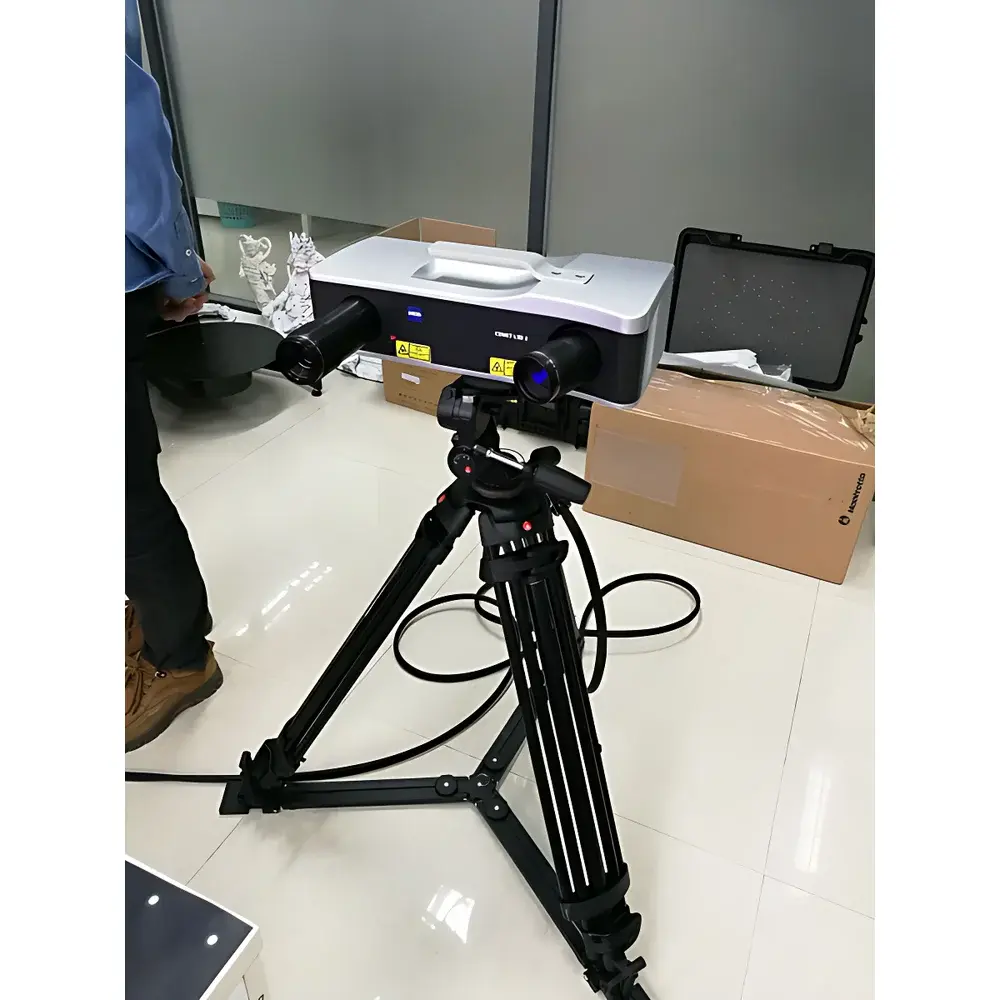
The ZEISS COMET L3D is a high-precision, non-contact blue light 3D scanning system engineered for metrology-grade digitization of automotive components, industrial parts, cultural heritage artifacts, jewelry, and design prototypes. Based on structured light triangulation with LED-based blue light projection, the system captures surface geometry by analyzing the deformation of precisely calibrated light patterns across an object’s surface. Unlike contact-based CMMs or articulated arms, the COMET L3D enables rapid, distortion-free acquisition of soft, fragile, or thermally sensitive materials—including foam, elastomers, thin-walled plastic housings, and aged organic artifacts—without mechanical loading or surface preparation. Its optical architecture is optimized for repeatability in controlled industrial environments, delivering traceable dimensional data compliant with ISO 10360 and VDI/VDE 2634 Part 2 standards for optical 3D measuring systems.
Key Features
- Blue LED structured light illumination (450–490 nm) for high signal-to-noise ratio and reduced ambient light interference
- Two resolution configurations: 2 MP (1600 × 1200) and 5 MP (2448 × 2050) sensor options for scalable accuracy vs. throughput trade-offs
- Three calibrated measurement volumes: 100 mm, 200 mm, and 400 mm working fields—supporting parts from engine sensors to full door panels
- Point spacing down to 50 µm (at 100 mm volume), enabling sub-100 µm volumetric accuracy per VDI/VDE 2634 calibration reports
- Single-frame acquisition time as low as 1.5 seconds per scan, with full 360° automated multi-view alignment via integrated rotary stages
- Modular motion integration: COMETrotary (single-axis, 30 kg capacity) and COMETdual rotary (dual-axis tilt + rotation, 20 kg capacity), both CANbus-controlled and synchronized with COMETplus software
- Ruggedized optical head design with thermal stabilization, suitable for integration into production-line inspection cells or metrology labs
Sample Compatibility & Compliance
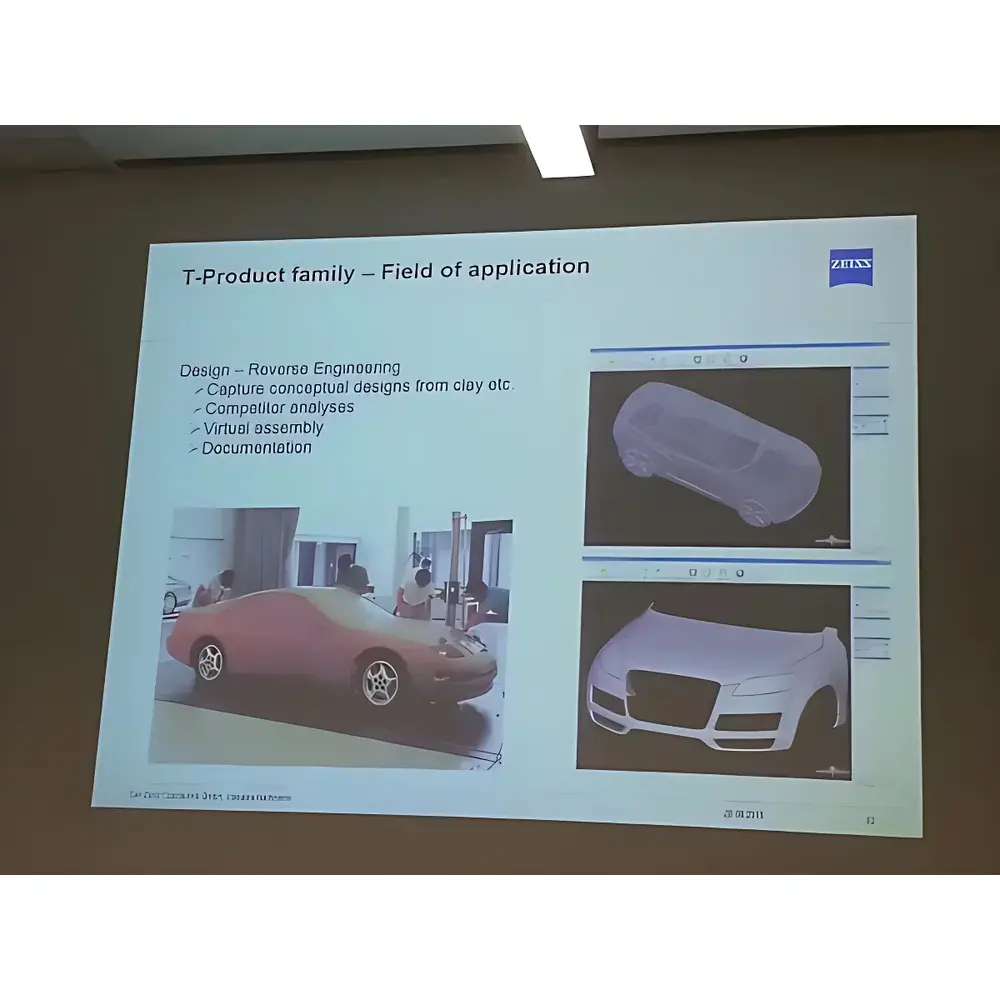
The COMET L3D accommodates a broad spectrum of reflective and matte surfaces without mandatory spray coating—enabled by adaptive exposure control and polarization filtering. It is routinely deployed for OEM automotive applications including A-surface validation, Class-A clay model digitization, trim component GD&T verification (per ASME Y14.5), and reverse engineering of legacy tooling where CAD is unavailable. In cultural heritage contexts, it meets ICOM-CC guidelines for non-invasive documentation of sculptures, archaeological finds, and archival objects. System compliance includes CE marking, RoHS, and conformity with EU Machinery Directive 2006/42/EC. Measurement uncertainty budgets are documented per ISO/IEC 17025-accredited calibration procedures performed by Steinbichler-certified service centers.
Software & Data Management
COMETplus serves as the unified platform for acquisition, registration, mesh generation, and deviation analysis. The software supports automatic multi-view alignment using markerless or coded-target strategies, iterative closest point (ICP) refinement, and hybrid alignment combining geometric primitives with reference points. STL export is optimized for downstream use in CAE simulation (ANSYS, HyperMesh), CAM programming (PowerMill, Mastercam), and GD&T reporting (PolyWorks Inspector, GOM Inspect). Audit-trail functionality records all processing steps—including filter parameters, alignment transformations, and user credentials—for GLP/GMP-aligned workflows. Integration with enterprise PLM systems (Teamcenter, Windchill) is supported via standardized XML and STEP AP242 interfaces. Batch scripting and API access (C++/Python SDK) allow embedding into automated QA stations or digital twin pipelines.
Applications
- Automotive: Body-in-white gap-and-flush analysis, prototype validation against Class-A surfacing data, casting/mold wear monitoring
- Tooling & Die Making: Electrode inspection, EDM cavity verification, mold flow simulation input generation
- Reverse Engineering: Legacy part reconstruction when drawings are missing; topology-optimized redesign of brackets, housings, and ducting
- Cultural Heritage: High-fidelity archival modeling of bronze statues, ceramic fragments, and wooden artifacts for conservation planning
- Jewelry & Design: Precise capture of intricate wax patterns, filigree details, and stone-setting geometry for CAD/CAM replication
- Medical Device Prototyping: Non-contact digitization of anatomical models and ergonomic handheld device mockups
FAQ
What surface preparation is required before scanning?
Minimal preparation is needed. Matte or moderately reflective surfaces can be scanned directly. Highly glossy or transparent parts may require a removable, ISO-compliant anti-reflective spray (e.g., Aesub Blue), applied under controlled humidity and temperature conditions.
Can the system perform true GD&T evaluation against nominal CAD?
Yes—COMETplus exports aligned point clouds and polygonal meshes compatible with certified inspection software (e.g., PolyWorks, GOM Inspect). Full ASME Y14.5-compliant feature-based tolerancing—including position, profile, and runout—is achievable when paired with appropriate reference geometry.
Is the system validated for ISO 17025 traceability?
While the base hardware is calibrated per VDI/VDE 2634, formal ISO/IEC 17025 accreditation applies to the calibration laboratory—not the end-user system. Customers requiring accredited verification must engage a ZEISS-authorized metrology service partner for on-site validation and uncertainty budgeting.
Does the system support automation in production environments?
Yes—CANbus interface enables synchronization with PLCs, robotic arms, and conveyor triggers. Predefined scanning sequences, pass/fail logic, and report auto-generation can be scripted and deployed in lights-out inspection cells.
What computing hardware is recommended for real-time processing?
A dual-socket workstation with ≥64 GB RAM, NVIDIA RTX A5000/A6000 GPU, and RAID 0 NVMe storage is recommended for full 5 MP dataset handling and real-time mesh optimization. COMETplus is Windows 10/11 x64 only and does not support virtualized OS environments.




