
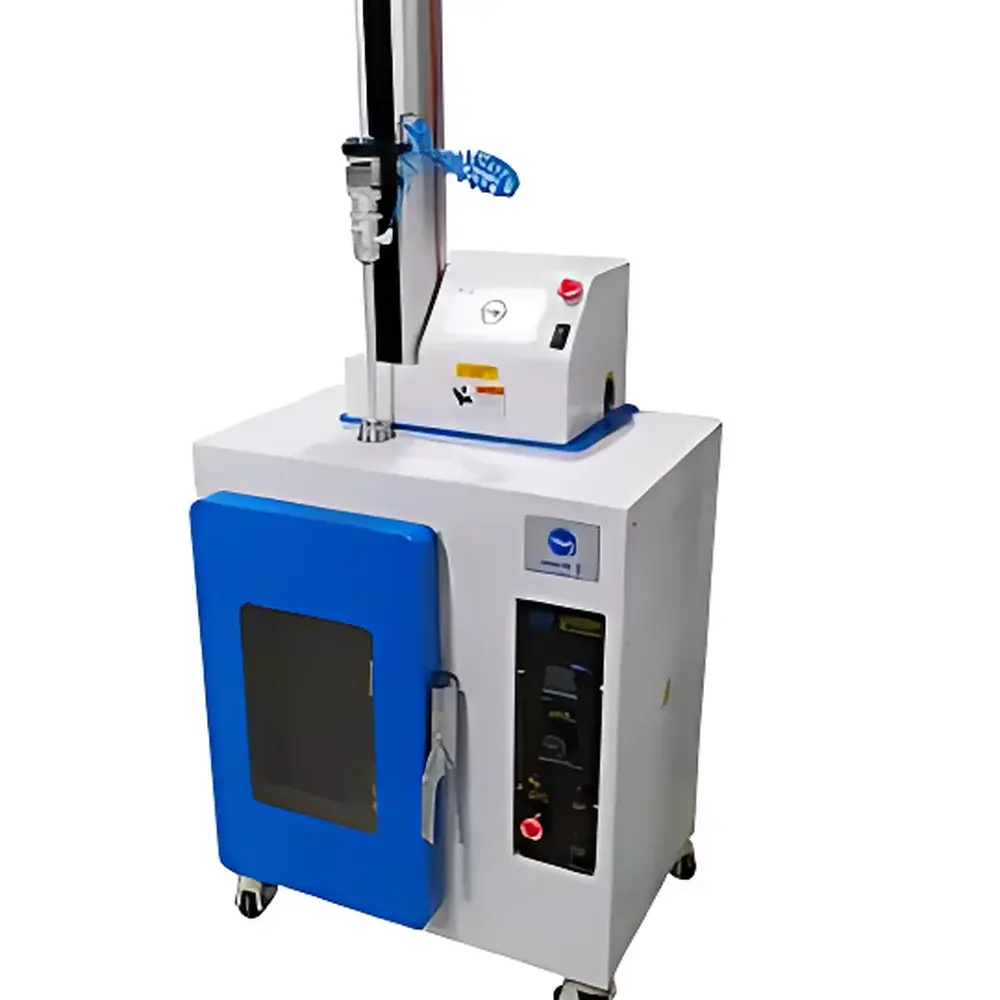
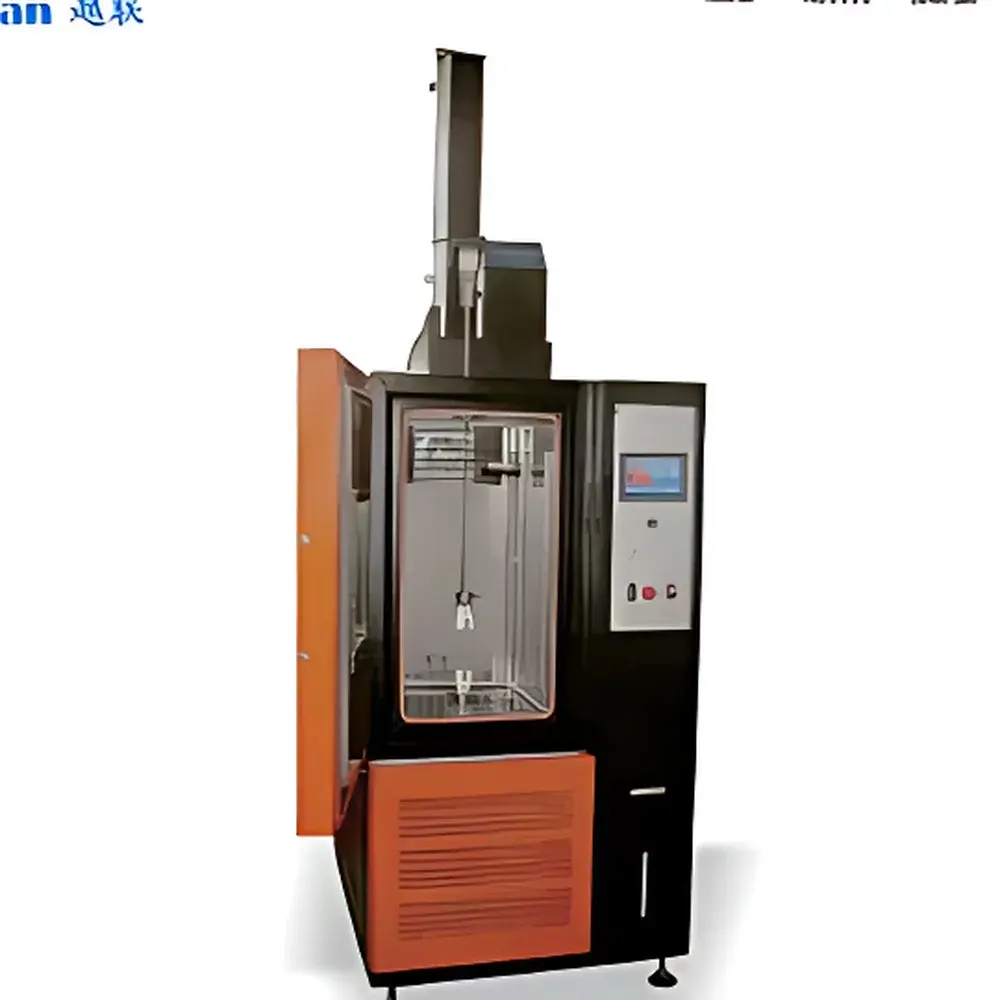
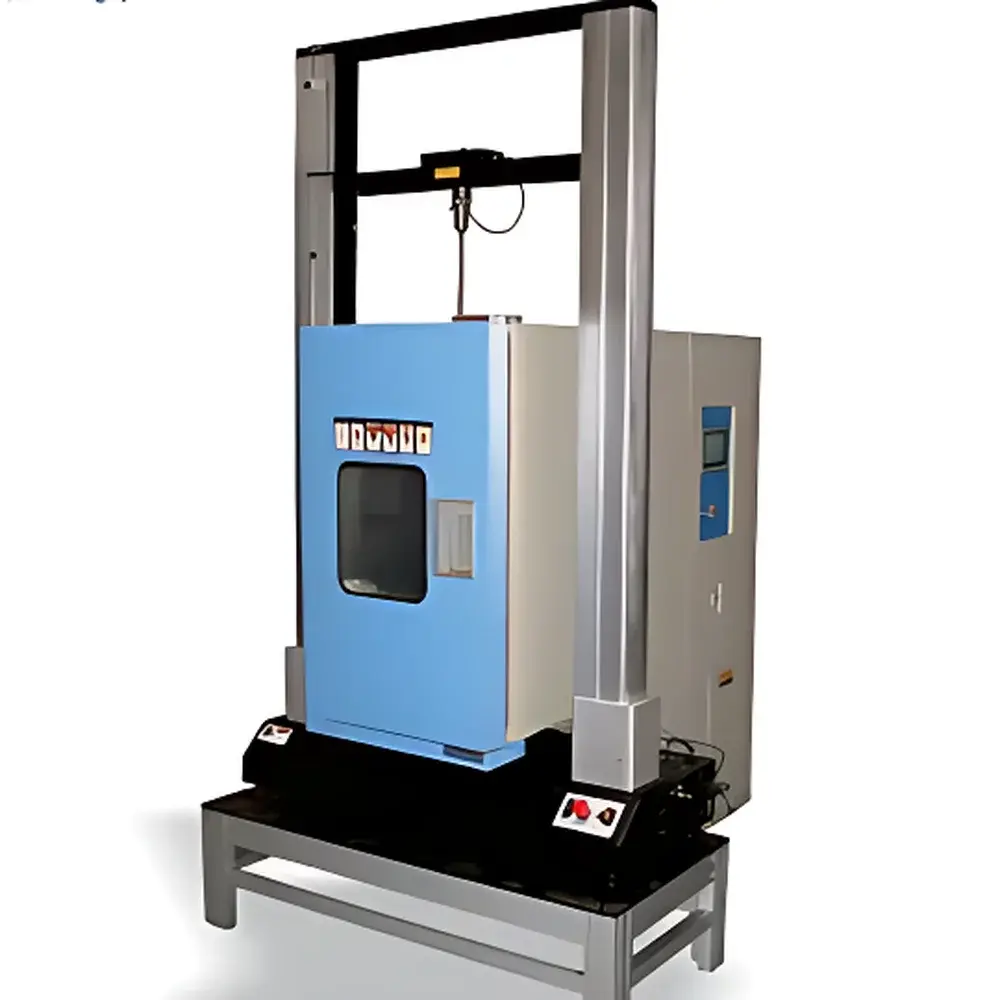
Yuelian PW-US120 High-Temperature Universal Testing Machine
| Brand | Yuelian |
|---|---|
| Model | PW-US120 |
| Type | Electromechanical Universal Testing Machine |
| Load Capacity | Up to 1 kN (optional ranges: 50 N, 100 N, 200 N, 500 N) |
| Temperature Range | Ambient to 200 °C |
| Chamber Dimensions | 400 × 400 × 800 mm (W × D × H) |
| Temperature Accuracy | ±1 °C |
| Drive System | Servo Motor with Precision Ball Screw & Timing Belt Transmission |
| Speed Range | 0.01–500 mm/min (software-programmable) |
| Force Measurement | ASTM E4-compliant load cell, 0.5% accuracy within 0.5–100% FS, 24-bit isolated ADC, resolution 1/1,000,000 FS |
| Displacement/Strain Measurement | High-resolution extensometer interface, 24-bit ADC, resolution 1/1,000,000 FS, 0.5% accuracy |
| Software | Multi-language (EN/CN), ISO/ASTM/GB/DIN/JIS standard-compliant test method library, CFR 21 Part 11-ready audit trail, Crystal Reports & .NET-based reporting, VBS-scriptable control and calculation engine |
| Safety Features | Dual mechanical end-limit switches, emergency stop button, thermal over-limit protection, overload and over-travel software safeguards |
| Power Supply | 220 V AC, 50/60 Hz, 30 A |
Overview
The Yuelian PW-US120 High-Temperature Universal Testing Machine is an electromechanical testing system engineered for precision tensile, compressive, and flexural characterization of materials under controlled thermal conditions. It operates on the fundamental principle of servo-controlled displacement actuation coupled with high-fidelity force and deformation transduction—enabling accurate derivation of stress–strain relationships, modulus (E), yield strength, ultimate tensile strength (UTS), elongation at break, and other mechanical parameters per ASTM E8, ISO 6892-1, GB/T 228.1, and related standards. Its integrated high-temperature chamber (ambient to 200 °C) supports thermomechanical evaluation of polymers, elastomers, composites, thin films, adhesives, and metal alloys during deformation—critical for R&D labs validating material performance across service temperature envelopes. The single-column architecture minimizes laboratory footprint while maintaining structural rigidity and alignment integrity essential for low-load, high-resolution testing.
Key Features
- Precision thermal chamber with SUS304 stainless steel interior, forced-air convection circulation, PID-controlled heating (±1 °C stability), and dual safety cutoffs (temperature limit + overcurrent protection)
- High-resolution force measurement via ASTM E4-certified load cell: 0.5% accuracy over 0.5–100% full scale, 24-bit isolated analog-to-digital conversion, 1:1,000,000 internal resolution
- Advanced displacement and strain acquisition: dedicated extensometer channel with 24-bit ADC, continuous un-ganged signal conditioning, and 1:1,000,000 effective resolution
- Servo-driven motion system featuring preloaded ball screw transmission and timing belt reduction—delivering low-noise operation and repeatable speed control from 0.01 to 500 mm/min
- Triple-channel analog input module with programmable gain amplification, enabling simultaneous acquisition of load, displacement, and auxiliary sensor signals (e.g., thermocouple feedback)
- Hardware-level safety interlocks: upper/lower mechanical limits, emergency stop circuitry, and software-enforced overload/overtravel protection
- Dust-resistant enclosure and protective shroud extend service life and maintain metrological integrity in shared lab environments
Sample Compatibility & Compliance
The PW-US120 accommodates specimens ranging from micro-thin polymer strips (≥0.1 mm thickness) to rigid composite coupons (up to 80 mm width), using interchangeable fixtures including 90° and 180° peel grips, tensile wedges, compression platens, and bending jigs. Its modular design supports integration with environmental accessories such as external extensometers, video extensometry systems, and humidity-controlled enclosures (optional). The system complies with ISO/IEC 17025 requirements for test equipment validation and meets mechanical verification criteria outlined in ISO 7500-1 (class 0.5) and ASTM E4. Data integrity protocols align with FDA 21 CFR Part 11 expectations—including electronic signatures, audit trails, role-based access control, and immutable data archiving—making it suitable for GLP and GMP-regulated quality control laboratories.
Software & Data Management
The 2020-generation Yuelian TestControl Pro software provides a fully scriptable, multi-standard platform built on Microsoft .NET Framework and Crystal Reports. It natively supports EN, CN, and JP language interfaces—with automatic real-time translation of both UI elements and stored database records (Microsoft Access backend). Units are dynamically convertible across metric (N, MPa, mm), imperial (lbf, kpsi, inch), and legacy systems (kgf, kgf/cm²). Over 169 standardized stress–strain curve templates are embedded—including Ramberg–Osgood, Ludwik, and hyperelastic models—and all curves support pixel-accurate zoom, parameter annotation (e.g., 0.2% offset yield), and export to BMP, JPEG, PDF, Excel, or Word. Custom test methods are defined via VBS scripting—allowing users to embed proprietary calculations, conditional logic, and hardware I/O triggers without vendor dependency. All system configurations, user permissions, calibration histories, and test logs are centrally managed in relational database tables—facilitating traceability, revalidation, and regulatory inspection readiness.
Applications
- Thermomechanical profiling of thermoplastics and thermosets (e.g., Tg-dependent modulus drop, creep compliance at elevated temperatures)
- Adhesion strength quantification of pressure-sensitive adhesives (PSAs) and laminates via 90°/180° peel testing at 60–120 °C
- Mechanical screening of battery electrode coatings, flexible printed circuits (FPCs), and medical device polymers under simulated operating temperatures
- Quality assurance of automotive seals, gaskets, and under-hood components per SAE J2236 and ISO 37
- Research-grade tensile mapping of nanocomposite films, hydrogels, and bioresorbable scaffolds with sub-millimeter gauge lengths
- Validation of ASTM D638, ISO 527-2, GB/T 1040.2, and JIS K7113 test protocols under non-ambient conditions
FAQ
What temperature uniformity can be expected inside the chamber during a 200 °C test?
The chamber achieves ±1 °C deviation across the central 80% volume (per ASTM E2203) when stabilized for ≥30 minutes, verified by calibrated Class A PT100 sensors at three spatial points.
Is the system compatible with third-party extensometers?
Yes—the analog input module accepts differential voltage signals (±10 V) from LVDT, clip-on, or video-based extensometers; gain and offset are software-configurable.
Does the software support automated pass/fail evaluation against specification limits?
Yes—user-defined acceptance criteria (e.g., “UTS ≥ 25 MPa AND Elongation ≥ 300%”) trigger color-coded result flags and auto-generate non-conformance reports.
Can test sequences be scheduled for unattended overnight operation?
Yes—batch mode enables queued execution of multiple specimen tests with automatic fixture repositioning, data saving, and thermal soak steps—all logged with timestamped audit trail entries.
What documentation is provided for IQ/OQ/PQ validation?
Factory-issued calibration certificates (force, displacement, temperature), installation checklist, operational qualification protocol templates, and traceable uncertainty budgets are included in the delivery package.



