
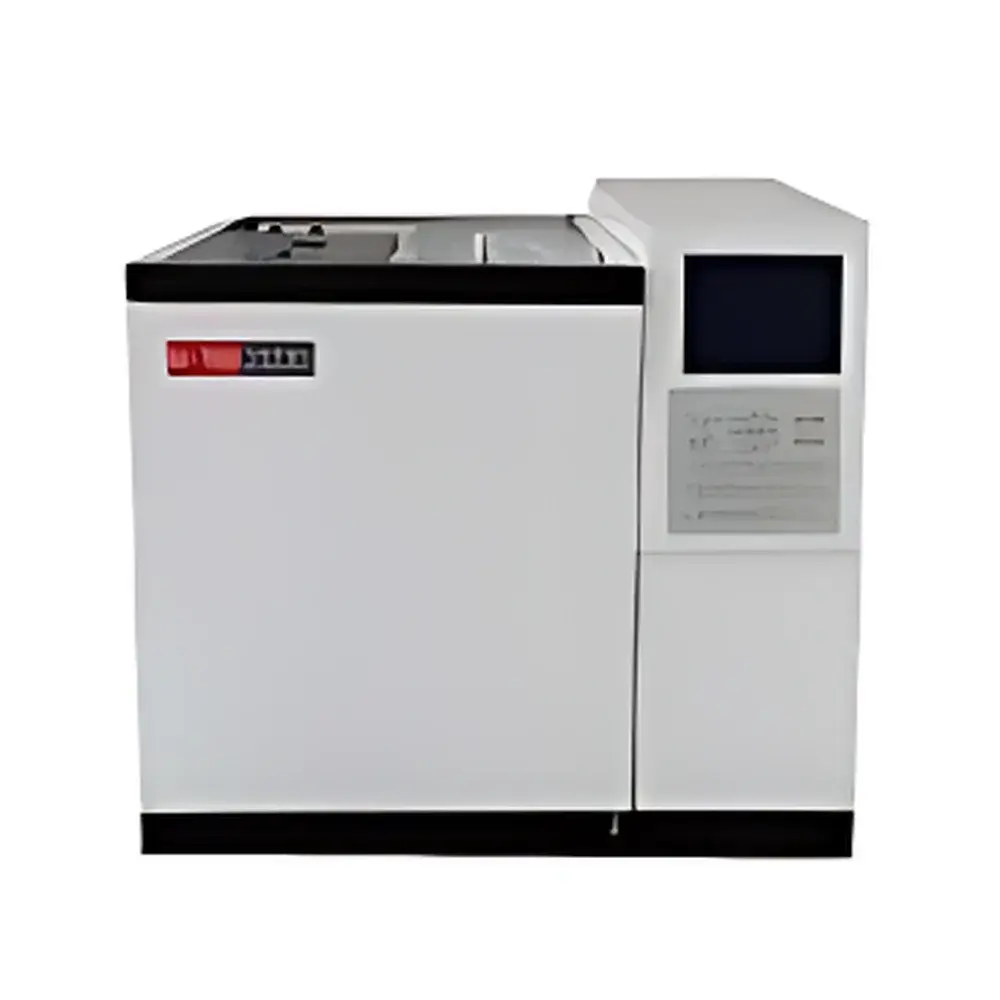
APL GC-7890 Gas Chromatograph
| Brand | APL |
|---|---|
| Origin | Sichuan, China |
| Manufacturer Type | Direct Manufacturer |
| Regional Classification | Domestic (China) |
| Model | GC-7890 |
| Instrument Type | Laboratory Gas Chromatograph |
| Application Scope | General-Purpose |
| Oven Temperature Range | 5 °C above ambient to 420 °C (1 °C increment programmable) |
| Maximum Oven Operating Temperature | 400 °C |
| Heating Rate | Up to 40 °C/min |
| Cooling Rate | 280 °C → 50 °C in ≤8 min |
| Carrier Gas Flow Control Range | 0–50 mL/min |
| Carrier Gas Pressure Control Range | 0–0.35 MPa |
| Injector Maximum Temperature | 400 °C |
| Injector Pressure Setting Range | 0–0.35 MPa |
| Total Injector Flow Setting Range | 0–500 mL/min |
| Temperature Stability (≤180 °C) | ±0.01 °C |
| Temperature Stability (full range) | ±0.1 °C |
| Programmable Temperature Ramping | 7-stage |
| Independent Temperature Control | Dual vaporizers (capillary & packed column) |
| Detector Configuration | FID (Hydrogen Flame Ionization Detector) |
| FID Detection Limit | ≤5×10⁻¹² g/s (n-hexadecane) |
| FID Noise | ≤5×10⁻¹⁴ A |
| FID Drift | ≤1×10⁻¹³ V/h |
| FID Linear Dynamic Range | ≥10⁷ |
| Column Compatibility | Up to three packed columns or two capillary columns simultaneously |
| Detector Capacity | Up to three detectors + methanizer |
| Optional Features | Integrated AD conversion circuit, cryogenic oven operation (dry ice/liquid nitrogen), dual rear doors with intelligent control, ceramic or quartz jet nozzles |
Overview
The APL GC-7890 Gas Chromatograph is a robust, laboratory-grade analytical instrument engineered for high-reproducibility separation and quantitative analysis of volatile and semi-volatile organic compounds. Based on classical gas–solid and gas–liquid partition chromatography principles, the GC-7890 utilizes carrier gas (e.g., He, H₂, or N₂) to transport vaporized sample components through temperature-controlled capillary or packed columns. Separation occurs as analytes differentially partition between the mobile phase (carrier gas) and stationary phase (column coating), with elution order governed by polarity, volatility, and molecular interaction kinetics. Designed for routine QC/QA, environmental monitoring, petrochemical screening, and pharmaceutical impurity profiling, the system delivers stable baseline performance, precise thermal management, and modular detector expandability—meeting foundational operational requirements for ISO/IEC 17025-accredited laboratories and GLP-compliant workflows.
Key Features
- Seven-stage programmable temperature ramping with independent control of oven, dual injectors (capillary and packed), and up to three detectors—enabling complex method development without hardware reconfiguration.
- High-precision oven temperature control: ±0.01 °C stability below 180 °C and ±0.1 °C across full operating range (5 °C above ambient to 420 °C), calibrated per ASTM E1510 and ISO 10101-2 protocols.
- Rapid thermal cycling: heating rate up to 40 °C/min; cooling from 280 °C to 50 °C in ≤8 minutes via intelligent dual rear-door airflow modulation—reducing cycle time without compromising column integrity.
- FID detector with verified sensitivity: detection limit ≤5×10⁻¹² g/s (n-hexadecane), noise ≤5×10⁻¹⁴ A, drift ≤1×10⁻¹³ V/h, and linear dynamic range ≥10⁷—validated per USP <621> and EP 2.2.47 guidelines.
- Modular inlet architecture supporting split/splitless capillary injection, on-column, and packed-column configurations; optional ceramic or quartz jet nozzles ensure compatibility with corrosive or high-temperature applications.
- Integrated diagnostics engine with real-time fault logging—including Pt100 RTD open/short detection, heater failure alerts, and pressure/flow deviation thresholds—facilitating rapid root-cause analysis during routine maintenance.
- Cryogenic capability: column oven operable down to –40 °C using dry ice or liquid nitrogen cooling accessories—enabling retention of highly volatile analytes (e.g., C₂–C₅ hydrocarbons, halogenated solvents).
Sample Compatibility & Compliance
The GC-7890 accommodates a broad spectrum of sample matrices—liquid, gaseous, and thermally stable solid extracts—via manual syringe injection, autosampler integration (optional), or headspace/GC coupling. Its dual vaporizer design allows simultaneous optimization of capillary (low-volume, high-resolution) and packed-column (high-capacity, ruggedized) methods. All thermal zones meet IEC 61010-1 safety standards for laboratory equipment. Firmware supports audit-trail-enabled data acquisition compliant with FDA 21 CFR Part 11 requirements when paired with validated third-party chromatography data systems (CDS). Column bleed profiles, retention time locking (RTL), and system suitability test (SST) reporting align with pharmacopeial methods (USP, EP, JP) and environmental standards (EPA Method 8021B, ISO 11843-2).
Software & Data Management
The GC-7890 operates under embedded ARM9-32-bit firmware with native English/Chinese UI switching and intuitive touchscreen navigation. Optional integrated 24-bit ADC enables direct digital signal transmission to Windows-based CDS platforms—eliminating analog-to-digital conversion losses and supporting real-time peak integration, calibration curve generation, and report export in PDF, CSV, and XML formats. Raw data files retain full metadata (instrument parameters, sequence logs, calibration history), enabling retrospective reprocessing and compliance with ALCOA+ data integrity principles. Remote monitoring via Ethernet interface supports centralized lab instrument management and preventive maintenance scheduling.
Applications
- Environmental analysis: BTEX, PAHs, chlorinated pesticides, and VOCs in water, soil, and air samples per EPA SW-846 and ISO 17993.
- Petrochemical QA: Hydrocarbon group-type analysis (PIONA), gasoline oxygenates, and refinery gas composition (ASTM D1319, D3588).
- Pharmaceutical testing: Residual solvent quantification (ICH Q3C), excipient purity, and degradation product profiling under GMP conditions.
- Food & flavor chemistry: Essential oil fingerprinting, fatty acid methyl ester (FAME) profiling, and adulterant detection.
- Academic research: Reaction monitoring, polymer additive migration studies, and chiral separations using compatible chiral columns.
FAQ
Does the GC-7890 support compliance with 21 CFR Part 11?
Yes—when used with validated third-party CDS software that implements electronic signatures, audit trails, and role-based access control.
Can the instrument operate below ambient temperature?
Yes—equipped with optional cryogenic accessories (dry ice or liquid nitrogen cooling traps), the oven achieves temperatures as low as –40 °C.
What is the maximum column configuration supported?
Two capillary columns or three packed columns simultaneously, with independent temperature control for each inlet.
Is FID the only detector included by default?
The base configuration includes one FID; TCD, ECD, NPD, and FPD modules are available as factory-installed options.
How is temperature calibration verified?
Calibration follows traceable procedures aligned with ISO/IEC 17025, using NIST-traceable reference materials and documented SOPs for oven, injector, and detector zones.
Related Products




