
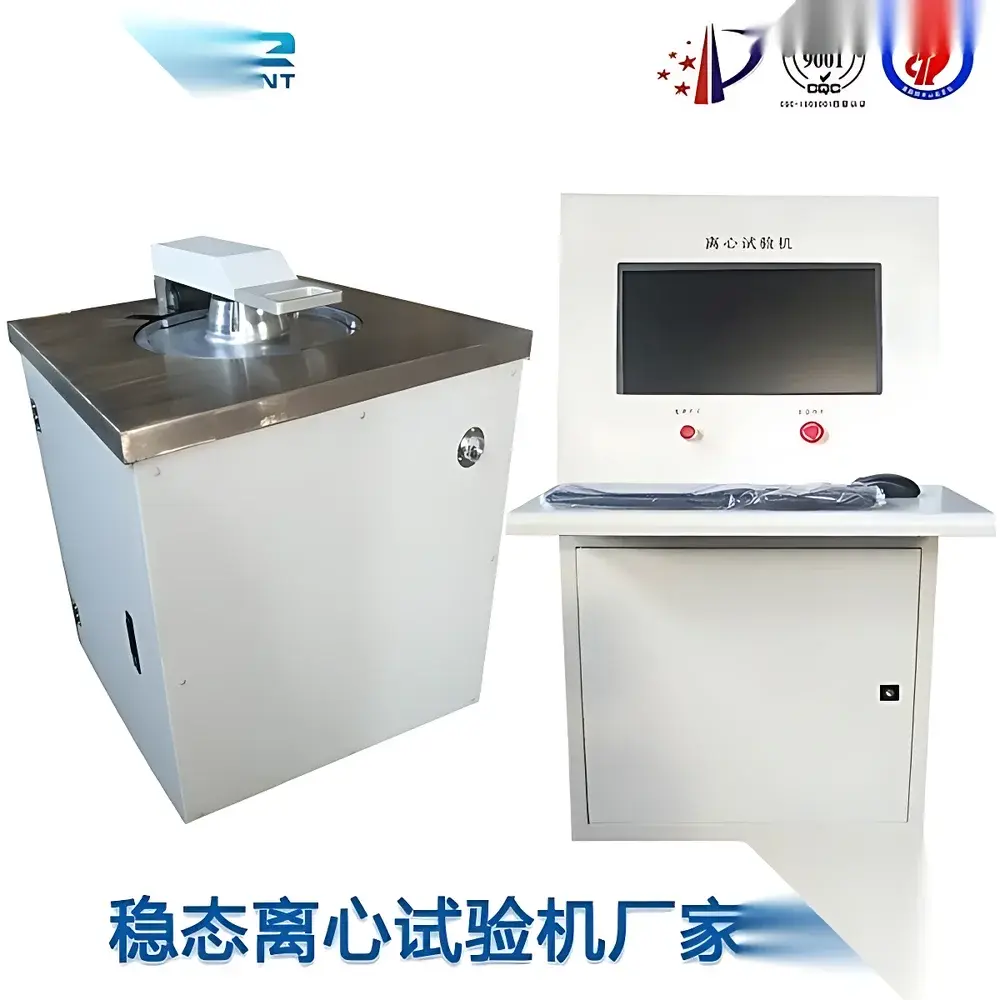
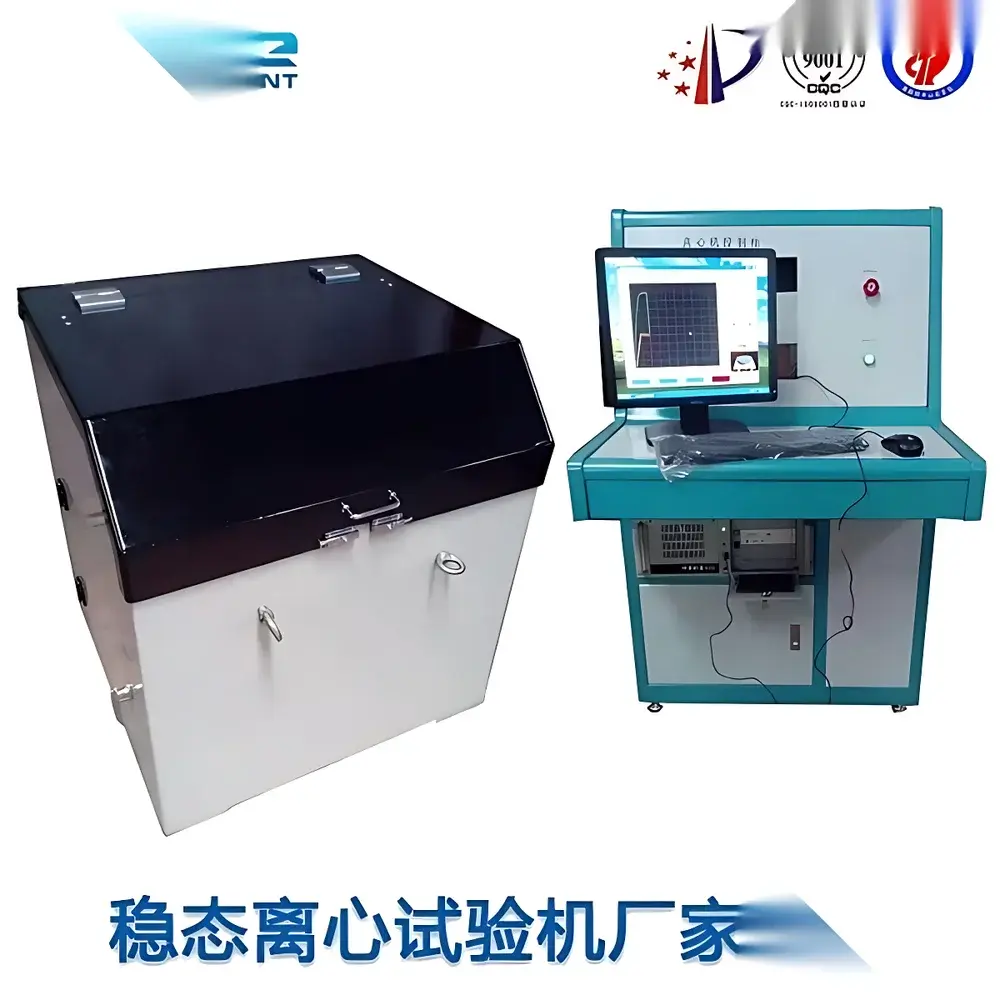
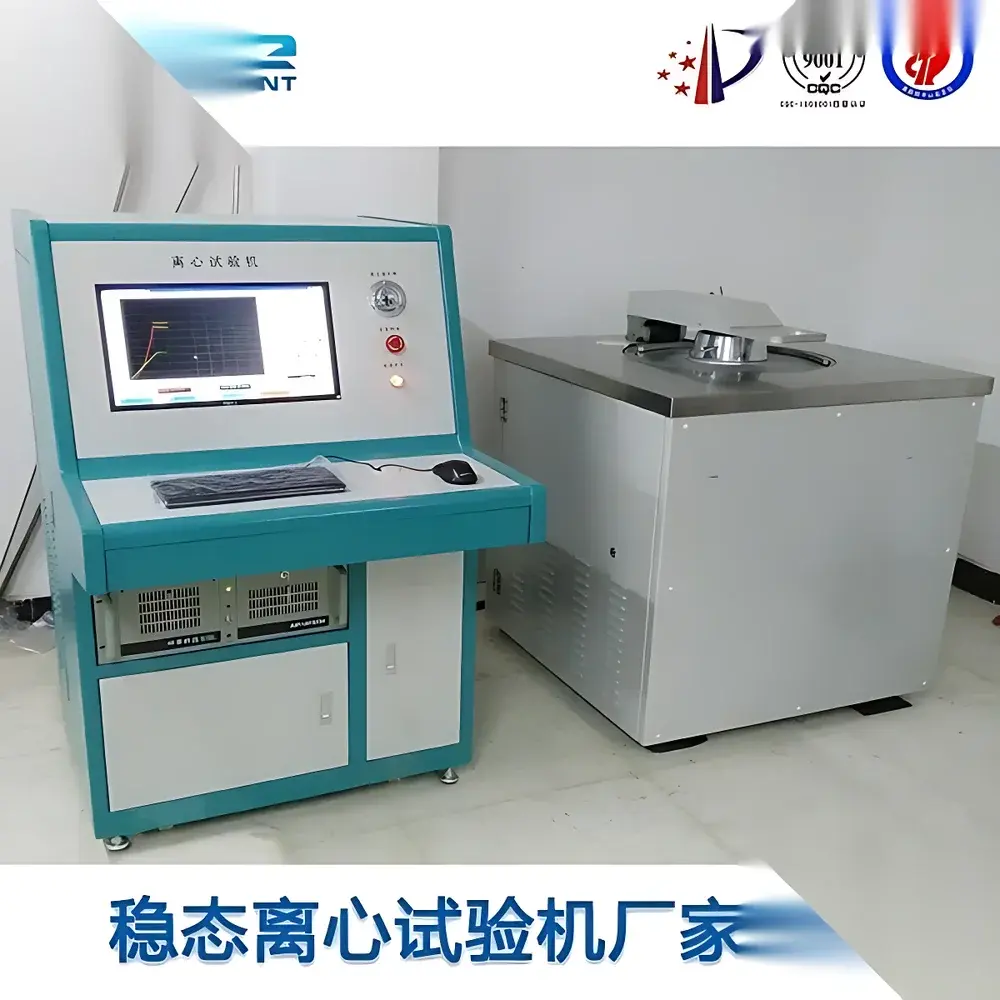
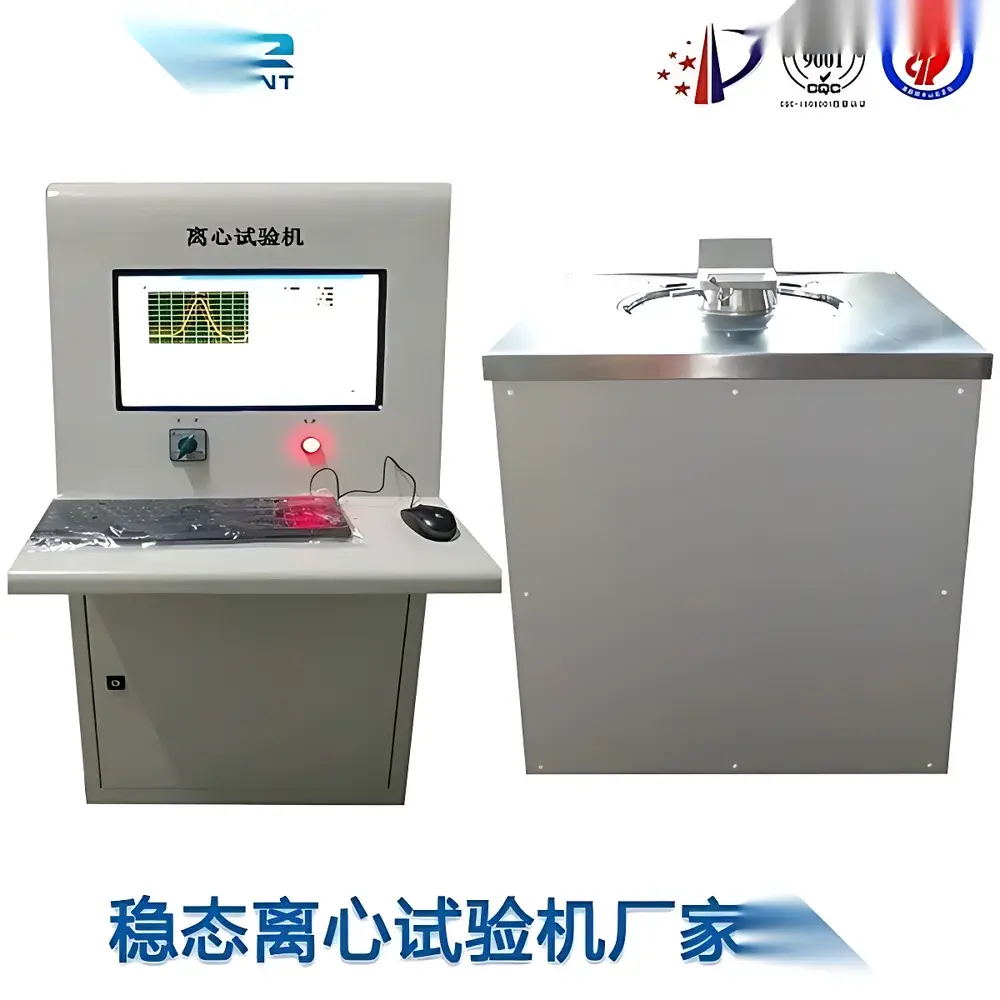
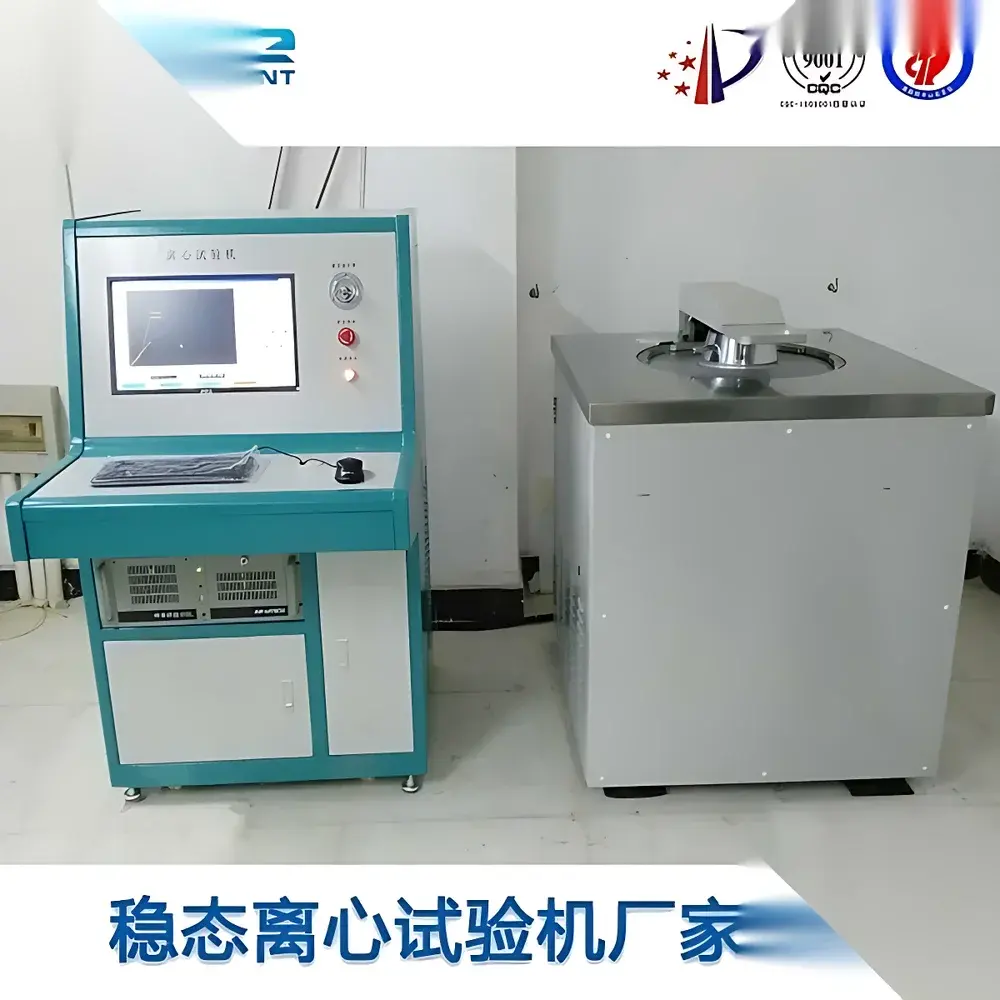
Other Brands LXJ Series Semiconductor Acceleration Centrifuge Test System
| Brand | Other Brands |
|---|---|
| Origin | Imported |
| Manufacturer Type | General Distributor |
| Price | USD 28,000 (approx.) |
| Max Acceleration Range | 30–400,000 m/s² |
| Load Capacity | 0.04–20 kg |
| Number of Test Stations | 4–10 |
| Test Axes | X, Y, Z orthogonal directions |
| Radial Installation Radius | 100–500 mm |
| Max Continuous Run Time | 5–60 min |
| Power Supply | AC 380 V, 1.5–6.5 kVA |
| Compliance | MIL-STD-810F, MIL-STD-883C, GJB150, GJB360, GB/T 2423, IEC 60068-2-27 |
Overview
The Other Brands LXJ Series Semiconductor Acceleration Centrifuge Test System is a high-precision dynamic mechanical stress testing platform engineered for qualification-level acceleration testing of microelectronic components, semiconductor packages, MEMS devices, and miniature electromechanical assemblies. Unlike conventional static or vibration-based reliability assessment tools, this system applies controlled, radially directed inertial loads—expressed in multiples of gravitational acceleration (g) or SI units (m/s²)—to simulate extreme launch, maneuver, or impact-induced overloads encountered during aerospace, defense, and high-reliability industrial deployment. The core principle relies on rotational kinematics: test specimens are mounted at a defined radial distance from the axis of rotation; angular velocity (ω) is precisely regulated to generate centripetal acceleration a = ω²r, enabling repeatable, traceable, and programmable acceleration profiles across wide dynamic ranges (30–400,000 m/s²). Designed for structural integrity verification—not functional burn-in—the system evaluates mechanical robustness, interconnect survivability, die attach integrity, and package-level deformation under sustained or stepped acceleration stress.
Key Features
- Real-time industrial PC-based control with deterministic timing resolution (<10 ms loop cycle), supporting both open-loop ramping and closed-loop acceleration regulation via high-bandwidth optical encoders and torque feedback.
- Multi-step acceleration profile generation: users define up to 16 discrete acceleration levels, dwell durations, ramp rates (m/s²/s), and directional sequences (X/Y/Z-axis sequential or simultaneous mounting configurations).
- Integrated safety architecture including hardware-enforced over-acceleration cutoff (±2% tolerance band), overspeed shutdown (via dual redundant tachometers), open-circuit detection on slip-ring channels, and thermal monitoring of motor windings and bearing housings.
- Modular slip-ring assembly with configurable current channel count (standard 15-channel, expandable to 36), rated for 500 V DC/AC and 5 A per circuit—enabling real-time telemetry (e.g., resistance, capacitance, continuity) during acceleration exposure.
- Dual-mode operation: fully automated test execution with preloaded mission profiles, or manual mode for exploratory parameter tuning and failure boundary mapping.
- Comprehensive onboard data acquisition: synchronized logging of actual acceleration (via calibrated piezoresistive sensor), rotational speed, elapsed time, chamber temperature, and electrical continuity status at ≥1 kHz sampling rate.
Sample Compatibility & Compliance
The LXJ system accommodates specimens ranging from bare die and QFN/QFP packages (≤200 mm height) to assembled PCB modules and hybrid microcircuits. Fixturing supports orthogonal orientation across X, Y, and Z axes using precision-machined aluminum load plates with T-slot and threaded-hole patterns (M3/M4/M6). Radial installation radii are configurable between 100 mm and 500 mm to optimize acceleration resolution versus torque demand. All standard configurations meet the mechanical stress test requirements of MIL-STD-883C Method 2001 (Centrifugal Acceleration), MIL-STD-810F Method 513.5 (Acceleration), GJB150.15A (China MIL-STD equivalent), and IEC 60068-2-27 (Shock and Acceleration Testing). Calibration certificates (traceable to NIST or CNAS-accredited labs) and full test record archives—including raw acceleration waveforms, metadata, and operator audit trails—are generated in accordance with GLP and GMP documentation practices.
Software & Data Management
The embedded control software runs on a ruggedized Windows-based industrial PC with deterministic real-time extensions. It provides ISO/IEC 17025-aligned calibration management, user role-based access control (admin/operator/viewer), and electronic signature support compliant with FDA 21 CFR Part 11. Test reports are exported in PDF/A-1b and CSV formats, embedding digital signatures, timestamped calibration logs, and pass/fail evaluation against user-defined tolerance bands (e.g., ±5% of target g-level for duration ≥10 s). Raw binary data files (with header metadata) are stored in vendor-neutral HDF5 format for third-party analysis in MATLAB, Python (NumPy/H5Py), or LabVIEW environments. Audit trail functionality records all parameter changes, start/stop events, safety interventions, and user logins with immutable timestamps.
Applications
- Qualification testing of automotive-grade ASICs and power modules per AEC-Q100 stress test schedules.
- Evaluation of solder joint fatigue resistance in flip-chip and wafer-level CSP packages under high-g loading.
- Structural validation of inertial sensors (gyroscopes, accelerometers) and RF front-end modules for UAV and missile guidance systems.
- Failure mode analysis of wire-bond lift-off, substrate warpage, and lid seal integrity in hermetic ceramic packages.
- Process development support for advanced packaging technologies including 2.5D/3D integration and fan-out wafer-level packaging (FOWLP).
- Reliability screening of commercial-off-the-shelf (COTS) components intended for space applications (per ECSS-Q-ST-60-13C).
FAQ
What standards does the LXJ system natively support for test execution and reporting?
The system includes preconfigured test templates for MIL-STD-883C Method 2001, MIL-STD-810F Method 513.5, GJB150.15A, and GB/T 2423.33—each with built-in pass/fail logic, dwell timing, and acceleration ramp profiles.
Can the system perform simultaneous multi-axis acceleration testing?
No. The LXJ is a single-axis centrifugal platform; orthogonal axis testing requires physical reorientation of the specimen mount between runs. True triaxial acceleration requires separate shaker-based systems.
Is remote monitoring and control supported?
Yes—via secure TLS-encrypted Ethernet connection using OPC UA protocol. Full GUI mirroring, real-time waveform streaming, and emergency stop initiation are available through authorized client workstations.
What is the recommended calibration interval?
Annual calibration is advised per ISO/IEC 17025 requirements; however, calibration frequency may be adjusted based on usage intensity, criticality of application, and internal quality procedures.
Does the system support custom fixturing design and validation?
Yes—mechanical drawings and modal analysis support (ANSYS Workbench export) are provided for customer-designed fixtures, with validation services available upon request.



