
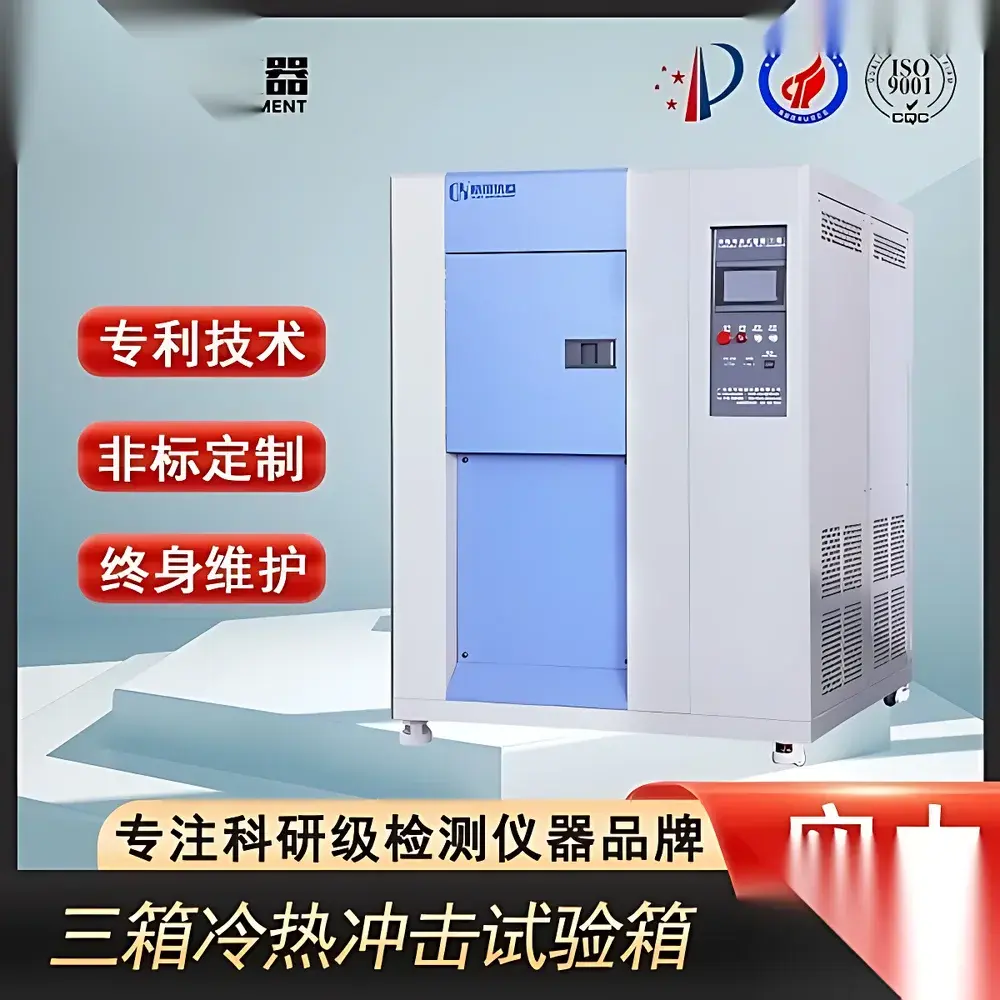
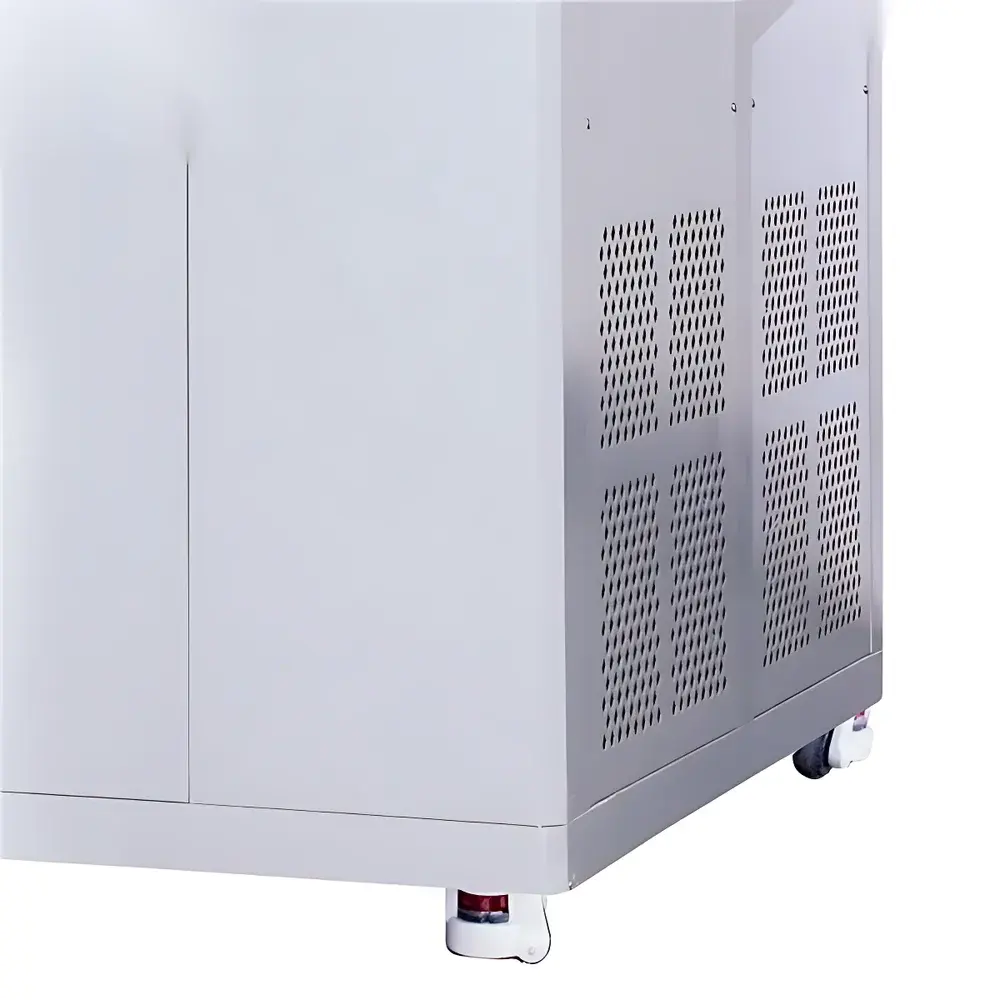
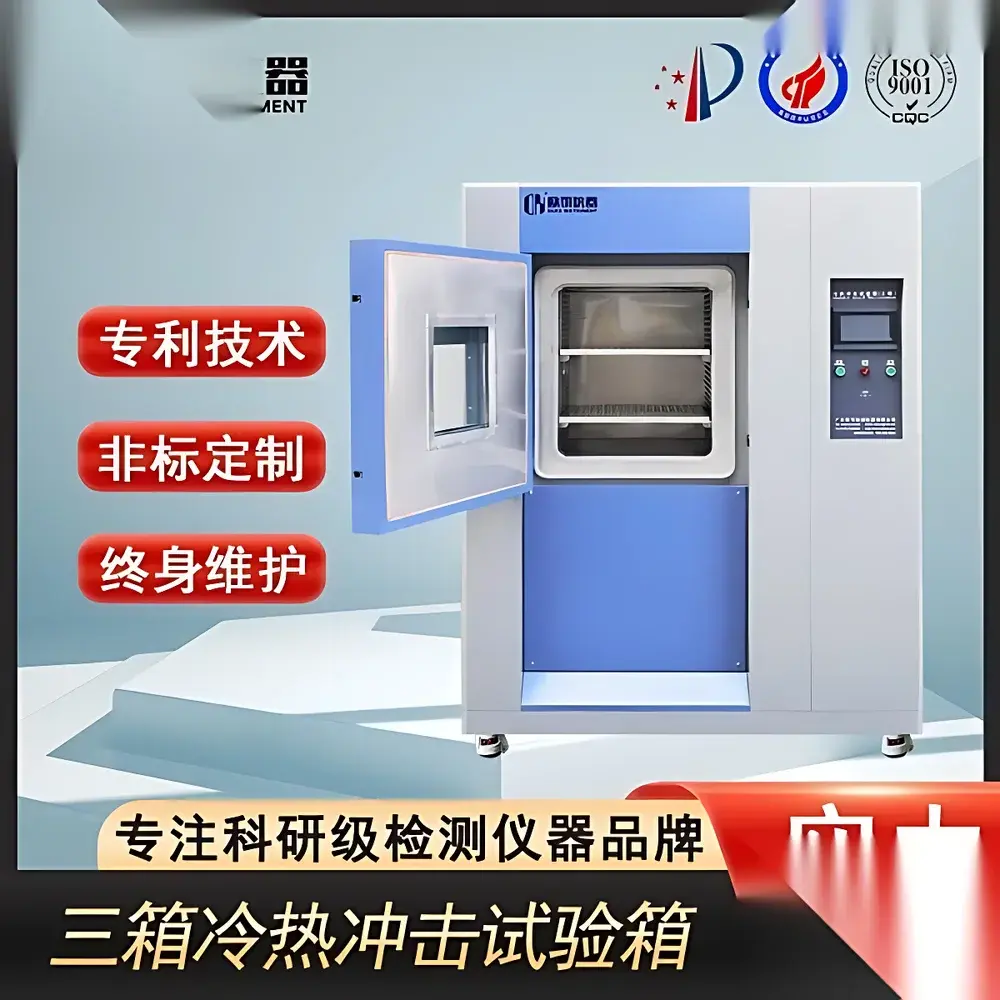
Thermal Shock Test Chamber – Dual-Zone or Triple-Zone Configuration
| Brand | Other Brands |
|---|---|
| Origin | Imported |
| Manufacturer Type | Authorized Distributor |
| Price | USD 11,200 (FOB) |
Overview
The Thermal Shock Test Chamber is an environmental test system engineered for rapid and repeatable temperature transitions between extreme high- and low-temperature zones. It operates on the principle of thermal inertia separation—either via dual-zone (hot/cold chambers with specimen transfer via motorized basket) or triple-zone (separate hot soak, cold soak, and test chambers with static specimen placement) architecture. This design enables precise execution of temperature shock profiles defined in international reliability standards, supporting accelerated life testing, failure mode analysis, and qualification of electronic assemblies, automotive components, aerospace hardware, and polymer-based materials subjected to severe ambient cycling.
Key Features
- Dual-zone configuration: Motor-driven insulated transfer basket ensures ≤15 s transfer time between chambers, minimizing thermal lag and enabling strict adherence to MIL-STD-810H Method 503.5 and IEC 60068-2-14 (Test N) ramp requirements.
- Triple-zone configuration: Independent hot soak (up to +180 °C), cold soak (down to −70 °C), and ambient test chamber eliminate specimen movement—ideal for large, fragile, or instrumented samples requiring positional stability during conditioning.
- High-efficiency refrigeration system with cascade compressor stages and optimized heat exchanger geometry delivers stable temperature control within ±0.5 °C tolerance across full operating range.
- Industrial-grade stainless-steel interior with reinforced insulation (≥150 mm polyurethane foam, λ ≤ 0.022 W/m·K) ensures low thermal leakage and long-term chamber integrity under cyclic stress.
- Programmable controller with Ethernet interface supports multi-step shock sequences, dwell times, cycle counts, and real-time deviation logging per ISO/IEC 17025 traceability requirements.
Sample Compatibility & Compliance
The chamber accommodates specimens up to 500 mm × 500 mm × 500 mm (W×D×H) in dual-zone mode and up to 600 mm × 600 mm × 600 mm in triple-zone configurations. Fixturing options include non-conductive trays, grounding plates, and sensor-mounting brackets compatible with thermocouples (Type K/T), RTDs, and strain gauges. The system complies with the following test standards:
- IEC 60068-2-14:2021 (Environmental testing – Part 2-14: Tests – Test N: Change of temperature)
- MIL-STD-810H Method 503.5 (Temperature Shock)
- GJB 150.5A-2009 (Military standard for environmental test methods – Temperature shock)
- GB/T 2423.22–2012 (Environmental testing – Part 2: Tests – Test N: Change of temperature)
- QC/T 17–2019 (General rules for weather resistance testing of automotive components)
- EIA-364-32 (Thermal shock testing procedure for electrical connectors and sockets)
All configurations support GLP/GMP-aligned operation when integrated with audit-trail-enabled software (see Software & Data Management section).
Software & Data Management
Built-in controller firmware supports CSV export of time-stamped temperature logs (sample interval: 1 s to 60 s configurable), alarm history, and cycle completion reports. Optional PC-based software provides remote monitoring, multi-chamber synchronization, and automated report generation compliant with FDA 21 CFR Part 11 requirements—including electronic signatures, user access levels, and immutable audit trails. Data files are timestamped with UTC synchronization and retain metadata (operator ID, test plan revision, calibration certificate expiry). Export formats include PDF (for QA submission), Excel (for statistical process control), and XML (for LIMS integration).
Applications
- Qualification testing of printed circuit board assemblies (PCBAs) per IPC-J-STD-004 and IPC-A-610 for solder joint integrity under thermal cycling stress.
- Validation of adhesive bond strength in composite aerospace structures exposed to −55 °C/+125 °C transitions.
- Reliability screening of MEMS sensors, optoelectronic modules, and battery management systems prior to field deployment.
- Material characterization of thermoplastics, elastomers, and encapsulants per ASTM D696 (Coefficient of Linear Expansion) and ISO 11359 (Thermal mechanical analysis).
- Environmental stress screening (ESS) in manufacturing line final test stations to detect latent defects before shipment.
FAQ
What is the difference between dual-zone and triple-zone thermal shock chambers?
Dual-zone chambers use a moving basket to shuttle specimens between hot and cold zones; triple-zone chambers keep specimens stationary in a central test chamber while alternating airflow from independently conditioned hot and cold reservoirs.
Does the chamber support programmable dwell times and variable transition rates?
Yes—the controller allows independent setting of soak durations (1 min to 999 h), transfer speed (for dual-zone), and ramp rate limits (0.5–15 °C/min) per test step.
Is calibration documentation included with delivery?
Each unit ships with a factory calibration certificate traceable to NIST or equivalent national metrology institute, covering temperature uniformity, stability, and transition performance verification.
Can the system be integrated into an existing MES or QMS platform?
Yes—via Modbus TCP or OPC UA protocols; optional API modules enable direct data ingestion into Siemens Opcenter, ETQ Reliance, or Qualio QMS environments.
What maintenance intervals are recommended for long-term reliability?
Compressor oil and filter replacement every 2,000 operating hours; annual verification of door seal integrity, refrigerant charge, and sensor calibration against reference standards.



