
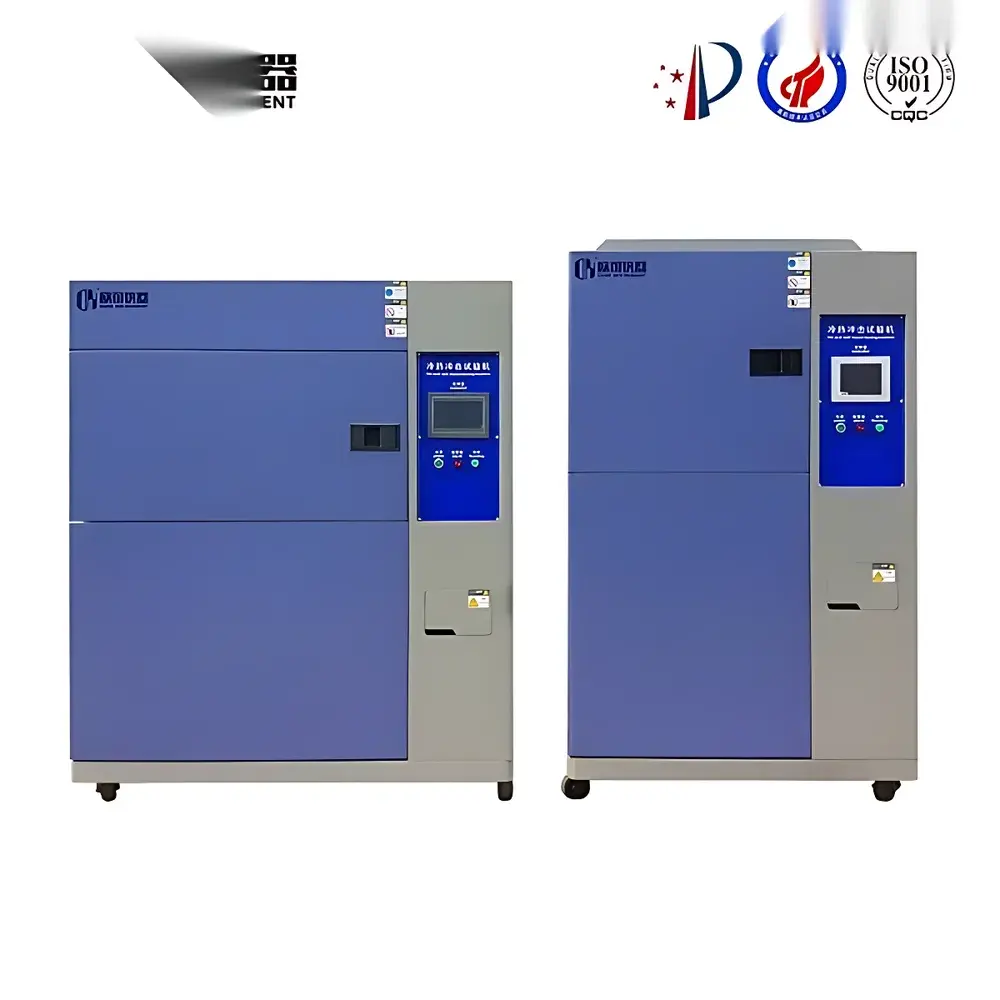
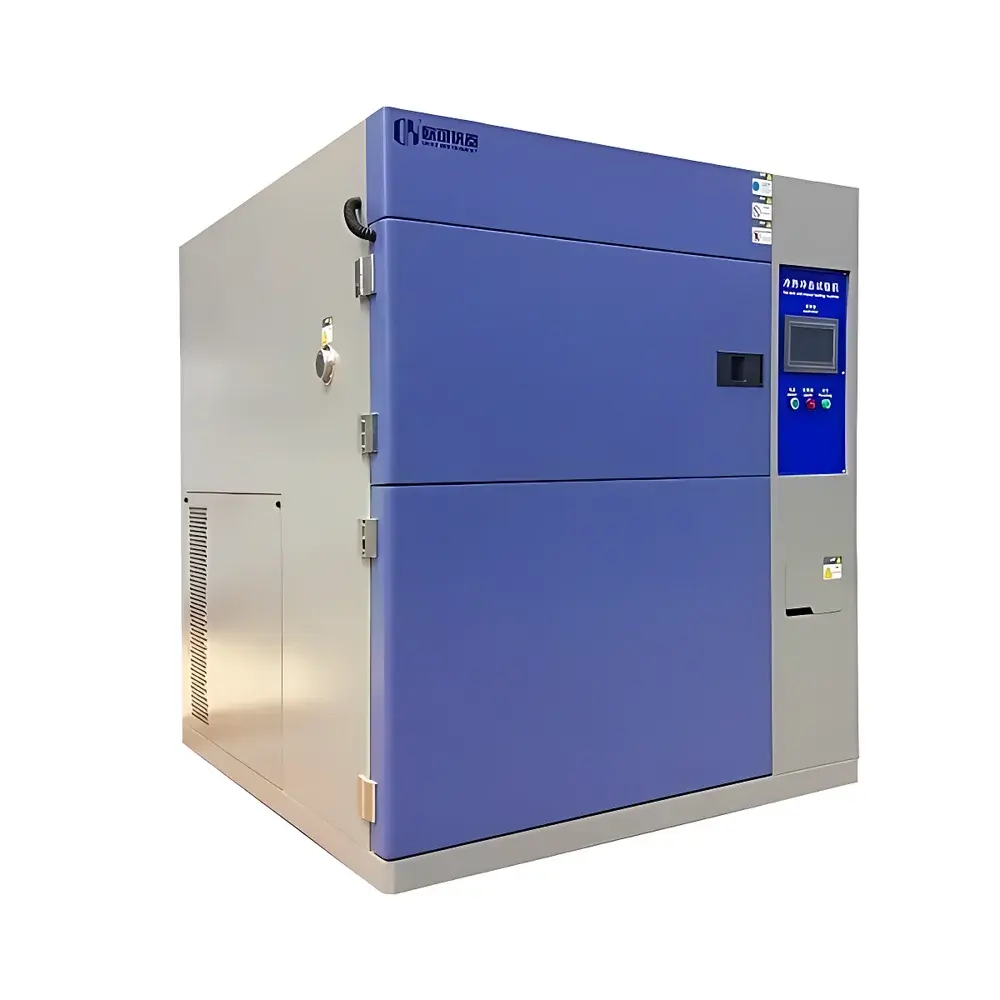
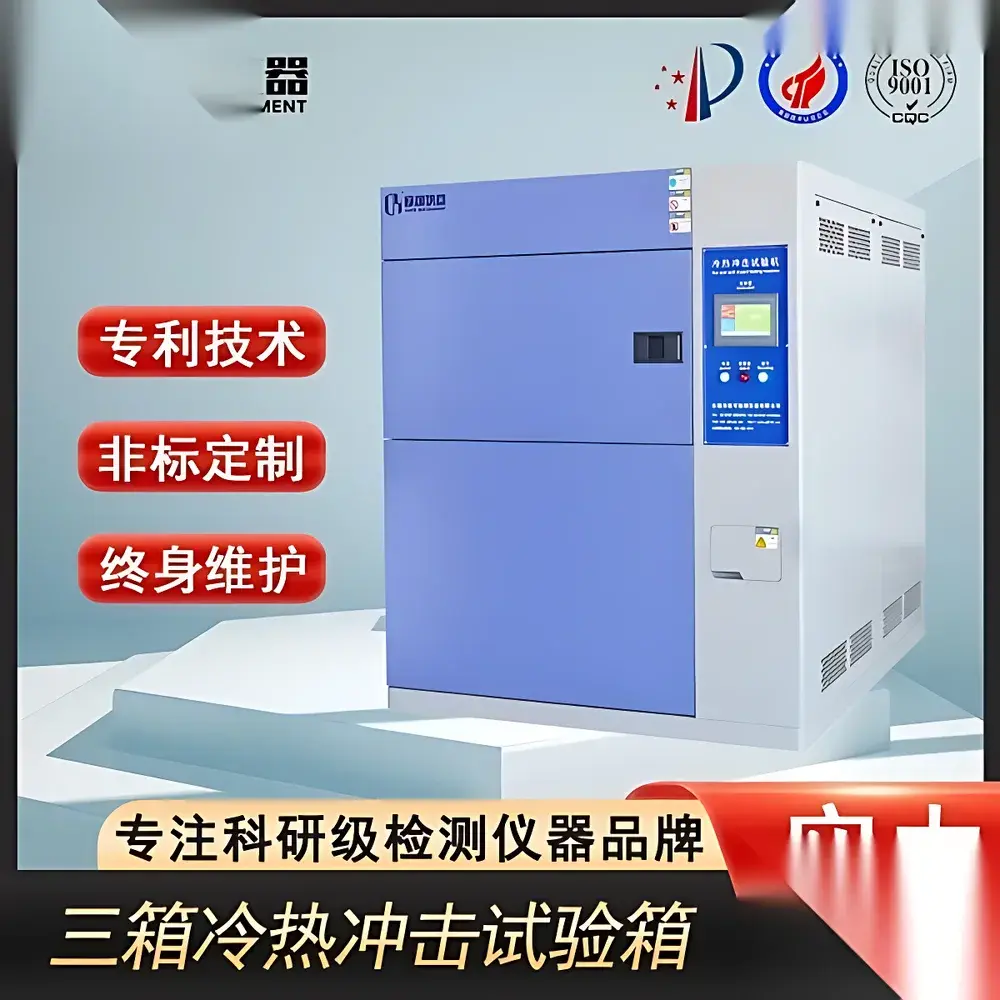
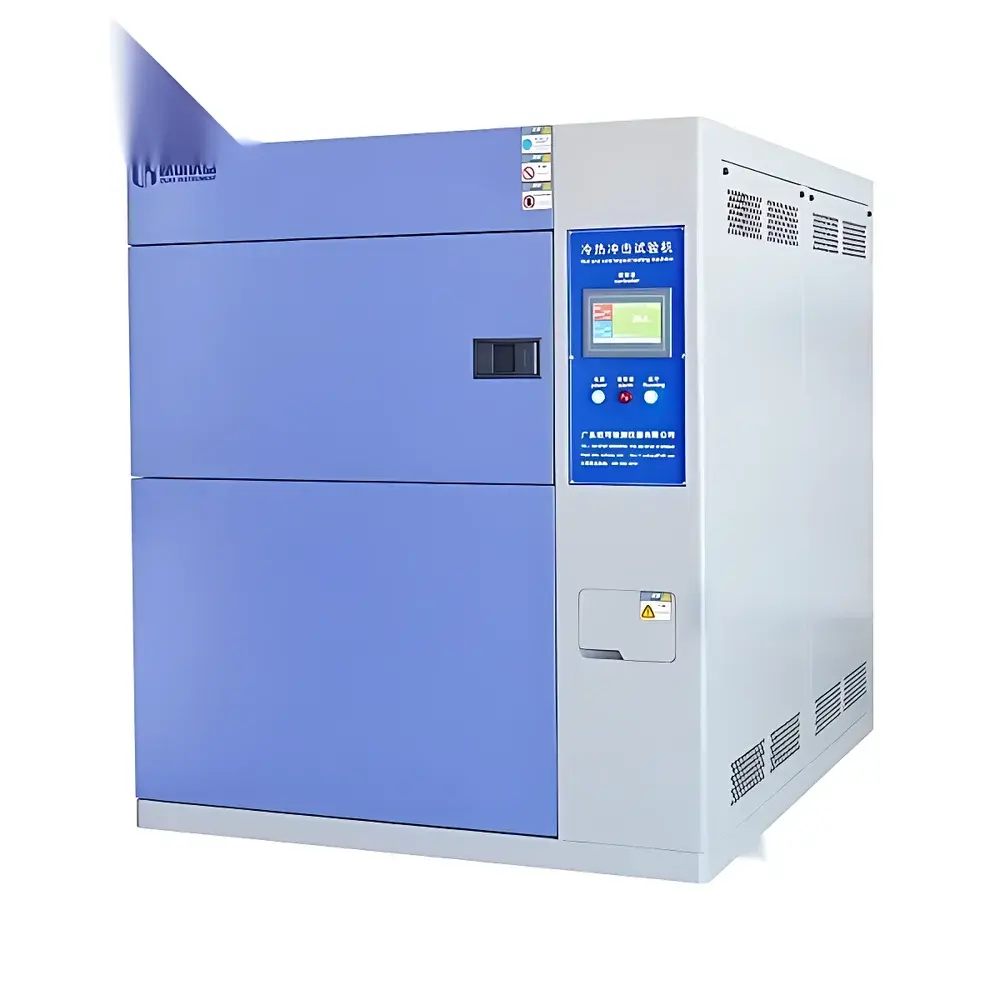
Thermal Shock Test Chamber – TEMI880/TEMI300 Programmable Environmental Test System
| Brand | OEM / Private Label |
|---|---|
| Origin | Imported |
| Supplier Type | Authorized Distributor |
| Price | USD 11,200 (FOB) |
| Controller Options | TEMI880 color touchscreen (English/Chinese), TEMI300 membrane keypad (English only) |
| Temperature Range | −70 °C to +180 °C |
| Shock Transition Time | ≤5 s (typical between chambers) |
| Internal Volume | Standard configurations from 150 L to 1000 L |
| Compliance | IEC 60068-2-14, MIL-STD-810H, GB/T 2423.22 |
| Refrigeration | Twin-compartment forced-air thermal shock system with dual-stage cascade refrigeration (Copeland/Tecumseh or equivalent), French-made “Tecumseh” hermetic compressors |
| Insulation | Polyurethane rigid foam (≥150 mm thickness) + ultra-fine glass fiber blanket |
| Interior Material | SUS304 stainless steel |
| Exterior Finish | Electrostatic powder-coated cold-rolled steel or optional brushed SUS304 |
| Airflow | Wide-band forced convection (top discharge / bottom intake), centrifugal blower, multi-wing impeller |
| Humidification | Surface evaporation type |
| Safety Protections | Compressor overheat/overcurrent/high-pressure cut-off, dry-run protection for heaters/humidifiers, chamber overtemperature alarm, low-water-level interlock, door seal integrity monitoring |
Overview
The Thermal Shock Test Chamber is an engineered environmental stress screening (ESS) platform designed for rapid, repeatable, and highly controlled temperature transitions between extreme high- and low-temperature zones. Utilizing a dual-chamber or single-chamber with lift-type basket mechanism architecture, it subjects electronic components, aerospace composites, automotive ECUs, and polymer-based assemblies to abrupt thermal gradients—enabling accelerated detection of latent defects such as solder joint fatigue, delamination, seal failure, and coefficient-of-thermal-expansion (CTE) mismatch. The system operates on the principle of mechanical thermal inertia isolation: separate hot and cold zones maintain stable setpoints while the test specimen undergoes programmable transfers (typically ≤5 seconds), ensuring minimal thermal lag and high reproducibility across qualification cycles. Designed for compliance-driven laboratories, it supports deterministic test profiles per IEC 60068-2-14 (Change of Temperature), MIL-STD-810H Method 503.5, and GB/T 2423.22—making it suitable for AEC-Q200, JEDEC JESD22-A104, and IPC-9701 validation protocols.
Key Features
- Dual independent temperature control zones (hot chamber: +60 °C to +180 °C; cold chamber: −70 °C to +10 °C) with real-time PID tuning and auto-tuning capability
- TEMI880 7-inch full-color capacitive touchscreen controller with intuitive drag-and-drop profile programming, data logging (≥10,000 points), USB export, and bilingual UI (English/Chinese)
- TEMI300 membrane-keypad alternative for cost-sensitive or GMP-regulated environments requiring simplified operator interface and audit-trail compatibility
- Balanced Temperature & Humidity Control (BTSC) algorithm ensures precise stabilization without overshoot during ramp phases
- Triple-layer insulation: 150 mm polyurethane rigid foam core + secondary ultra-fine glass fiber blanket + vapor barrier film for thermal leakage <0.8 K/h at −65 °C
- High-efficiency air circulation: forward-curved multi-wing centrifugal blower delivering ≥1.2 m/s uniform airflow velocity across entire test volume (IEC 60068-3-5 compliant)
- Comprehensive safety architecture: redundant thermocouple monitoring, compressor high-pressure switch, heater dry-run cut-off, and silicone rubber dual-lip door gasket rated for −70 °C to +200 °C continuous operation
Sample Compatibility & Compliance
The chamber accommodates standard test specimens up to 500 mm × 500 mm × 500 mm (W×D×H) with adjustable stainless-steel sample racks (two sets included). Optional accessories include calibrated PT100 sensor ports (φ50 mm, left-side mounted), quartz observation window with anti-fog coating, and integrated LED lighting compliant with Class II electrical safety standards. All models meet electromagnetic compatibility (EMC) requirements per EN 61326-1 and are CE-marked. For regulated industries, firmware supports 21 CFR Part 11-compliant user access levels, electronic signature logging, and immutable audit trails when paired with validated PC software. Calibration certificates traceable to NIST or DAkkS are available upon request.
Software & Data Management
The included Windows-based control software enables remote monitoring, real-time graphing (temperature vs. time), multi-channel data overlay, and automated report generation in PDF/Excel formats. It supports CSV export for integration with LIMS platforms and includes built-in statistical process control (SPC) tools for Cp/Cpk calculation across test runs. Firmware updates are delivered via secure HTTPS channel with SHA-256 verification. All logged data—including timestamps, setpoints, actual values, alarm events, and operator IDs—are stored in encrypted binary format with write-protection to prevent tampering—meeting GLP/GMP documentation integrity requirements.
Applications
This thermal shock system is routinely deployed in reliability engineering labs for: accelerated life testing of PCBAs and wafer-level packages; qualification of battery modules under extreme thermal cycling; validation of medical device housing seals per ISO 11607; evaluation of adhesive bond strength in structural composites; and screening of optical lens coatings for microcracking. It serves Tier-1 automotive suppliers performing GM W317772 or Ford ES-XW7T-1A278-AC testing, as well as semiconductor foundries executing JEDEC JESD22-A106B (cold-to-hot transition) and JESD22-A104D (hot-to-cold transition) protocols.
FAQ
What is the typical temperature transition time between chambers?
Standard models achieve ≤5 seconds for specimen transfer between hot and cold zones, verified per IEC 60068-2-14 Annex B.
Does the system support humidity control during thermal shock?
No—this is a dry thermal shock chamber. Humidity functionality is excluded to maintain mechanical reliability and avoid condensation-induced failures during rapid transitions.
Can the controller be validated for FDA-regulated environments?
Yes. The TEMI880 firmware supports IQ/OQ documentation templates and meets 21 CFR Part 11 requirements when configured with password-protected user roles and electronic signature workflows.
What maintenance intervals are recommended for the refrigeration system?
Compressor oil and filter-drier replacement every 24 months; annual calibration of all PT100 sensors and pressure transducers by accredited service technicians.
Is third-party calibration certification included with purchase?
Factory calibration is performed pre-shipment. DAkkS/NIST-traceable calibration certificates are available as optional add-ons with documented uncertainty budgets.



