
SCG-BTC In Situ Soil CO₂ and Root Dynamics Observation System
| Origin | USA/Europe |
|---|---|
| Manufacturer Type | Authorized Distributor |
| Origin Category | Imported |
| Model | SCG-BTC In Situ Soil CO₂ and Root Dynamics Observation System |
| Pricing | Available Upon Request |
Overview
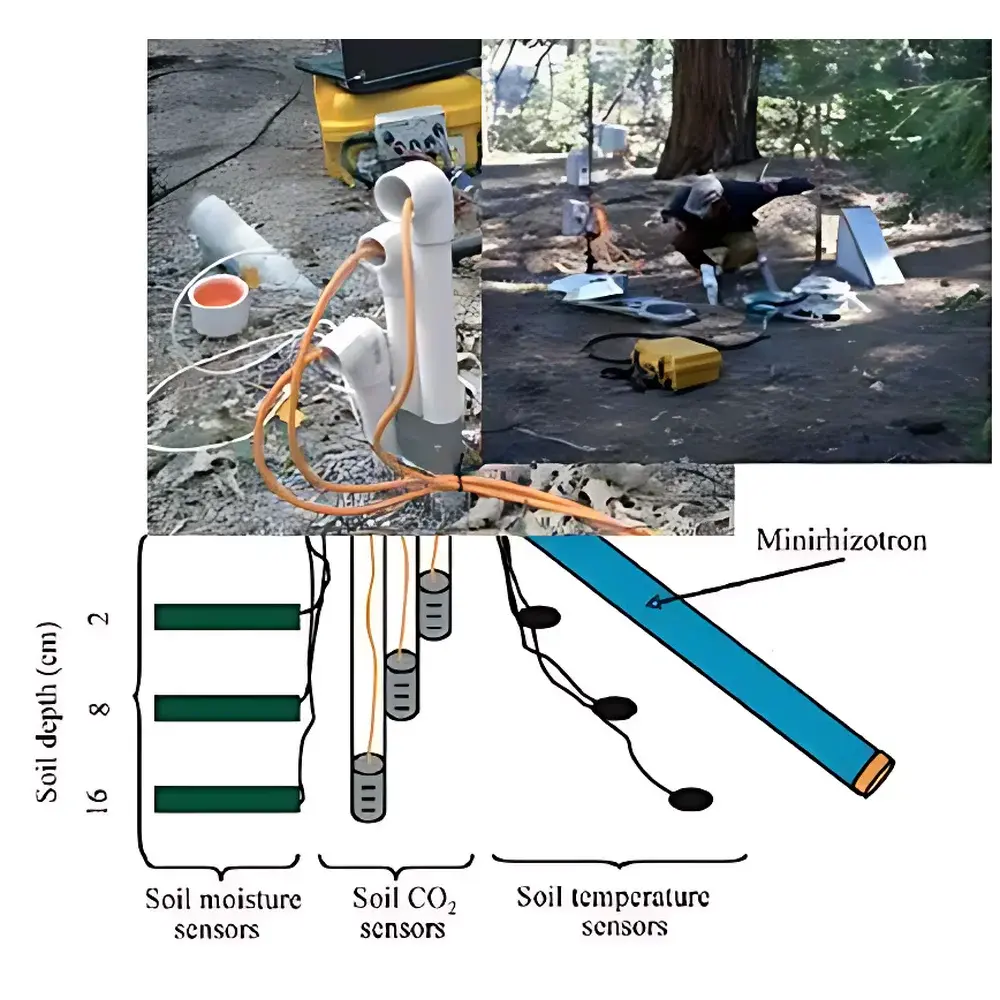
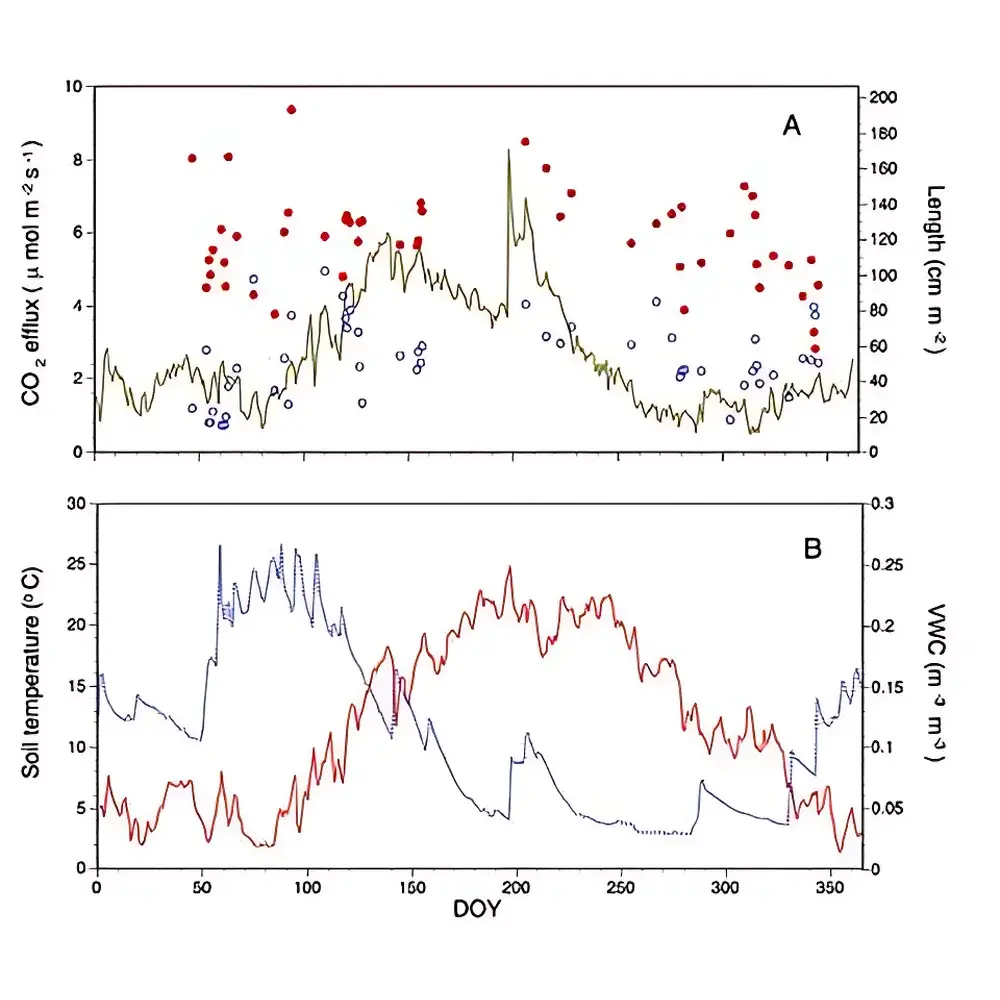
The SCG-BTC In Situ Soil CO₂ and Root Dynamics Observation System is a fully integrated, field-deployable platform engineered for concurrent, high-temporal-resolution monitoring of fine-root and mycorrhizal dynamics alongside soil carbon fluxes. It operates on two complementary biophysical principles: (1) digital minirhizotron imaging—based on optical magnification and time-series image registration—to quantify root growth, mortality, branching, and mycorrhizal colonization in situ; and (2) non-dispersive infrared (NDIR) spectroscopy combined with gradient-based soil gas profiling and automated chamber-based respiration measurement to resolve CO₂ production, diffusion, and efflux across soil horizons. This dual-modality architecture enables mechanistic linkage between belowground biological activity (root turnover, microbial metabolism) and ecosystem-scale carbon exchange—critical for advancing process-based models of terrestrial carbon cycling under climate change scenarios.
Key Features
- Fully synchronized acquisition across four independent data streams: root imagery (BTC–100), soil CO₂ concentration gradients (SCG–3), volumetric water content & temperature (TRIME–PICO32), and chamber-based soil respiration (ACE)
- BTC–100 minirhizotron system with 15×–100× optical magnification, precision-positioning handle, and distortion-corrected imaging area (18 mm × 13.5 mm at 15×; 3 mm × 2.1 mm at 100×) optimized for fine-root (≤2 mm diameter) and hyphal structure resolution
- SCG–3 multi-depth CO₂ profiler with 16-channel (expandable to 32-channel) datalogger: 16-bit resolution, ±0.03% accuracy, programmable sampling interval (3 s – 4 h), and timestamped storage capacity of 220,000 records
- NDIR CO₂ sensors with dual-wavelength compensation: selectable ranges (0–5000, 0–7000, 0–10,000, or 0–20,000 ppm), ±1.5% full-scale accuracy, and 30-s response time (t₉₀)
- TRIME–PICO32 TDR sensor: 0–100% volumetric water content (±1% accuracy), −20°C to +50°C soil temperature (±0.2°C), embedded calibration for mineral and organic soils
- ACE automated soil respiration system with configurable chamber modes (closed/open; transparent/opaque), 40.0 mmol·m⁻³ measurement range (0–896 ppm), 1-ppm resolution, and integrated auto-zero calibration
- Wireless data telemetry via secure HTTPS API—no static IP required—enabling remote access, real-time visualization, and scheduled downloads through browser-based software interface
Sample Compatibility & Compliance
The system is validated for deployment in diverse soil textures (sand to clay loam), organic-rich forest floors, agricultural plots, and restored grasslands. All hardware components comply with IEC 60529 (IP67 enclosure rating for underground probes), FCC Part 15 Class B (EMI/RFI emissions), and RoHS 2011/65/EU. Data acquisition workflows support ALCOA+ principles (Attributable, Legible, Contemporaneous, Original, Accurate, Complete, Consistent, Enduring, Available) and are compatible with GLP/GMP audit requirements. Software logging includes full metadata tagging (sensor ID, depth, timestamp, operator ID), electronic signatures, and immutable audit trails—fully aligned with FDA 21 CFR Part 11 for regulated environmental monitoring applications.
Software & Data Management
The proprietary SCG-DataLink Suite provides end-to-end data handling: raw image ingestion with batch georeferencing and root segmentation (via trainable U-Net model); time-series alignment of CO₂ gradients with root turnover metrics; statistical aggregation (hourly/daily means, min/max, cross-correlation, spectral analysis); and export to NetCDF, CSV, or HDF5 formats for integration with R, Python (SciPy/Pandas), or MATLAB. The software supports automated QC flagging (e.g., condensation artifacts in minirhizotron images, NDIR drift alerts, TDR saturation thresholds) and generates ISO-compliant metadata files compliant with the FAIR principles (Findable, Accessible, Interoperable, Reusable).
Applications
- Quantifying root-mycorrhiza contributions to rhizosphere priming effects and soil organic carbon stabilization
- Evaluating drought-induced shifts in root turnover rates and their coupling to diel CO₂ efflux patterns
- Validating land surface models (e.g., CLM, ORCHIDEE) by constraining root-derived respiration parameters
- Assessing carbon sequestration potential of agroforestry systems through long-term root dynamics + flux co-monitoring
- Supporting IPCC Tier 3 inventories for soil carbon stock change reporting under UNFCCC Article 5
- Field validation of root trait–function relationships in functional ecology and breeding programs
FAQ
Can the BTC–100 minirhizotron be used in saturated or high-clay soils?
Yes—its stainless-steel housing and hydrophobic lens coating resist biofouling and water intrusion; however, installation requires augering with minimal soil disturbance and backfilling with native soil to preserve hydraulic continuity.
How does the SCG–3 system distinguish biotic from abiotic CO₂ sources?
It does not directly differentiate sources; rather, it enables inference via multi-depth profiling: steep CO₂ gradients near roots (<10 cm depth) coupled with concurrent root growth pulses strongly indicate biogenic origin, while uniform profiles suggest diffusion-limited or geochemical contributions.
Is the ACE respirometer compatible with eddy covariance tower networks?
Yes—its output conforms to AmeriFlux Level 1 standards (netCDF format, UTC timestamps, QA/QC flags), and its chamber footprint (20 cm diameter) is designed to match typical tower footprint partitioning scales.
What is the minimum recommended deployment duration for statistically robust root turnover estimates?
Based on Vargas et al. (2008) and subsequent meta-analyses, ≥12 months of weekly imaging is required to capture seasonal phenology and derive annual production/mortality rates with <15% uncertainty.
Does the system support third-party sensor integration?
Yes—the SCG–3 datalogger provides 4 analog input channels (0–5 V, 16-bit) and RS-485 Modbus RTU support for adding custom sensors (e.g., O₂, CH₄, NOₓ) without firmware modification.
Related Products







