
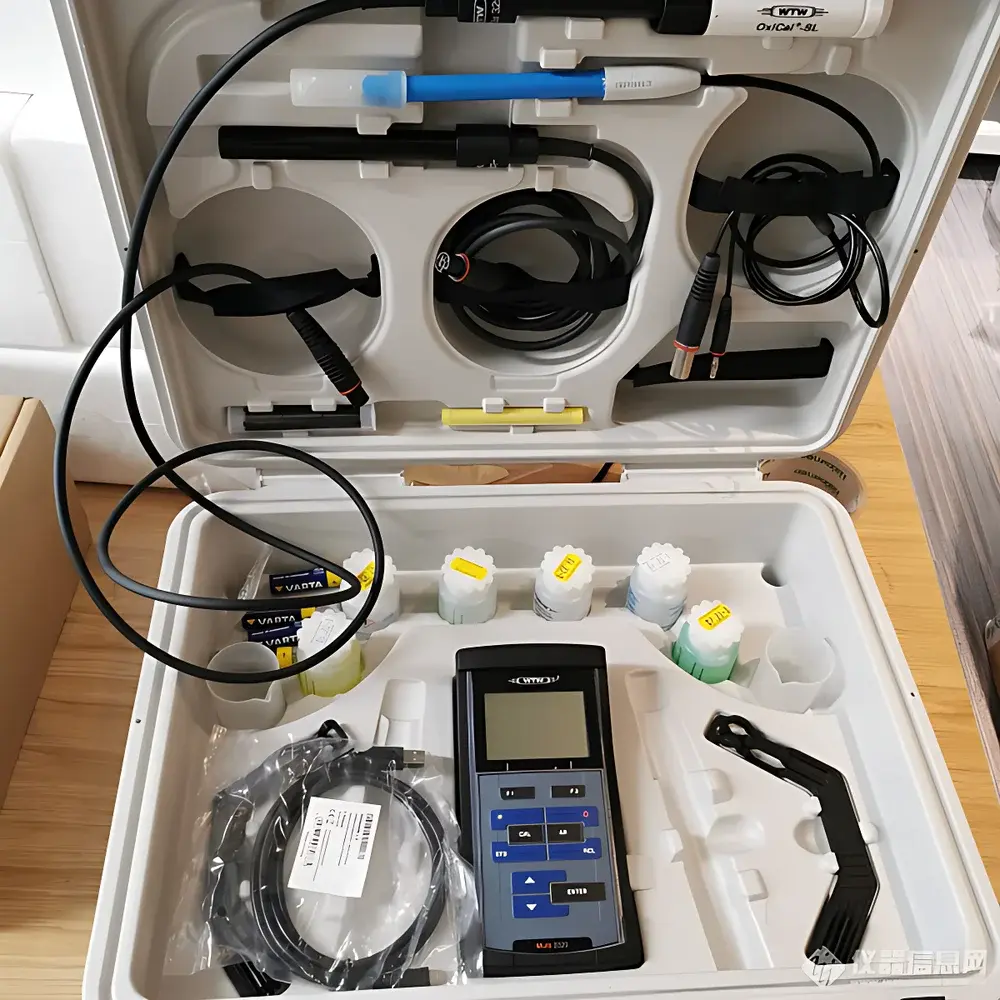
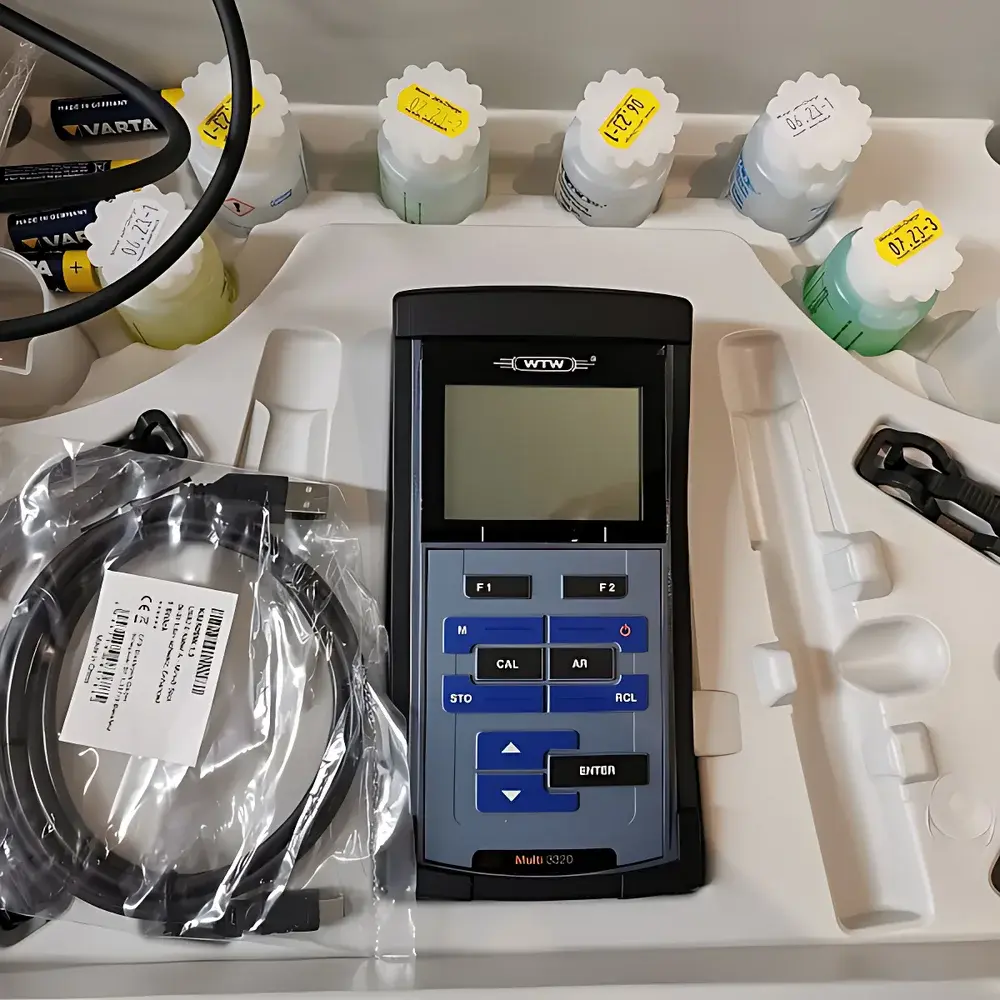
WTW Multi 3320 Portable Multi-Parameter Water Quality Analyzer
| Brand | WTW |
|---|---|
| Origin | Germany |
| Model | Multi 3320 |
| Instrument Type | Portable/Handheld Water Quality Analyzer |
| Measurement Principle | Electrochemical Sensing |
| Measurable Parameters | pH, ORP, Dissolved Oxygen (DO), Conductivity, Temperature |
| Compliance | GLP-compliant data logging |
| Memory Capacity | 5000 GLP-formatted records |
| Display | Backlit graphical LCD |
| Input Channels | Dual analog inputs (DIN 8-pin) |
| Protection Rating | IP67 |
| Power Supply | 4 × 1.5 V AA alkaline batteries (up to 1000 h operation) |
| Dimensions | 180 × 80 × 55 mm (H × L × W) |
Overview
The WTW Multi 3320 Portable Multi-Parameter Water Quality Analyzer is an engineered field instrument designed for high-reliability electrochemical measurements in demanding environmental and process monitoring applications. Built upon WTW’s decades of expertise in sensor technology and metrological traceability, the Multi 3320 implements standardized potentiometric, amperometric, and conductometric measurement principles compliant with ISO 5667 (water quality sampling), ASTM D1293 (pH of water), ASTM D888 (dissolved oxygen), and EN 27888 (conductivity). Its dual-channel analog input architecture supports simultaneous acquisition from two independent electrochemical sensors—enabling concurrent pH/DO or pH/conductivity profiling without cross-channel interference. The device operates across a wide thermal range (–5.0 to +105.0 °C) and delivers stable readings under variable pressure and humidity conditions typical of surface water, wastewater effluent, groundwater wells, and industrial process streams.
Key Features
- Dual analog input channels compatible with all standard WTW DIN 8-pin electrochemical sensors—including SenTix® pH electrodes, TetraCon® conductivity cells, CellOx® optical DO probes, and ISE-compatible modules
- High-resolution graphical LCD with backlighting for legible operation under low-light or outdoor conditions
- GLP-compliant internal memory storing up to 5000 measurement records with timestamp, sensor ID, calibration history, and operator tag
- Configurable auto-data logging intervals (1 s to 24 h), manual storage (200 entries), and ECO power mode extending battery life to >1000 hours on four AA alkaline cells
- IP67-rated enclosure ensuring full dust ingress protection and temporary submersion resistance (1 m for 30 min)
- USB Mini-B interface supporting rapid data export to PC-based software (e.g., WTW LabX® Light or third-party CSV-compatible platforms) with full audit trail support
- Auto-read stabilization detection with user-defined hold criteria, eliminating subjective endpoint judgment during field titrations or equilibrium-based measurements
Sample Compatibility & Compliance
The Multi 3320 is validated for use with natural waters (freshwater, seawater, brackish), treated effluents, cooling tower fluids, and potable water distribution systems. All electrochemical measurements adhere to internationally recognized reference methods: pH per ISO 10523 and USP ; conductivity per ISO 7888 and ASTM D1125; dissolved oxygen per ISO 5814 (optical) and ISO 5815-1 (electrochemical); ORP per ASTM D1498. Data integrity meets GLP requirements through embedded calibration verification logs, sensor drift tracking, and tamper-evident timestamping. While not inherently 21 CFR Part 11 compliant, its structured data export format enables integration into validated LIMS or ELN environments where electronic signature and audit trail functionality are managed at the system level.
Software & Data Management
Data retrieval occurs via USB connection using WTW’s free LabX® Light software or generic terminal emulators supporting ASCII/CSV protocols. Each stored record includes parameter values, measurement units, sensor serial numbers, calibration dates, temperature compensation status, and user-defined location tags. The instrument supports batch export with automatic file naming by date/time stamp. For regulated laboratories, exported datasets can be imported into validated analytical platforms supporting metadata enrichment, statistical process control (SPC), and trend analysis. Firmware updates are delivered via downloadable HEX files and applied through the same USB interface—ensuring long-term compatibility with evolving regulatory expectations.
Applications
- Field-based ambient monitoring of rivers, lakes, and coastal zones under national water framework directives
- Routine QA/QC at municipal wastewater treatment plants (influent, bioreactor, final effluent)
- Groundwater well profiling for redox potential mapping and contaminant plume delineation
- Process validation in pharmaceutical water systems (PW, WFI) per EU GMP Annex 1 and USP
- Educational laboratory instruction in environmental chemistry and analytical instrumentation
- Emergency response deployments requiring rapid, multi-parameter assessment following spills or infrastructure failures
FAQ
What sensor types are supported by the Multi 3320?
The instrument accepts all WTW analog sensors with DIN 8-pin connectors—including pH (SenTix series), ORP, conductivity (TetraCon, LR), dissolved oxygen (CellOx optical and IDS polarographic), and select ion-selective electrodes (e.g., NH₄⁺, NO₃⁻).
Does the Multi 3320 support automatic temperature compensation?
Yes—each parameter channel applies configurable, sensor-specific temperature compensation algorithms per IUPAC and ISO standards; users may enable/disable compensation or input fixed reference temperatures.
Can calibration data be transferred between instruments?
Calibration coefficients are stored per sensor ID and retained when the electrode is moved to another Multi 3320 unit; no manual re-entry is required if the same sensor is reused.
Is the device suitable for saline or high-conductivity samples?
With a conductivity range spanning 0.000 µS/cm to 1000 mS/cm and built-in salinity/TDS conversion per PNA or NaCl standards, it accommodates seawater, industrial brines, and desalination plant streams.
How is data security handled during USB transfer?
No encryption is applied onboard; however, exported files contain unalterable timestamps and sensor metadata, enabling forensic reconstruction of measurement provenance within a controlled IT environment.
Related Products







