
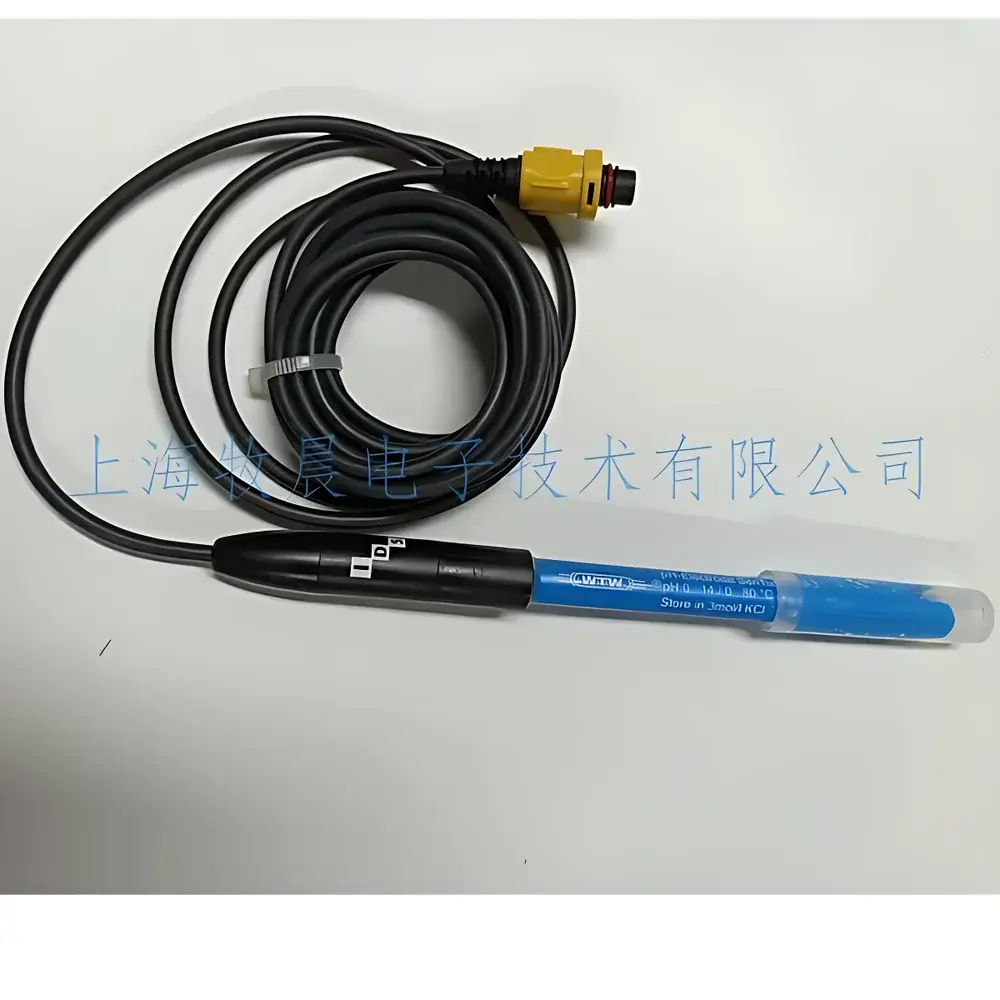
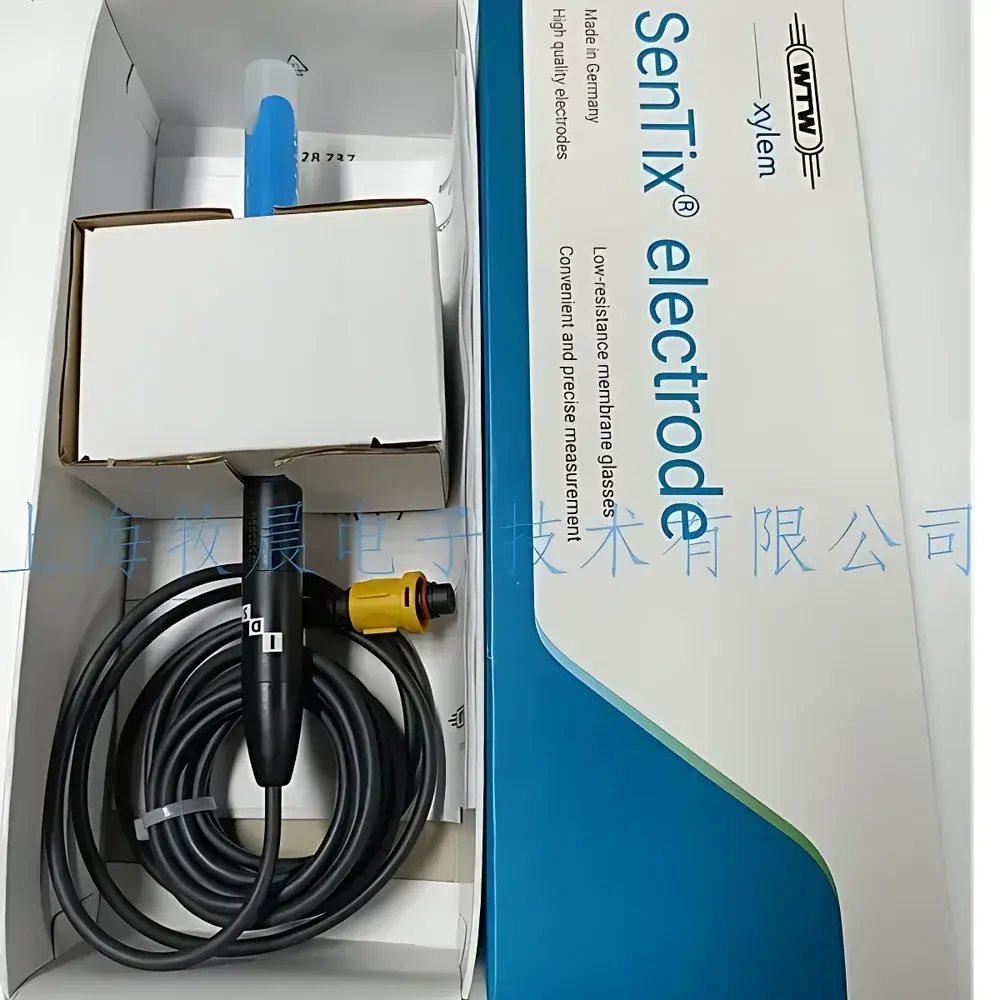
WTW SenTix 940-3 IDS pH Electrode for Aqueous Solutions
| Brand | WTW |
|---|---|
| Origin | Germany |
| Model | SenTix 940-3 |
| Measurement Range | 0.000–14.000 pH |
| Accuracy | ±0.004 pH |
| Temperature Range | 0–80 °C |
| Cable Length | 3 m |
| Electrolyte | Polymer Gel (Gel-Filled) |
| Input Impedance | >1 GΩ at 25 °C |
| Connector Type | 4-pin IDS (Intelligent Digital Sensor) |
| Housing Material | PPE/PS Composite |
| Shaft Length | 120 mm |
| Shaft Diameter | 4.3 mm |
| Minimum Bending Radius | 20 mm (fixed), 60 mm (flexible use) |
Overview
The WTW SenTix 940-3 IDS pH electrode is an intelligent, gel-filled, polymer-bodied sensor engineered for high-precision, routine pH measurement in aqueous environmental, municipal, and industrial water applications. Designed according to ISO 17025-compliant metrological principles, it operates on the potentiometric principle—measuring the potential difference between a pH-sensitive glass membrane and a stable internal reference system against a known buffer solution. Its integrated IDS (Intelligent Digital Sensor) interface embeds non-volatile memory directly within the electrode connector, enabling automatic recognition of calibration history, slope, offset, and sensor identity by any compatible WTW or Xylem-branded meter (e.g., MultiLine® SC, pH 3310, or IQ Sensor Net systems). This architecture eliminates manual parameter entry, reduces operator error, and ensures traceable, instrument-agnostic calibration data integrity across laboratory, field, and process environments.
Key Features
- Intelligent Digital Sensor (IDS) technology with embedded EEPROM storing calibration coefficients, date-stamped calibration history, and sensor-specific metadata—including serial number, manufacturing date, and last calibration timestamp.
- Gel-filled reference system with polymer electrolyte eliminates liquid junction maintenance and minimizes clogging risk in turbid or particulate-laden water samples.
- High-impedance pH glass membrane (>1 GΩ at 25 °C) optimized for stability and low drift in neutral-to-alkaline matrices; suitable for continuous immersion in drinking water, surface water, wastewater effluent, and aquaculture systems.
- Chemically resistant PPE/PS composite shaft (120 mm length, 4.3 mm diameter) with reinforced strain relief and optimized bending radius (20 mm fixed / 60 mm flexible) for durable deployment in both handheld and fixed-mount configurations.
- NTC temperature sensor (10 kΩ at 25 °C) co-located with the pH membrane for simultaneous, spatially correlated temperature compensation—critical for compliance with ASTM D1293 and ISO 10523 protocols.
- Auto-recognition enabled by standardized 4-pin IDS connector; supports bidirectional communication for firmware updates, diagnostics, and audit-log synchronization.
Sample Compatibility & Compliance
The SenTix 940-3 is validated for use in low- to medium-conductivity aqueous matrices (≥50 µS/cm), including potable water, river/lake monitoring, activated sludge, and treated effluent. It is not recommended for strong acids (pH 13), hydrofluoric acid, organic solvents, high-fat or protein-rich media (e.g., dairy or food processing streams), or solutions containing sulfides, bromides, or iodides—substances known to accelerate glass membrane aging or poison the reference junction. The electrode meets CE marking requirements under Directive 2014/30/EU (EMC) and 2011/65/EU (RoHS). Its design aligns with GLP/GMP documentation practices through persistent, tamper-evident calibration storage—supporting FDA 21 CFR Part 11–compliant data integrity when used with validated WTW software platforms (e.g., LabX® or MultiLab® Suite).
Software & Data Management
When connected to IDS-enabled instruments, the SenTix 940-3 enables full digital traceability: each calibration event—including buffer IDs, measured mV values, calculated slope (%), offset (mV), and temperature—is written directly to the electrode’s onboard memory. Meters automatically retrieve this log upon connection, allowing cross-instrument consistency without reconfiguration. Exported calibration reports include ISO/IEC 17025–aligned metadata (uncertainty estimates per ISO/IEC 17025:2017 Annex A.3.2). Software tools such as WTW LabX support automated report generation, electronic signature workflows, and long-term trend analysis of electrode performance metrics (e.g., slope decay rate, response time degradation), facilitating predictive maintenance planning.
Applications
- Drinking water quality control in municipal treatment plants (compliance with EU Directive 98/83/EC and US EPA Method 150.1).
- Environmental monitoring of surface and groundwater per ISO 5667-3 and ASTM D3370 sampling protocols.
- Wastewater process control—nitrification/denitrification monitoring, equalization tank profiling, and final effluent verification.
- Educational laboratories requiring robust, low-maintenance electrodes for undergraduate analytical chemistry curricula.
- Industrial cooling tower and boiler feedwater management where repeatable, low-drift measurements are essential for corrosion inhibition control.
FAQ
How does the IDS interface improve measurement traceability?
The IDS interface stores calibration data permanently in the electrode—not the meter—ensuring that slope, offset, and history remain associated with the physical sensor regardless of which compatible instrument it is used with. This satisfies ISO/IEC 17025 clause 7.7.1 on equipment identification and data linkage.
Can the SenTix 940-3 be used in hot water applications up to 80 °C?
Yes, but prolonged exposure above 60 °C accelerates reference electrolyte diffusion and may reduce service life. For intermittent high-temperature use, allow thermal equilibration before measurement and avoid rapid temperature cycling.
What cleaning protocol restores performance after protein or fat fouling?
Rinse with deionized water first, then soak for ≤5 minutes in warm (40 °C) 1% laboratory detergent solution. Follow immediately with thorough rinsing in deionized water, rehydration in 3 mol/L KCl for ≥1 hour, and full two-point calibration using certified buffers.
Why is slope verification critical during calibration?
A slope outside 95–105% of theoretical (59.16 mV/pH at 25 °C) indicates membrane aging, contamination, or reference junction blockage—triggering corrective action before data integrity is compromised.
Does the electrode require refilling or electrolyte replacement?
No. The polymer gel electrolyte is sealed and maintenance-free for the electrode’s operational lifetime; no user-accessible refill ports or liquid junctions are present.





