
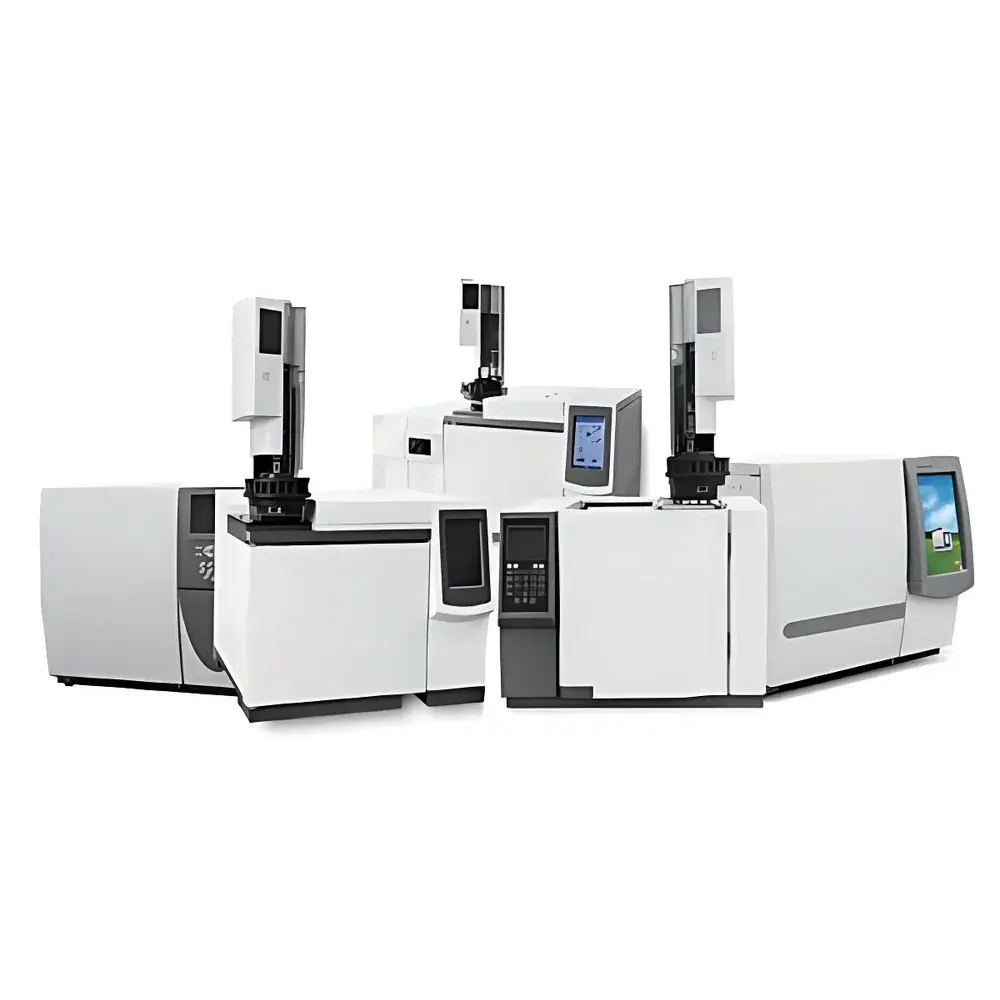
Hailong TD-380 Thermal Desorption Unit for GC Coupling
| Brand | Hailong |
|---|---|
| Model | TD-380 |
| Thermal Desorption Temperature Range | Ambient to 380 °C |
| Valve Oven Temperature Range | Ambient to 150 °C |
| Transfer Line Temperature Range | Ambient to 150 °C |
| Desorption Time | 0–60 min |
| Bake-out (Conditioning) Time | 0–60 min |
| Sample Introduction Time | 0–10 min |
| Carrier Gas Control | High-precision pressure-regulated stainless steel pneumatic system |
| Construction | Passivated 316 SS tubing, PTFE-sealed high-temp valve manifold, silicone O-rings (low-volatility), de-activated inert transfer lines |
Overview
The Hailong TD-380 Thermal Desorption Unit is an analytical interface engineered for quantitative trace volatile organic compound (VOC) and semi-volatile organic compound (SVOC) analysis in environmental, occupational hygiene, pharmaceutical, and materials testing laboratories. It operates on the principle of thermal desorption—controlled heating of sorbent-packed tubes to release analytes into a carrier gas stream, followed by cryo-focusing or direct transfer into a gas chromatograph (GC) inlet. Unlike solvent-based extraction methods, thermal desorption eliminates matrix interference, reduces solvent consumption, and delivers superior sensitivity (sub-pg level detection limits when coupled with mass spectrometry). The TD-380 is designed for seamless integration with all major GC platforms—including Agilent, Thermo Fisher, Shimadzu, and PerkinElmer—via standardized pneumatic and electrical interfaces compliant with ASTM D6196 and ISO 16017-1 protocols.
Key Features
- Direct thermal desorption interface with zero-solvent sample introduction—eliminates carryover and improves reproducibility across multi-sample sequences.
- Microcontroller-based embedded control system with independent PID regulation for desorption oven, valve oven, and transfer line—ensuring ±0.5 °C temperature stability under dynamic heating profiles.
- High-integrity pneumatic architecture: precision-machined 316 stainless steel tubing, electropolished and passivated per ASTM A967; all static seals utilize low-extractable silicone elastomers; dynamic sealing at high-temperature valves employs chemically resistant PTFE gaskets rated to 200 °C.
- Integrated valve oven and heated transfer line assembly—minimizes dead volume and prevents condensation-induced analyte loss during transfer; optimized flow path geometry validated via computational fluid dynamics (CFD) modeling.
- Custom-engineered tapered ferrules and variable-diameter connectors reduce interfacial dead volume between sorbent tube and transfer line to <0.2 µL—critical for preserving peak shape and quantitative accuracy in narrow-bore capillary GC applications.
- Programmable multi-step method support: includes tube conditioning (bake-out), desorption, focusing (optional with cryo-trap add-on), and purge cycles—all time- and temperature-resolved with non-volatile memory retention.
Sample Compatibility & Compliance
The TD-380 accommodates standard 6 mm OD × 89 mm length sorbent tubes (e.g., Tenax TA, Carbopack B/C, Carboxen 1000) and supports dual-tube configurations for automated back-flush or internal standard spiking. It complies with EPA Method TO-17 requirements for ambient air monitoring and meets key performance criteria outlined in ISO 21047 (determination of VOCs in indoor air) and EN 16755 (workplace air analysis). All wetted materials are certified extractables-free per USP , and firmware logging supports audit-ready operation under GLP and GMP environments. Optional 21 CFR Part 11-compliant software modules provide electronic signatures, user access tiers, and immutable method/data audit trails.
Software & Data Management
The unit operates standalone via front-panel keypad and LCD, or integrates with PC-based chromatography data systems (CDS) through RS-232/USB and TTL-triggered GC start signals. Hailong’s TDControl Suite (v3.2+) offers method editor with thermal ramp scripting, real-time temperature/gas flow monitoring, event logging with timestamped error codes, and CSV-exportable run reports. Raw thermal profiles and valve actuation timestamps are stored locally on industrial-grade SD card (included) for forensic review. Data integrity safeguards include cyclic redundancy check (CRC) validation on all configuration writes and automatic backup upon power cycle.
Applications
Typical use cases include: quantification of benzene, toluene, ethylbenzene, and xylenes (BTEX) in indoor air samples; screening of residual solvents (ICH Q3C) in pharmaceutical packaging; off-gassing analysis of automotive interior materials (VDA 278); identification of odorants in consumer products per ASTM E2853; and compliance testing for formaldehyde and aldehydes in building materials (ISO 16000-3). Its robust thermal control and inert flow path make it suitable for thermally labile compounds such as terpenes, lactones, and certain pesticides without degradation artifacts.
FAQ
Can the TD-380 be used with both split and splitless GC inlets?
Yes—the unit delivers consistent, pulse-free carrier gas flow compatible with either injection mode; optimal transfer parameters are selectable per application in the method editor.
Is calibration traceable to NIST standards?
Temperature sensors are factory-calibrated against NIST-traceable reference probes; users may perform field verification using certified dry-block calibrators per ISO/IEC 17025 guidelines.
What maintenance intervals are recommended for long-term reliability?
Valve o-rings should be inspected every 500 runs; stainless steel tubing requires cleaning only if carbon buildup is observed after repeated high-boiling-point sample analysis—typically beyond 2,000 injections under normal use.
Does the system support automated tube loading?
The base TD-380 is manually loaded; however, it is mechanically and electrically compatible with third-party autosamplers (e.g., Gerstel MPS, CDS 7000 series) via industry-standard TTL I/O and mounting interface dimensions.
How is method validation supported for regulated labs?
The system provides full parameter logging, including actual vs. setpoint temperature deviations, valve timing jitter (<10 ms), and pressure drift metrics—enabling comprehensive IQ/OQ/PQ documentation per FDA and EMA expectations.



