
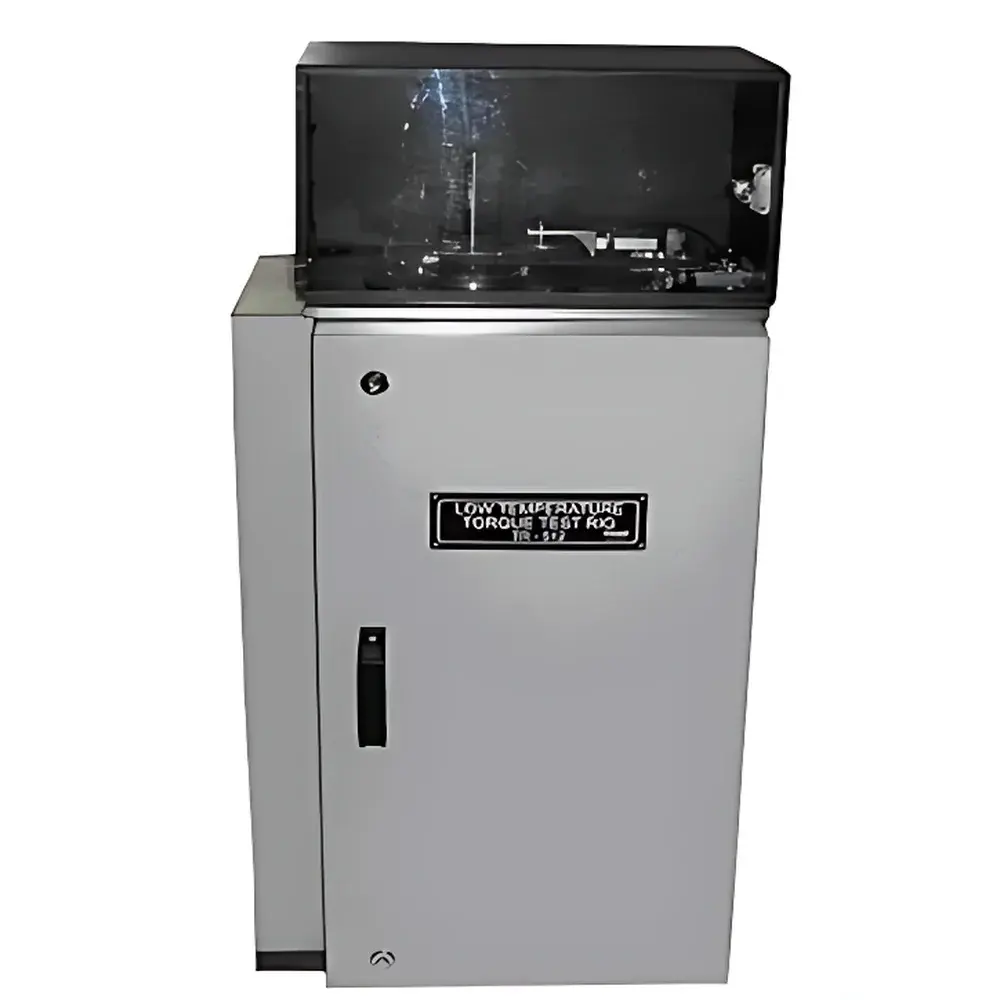
Ducom TR-512 Low-Temperature Torque Tester
| Origin | Hong Kong |
|---|---|
| Manufacturer Type | Authorized Distributor |
| Domestic Origin | PRC-Made |
| Model | TR-512 |
| Pricing | Available Upon Request |
Overview
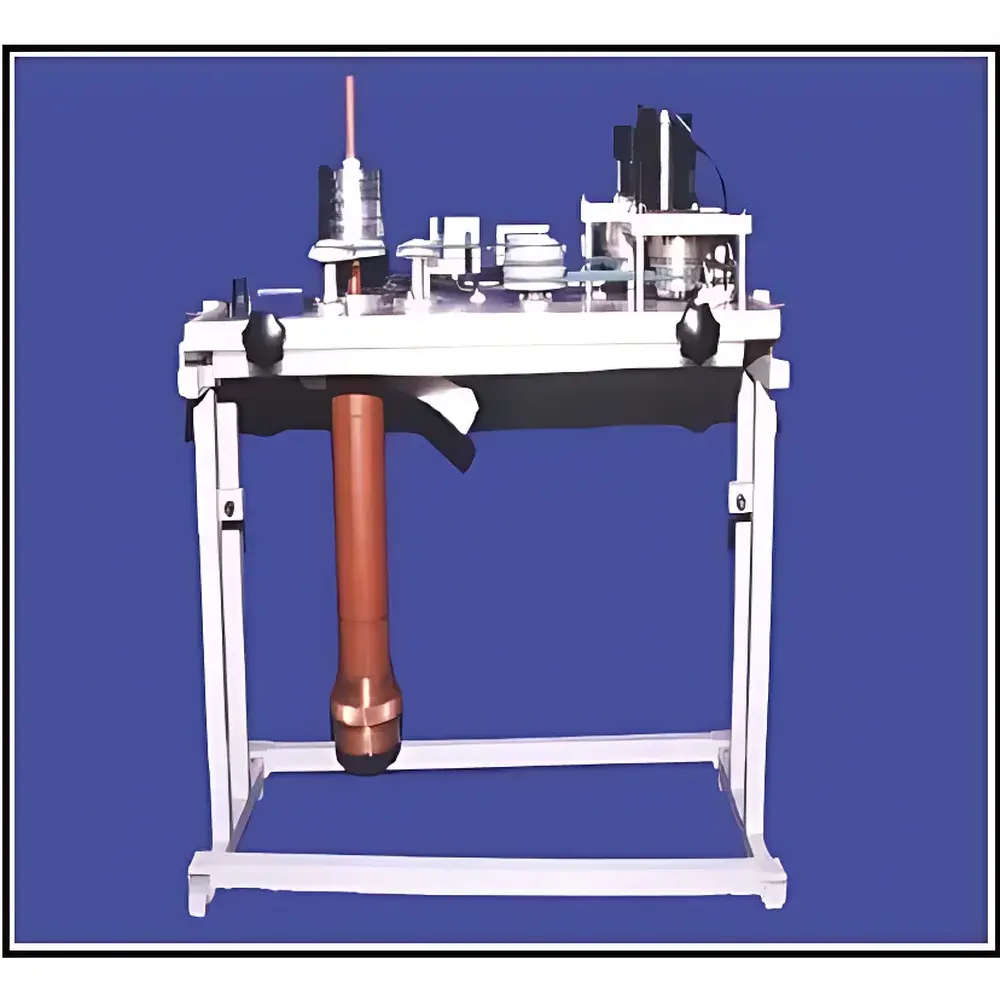
The Ducom TR-512 Low-Temperature Torque Tester is a precision-engineered instrument designed for quantifying rotational resistance (torque) of lubricants—particularly greases and semi-solid lubricants—under controlled sub-zero thermal conditions. It operates on the fundamental principle of measuring the dynamic torque required to rotate a standardized test shaft or bearing assembly immersed in the lubricant sample, while maintaining precise temperature control via external cryogenic media (e.g., liquid nitrogen) and integrated PID-regulated heating elements. Unlike systems with built-in refrigeration compressors, the TR-512 adopts an open-cryostat architecture, enabling rapid, stable, and highly reproducible thermal conditioning down to –70 °C (typical operational range: –60 °C to +100 °C), making it especially suitable for aerospace-grade grease qualification, cold-climate equipment validation, and low-temperature tribological R&D per ASTM D1478, IP 186/93, and ISO 6743-9 specifications.
Key Features
- Real-time, high-resolution digital torque measurement synchronized with temperature acquisition at user-defined sampling intervals
- PID-controlled resistive heating system ensuring ±0.3 °C thermal stability during dynamic testing—even under cryogenic ambient conditions
- Modular test fixture design compatible with standard roller bearings (e.g., 6204, 6304), plain journal configurations, and custom shaft geometries
- Direct USB interface with proprietary Windows-based software for automated test sequencing, live data visualization, and export to CSV/PDF formats
- Compliance-ready architecture supporting audit trails, user-level access control, and electronic signature functionality aligned with GLP and FDA 21 CFR Part 11 requirements (when deployed in validated environments)
- No internal compressor or closed-loop refrigeration—enables rapid cooldown using liquid nitrogen or dry ice/ethanol baths without condensation risk inside the instrument housing
Sample Compatibility & Compliance
The TR-512 accommodates a broad range of lubricant formulations including lithium-complex, polyurea, calcium-sulfonate, and PFPE-based greases, as well as low-viscosity synthetic oils used in cryogenic actuators and inertial guidance systems. Sample volume requirements are minimal (typically 5–15 mL), minimizing material consumption during qualification. The system supports test protocols defined in IP 186/93 (“Determination of Low-Temperature Torque of Greases”), ASTM D1478 (“Standard Test Method for Low-Temperature Torque of Lubricating Greases”), and ISO 6743-9 (lubricant classification for rolling bearings). All torque transducers are factory-calibrated traceable to NIST standards, with annual recalibration services available through Ducom’s ISO/IEC 17025-accredited calibration laboratory.
Software & Data Management
The TR-512 is operated via Ducom’s TorqueView™ software—a deterministic, deterministic real-time acquisition platform developed for tribological laboratories. It provides full programmability of ramp rates, dwell times, temperature setpoints, and torque thresholds. Each test session automatically generates timestamped metadata including operator ID, environmental chamber status (if externally monitored), calibration certificate IDs, and raw sensor output files (.tdms format). Export modules support direct integration into LIMS environments and comply with data integrity principles outlined in ALCOA+ (Attributable, Legible, Contemporaneous, Original, Accurate, Complete, Consistent, Enduring, Available). Audit logs record all parameter modifications, file exports, and user logins for regulatory review.
Applications
- Qualification of aviation greases for turbine engine accessories operating below –40 °C (per SAE AS5780 and MIL-PRF-81322)
- Development of low-temperature lubricants for polar exploration vehicles, satellite mechanisms, and cryogenic valve actuators
- Comparative analysis of grease thickener performance under thermal cycling (e.g., –55 °C ↔ +25 °C)
- Root-cause investigation of cold-start failures in electric motor bearings and gearboxes
- Supporting OEM specification development for automotive EV drivetrain components exposed to arctic climates
FAQ
Does the TR-512 include an integrated refrigeration unit?
No—the TR-512 relies on external cryogenic media (e.g., liquid nitrogen or chilled ethanol/dry ice baths) for sub-zero conditioning. This design eliminates compressor vibration, improves thermal response time, and avoids oil contamination risks.
What is the minimum achievable test temperature?
With proper cryogen handling and insulation, the system achieves stable operation down to –70 °C; typical validated range per IP 186/93 is –60 °C to +100 °C.
Is the torque sensor calibrated to international standards?
Yes—all torque transducers are NIST-traceable and supplied with calibration certificates valid for 12 months; recalibration services follow ISO/IEC 17025 procedures.
Can the TR-512 be integrated into a GMP-compliant lab environment?
When configured with user authentication, electronic signatures, and audit trail activation, the system meets foundational requirements for GMP and GLP documentation integrity.
What bearing types are supported out-of-the-box?
Standard fixtures accommodate deep-groove ball bearings (6204, 6304), tapered roller bearings (LM11949/LM11910), and custom-machined journal assemblies upon request.



