
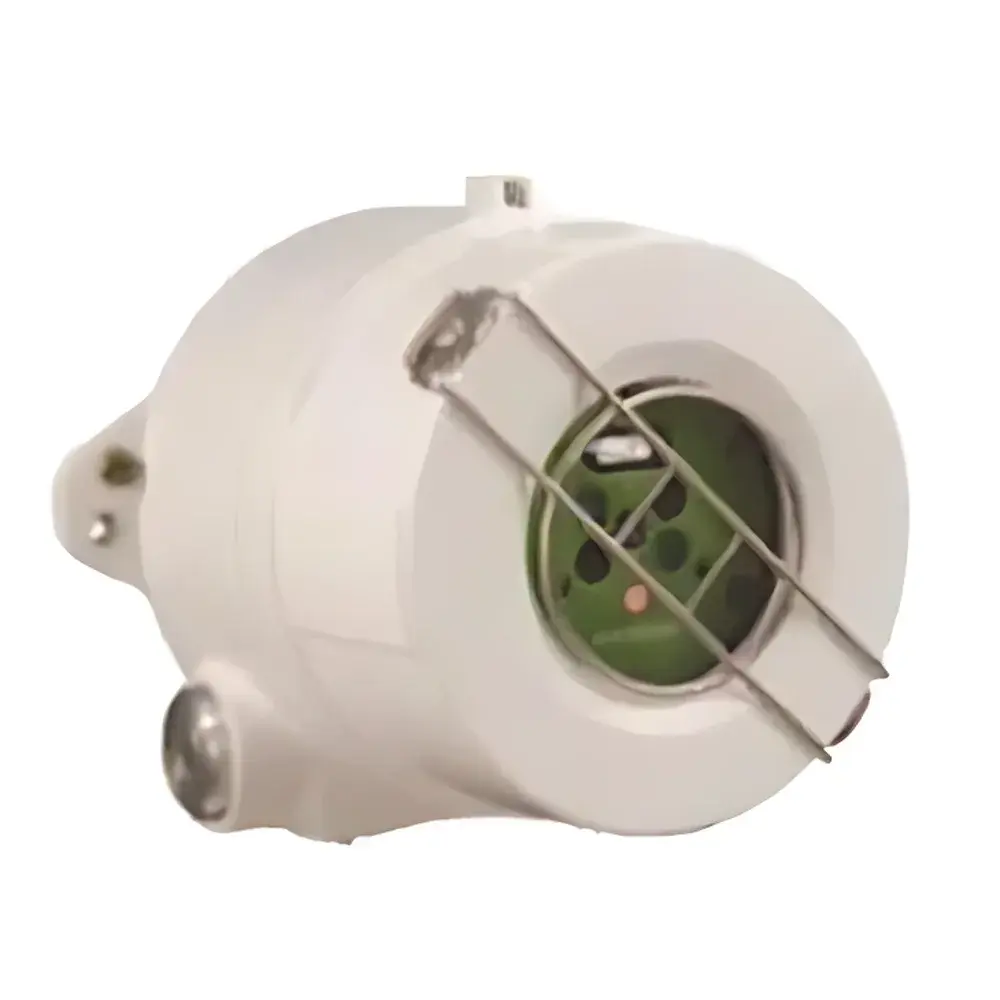
BW FS20X Multi-Frequency IR/UV Flame Detector
| Brand | BW |
|---|---|
| Origin | Canada |
| Manufacturer Type | Authorized Distributor |
| Origin Category | Imported |
| Model | FS20X |
| Price | Upon Request |
Overview
The BW FS20X Multi-Frequency IR/UV Flame Detector is an advanced optical flame sensing system engineered for high-reliability fire detection in demanding industrial environments. Unlike conventional dual-band UV/IR detectors, the FS20X employs a proprietary quad-spectral detection architecture—simultaneously monitoring multiple infrared (IR) bands (including two distinct IR channels), ultraviolet (UV), and visible light (VIS) spectra. This multi-frequency approach enables robust discrimination between true hydrocarbon and non-hydrocarbon flames (e.g., hydrogen, ammonia, or metal combustion) and common false sources such as welding arcs, sunlight, hot surfaces, and incandescent lighting. The detector operates on the principle of spectral signature analysis: real flames emit characteristic temporal and spectral patterns across these bands, while interference sources exhibit inconsistent or non-correlated emission profiles. Its detection range extends to 61 meters (200 ft) for a 1 ft² n-heptane fire—a benchmark test defined in UL 268 and EN 54-10—and delivers superior coverage area compared to legacy UV/IR units under identical mounting conditions.
Key Features
- Quad-spectral sensing: Dual IR channels (centered at ~4.3 µm CO₂ emission band and secondary IR reference band), solar-blind UV (185–260 nm), and visible-light (400–700 nm) photodiodes
- Real-time frequency-domain flame analysis algorithm implemented across dual microprocessors—primary CPU for high-speed signal acquisition and FFT-based pattern recognition; secondary MCU for sensor diagnostics, self-test execution, and Modbus protocol handling
- 90° conical field-of-view with built-in solar radiation rejection, certified to operate under direct sunlight up to 120,000 lux without false triggering
- RS-485 interface compliant with Modbus RTU protocol for integration into DCS, PLC, or BMS systems; supports peer-to-peer device addressing and firmware updates
- 4–20 mA analog output (configurable as sourcing or sinking) with HART-compatible digital overlay for remote calibration and status reporting
- Internal non-volatile memory stores ≥10,000 event logs—including alarm timestamps, fault codes, self-test results, and environmental temperature readings—with embedded real-time clock (RTC) and battery-backed timekeeping
- FM-approved Class I, Division 1, Groups B, C, D; ATEX II 2G Ex db IIC T6 Gb; IECEx Db Ex db IIC T6 Gb; SIL 2 per IEC 61508
- IP66-rated aluminum housing with dual 3/4” NPT or M25 cable entries; operating temperature range: −40 °C to +70 °C
- Automatic optical path verification and electronic self-test performed every 30 seconds; diagnostic status accessible via LED indicators or host software
Sample Compatibility & Compliance
The FS20X is validated for detection of both hydrocarbon (e.g., methane, propane, diesel, jet fuel) and non-hydrocarbon flames (e.g., hydrogen, sulfur, magnesium, lithium). It meets rigorous performance criteria outlined in UL 268A (Flame Detectors), EN 54-10:2013+A1:2017 (Fire Detection and Fire Alarm Systems — Part 10: Flame Detectors — Requirements and Test Methods), and NFPA 72 Chapter 17 (Detection, Notification, and Communication). Its immunity to arc welding (tested per IEC 61000-4-3 and IEC 61000-4-4) and resistance to electromagnetic interference (EMI) exceed Level 4 requirements per IEC 61326-1. The device supports traceable calibration and audit-ready event logging aligned with GLP/GMP documentation standards.
Software & Data Management
The FS20X integrates seamlessly with BW’s Flame System Interface Module (FSIM), a USB-connected diagnostic tool enabling configuration, firmware upgrades, and full event log extraction via Windows-based FlameView software. All logged events include ISO 8601-compliant timestamps, alarm cause classification (flame confirmed, false alarm, sensor fault), and contextual environmental data. Event history export supports CSV and XML formats for integration with CMMS or EHS platforms. Audit trails comply with FDA 21 CFR Part 11 requirements when used with validated FSIM firmware and secure user authentication protocols.
Applications
Typical deployment environments include offshore oil & gas platforms, LNG terminals, turbine enclosures, chemical processing units, paint spray booths, battery energy storage systems (BESS), hydrogen refueling stations, and semiconductor cleanrooms. Its wide temperature tolerance and solar immunity make it suitable for outdoor installations in desert, arctic, and tropical climates. The detector is frequently specified in safety instrumented systems (SIS) requiring SIL 2 integrity for emergency shutdown (ESD) initiation.
FAQ
What flame types does the FS20X reliably detect?
It detects hydrocarbon flames (e.g., natural gas, gasoline, kerosene) and non-hydrocarbon flames including hydrogen, ammonia, phosphorus, and metal fires—validated per EN 54-10 Annex D test protocols.
How does the FS20X suppress false alarms from welding or sunlight?
Through simultaneous multi-band correlation analysis and adaptive UV thresholding—solar-blind UV response is gated by concurrent IR/VIS confirmation, eliminating single-spectrum triggers.
Is the FS20X compatible with existing fire alarm control panels?
Yes—via 4–20 mA analog output or Modbus RTU over RS-485; configurable relay outputs support conventional panel integration without protocol translation.
What maintenance is required during its operational life?
No routine optical cleaning or recalibration is needed; automatic daily self-tests and quarterly full diagnostics are performed internally. Field verification requires only functional test with calibrated flame simulator per NFPA 72.
Does the FS20X support remote firmware updates?
Yes—through FSIM and FlameView software; updates preserve all configuration parameters and event history.







