
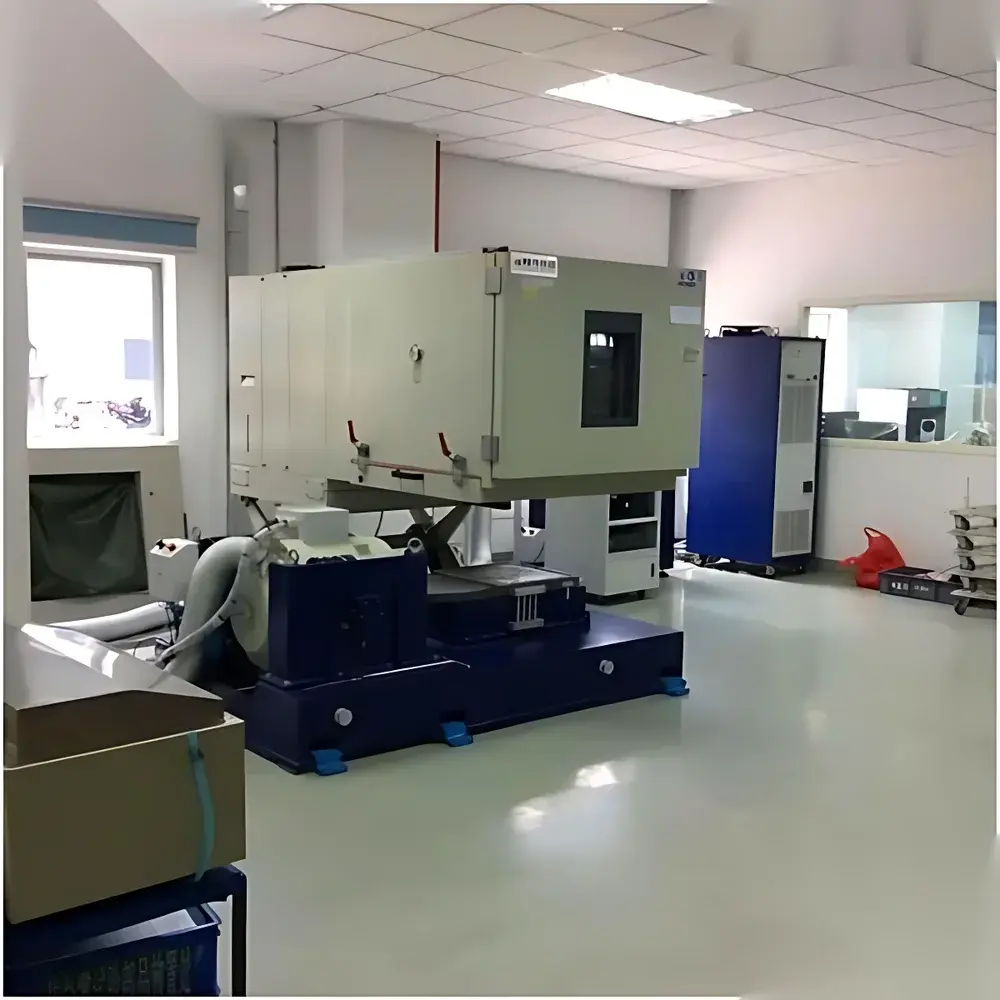
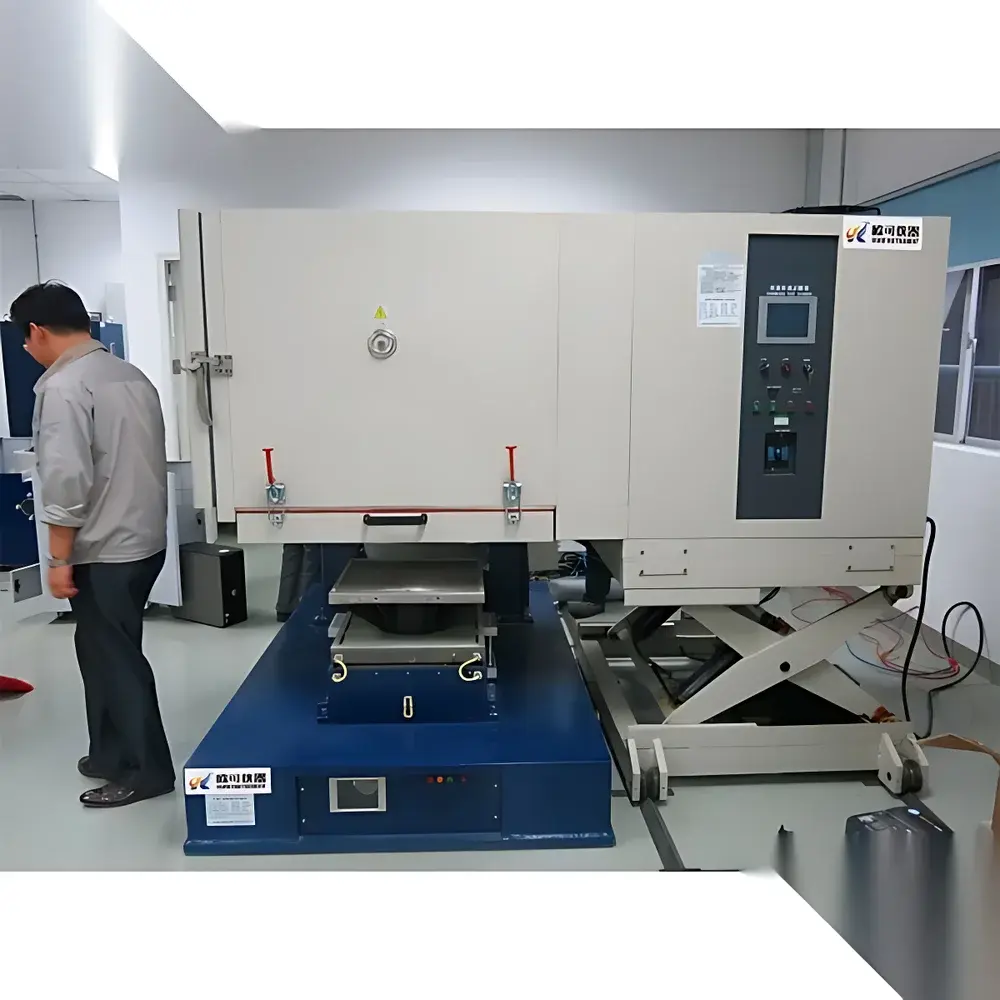
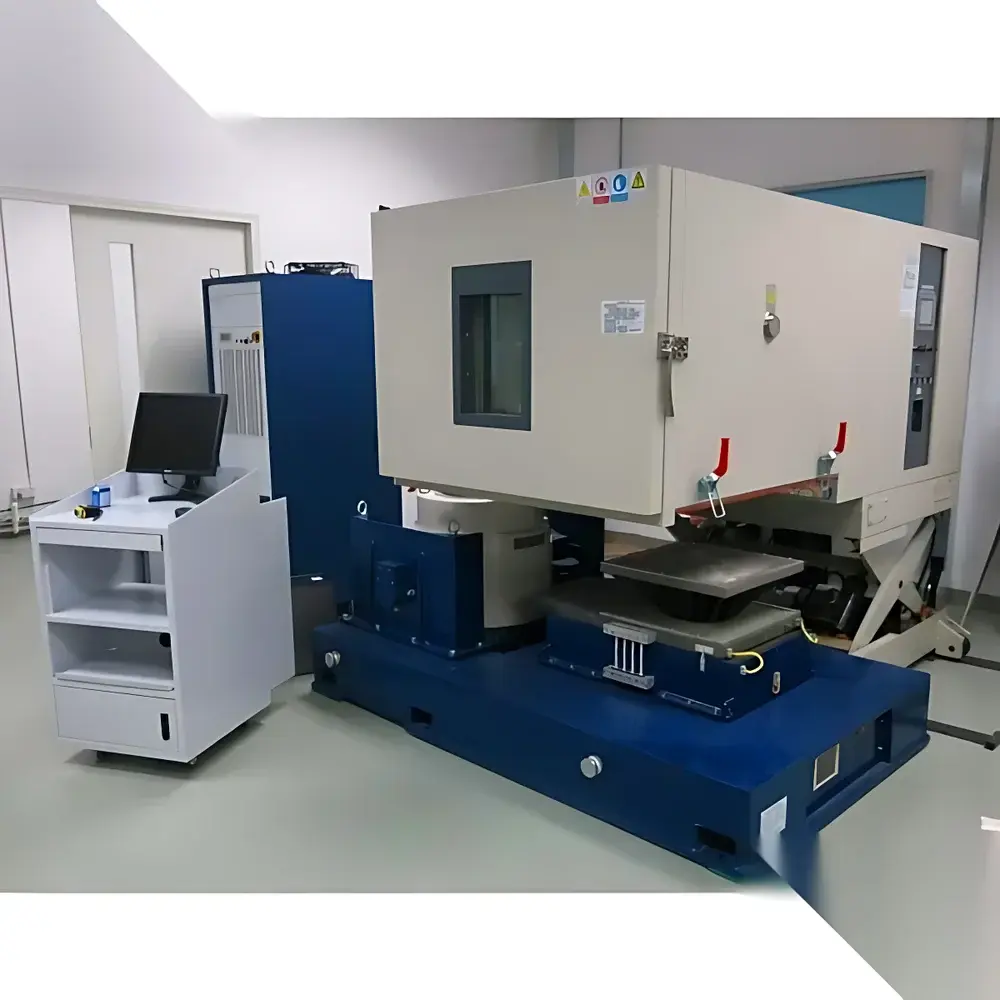
Custom-Built Combined Temperature-Humidity-Vibration Test Chamber Manufacturer
| Key | Temperature Range: -70°C to +150°C |
|---|---|
| Humidity Range | 30–98% RH |
| Temp. Uniformity | ≤ ±2.0°C |
| Temp. Stability | ≤ ±0.5°C |
| Humidity Stability | +2 to –3% RH |
| Cooling Rate (no load) | 0.7–1.0°C/min |
| Heating Rate (no load) | 1.0–3.0°C/min |
| Vibration Type | Electromagnetic Shaker |
| Frequency Range | 2–500 Hz |
| Displacement Amplitude | 0–5 mm |
| Acceleration Capacity | 0–20 gₚₖ |
| Compliance | GB/T 2423.1, GB/T 2423.2, GB/T 2423.3, GB/T 2423.10, GB/T 2423.48, GB/T 2423.49, GB 10586, GB 10589, GB 10592, GB 11158, GB/T 5170.2, GB/T 5170.5 |
Overview
The Custom-Built Combined Temperature-Humidity-Vibration Test Chamber is an integrated environmental simulation system engineered for rigorous reliability validation of electronic components, aerospace subsystems, automotive modules, and industrial instrumentation under simultaneous multi-stress conditions. Unlike sequential single-factor testing, this chamber applies controlled thermal cycling, humidity modulation, and mechanical vibration—within a single, synchronized test profile—to replicate real-world operational and transportation environments with high fidelity. Its core architecture integrates three independently regulated subsystems: a dual-refrigeration + electric heating climate control unit, a steam-based humidification/dehumidification system with PID-controlled saturation chamber, and a high-fidelity electromagnetic shaker table mounted directly on the chamber’s structural baseplate. This co-located design ensures minimal phase lag between environmental and dynamic stress inputs, enabling precise correlation of failure modes across coupled stress domains—a critical requirement for HALT/HASS protocols, qualification per MIL-STD-810H Method 514.7, and IEC 60068-2 series standards.
Key Features
- Modular thermal system with cascade refrigeration (for sub-zero operation down to –70°C) and proportional electric heating, delivering stable ramp rates from 0.7°C/min (cooling) to 3.0°C/min (heating) under no-load conditions
- Steam-generator humidification and refrigerated dehumidification, maintaining 30–98% RH with stability within +2/–3% RH over full range
- Electromagnetic vibration exciter with closed-loop acceleration feedback, supporting frequency sweeps from 2 Hz to 500 Hz and programmable displacement amplitudes up to 5 mm peak-to-peak
- Structurally reinforced inner chamber with stainless steel 304 construction, insulated with high-density polyurethane foam (≥100 mm thickness), and equipped with double-glazed observation window with anti-fog heater
- Integrated vibration isolation platform with active damping mounts to prevent energy coupling into facility infrastructure
- Compliance-ready controller with audit trail logging, user-level access control, and configurable alarm thresholds for temperature, humidity, and vibration parameters
Sample Compatibility & Compliance
This test chamber accommodates samples up to custom-defined internal volumes (e.g., OK-ZTH-500, OK-ZTH-1000), with standardized mounting interfaces for PCB assemblies, avionics enclosures, battery packs, and sensor housings. Sample loading is facilitated via front-hinged or top-lift doors with silicone-sealed gaskets and pressure-equalization vents. The system conforms to national and international environmental testing standards including GB/T 2423.1 (cold), GB/T 2423.2 (dry heat), GB/T 2423.3 (damp heat, steady state), GB/T 2423.10 (vibration, sinusoidal), GB/T 2423.48–2423.49 (combined temperature/humidity/vibration), and foundational calibration standards GB/T 5170.2 and GB/T 5170.5. While not pre-certified to ISO/IEC 17025, its measurement subsystems support traceable calibration using NIST-traceable reference sensors, making it suitable for GLP-compliant laboratories and GMP-aligned product verification workflows where documented uncertainty budgets are required.
Software & Data Management
Control and monitoring are performed via a Windows-based HMI with embedded real-time OS, supporting both manual operation and automated test sequencing. The software enables synchronized profile definition across all three stress axes—including ramp/soak segments, random vibration spectra (PSD), and harmonic sweeps—with time-synchronized data acquisition at up to 10 Hz per channel. All raw sensor readings (PT100 temperature, capacitive RH, IEPE accelerometers) are logged with timestamps and stored in CSV and binary formats. Audit trails record operator actions, parameter changes, and alarm events in accordance with FDA 21 CFR Part 11 requirements when configured with digital signature and role-based authentication modules. Exported datasets integrate seamlessly with MATLAB, Python (via Pandas), and commercial reliability analysis platforms such as Weibull++ for accelerated life modeling and failure root-cause correlation.
Applications
- Environmental stress screening (ESS) and highly accelerated life testing (HALT) of mission-critical electronics in defense and aerospace supply chains
- Qualification testing of EV battery management systems (BMS) under combined thermal gradient, condensation risk, and road-simulated vibration spectra
- Reliability assessment of 5G base station RF modules subjected to coastal humidity exposure and wind-induced structural resonance
- Validation of medical device enclosures (e.g., portable ultrasound units) for compliance with IEC 60601-1 clause 11.2 (mechanical and environmental hazards)
- Material compatibility studies involving polymer seals, conformal coatings, and solder joint integrity under thermo-mechanical fatigue loading
FAQ
Can this chamber perform independent humidity-only or vibration-only tests?
Yes. Each subsystem operates autonomously; users may deactivate temperature or vibration modules while retaining full control over humidity profiles—or run vibration-only tests with chamber ambient conditions stabilized.
What is the maximum payload capacity for the vibration table?
Payload limits depend on selected frequency range and acceleration target; typical configurations support up to 50 kg at 20 gₚₖ below 100 Hz, with derating above 200 Hz per shaker manufacturer specifications.
Is third-party calibration documentation included with delivery?
A factory calibration report with measurement uncertainties is provided. Optional UKAS/NIST-traceable calibration certificates can be arranged prior to shipment at additional cost.
How is electrical noise from the shaker isolated from sensitive DUT instrumentation?
The chamber features dedicated shielded signal feedthroughs, isolated grounding buses, and optional EMI-filtered power supplies to maintain signal integrity during concurrent operation.
Does the system support remote monitoring and alarm notification?
Yes. Ethernet-enabled controller supports SNMP traps, email alerts, and integration with enterprise SCADA or CMMS platforms via Modbus TCP or OPC UA protocols.



