
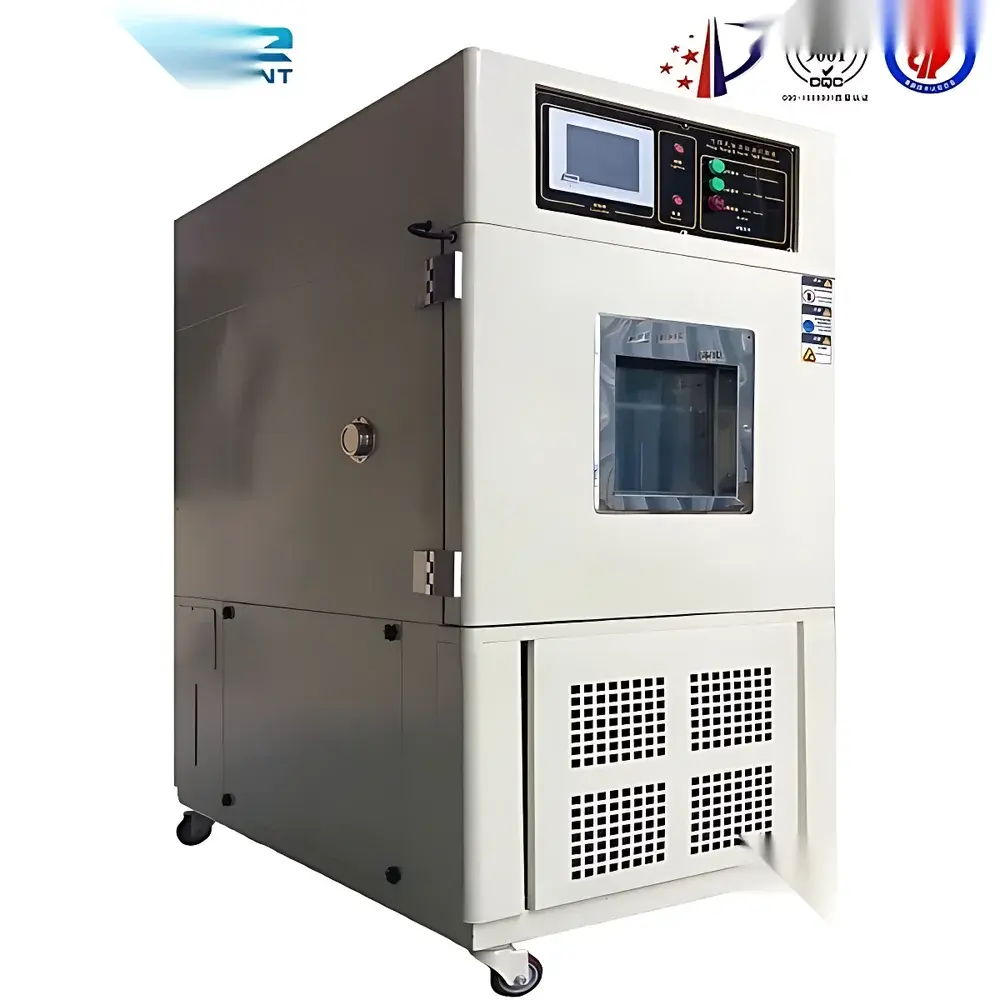
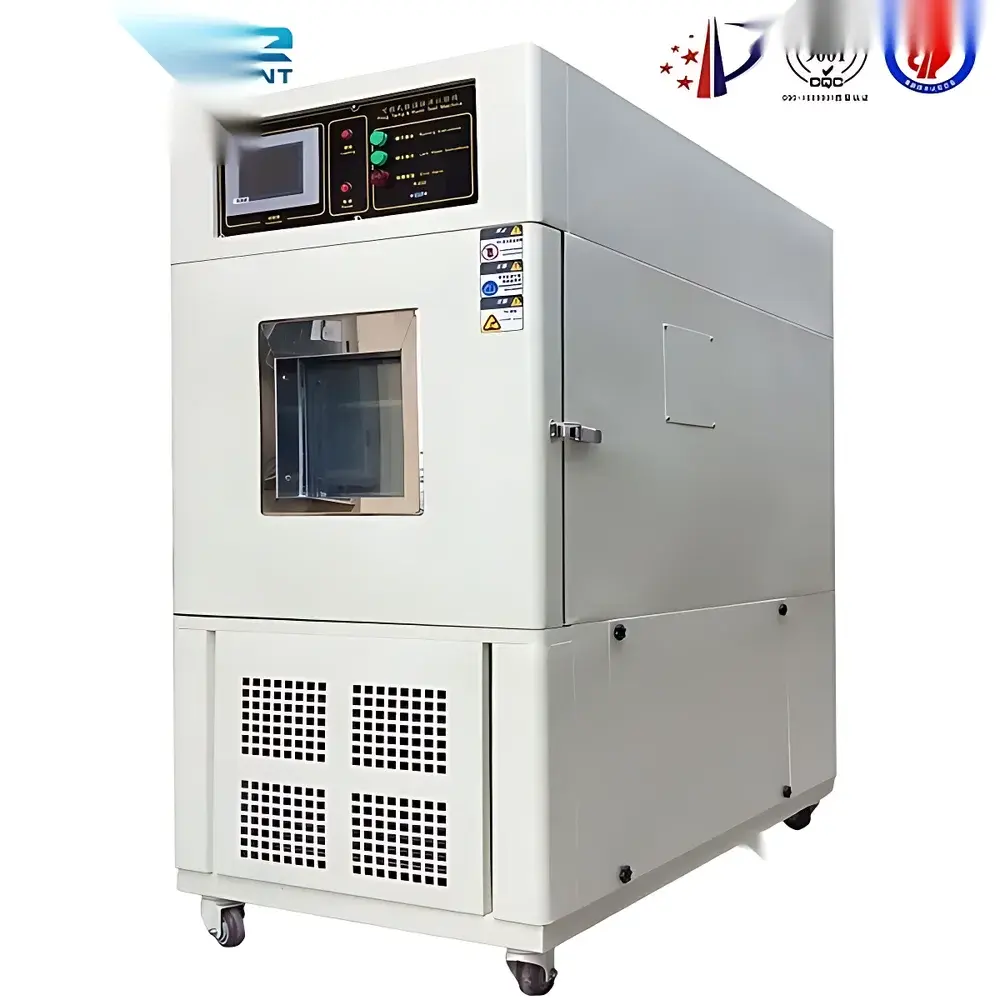
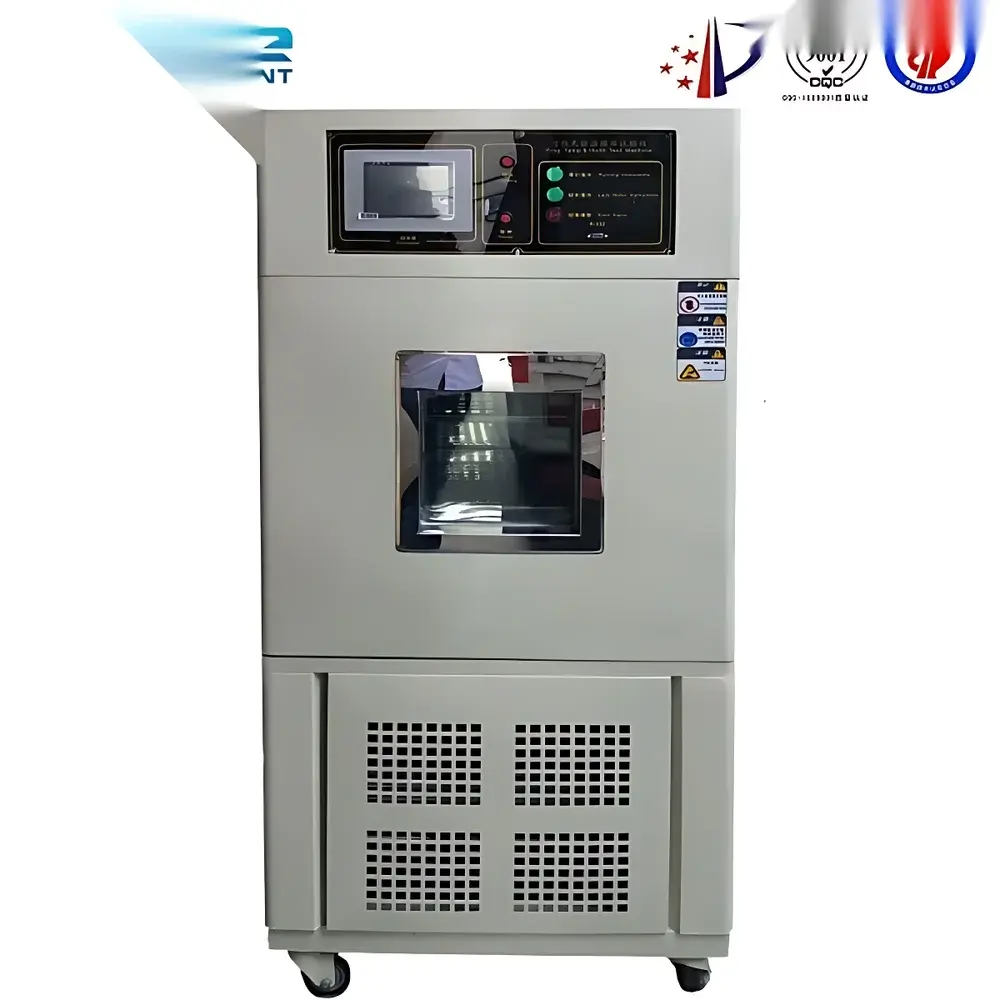
Environmental Test Chamber for Automotive Component Testing – Temperature and Humidity Controlled Chamber
| Brand | OEM / Custom-Built |
|---|---|
| Origin | Imported |
| Manufacturer Type | Authorized Distributor |
| Price | USD 3,000–4,200 (FOB ex-works, subject to configuration and certification requirements) |
| Temperature Range | −70°C to +180°C |
| Humidity Range | 10%–98% RH |
| Control Accuracy | ±0.5°C (temp), ±2.5% RH (humidity) |
| Uniformity | ±1.5°C (temp), ±3% RH (humidity) |
| Ramp Rate (typical, no load) | 1–3°C/min (heating), 0.7–2.5°C/min (cooling) |
| Cooling Water Requirement | 10–28°C, 0.1–0.3 MPa |
| Compliance | GB/T 2423.1–2023, GB/T 2423.2–2023, IEC 60068-2-1:2022, IEC 60068-2-2:2022, GJB 1032A–2021, MIL-STD-2164A–2018 |
Overview
The Environmental Test Chamber for Automotive Component Testing is a precision-engineered temperature and humidity controlled chamber designed to replicate real-world climatic stress conditions during validation, reliability screening, and qualification testing of automotive subsystems—including ECUs, sensors, wiring harnesses, lighting modules, infotainment interfaces, and powertrain components. It operates on a balanced temperature and humidity control (BTHC) principle, utilizing proportional-integral-derivative (PID) algorithms to dynamically regulate heating, refrigeration, steam humidification, and dehumidification subsystems—ensuring thermal and hygric equilibrium across the working volume. The chamber’s architecture integrates dual-stage refrigeration with capillary tube expansion technology, eliminating mechanical instability associated with thermostatic expansion valves and enabling faster, smoother, and more repeatable thermal transitions under variable load conditions.
Key Features
- Robust stainless-steel interior with seamless welded construction and anti-condensation insulation (≥100 mm polyurethane foam, 0.022 W/m·K thermal conductivity)
- Advanced touchscreen controller with multi-segment programmable profiles (up to 99 cycles, 999 steps), real-time trend logging, and USB data export
- Dual independent safety layers: primary PID-controlled protection plus hardware-based redundant safeguards—including dry-heater cut-off, compressor overcurrent/overheat/overpressure monitoring, high-pressure refrigerant switch, phase failure detection, and earth-leakage circuit interruption
- Optimized air circulation system with adjustable vane-type centrifugal blower and laminar airflow ducting to ensure ≤±1.5°C temperature uniformity and ≤±3% RH stability across the test zone
- Modular design supporting custom internal dimensions, extended temperature/humidity ranges, and optional add-ons such as RS-485 Modbus RTU interface, Ethernet/IP integration, or nitrogen purge capability
- Compliance-ready architecture: built-in audit trail, user-level access control (admin/operator/guest), and configurable event logging aligned with GLP/GMP documentation requirements
Sample Compatibility & Compliance
This chamber accommodates automotive components up to 1,200 mm (W) × 1,000 mm (D) × 1,200 mm (H), with customizable internal configurations including removable shelves, cable ports (with silicone grommets), and mounting rails compliant with ISO 16750-4 (road vehicles—environmental conditions and testing). All operational parameters are validated per IEC 60068-3-5:2021 (methods for determining the performance of temperature chambers) and calibrated traceably to NIST or PTB standards. The system meets mandatory environmental stress screening (ESS) protocols defined in GJB 1032A–2021 and MIL-STD-2164A–2018, supporting both accelerated life testing and HALT/HASS pre-screening workflows. Optional IQ/OQ documentation packages are available for regulated automotive Tier-1 suppliers requiring IATF 16949-aligned validation evidence.
Software & Data Management
The embedded controller firmware supports full-cycle data acquisition at 1-second intervals, with local storage (≥32 GB SD card) and remote monitoring via secure HTTPS web interface. Export formats include CSV, PDF test reports, and XML-compatible structured logs compatible with LIMS platforms (e.g., LabVantage, Thermo Fisher SampleManager). Audit trails record all parameter modifications, user logins, alarm events, and calibration interventions—with timestamped digital signatures meeting FDA 21 CFR Part 11 requirements when paired with optional electronic signature module. Remote firmware updates and diagnostic telemetry are supported via TLS 1.2 encrypted OTA channel.
Applications
- Thermal cycling validation of ADAS camera housings per ISO 16750-4 Clause 6.1.2 (temperature shock)
- Humidity soak testing of battery management systems (BMS) under condensing conditions (IEC 60068-2-30)
- Combined temperature-humidity endurance of infotainment touchscreens per AEC-Q200 stress categories
- Environmental stress screening (ESS) of PCBAs prior to burn-in, per GJB 1032A Annex B
- Corrosion resistance evaluation of fasteners and chassis brackets using cyclic salt-spray + humidity conditioning sequences
- Material compatibility testing of sealants, adhesives, and gasket compounds under prolonged 85°C/85% RH exposure
FAQ
What is the standard calibration interval recommended for this chamber?
Annual calibration is recommended per ISO/IEC 17025 guidelines; however, internal verification using NIST-traceable reference sensors should be performed before each critical test campaign.
Can the chamber operate continuously at −40°C and 95% RH?
Yes—provided cooling water supply remains within 10–28°C and system condensate removal is uninterrupted; continuous operation at extreme low-temperature/high-humidity combinations requires optional frost-resistant humidifier and drain heater kit.
Is remote monitoring supported without third-party SCADA software?
Yes—the built-in web server enables real-time parameter viewing, alarm notifications via SMTP/SNMP, and historical data retrieval without external middleware.
Does the chamber meet automotive OEM-specific environmental test specifications (e.g., Ford WERS, GM W317728)?
The base configuration satisfies foundational requirements; full compliance with proprietary OEM specs requires application-specific configuration review and optional validation support services.
How is traceability maintained for temperature and humidity sensors?
Each sensor is individually serialized and supplied with factory calibration certificate (ISO/IEC 17025 accredited lab); field recalibration kits with certified reference standards are available upon request.



