
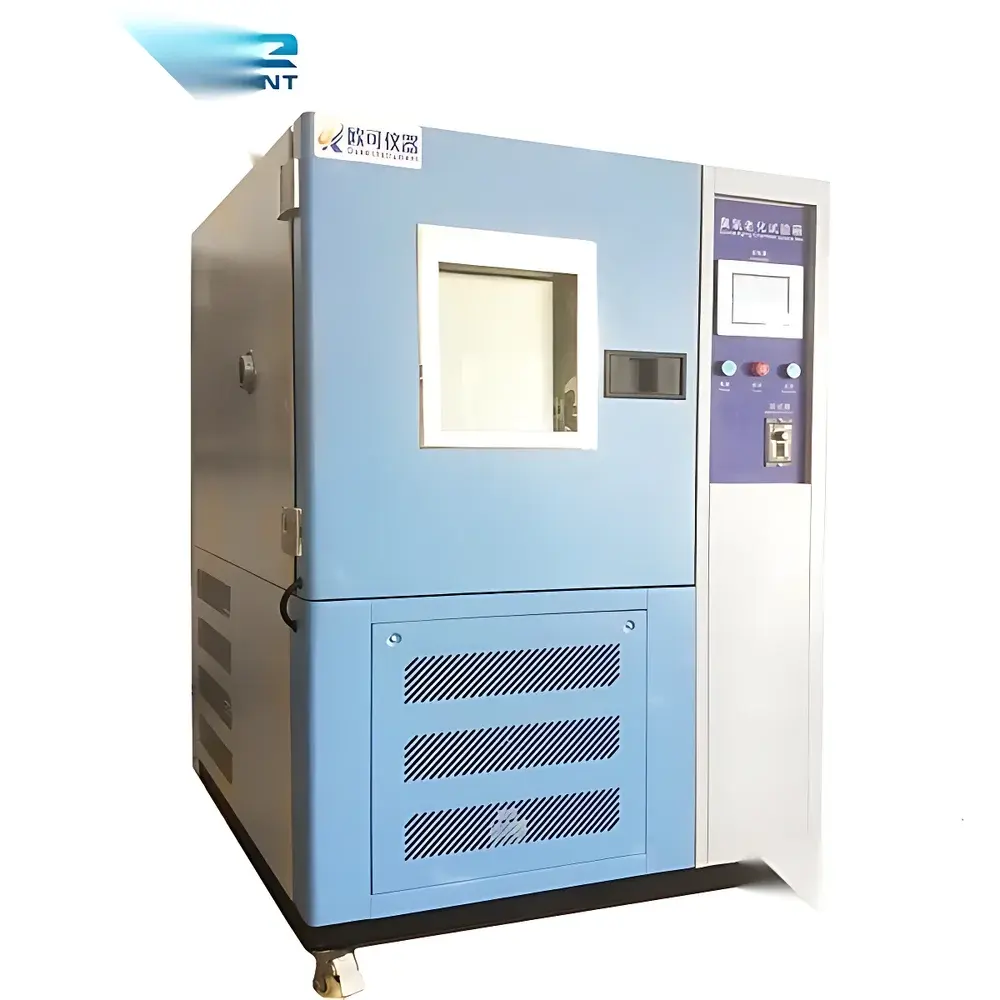
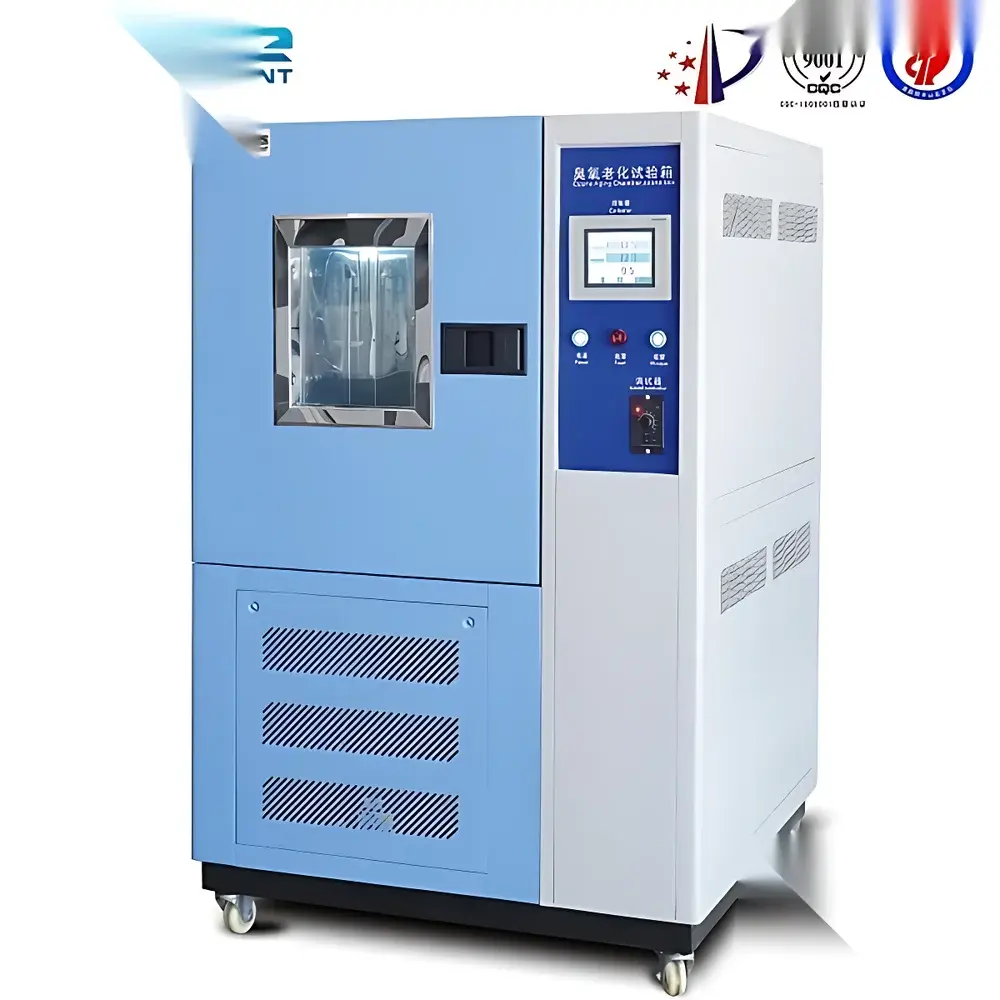
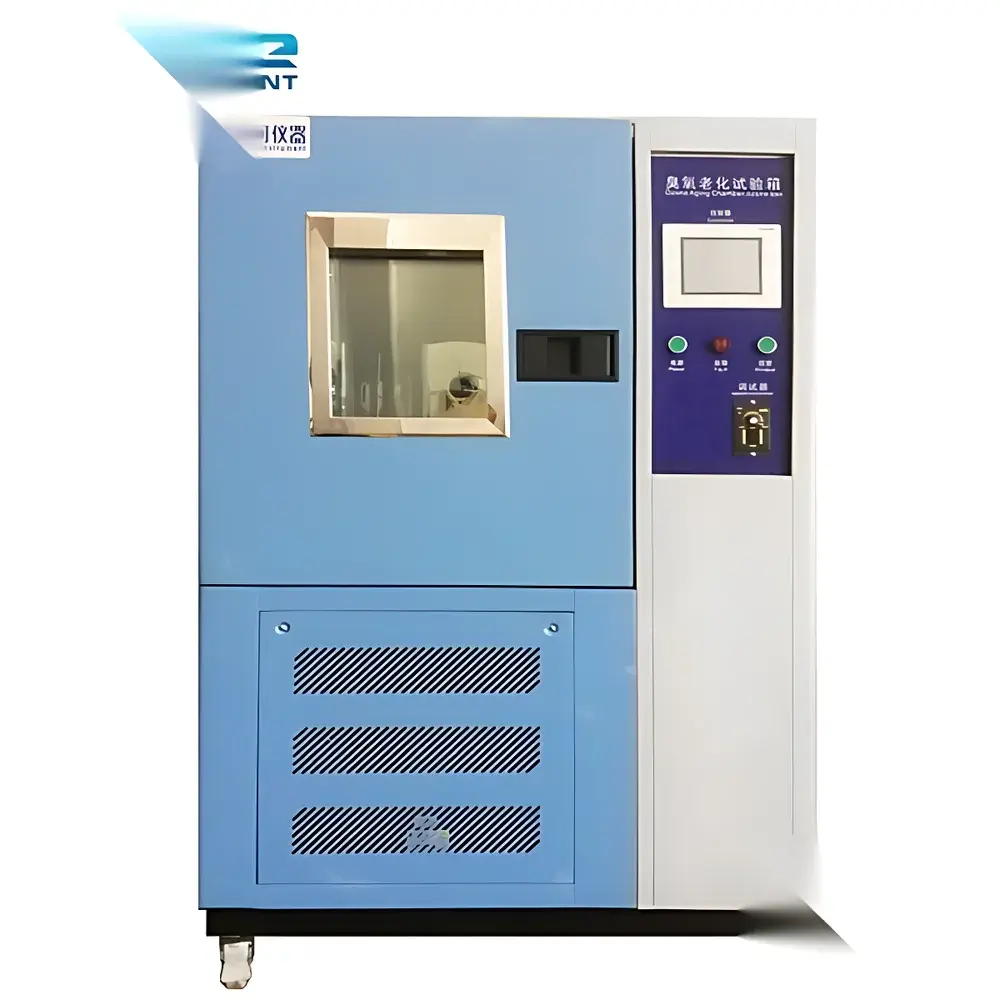
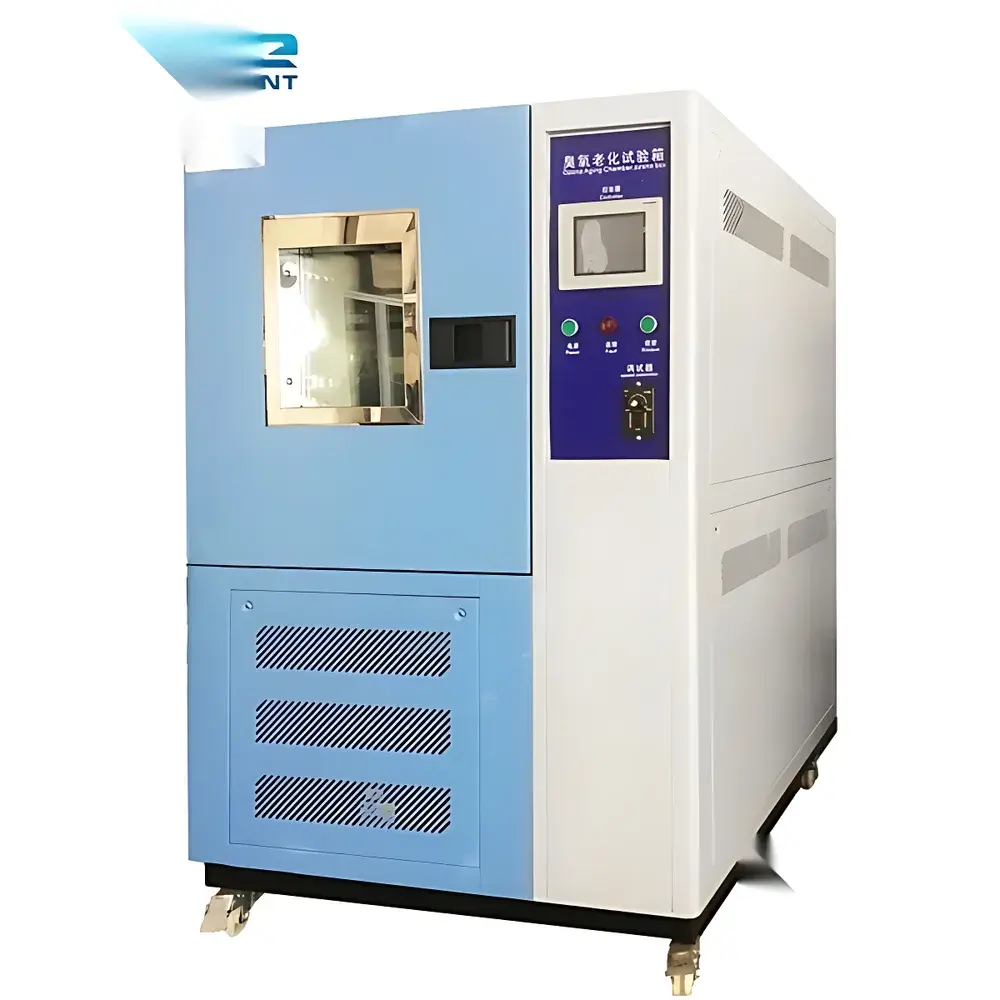
Ozone Aging Test Chamber – QY Series (QY-80 / QY-225 / QY-500 / QY-1000)
| Key Specifications | Temperature Range: 25–40 °C |
|---|---|
| Humidity Range | 30–65 %RH |
| Ozone Concentration | 50–1500 pphm |
| Temperature Uniformity | ±0.5 °C |
| Sample Rotation Speed | 1 rpm (360° continuous rotation) |
| Gas Flow Velocity | 8–16 mm/s |
| Control System | Siemens PLC + Weintek color touchscreen HMI |
| Ozone Generation | Silent discharge tube type |
| Ozone Detection | Non-dispersive UV absorption sensor (≥5-year service life) |
| Compliance | ASTM D1149, ISO 1431-1, GB/T 7762, JIS K 6259 |
Overview
The QY Series Ozone Aging Test Chamber is an engineered environmental test system designed to evaluate the ozone resistance of elastomeric materials—particularly natural rubber, SBR, BR, and other unsaturated polymers—under controlled, accelerated atmospheric conditions. Ozone-induced cracking remains a leading failure mode in rubber components exposed to ambient air, especially under mechanical strain. This chamber replicates and intensifies real-world ozone exposure by generating precise, stable concentrations (50–1500 pphm) within a fully sealed, stainless-steel reaction chamber. It operates on the principle of silent discharge ozone generation, coupled with non-dispersive ultraviolet (UV) absorption spectroscopy for real-time, trace-level ozone quantification. The system supports both static and dynamic testing configurations, enabling standardized evaluation per ASTM D1149 (rubber—resistance to ozone cracking—static strain), ISO 1431-1 (elastomers—determination of resistance to ozone cracking—part 1: static strain), and equivalent national standards (GB/T 7762, JIS K 6259). Temperature and humidity are independently regulated to maintain thermodynamic stability during prolonged exposure cycles, ensuring reproducible degradation kinetics.
Key Features
- Fully enclosed, corrosion-resistant 304 stainless-steel test chamber with leak-tight gas recirculation loop—eliminates ambient ozone leakage and ensures operator safety.
- Precision ozone generation via silent discharge tube technology, delivering stable output across the full 50–1500 pphm range with <±3% linearity.
- Integrated non-dispersive UV ozone analyzer with digital display, continuous online monitoring, and ≥5-year sensor lifetime—calibration traceable to NIST-certified reference standards.
- Motor-driven sample rotation system (1 rpm, 360° continuous) compliant with摆线 (cycloidal) trajectory requirements for dynamic strain simulation per ISO 1431-1 Annex A.
- Siemens S7-1200 PLC paired with Weintek cMT Series color touchscreen HMI—enabling PID auto-tuning, multi-segment program control, data logging, and password-protected parameter management.
- Dual-channel environmental control: independent regulation of temperature (25–40 °C, ±0.5 °C uniformity) and relative humidity (30–65 %RH) via refrigeration + steam humidification subsystems.
- Standardized 4–20 mA analog output and RS232 serial interface for integration into centralized lab monitoring systems or LIMS platforms.
- Comprehensive safety architecture: over-temperature cutoff, motor thermal overload protection, ozone leak detection interlock, and grounded high-voltage isolation for ozone generator circuits.
Sample Compatibility & Compliance
The QY chamber accommodates standard dumbbell-shaped specimens (e.g., ISO 37 Type 2, ASTM D412 C), ring samples, and molded parts up to the internal dimensions of each model (QY-80 to QY-1000). Fixtures support static tensile strain (20%, 30%, or user-defined) as well as dynamic cyclic deformation. All models are configured to meet the physical and procedural requirements of internationally recognized test methods—including ASTM D1149 (Type A & B), ISO 1431-1 (Method A: static; Method B: dynamic), GB/T 7762 (China), and JIS K 6259 (Japan). The sealed gas circuit design complies with ISO/IEC 17025 clause 6.4.2 for measurement traceability, and optional calibration certificates are available per ISO/IEC 17025-accredited providers. The system supports GLP-compliant operation when paired with audit-trail-enabled software (see Software & Data Management).
Software & Data Management
While the base configuration uses embedded PLC-based control, optional PC-hosted software (QY-Control Suite v3.x) provides extended functionality: real-time multi-parameter trending (ozone concentration, temperature, humidity, elapsed time), automated report generation (PDF/CSV), electronic signature support, and 21 CFR Part 11-compliant audit trails—including user login history, parameter change logs, and test session metadata. Data export conforms to ASTM E2500 and ISO 10012 guidelines for measurement process validation. Calibration records, maintenance logs, and certificate of conformance are stored in encrypted local databases with configurable backup intervals.
Applications
- Quality assurance of automotive rubber seals, hoses, and suspension bushings exposed to urban ozone-rich environments.
- Formulation development of antiozonants (e.g., p-phenylenediamine derivatives) and evaluation of synergistic stabilizer packages.
- Accelerated aging studies for aerospace elastomers operating at high-altitude ozone concentrations.
- Regulatory submission testing for medical device tubing (ISO 10993-12) where ozone resistance impacts biocompatibility shelf life.
- Failure analysis of field-failed rubber components—correlating crack morphology with laboratory-simulated exposure profiles.
- Material screening for outdoor infrastructure gaskets, cable jackets, and roofing membranes subjected to long-term atmospheric stress.
FAQ
What ozone concentration ranges does the QY chamber support, and how is accuracy verified?
The chamber delivers 50–1500 pphm ozone with ≤±3% deviation from setpoint. Accuracy is maintained via factory calibration against primary ozone standards and verified annually using NIST-traceable UV photometers.
Can the system operate unattended for extended cycles (e.g., 72+ hours)?
Yes—equipped with redundant safety interlocks, uninterruptible power monitoring, and automatic shutdown on critical fault detection. Continuous operation is validated per IEC 60068-2-39.
Is dynamic testing (rotating sample) compliant with ISO 1431-1 Method B?
Yes—the 1 rpm cycloidal rotation mechanism satisfies the angular velocity and trajectory specifications defined in ISO 1431-1 Annex A for dynamic strain application.
Does the chamber support third-party calibration and metrological traceability?
All units ship with a factory calibration certificate. Optional on-site calibration services are available through ISO/IEC 17025-accredited partners, including uncertainty budgets per GUM (JCGM 100:2008).
What maintenance intervals are recommended for the ozone generator and UV sensor?
The silent discharge tube requires cleaning every 500 operational hours; the UV sensor is rated for ≥43,800 hours (5 years) of continuous use with no consumables—verified via built-in self-diagnostic routines.



