
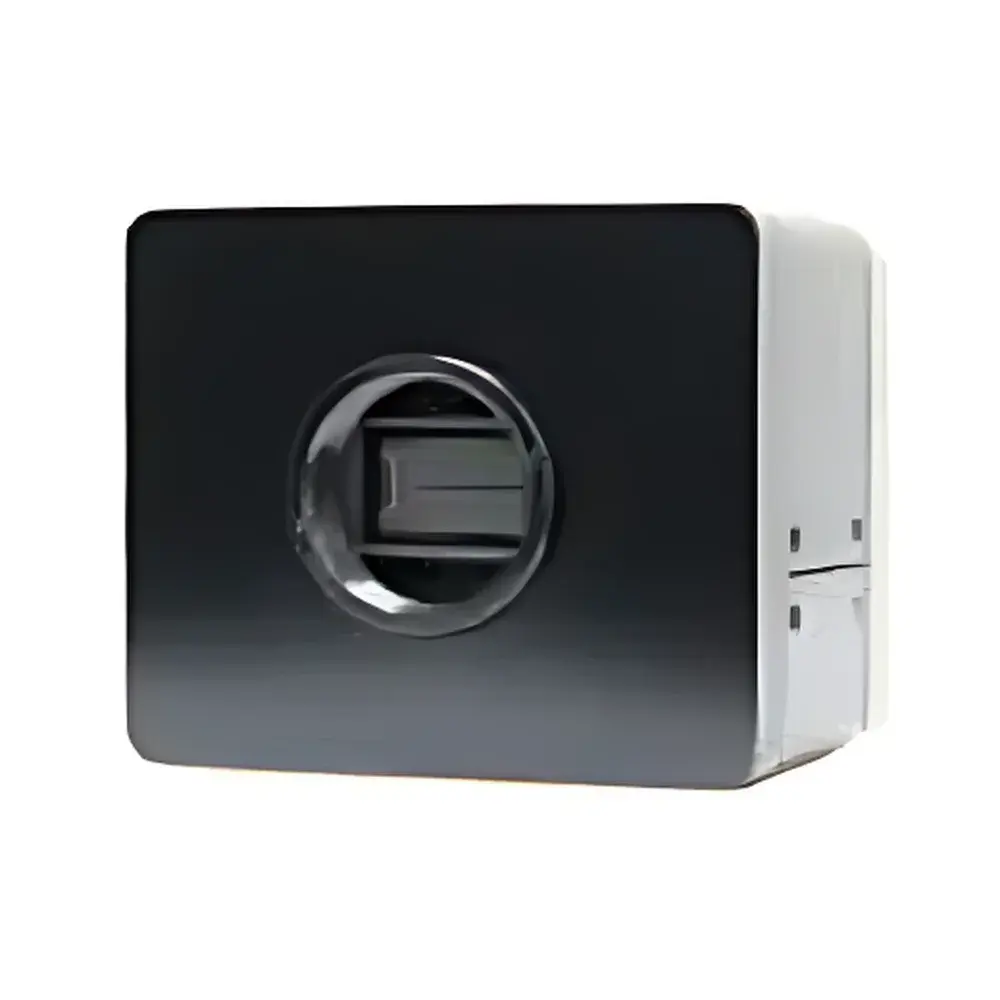
Artray ARTCAM-L Series InGaAs Linear Array Near-Infrared Camera
| Brand | Artray |
|---|---|
| Origin | Japan |
| Model | ARTCAM-L1024DTNIR, ARTCAM-L1024DBTNIR, ARTCAM-L512TNIR, ARTCAM-L256TNIR |
| Resolution | 1024 × 1, 1024 × 1, 512 × 1, 256 × 1 pixels |
| Pixel Size | 25 × 100 µm, 25 × 25 µm, 25 × 25 µm, 50 × 50 µm |
| Spectral Response Range | 900–1700 nm, 900–1700 nm, 950–1700 nm, 950–1700 nm |
| Detector Material | InGaAs |
| Cooling | Thermoelectric (TE) cooled (for DT/DB variants) |
| Interface | Camera Link or GigE Vision (model-dependent) |
| Compliance | CE, RoHS, ISO 9001-certified manufacturing |
Overview
The Artray ARTCAM-L Series is a family of high-sensitivity, thermoelectrically cooled InGaAs linear array near-infrared cameras engineered for precision spectral and spatial measurement in industrial and research environments. Based on indium gallium arsenide (InGaAs) photodiode array technology, these line-scan imagers operate across the short-wave infrared (SWIR) band—specifically 900–1700 nm—enabling quantitative detection of molecular overtone and combination vibrations inaccessible to silicon-based sensors. Unlike area-scan devices, the ARTCAM-L architecture employs a single-row pixel configuration optimized for continuous-motion imaging, hyperspectral line scanning, and real-time NIR spectroscopy. Its optical design supports integration with diffraction gratings, fiber-coupled spectrometers, and custom illumination optics, making it suitable for inline process monitoring, material sorting, pharmaceutical tablet inspection, and agricultural quality assessment. All models are manufactured under ISO 9001-certified processes in Japan and comply with CE and RoHS directives for electromagnetic compatibility and hazardous substance restriction.
Key Features
- InGaAs linear sensor arrays with selectable resolutions: 1024-, 512-, and 256-pixel configurations, each offering distinct trade-offs between spatial sampling density and readout speed.
- Thermoelectric (Peltier) cooling available on ARTCAM-L1024DTNIR and ARTCAM-L1024DBTNIR variants, reducing dark current by up to 90% at −10 °C stabilization—critical for low-light, long-integration applications such as fluorescence lifetime mapping or weak-absorption spectroscopy.
- Pixel pitch options ranging from 25 × 25 µm to 50 × 50 µm, enabling optimization for either high-resolution spectral dispersion or increased photon collection efficiency in low-flux scenarios.
- Standard output interfaces include Camera Link Base and GigE Vision, both supporting GenICam-compliant configuration and trigger synchronization for multi-camera or multi-sensor systems.
- Hermetically sealed ceramic package with AR-coated sapphire window ensures long-term stability under variable humidity and thermal cycling conditions typical in factory-floor deployment.
- Factory-calibrated non-uniformity correction (NUC) tables provided per unit, supporting radiometric accuracy traceable to NIST-traceable reference sources.
Sample Compatibility & Compliance
The ARTCAM-L series is compatible with reflective, transmissive, and diffuse scattering samples across solid, liquid, and granular phases. It supports integration into ASTM E131-22 compliant NIR spectroscopic workflows and meets optical safety requirements per IEC 62471 for Class 1 LED-compatible illumination setups. For regulated industries—including pharmaceuticals and food production—the camera’s deterministic frame timing, hardware-triggered acquisition, and metadata-enriched image headers facilitate alignment with FDA 21 CFR Part 11 electronic record integrity requirements when deployed within validated software environments. All units undergo environmental stress screening per MIL-STD-810G for shock, vibration, and thermal shock resilience.
Software & Data Management
Artray provides native SDKs for Windows and Linux (C/C++, Python bindings), supporting full register-level control of exposure time, gain, offset, and internal NUC application. Third-party compatibility includes HALCON, LabVIEW Vision, and MATLAB Image Acquisition Toolbox via GenICam drivers. Raw 16-bit linear data streams are timestamped with microsecond resolution and support embedded metadata (e.g., temperature, integration time, sensor ID) for audit-ready data provenance. Optional firmware upgrades enable on-board averaging, background subtraction, and ROI binning—reducing host CPU load during high-throughput inspection tasks.
Applications
- Real-time NIR chemical imaging for polymer identification and blend homogeneity analysis in extrusion lines.
- Moisture content mapping in cereal grains and leaf tissue using 1450 nm and 1940 nm water absorption bands.
- Defect detection in solar cell wafers via minority carrier lifetime contrast imaging at 1150 nm.
- Pharmaceutical coating thickness quantification using multivariate calibration models trained on ARTCAM-L-derived spectral profiles.
- Sorting of recycled plastics (e.g., PET vs. PVC) based on SWIR spectral fingerprinting at conveyor speeds exceeding 2 m/s.
FAQ
What cooling method is used in the ARTCAM-L1024DTNIR model?
It uses a single-stage thermoelectric cooler (TEC) with closed-loop temperature control, stabilizing the sensor die at −10 °C ± 0.5 °C.
Is radiometric calibration included with purchase?
Yes—each unit ships with a factory-acquired NUC table and relative responsivity map, valid for standard 25 °C ambient operation.
Can the ARTCAM-L interface with third-party spectrometers?
Yes—via fiber-optic coupling (SMA 905) and synchronized external triggering; full timing diagrams and electrical specs are provided in the Hardware Integration Manual.
Does Artray provide validation documentation for GMP environments?
While the camera itself is not GMP-certified, its deterministic behavior, traceable calibration, and GenICam-compliant metadata generation support IQ/OQ protocols when integrated into user-validated systems.
What is the maximum line rate for the ARTCAM-L1024DTNIR at full resolution?
Up to 12.5 kHz with Camera Link Base; reduced to ~8.3 kHz when TE cooling is active at −10 °C due to power management constraints.



