
CEL-SPIP QE/IPCE Upgrade Module for Surface Photovoltage Spectroscopy
| Brand | CEL (Zhongjiao Jinyuan) |
|---|---|
| Model | CEL-SPIP |
| Light Source | 500 W Oslamp® Xenon Lamp (Germany) |
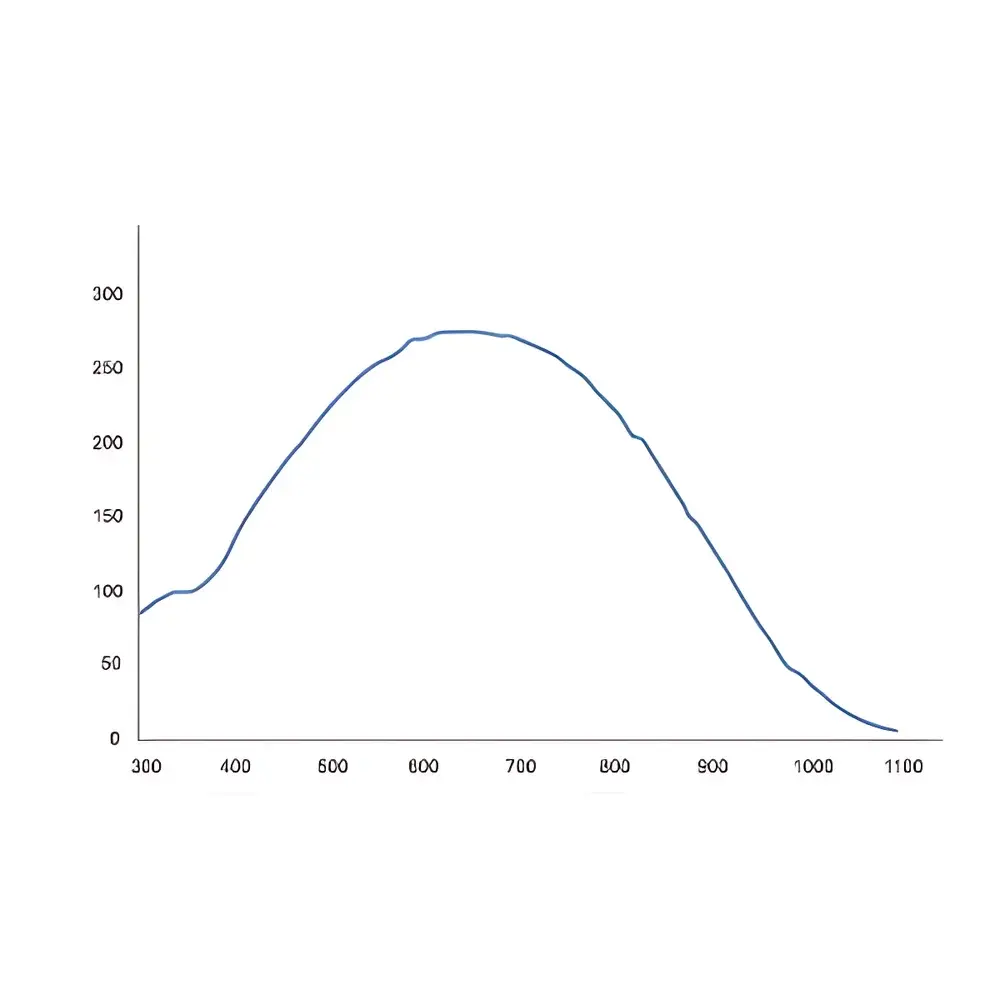
| Spectral Range | 200–1100 nm |
| Optical Configuration | External Illumination, Vertical Beam Path |
| Detector Calibration | NIST-traceable UV-enhanced reference standard |
| Measurement Modes | DC & AC (chopped, 5–1000 Hz) |
| Positioning System | Motorized Horizontal Precision Translation Stage |
| Data Synchronization | Integrated control of light source, monochromator, lock-in amplifier, and spectrometer |
| Repeatability | <0.3% (J<sub>sc</sub>) |
| Compliance | ASTM E1021, IEC 60904-8, ISO 17025-aligned calibration traceability |
| Software | CEL-QEPro v3.x with GLP-compliant audit trail, 21 CFR Part 11 optional module |
Overview
The CEL-SPIP QE/IPCE Upgrade Module is an engineered enhancement for the CEL-SPS1000 Surface Photovoltage Spectroscopy (SPS) system, transforming it into a fully functional quantum efficiency characterization platform. Designed for rigorous optoelectronic materials evaluation, the module leverages the existing vertical optical architecture while introducing metrologically traceable spectral responsivity measurement capability. It operates on the principle of monochromatic photon flux calibration combined with lock-in detection of photogenerated voltage or current under modulated illumination — enabling precise determination of external quantum efficiency (EQE or IPCE) and absolute spectral response (QE). The system adheres to core photovoltaic metrology standards including IEC 60904-8 (spectral mismatch correction), ASTM E1021 (test methods for spectral responsivity), and supports traceability to NIST-calibrated UV-enhanced reference detectors. Its integration preserves the SPS platform’s inherent surface-sensitive voltage detection while extending functionality to quantitative device-level performance metrics under AM1.5G-simulated solar irradiance.
Key Features
- 500 W high-stability Oslamp® xenon short-arc lamp (Germany-sourced), coupled with active thermal management and beam homogenization optics to ensure spatial and temporal irradiance uniformity.
- 300 mm focal length imaging spectrometer with grating selection optimized for 200–1100 nm coverage, delivering <0.2 nm wavelength resolution and <±0.1 nm wavelength accuracy after in-situ calibration.
- UV-enhanced, NIST-traceable silicon photodiode reference standard, calibrated across the full spectral range with documented uncertainty budgets per ISO/IEC 17025 requirements.
- Motorized horizontal precision translation stage (±0.5 µm repeatability) enabling automated switching between reference and sample positions without realignment — critical for minimizing systematic error in comparative measurements.
- AC-coupled detection architecture with programmable chopper frequency (5–1000 Hz) and dual-phase lock-in amplification, supporting both surface photovoltage (SPV) and photocurrent (PC) modes with common-mode noise rejection.
- Fully enclosed, light-tight optical path design eliminates ambient stray light interference and ensures measurement integrity in shared laboratory environments.
Sample Compatibility & Compliance
The CEL-SPIP module accommodates planar optoelectronic samples up to 50 mm × 50 mm, including single-crystal Si, multicrystalline Si, CIGS, perovskite thin films, organic semiconductors, and photoelectrodes for water splitting. Sample mounting is compatible with standard electrical probe stations (e.g., Cascade Microtech, Signatone) and vacuum-compatible holders. All hardware and software components comply with CE marking directives (EMC & LVD), and the calibration protocol aligns with ISO/IEC 17025:2017 requirements for testing laboratories. Optional 21 CFR Part 11 compliance packages are available for regulated R&D environments requiring electronic signature, audit trail, and user access control.
Software & Data Management
CEL-QEPro v3.x provides unified instrument control, data acquisition, and post-processing. The software enables synchronized triggering of the xenon lamp power supply, monochromator wavelength sweep, chopper driver, and lock-in amplifier output sampling. Real-time spectral mapping includes automatic normalization to reference diode response, AM1.5G spectral weighting, and Jsc integration. Raw datasets are stored in HDF5 format with embedded metadata (wavelength, intensity, bias voltage, temperature, operator ID). Audit trails record all parameter changes, calibration events, and export actions. Export options include CSV, MATLAB (.mat), and PDF reports compliant with internal QA documentation standards.
Applications
- Quantitative EQE/IPCE mapping of photovoltaic devices for cell efficiency validation and loss mechanism analysis.
- Surface uniformity assessment via raster-scanned QE measurements across wafer or film areas.
- Correlation of surface photovoltage dynamics (from SPS mode) with charge extraction efficiency (from IPCE mode) in heterojunction systems.
- Optical characterization of transparent conductive oxides (TCOs) and anti-reflection coatings via spectral transmittance + QE co-measurement.
- Photoelectrochemical (PEC) material screening under simulated solar illumination with bias-controlled IPCE.
- Development and verification of spectral mismatch correction factors for PV calibration labs.
FAQ
Does the CEL-SPIP module require modification of the original CEL-SPS1000 hardware?
No — it integrates non-invasively into the existing vertical optical train using standardized kinematic mounts and digital I/O interfaces.
Can the system measure both QE and IPCE simultaneously?
Yes — the same optical configuration supports both voltage-based (SPV/QE) and current-based (IPCE) detection through configurable signal routing and grounding schemes.
Is AM1.5G spectral irradiance simulation certified?
The system uses a Class AAA solar simulator spectrum profile validated against NREL reference spectra; absolute irradiance is calibrated using a secondary standard thermopile sensor traceable to NIST.
What level of spectral uncertainty does the module achieve?
Wavelength uncertainty is ±0.1 nm (k=2); spectral responsivity uncertainty is ≤2.8% (k=2) from 300–1100 nm, as verified by third-party calibration report.
Is remote operation supported?
Yes — CEL-QEPro supports TCP/IP-based remote control and monitoring via secure LAN connection, compatible with institutional IT security policies.



