
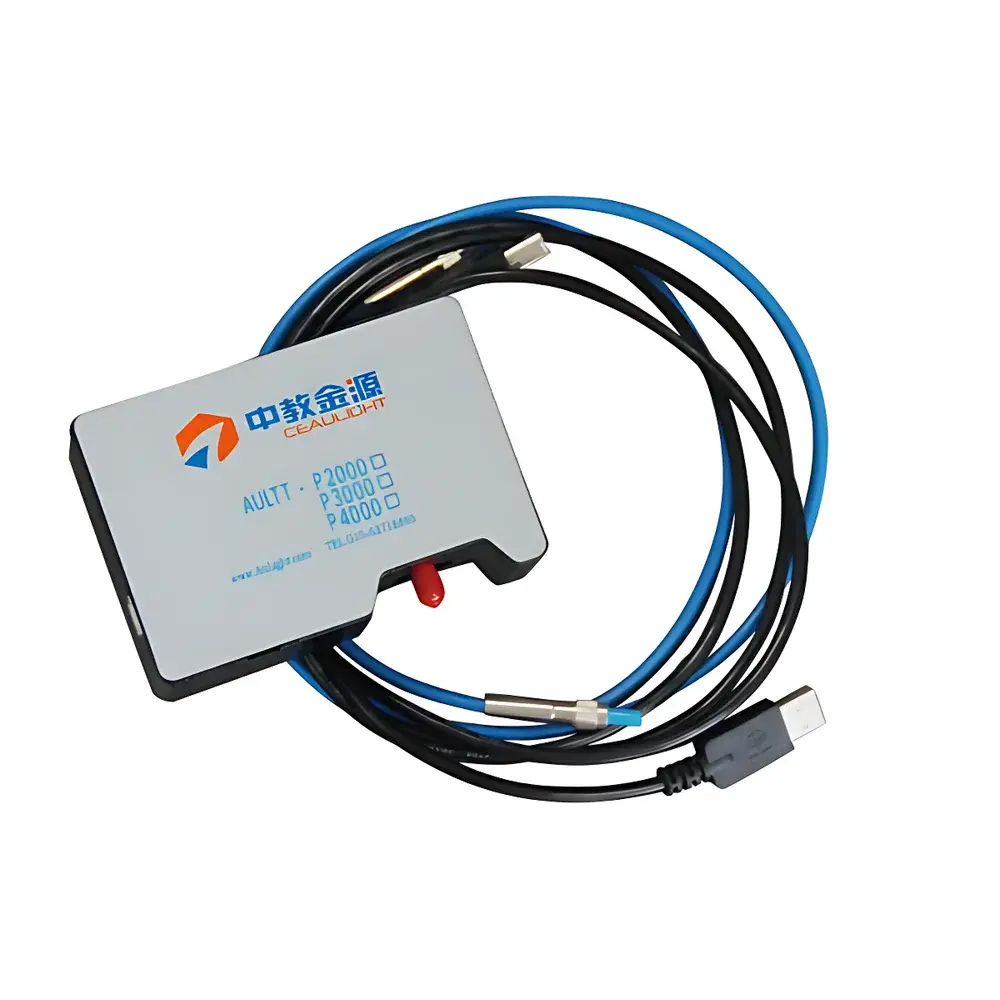
AULTT-P Series Fiber Optic Spectrometer
| Brand | AULTT |
|---|---|
| Model | AULTT-P |
| Type | Compact USB-Powered CCD Spectrometer with UV-VIS-NIR Coverage |
| Origin | Beijing, China |
| Manufacturer | Zhongjiaojinyuan (CNI) |
| Component Category | Light Source–Integrated Spectral Measurement System |
| Key Specifications | 185–1100 nm spectral range (model-dependent), 0.03 nm optical resolution, <0.3 nm wavelength repeatability, 30 µm slit, 600 lines/mm grating (optimized for UV or VIS), 2048- or 3648-pixel linear silicon CCD detector, USB 2.0 bus-powered operation |
| Software | Win7-compatible spectral acquisition & analysis suite with multi-instrument support, real-time exposure control, spectral video capture, and export to CSV, TXT, PDF, BMP |
| Compliance | Designed for laboratory-grade optical metrology in R&D, QA/QC, and educational environments |
| supports ASTM E308, CIE 15 | 2018, ISO/CIE 11664, and GLP-aligned data traceability (audit trail enabled in software log) |
Overview
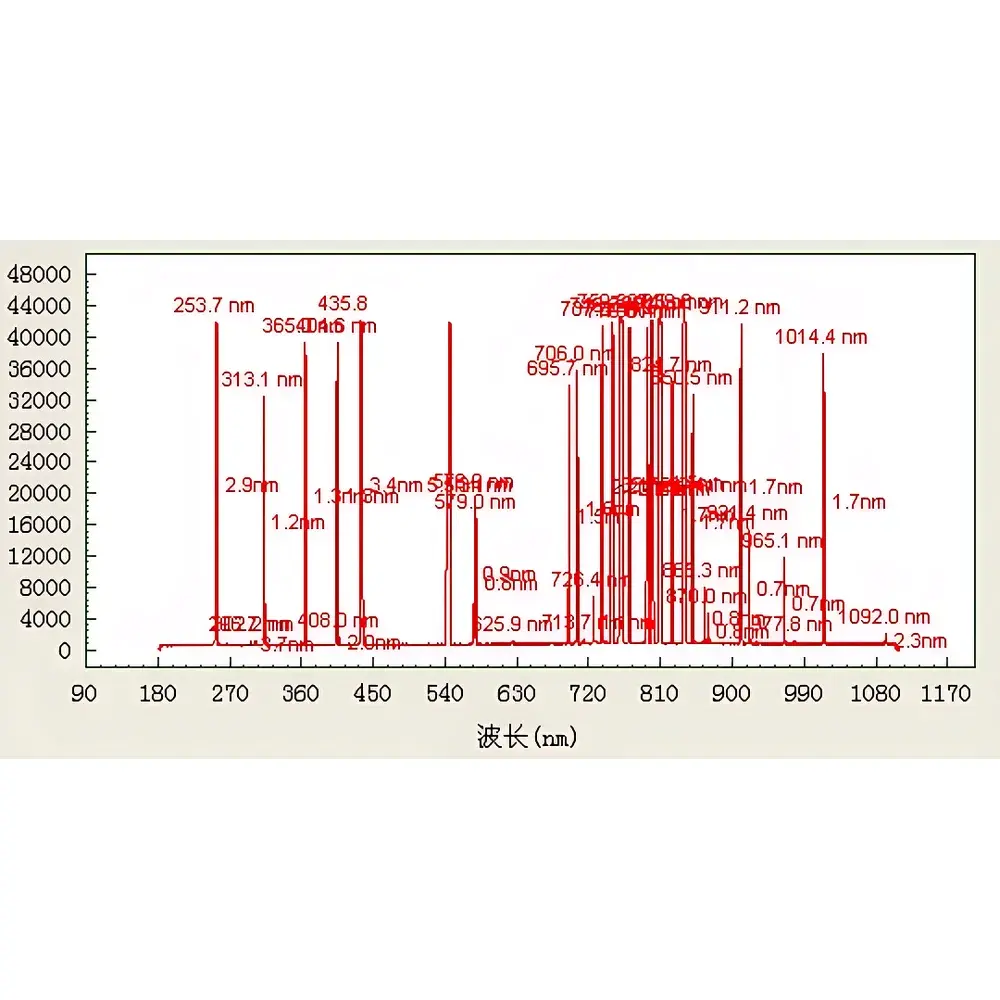
The AULTT-P Series Fiber Optic Spectrometer is a compact, high-performance benchtop spectrometer engineered for precision spectral characterization across the ultraviolet, visible, and near-infrared (UV-VIS-NIR) domains. Based on the principles of Czerny-Turner optical architecture and calibrated diffraction grating dispersion, the instrument delivers consistent wavelength accuracy and radiometric stability without external power supplies—drawing full operational power via USB 2.0 interface. Its modular design integrates seamlessly with standard SMA905 fiber optic couplings, enabling flexible configuration for transmission, reflectance, fluorescence, absorbance, and colorimetric measurements. Three model variants—AULTT-P2000 (350–1000 nm), AULTT-P3000 (200–800 nm), and AULTT-P4000 (185–1100 nm)—are optimized for distinct application envelopes while maintaining identical mechanical footprint, software interface, and calibration traceability. Each unit is factory-calibrated against NIST-traceable deuterium and mercury-argon emission standards, ensuring compliance with ISO/IEC 17025–recommended verification practices for optical instrumentation.
Key Features
- UV-VIS-NIR spectral coverage from 185 nm to 1100 nm—enabling detection of deep-UV transitions (e.g., ozone absorption at 254 nm) and NIR vibrational overtones up to 1100 nm
- Optical resolution ≤0.03 nm (FWHM), achieved via high-efficiency 600 lines/mm holographic gratings and thermally stabilized optical path
- Wavelength repeatability < ±0.3 nm over 24-hour continuous operation—validated per ASTM E275 for spectrophotometer stability
- USB-powered architecture eliminates need for auxiliary power adapters; supports plug-and-play operation under Windows 7 (32/64-bit) with signed drivers
- Integrated intelligent exposure control: automatic integration time adjustment based on signal saturation thresholds and SNR optimization
- Real-time spectral video capture mode for kinetic monitoring of transient optical events (e.g., LED turn-on transients, photochemical decay)
- Standard 30 µm entrance slit—exchangeable with optional 10 µm, 50 µm, or 100 µm slits to balance resolution vs. throughput
Sample Compatibility & Compliance
The AULTT-P series accommodates diverse sample geometries via interchangeable fiber-coupled probes—including integrating spheres (for diffuse reflectance), cuvette holders (10 mm pathlength), collimating lenses (for free-space beam analysis), and custom OEM mounts. It supports quantitative absorbance measurements compliant with Beer-Lambert law implementation (A = ε·c·l), referenced against air or blank solvent baselines. All firmware and software modules adhere to GLP data integrity requirements: each spectrum file embeds timestamp, instrument ID, calibration date, user-defined metadata, and full audit trail of processing steps (smoothing, baseline correction, peak integration). The system satisfies essential criteria for ISO 17025-accredited labs performing spectral validation per ICH Q2(R2) guidelines and USP Photometric Absorption Spectroscopy.
Software & Data Management
The bundled SpectraView Pro software provides a unified platform for instrument control, spectral acquisition, and post-processing. It features native multi-device support—up to eight AULTT-P units can be synchronized and triggered simultaneously via software-defined TTL signals. Core analytical modules include: wavelength calibration assistant (with Hg/Ar/D₂ line fitting), photometric intensity normalization, CIE 1931 xy chromaticity mapping, correlated color temperature (CCT) calculation, and spectral irradiance conversion using NIST-traceable responsivity curves. Export options include CSV (for MATLAB/Python ingestion), TXT (ASCII tab-delimited), PDF (publication-ready reports with embedded spectra), and BMP/PNG (raster graphics with DPI scaling). All exported files retain embedded EXIF-like metadata—ensuring full data provenance for FDA 21 CFR Part 11–aligned environments when paired with user-authenticated login and electronic signature modules.
Applications
- LED and OLED spectral characterization: CCT, Duv, CRI (R1–R14), TM-30 metrics, and binning consistency verification
- UV curing lamp spectral output validation per ISO 11664-3 and ASTM D4082
- Thin-film interference analysis and optical coating transmission/reflection profiling
- Chemical identification via absorption fingerprinting (e.g., nitrate in water at 220 nm, chlorophyll-a at 663 nm)
- Educational spectroscopy labs: atomic emission experiments (Hg, Na, He), fluorescence quantum yield estimation, and solar simulator spectral match evaluation (IEC 60904-9 Class AAA)
- Quality assurance of optical filters, dichroics, and bandpass components across 185–1100 nm
FAQ
Is the AULTT-P spectrometer compatible with operating systems beyond Windows 7?
Yes—while officially validated on Windows 7, the device operates under Windows 10/11 and Linux (via libusb and custom Python bindings); macOS support is available through third-party SDKs.
Can the spectrometer perform absolute irradiance measurements?
Yes—when calibrated with an NIST-traceable cosine-corrected irradiance standard (e.g., Ocean Insight CC-3-UV), the system reports µW/cm²/nm with ±5% uncertainty across 250–1000 nm.
What is the minimum integration time supported?
The shortest programmable integration time is 1 ms, with 10 µs increments; dynamic range exceeds 10⁴:1 (typical) after dark-current subtraction.
Does the software support automated batch processing of multiple spectra?
Yes—SpectraView Pro includes a macro scripting engine (VBScript-based) for unattended spectral acquisition, peak area quantification, and report generation across hundreds of samples.
Are OEM integration options available for embedded system deployment?
Yes—AULTT-P modules are supplied with TTL trigger I/O, UART debug port, and SDKs for C/C++, Python, LabVIEW, and MATLAB; custom firmware builds support deterministic latency modes for real-time control loops.




