
CEL-TPV355 Transient Surface Photovoltage Spectrometer (TPV)
| Brand | CEAULIGHT |
|---|---|
| Origin | Beijing, China |
| Manufacturer Type | Original Equipment Manufacturer (OEM) |
| Country of Origin | China |
| Model | CEL-TPV355 |
| Price | USD 14,200 (FOB Beijing) |
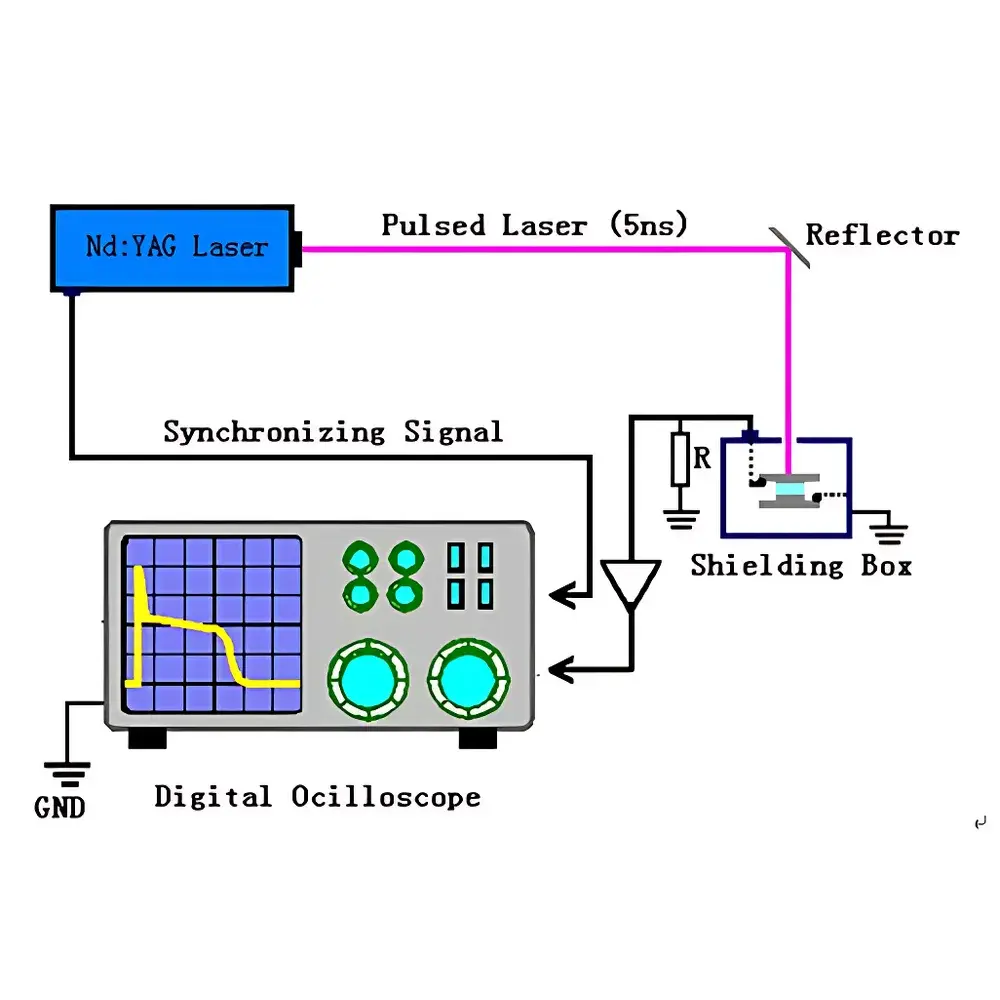
| Laser Source | Nd:YAG, 355 nm, 6 ns pulse width, 1–20 Hz repetition rate |
| Detection Bandwidth | DC–350 MHz (preamp), 500 MHz (oscilloscope) |
| Temporal Resolution | <1 ns (system-limited) |
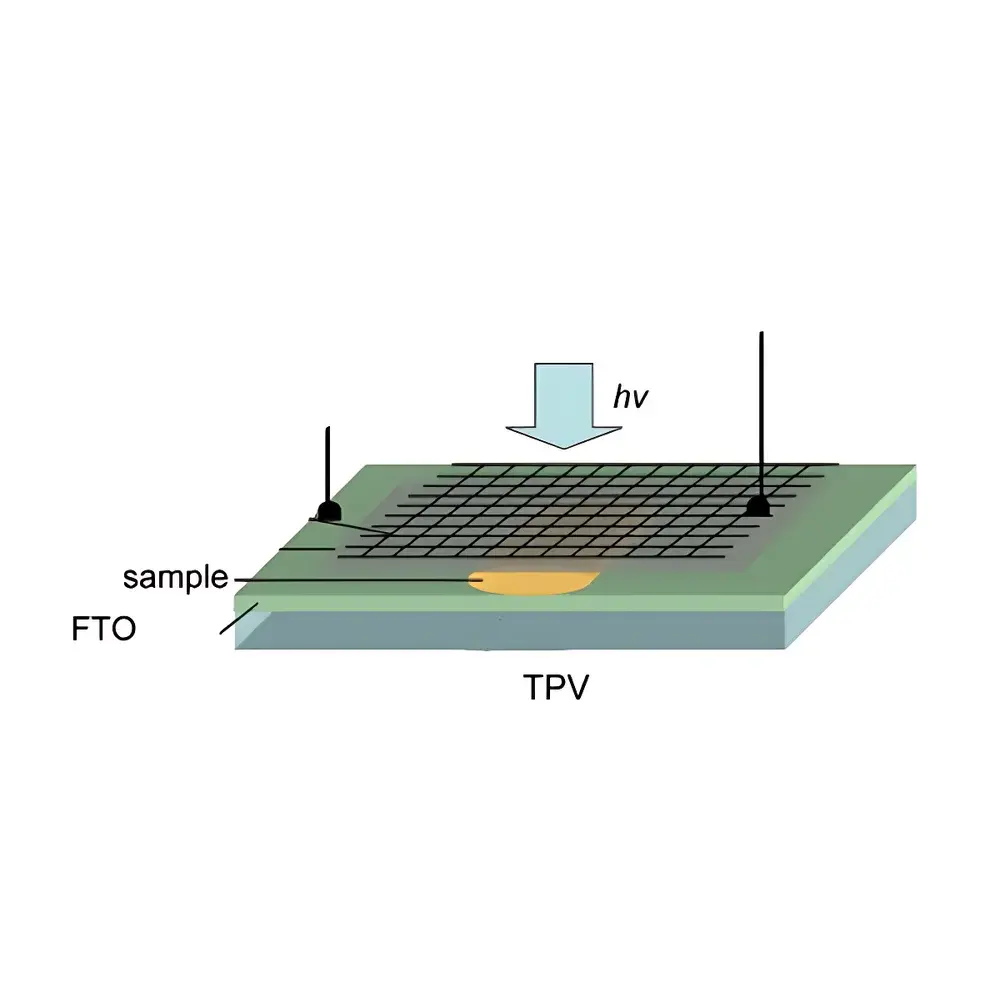
| Sample Configurations | Powder (sandwich cell), Thin-film/FTO-based devices (liquid-phase or solid-state), Nanomaterials |
| Data Acquisition | Real-time dual-channel synchronous capture with hardware/software noise suppression |
| Compliance | Designed for GLP-compliant labs |
Overview
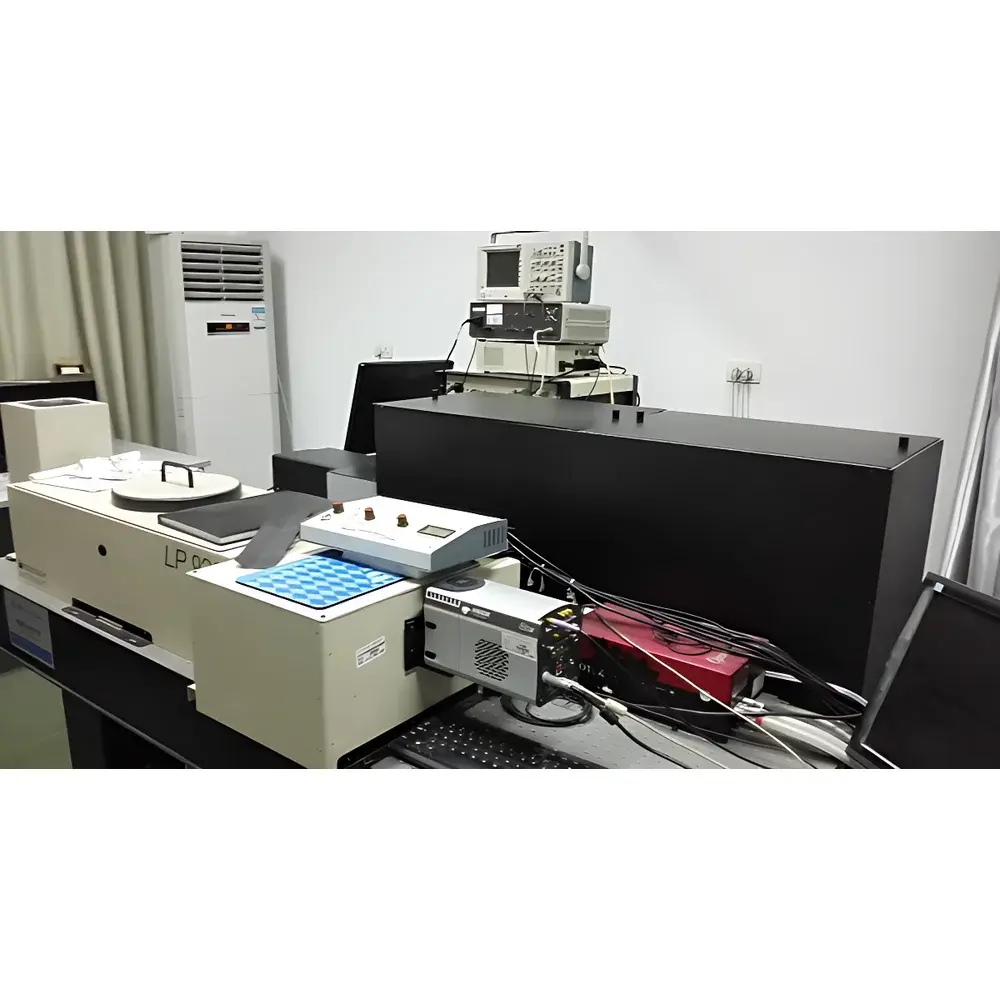
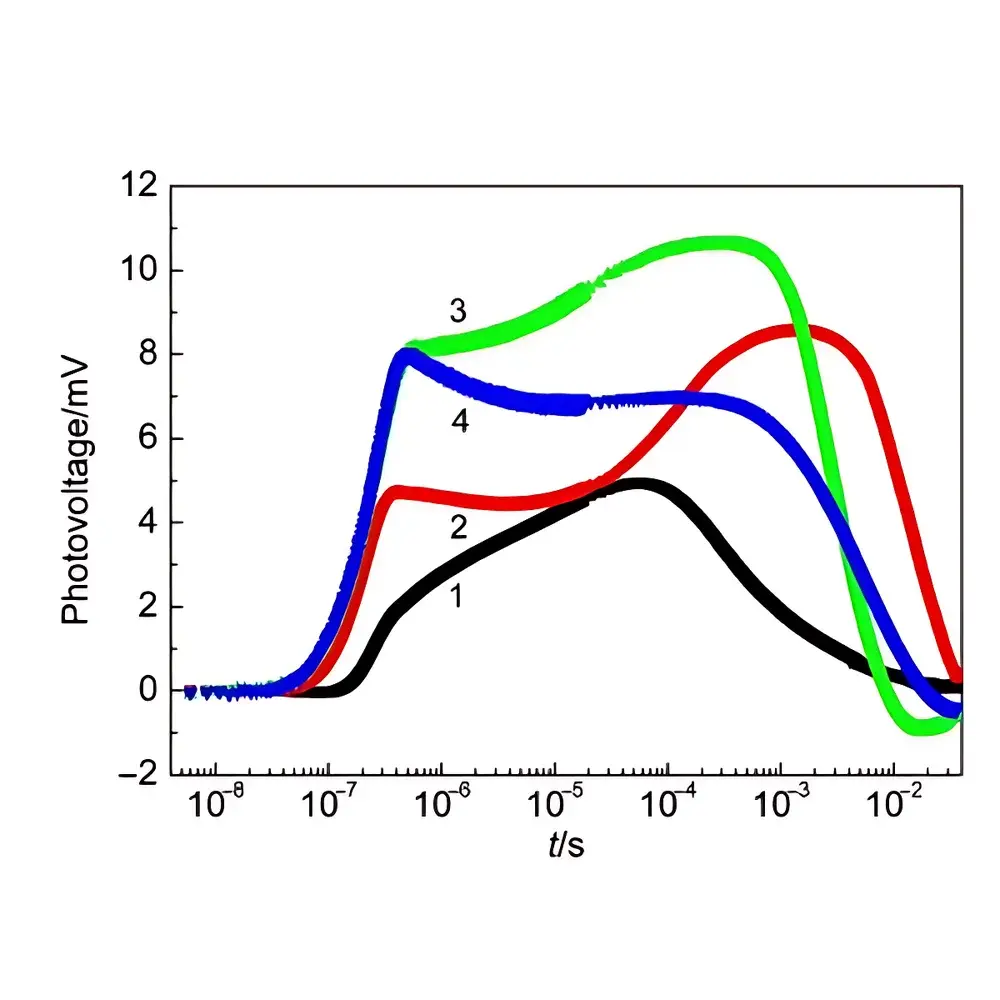
The CEL-TPV355 Transient Surface Photovoltage Spectrometer is a precision instrumentation system engineered for quantitative, time-resolved characterization of photogenerated charge carrier dynamics at semiconductor surfaces and interfaces. It operates on the physical principle of transient surface photovoltage (TPV): upon nanosecond laser excitation (355 nm, 6 ns pulse width), photogenerated electron–hole pairs induce a measurable voltage change across the surface depletion region—proportional to the net surface charge redistribution. Unlike steady-state surface photovoltage (SPV), TPV resolves kinetic pathways—specifically, the timescales of charge separation (drift-dominated, sub-ns to tens of ns), interfacial electron transfer (ns to µs), and recombination (µs to ms)—by capturing the full temporal profile of the photovoltage transient with sub-nanosecond instrumental response. The system is optimized for studies requiring high signal fidelity under low-light conditions, including photocatalytic materials, perovskite thin films, quantum dot assemblies, and organic–inorganic heterojunctions. Its architecture integrates synchronized optical triggering, low-noise signal conditioning, and deterministic waveform capture—enabling reproducible quantification of electron diffusion length, surface state density, and interfacial charge extraction efficiency without electrical contacts or electrochemical bias.
Key Features
- Integrated Nd:YAG laser source (355 nm, 6 ns FWHM, 1–20 Hz, <3% RMS energy stability) with adjustable attenuation via neutral density filter wheel
- Dual-channel acquisition path: reference photomultiplier tube (PMT) for laser pulse timing + sample channel routed through ultra-low-noise preamplifier (100 MΩ input impedance, DC–350 MHz bandwidth, 1 ns rise time, 6.4 nV/√Hz noise floor)
- 500 MHz digital phosphor oscilloscope (Tektronix platform) with 5 GS/s real-time sampling, 10 k-point record depth, and hardware-accelerated waveform processing
- Electromagnetically shielded sample chamber with modular cell design: stainless-steel powder cell (sandwich geometry) and quartz liquid-phase cell for FTO/glass-supported devices
- Optomechanical flexibility: fully enclosed dark box (900 × 1200 mm optical table integrated), motorized translation stages, kinematic mirror mounts, and vertical/horizontal beam routing capability
- Dedicated TPV analysis software with real-time noise suppression algorithms (adaptive baseline correction, cross-channel correlation filtering), automated peak detection, exponential decay fitting (mono-/bi-exponential models), and export-ready metadata tagging (ISO/IEC 17025-aligned)
Sample Compatibility & Compliance
The CEL-TPV355 accommodates heterogeneous sample formats without modification to core measurement physics: dry catalyst powders (e.g., TiO₂, g-C₃N₄, MOFs), spin-coated thin films (perovskites, organic semiconductors), and solution-immersed photoelectrodes (e.g., BiVO₄/FTO in phosphate buffer). All configurations maintain surface-sensitive detection (effective probing depth ≈ 10–50 nm), isolating interfacial phenomena from bulk contributions. The system conforms to laboratory quality management frameworks: raw waveform data are stored with embedded timestamps, operator IDs, instrument configuration logs, and environmental metadata (ambient temperature, humidity). Software supports 21 CFR Part 11–compliant audit trails—including electronic signatures, version-controlled analysis scripts, and immutable raw-data archiving—making it suitable for regulated R&D environments (e.g., photovoltaic material qualification under IEC 61215 or photocatalyst testing per ISO 22197-1).
Software & Data Management
The proprietary TPV Control Suite provides unified control of laser triggering, oscilloscope acquisition, and post-processing. It implements real-time hardware synchronization between PMT reference and sample channels, eliminating jitter-induced phase errors. Built-in algorithms perform automatic baseline subtraction, pulse-height normalization, and multi-exponential decay fitting using Levenberg–Marquardt optimization. Export options include CSV (with full metadata headers), MATLAB .mat, and HDF5 for interoperability with Python-based analysis pipelines (e.g., SciPy, NumPy, lmfit). The software includes a quantum yield calculation module compliant with ASTM E2042: users input incident photon flux (measured via calibrated power meter, 190–11000 nm range), bandgap, and reaction stoichiometry to compute apparent quantum efficiency (AQE %) and solar-to-hydrogen (STH) conversion metrics—directly traceable to NIST-traceable irradiance standards.
Applications
- Quantifying electron diffusion length in mesoporous metal oxides (e.g., TiO₂, ZnO) via TPV decay time vs. film thickness correlation
- Resolving charge transfer kinetics at heterojunction interfaces (e.g., CdS/TiO₂, CsPbBr₃/SnO₂) under open-circuit conditions
- Mapping surface trap distribution in colloidal quantum dots by varying excitation wavelength and analyzing TPV amplitude vs. photon energy
- Screening organic semiconductor doping type (p/n) through sign inversion analysis of initial TPV slope under controlled ambient exposure
- Validating passivation efficacy of ALD-grown interlayers (e.g., Al₂O₃ on Si) by comparing TPV recombination lifetimes before/after treatment
- Correlating TPV kinetics with operational stability in perovskite solar cells—linking early-stage ion migration signatures to long-term VOC degradation
FAQ
What is the minimum detectable photovoltage signal under standard operating conditions?
The system achieves a noise-equivalent voltage of ≤1.2 mV (RMS, 10 kHz bandwidth) with 100× signal averaging—sufficient to resolve sub-millivolt transients from 1 mg cm⁻² catalyst films.
Can the CEL-TPV355 be used for in-situ electrochemical TPV measurements?
Yes—optional potentiostat integration enables bias-controlled TPV under three-electrode configuration; software synchronizes voltage steps with laser pulses and records both current and photovoltage transients.
Is spectral tunability supported beyond 355 nm?
The base system uses fixed-wavelength 355 nm excitation; optional OPO upgrade extends coverage to 210–2600 nm with ≤10 nm resolution and pulse width preservation.
How is data integrity ensured during long-duration kinetic experiments (e.g., >1 hour)?
The oscilloscope’s continuous waveform capture mode (3,600 wfms/s) combined with ring-buffer storage ensures zero-gap acquisition; all triggers are logged with GPS-synchronized timestamps.
Does the system support third-party software integration (e.g., LabVIEW, Python APIs)?
Yes—TCP/IP and SCPI command sets are documented; Python SDK includes classes for automated experiment sequencing, parameter sweeps, and batch fitting.



