
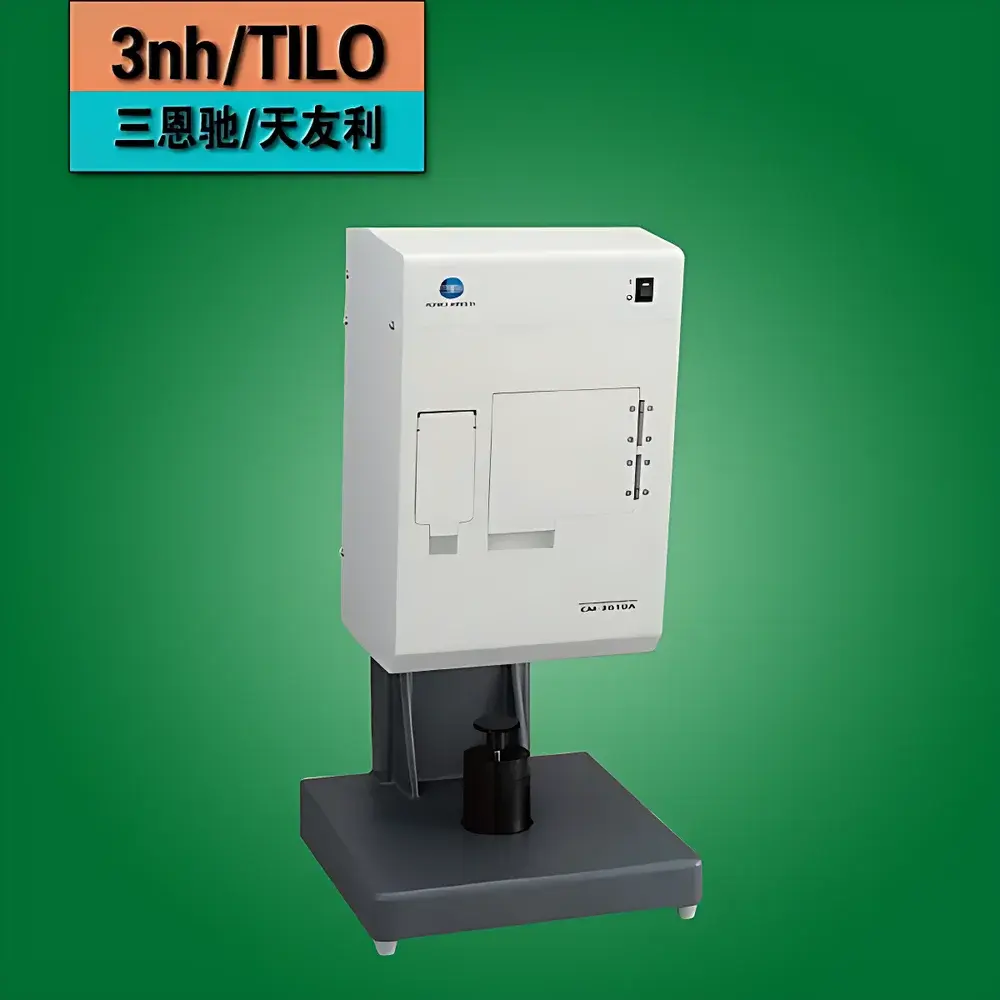
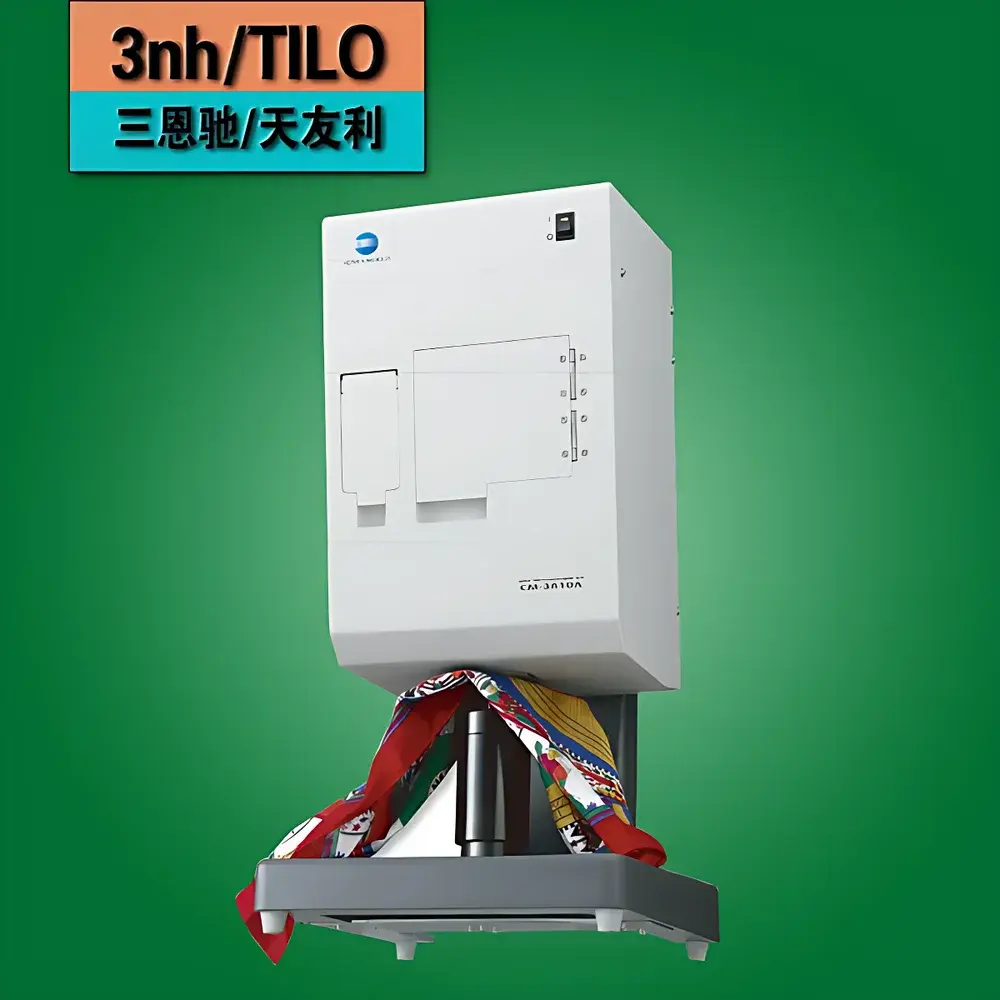
Konica Minolta CM-3610A Benchtop Spectrophotometer for Color Difference Measurement
| Brand | Konica Minolta |
|---|---|
| Origin | Shanghai, China |
| Model | CM-3610A |
| Product Type | Benchtop Spectrophotometer |
| Optical Geometry | d/8° integrating sphere |
| Light Source | Quad-pulse xenon lamp |
| Spectral Range | 360 nm – 740 nm |
| Spectral Interval | 10 nm |
| Repeatability (after white calibration) | spectral reflectance SD ≤ 0.1%, ΔE*ab SD ≤ 0.02 |
| Inter-instrument Agreement | ΔE*ab ≤ 0.15 (LAV/SCI, BCRA Series II average at 23°C) |
Overview
The Konica Minolta CM-3610A is a high-precision benchtop spectrophotometer engineered for rigorous color measurement and difference analysis in industrial R&D, quality assurance, and academic research environments. It operates on the principle of diffuse illumination with 8° viewing geometry (d/8°), compliant with ISO 7724-1, CIE No. 15, ASTM E1164, DIN 5033 Teil 7, and JIS Z 8722 Condition C. The instrument employs a dual-beam optical architecture with a dual-channel silicon photodiode array (40-element per channel) and a plane holographic grating to achieve stable spectral acquisition across the full visible and near-UV range (360–740 nm) at 10 nm intervals. Its core innovation lies in simultaneous SCI (Specular Component Included) and SCE (Specular Component Excluded) measurement—enabled by digital gloss control—eliminating mechanical filter movement and ensuring spatial consistency of the measurement area during mode switching. This design enhances measurement reproducibility, reduces operator-induced variability, and supports GLP-compliant workflows where traceability and mode stability are critical.
Key Features
- Simultaneous SCI/SCE measurement in under 4 seconds—no physical reconfiguration required, preserving measurement field integrity and minimizing inter-mode drift.
- Dual UV-capable illumination system: integrated pulsed xenon lamps emit both UV-containing and UV-filtered (400 nm or 420 nm cutoff) spectra sequentially, enabling quantitative fluorescence assessment without manual filter swaps.
- UV correction protocol: performed using a single certified fluorescent standard with known spectral reflectance; eliminates iterative trial-and-error adjustment and ensures metrologically traceable UV compensation per illuminant.
- Three interchangeable apertures: LAV (Φ25.4 mm / Φ30 mm), MAV (Φ8 mm / Φ11 mm), and SAV (Φ4 mm / Φ7 mm), supporting heterogeneous sample geometries—from large textile swatches to small metallic fasteners or printed labels.
- Robust thermal stability: spectral reflectance drift ≤ ±0.10%/°C; ΔE*ab drift ≤ 0.05/°C—validated across 13–33°C operational range, suitable for non-climate-controlled production labs.
- Backward compatibility with CM-3600d spectral databases: identical optical path and calibration algorithms ensure seamless migration of legacy color specifications and tolerance sets.
Sample Compatibility & Compliance
The CM-3610A accommodates opaque, translucent, and transparent samples—including textiles, painted metal surfaces, plastic housings, coated papers, and dyed leather—within defined dimensional limits (e.g., transmission samples up to 133 mm wide × <50 mm thick). Its d/8° sphere geometry meets international standards for colorimetric evaluation in manufacturing QA/QC, particularly where surface texture, gloss, and metamerism influence visual acceptability. Instrument validation follows ISO 9001-certified internal quality management procedures; inter-instrument agreement (ΔE*ab ≤ 0.15 under LAV/SCI) satisfies ASTM D2244 and ISO 12048 requirements for multi-site color matching. While not FDA 21 CFR Part 11–certified out-of-the-box, its Windows-based software supports audit trail configuration, electronic signature integration, and data export in CSV, CxF/XRGA, and CGATS formats—enabling alignment with GMP/GLP documentation protocols when deployed within validated IT environments.
Software & Data Management
Controlled via Konica Minolta’s SpectraMagic NX v2.x software (Windows 10/11 compatible), the CM-3610A enables real-time spectral visualization, multi-illuminant simulation (D65, A, F2, etc.), and advanced color difference computation (ΔE*ab, ΔE00, ΔEcmc). The software supports user-defined tolerances, pass/fail reporting, statistical process control (SPC) charting, and batch comparison against master standards. All measurements are timestamped and tagged with instrument ID, aperture, geometry, and UV status—facilitating retrospective analysis and regulatory review. Raw spectral data (31-point or 10-nm interpolated) is stored in vendor-neutral formats, allowing third-party integration with LIMS or ERP systems via COM/ActiveX interfaces. Firmware updates preserve calibration integrity and extend compliance with evolving CIE technical reports (e.g., CIE 179:2022 on color difference evaluation).
Applications
- Textile & Apparel: shade matching of dyed fabrics, batch-to-batch consistency verification, and fluorescence quantification in optical brightener applications.
- Automotive & Hardware: color consistency validation of electroplated trim, powder-coated chassis components, and anodized aluminum finishes under multiple viewing conditions.
- Plastics & Packaging: spectral assessment of pigment dispersion homogeneity, UV stabilizer efficacy, and substrate-dependent color shift in molded parts.
- Academic Research: spectral reflectance modeling, BRDF studies under controlled geometry, and development of custom color appearance models.
- Standards Laboratories: reference material characterization, inter-laboratory round-robin testing, and uncertainty budgeting per ISO/IEC 17025 Annex A.3.
FAQ
Does the CM-3610A require annual recalibration by a certified service provider?
No mandatory annual recalibration is specified; however, Konica Minolta recommends biannual verification using NIST-traceable ceramic tiles and quarterly white calibration with the included standard. Full recalibration is advised after impact, extended storage (>6 months), or exposure to ambient humidity >80% RH.
Can the instrument measure metallic or pearlescent coatings accurately?
Yes—when used with the LAV aperture and SCI geometry, it captures total reflectance including specular contributions essential for effect pigments. For directional dependency analysis, complementary goniospectrophotometry is recommended.
Is spectral data export compliant with ASTM E308-22 for color conversion?
Yes—exported 10-nm spectral data conforms to ASTM E308-22 Table 1 interpolation requirements and supports CIE 1931 XYZ, CIELAB, and CMC(2:1) conversions within SpectraMagic NX or external MATLAB/Python toolchains.
What is the maximum sample thickness supported in transmission mode?
Transmission measurements accommodate samples up to 50 mm thick, with a fixed 17 mm clear aperture. Samples must be optically homogeneous and free of air gaps or surface scratches affecting beam collimation.
How does the CM-3610A handle temperature-induced drift during extended production-line operation?
Its thermally compensated optical bench and real-time dark-current correction minimize drift; internal temperature sensors trigger automatic recalibration prompts if ambient deviation exceeds ±2°C from last stable baseline—ensuring sustained ΔE*ab repeatability within specification limits.






