
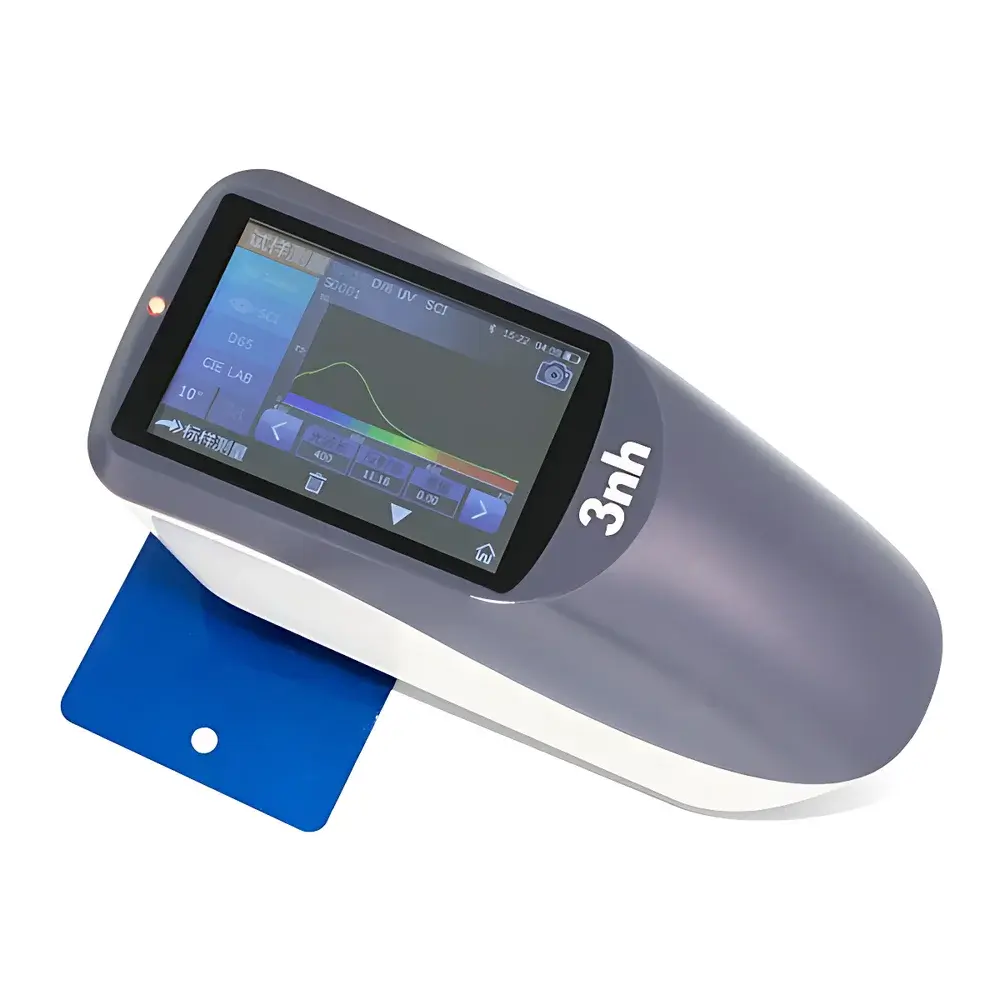
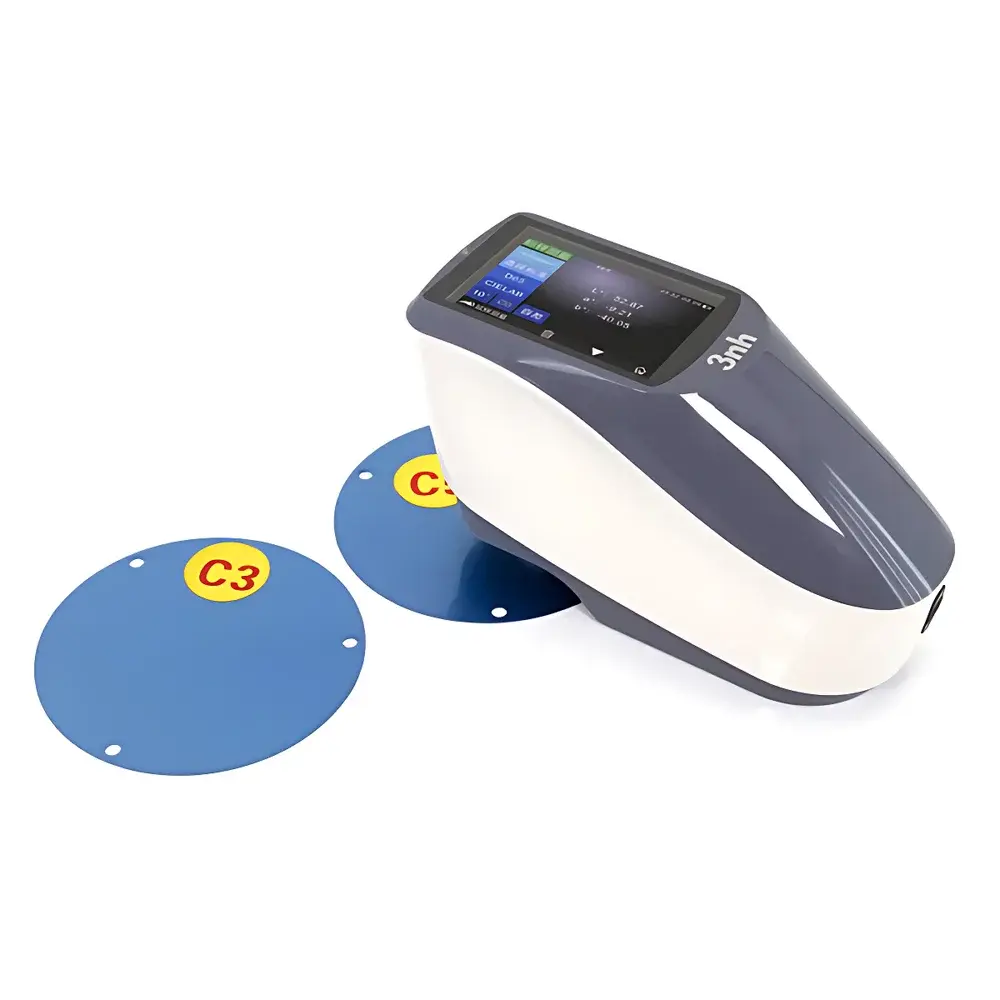
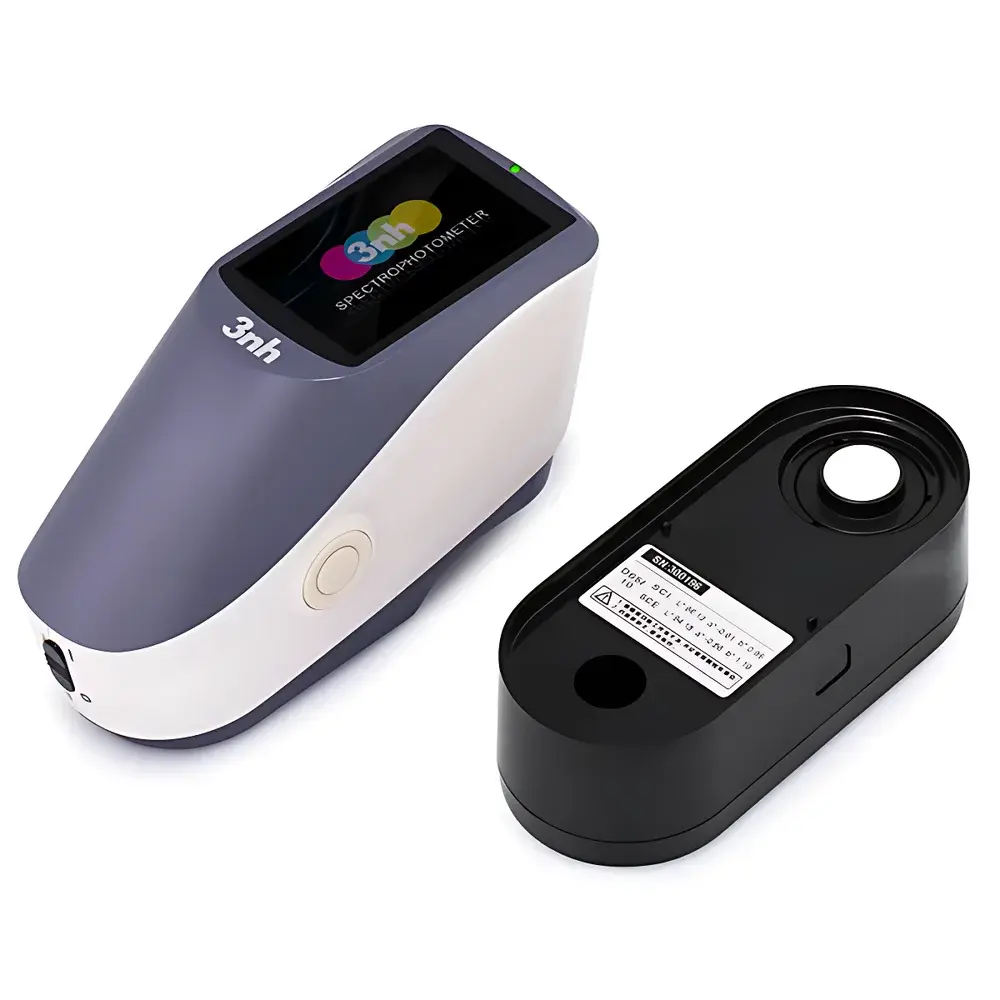
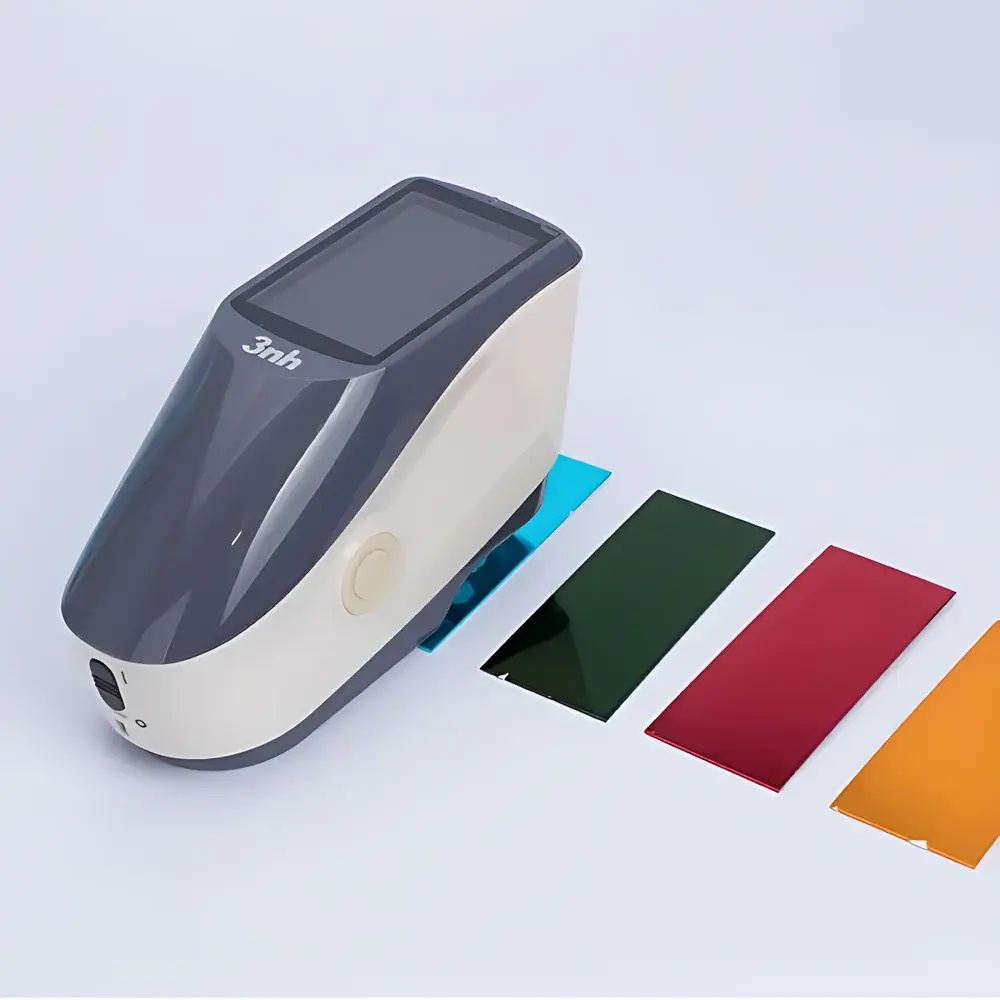
3nh YS4503 Portable Spectrophotometer
| Brand | 3nh |
|---|---|
| Origin | Guangdong, China |
| Manufacturer Type | Direct Manufacturer |
| Product Category | Spectrophotometer |
| Instrument Type | Portable |
| Optical Geometry | 45/0° (45° annular illumination / 0° viewing) |
| Light Source | Combined LED |
| Spectral Range | 400–700 nm |
| Spectral Resolution | 10 nm bandwidth |
| Reflectance Repeatability (MAV) | ≤0.1% std. dev. |
| Colorimetric Repeatability (ΔE*ab, MAV) | ≤0.05 |
| Inter-instrument Agreement (ΔE*ab, BCRA Series II) | ≤0.22 |
| Measurement Time | ~1.5 s |
| Aperture | Φ8 mm (standard), optional Φ10 mm |
| Observer Angle | 2° & 10° |
| Standard Compliance | CIE No. 15, ISO 7724-1, ASTM E1164, DIN 5033-7, GB/T 3978, GB/T 18833 |
Overview
The 3nh YS4503 Portable Spectrophotometer is an engineered solution for high-fidelity color measurement in industrial quality control environments. It operates on the 45/0° optical geometry—defined by CIE Publication No. 15 and standardized in ISO 7724-1 and ASTM E1164—where a ring of 45°-angled LEDs uniformly illuminates the sample surface while a coaxial 0° detector captures diffusely reflected light. This configuration eliminates directional gloss interference and closely emulates human visual perception under standardized viewing conditions, making it especially suitable for matte to semi-gloss surfaces common in plastics, coatings, textiles, ceramics, and print media. The instrument employs a concave holographic grating spectrometer coupled with a 256-element dual-array CMOS sensor, delivering spectral data at 10 nm intervals across the visible spectrum (400–700 nm). Its compact form factor (184 × 77 × 105 mm, ~600 g), integrated rechargeable lithium battery (5,000 measurements per charge), and capacitive 3.5-inch TFT display enable seamless transition between lab-grade verification and on-floor production line audits.
Key Features
- 45/0° optical geometry compliant with CIE, ISO, ASTM, and GB standards for robust inter-laboratory reproducibility
- High-stability combined LED illumination system with lifetime >3 million measurements and calibrated spectral output matching D65, A, C, D50, F-series, and other industry-standard illuminants
- Real-time spectral acquisition and full CIE-compliant color space computation—including CIE XYZ, Yxy, LAB, LCH, LUV, Hunter LAB, and βxy—with dual 2°/10° observer support
- Advanced repeatability: ≤0.05 ΔE*ab (MAV, after warm-up and white calibration; n=30, 5 s intervals) and ≤0.1% standard deviation in spectral reflectance
- Inter-instrument agreement validated against BCRA Series II reference tiles (ΔE*ab ≤0.22, MAV average)
- On-device pass/fail evaluation with configurable tolerances, spectral graph overlay, and deviation vector visualization
- Ruggedized housing rated for operation at 0–40°C and up to 85% RH (non-condensing), suitable for factory floor deployment
Sample Compatibility & Compliance
The YS4503 supports flat, rigid, and moderately textured surfaces via its standard Φ8 mm measuring aperture (Φ10 mm optional). Its 45/0° design minimizes sensitivity to surface orientation and specular highlights, ensuring stable readings on injection-molded plastics, painted panels, dyed fabrics, ceramic glazes, and printed substrates. Optional accessories—including powder test kits and multi-angle fixtures—extend applicability to loose powders, granules, and curved geometries. Regulatory alignment includes full traceability to national and international colorimetric standards: ISO 7724-1 (instrument geometry), ASTM E1164 (spectrophotometric measurement practice), DIN 5033-7 (photometric requirements), and GB/T 18833 (traffic sign color specifications). While not FDA 21 CFR Part 11–certified out-of-the-box, raw spectral data export (ASCII .csv, .spc) enables integration into validated GxP workflows when paired with controlled software validation protocols.
Software & Data Management
The YS4503 interfaces with SQCX Quality Control Software—a Windows-based platform supporting GLP-compliant audit trails, user-level access controls, and customizable reporting templates. SQCX enables statistical process control (SPC) charting (X-bar/R, Cp/Cpk), batch trend analysis, multi-instrument fleet management, and cross-site color database synchronization. All spectral scans, metadata (operator ID, timestamp, instrument SN, calibration history), and derived colorimetric values are stored locally on-device (500 standards + 20,000 samples) and synchronized via USB or exported in machine-readable formats (.csv, .xml, .spc). Raw spectral data retains full wavelength-resolution fidelity (400–700 nm @ 10 nm steps), permitting retrospective re-evaluation using updated illuminants or observer functions without hardware recalibration.
Applications
This spectrophotometer serves as a primary color verification tool across regulated and high-volume manufacturing sectors. In plastics and electronics, it validates pigment dispersion consistency and batch-to-batch hue stability during injection molding and coating processes. In paint and ink formulation, it supports spectral match prediction, metamerism assessment (via MI index), and weathering resistance tracking (ΔE vs. UV exposure time). Textile and apparel labs use it for shade sorting, dye lot approval, and fastness grading (color change and staining indices per AATCC/ISO). Print service providers apply it for G7 calibration, ICC profile generation, and substrate-specific gamut mapping. Ceramic manufacturers rely on its high repeatability for glaze color release certification prior to kiln firing.
FAQ
What standards does the YS4503 comply with for optical geometry and measurement practice?
It conforms to CIE Publication No. 15, ISO 7724-1, ASTM E1164, DIN 5033-7, and multiple Chinese national standards (GB/T 3978, GB/T 18833).
Can the YS4503 measure translucent or textured materials accurately?
It is optimized for opaque, planar, and low-to-moderate texture surfaces. For translucent films or deep textures, supplementary fixtures (e.g., black cavity backings or pressure clamps) are recommended.
Is spectral data export supported for third-party analysis?
Yes—full-resolution reflectance spectra (400–700 nm, 10 nm step) export in ASCII .csv and proprietary .spc formats for use in MATLAB, Python, or commercial color science platforms.
How is instrument-to-instrument variability controlled?
Each unit undergoes BCRA Series II tile verification; inter-instrument agreement is specified at ΔE*ab ≤0.22 (MAV, 12-tile average), documented in the出厂 calibration report.
Does the device support regulatory audit requirements such as 21 CFR Part 11?
The hardware and firmware do not include electronic signature or audit trail features. However, SQCX software can be validated within a site-specific QMS to meet ALCOA+ data integrity principles when deployed under controlled procedures.




