
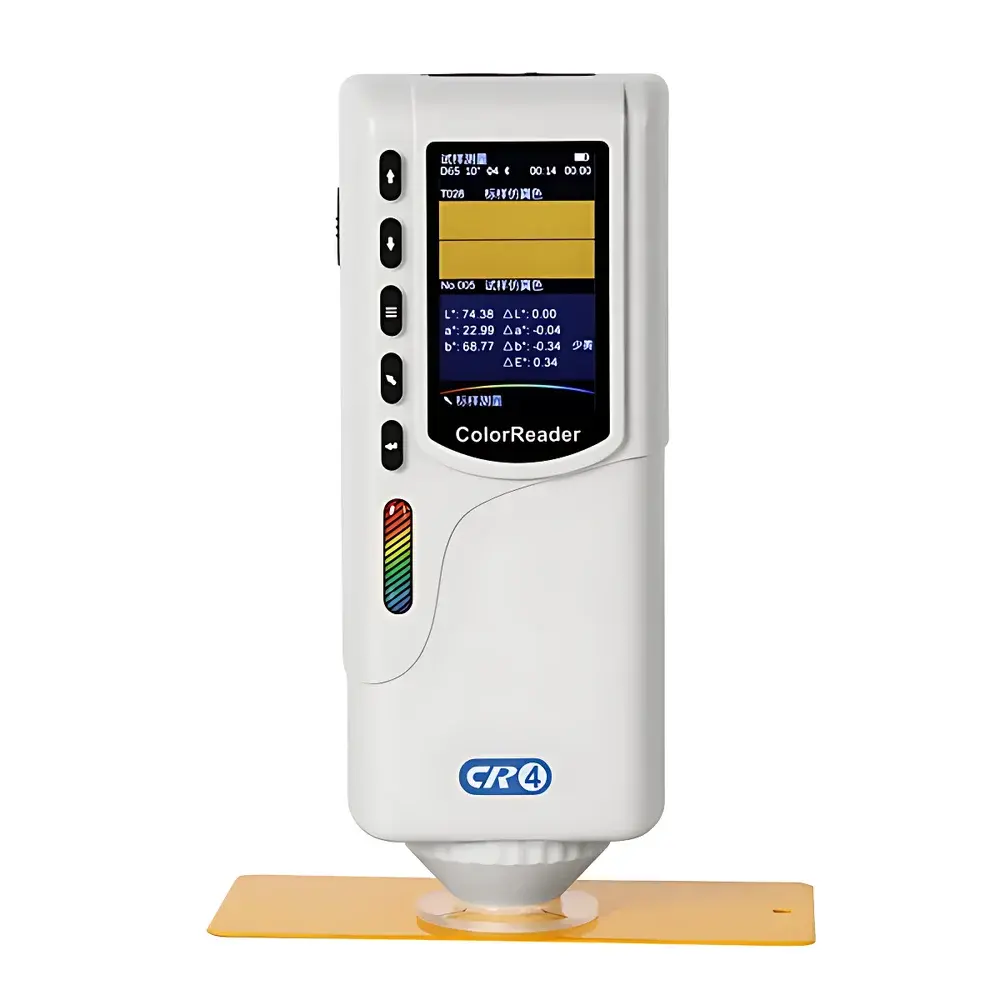
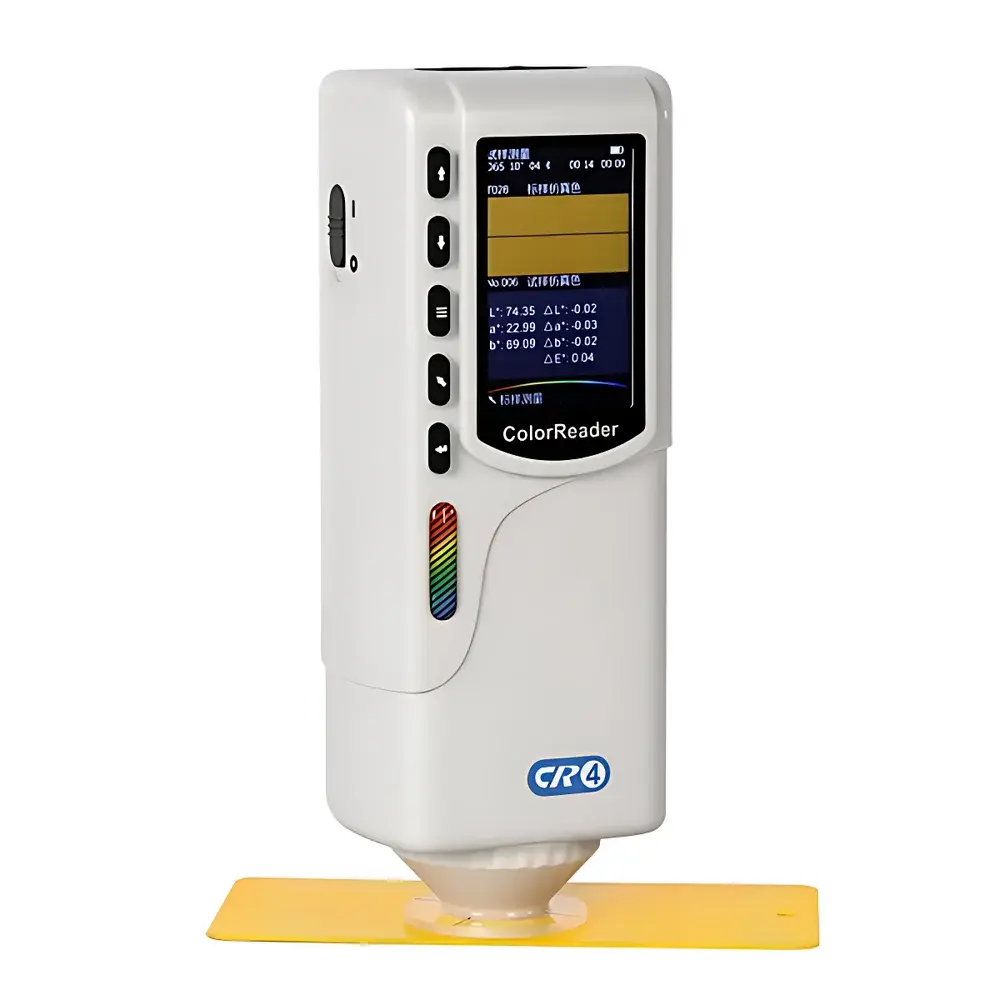
3nh CR4 Portable Color Difference Meter
| Brand | 3nh |
|---|---|
| Origin | Guangdong, China |
| Manufacturer Type | Direct Manufacturer |
| Regional Category | Domestic (China) |
| Model | CR4 |
| Product Type | Color Difference Meter |
| Instrument Type | Portable |
| Optical Geometry | 8°/d (8° illumination, diffuse viewing, including specular component, SCI mode) |
| Illuminant | D65 |
| Spectral Range | 400–700 nm |
| Repeatability | ΔE*ab ≤ 0.1 (after warm-up and calibration |
Overview
The 3nh CR4 Portable Color Difference Meter is an industrial-grade, handheld spectrophotometric color measurement instrument engineered for rapid, repeatable, and traceable color evaluation in production and quality control environments. Operating on the CIE 15-compliant 8°/d (SCI) optical geometry—where incident light strikes the sample at 8° and reflected light is collected diffusely over a hemisphere—the CR4 captures full-spectrum reflectance data across the visible range (400–700 nm) using a calibrated full-spectrum LED illuminant and CMOS linear array sensor with interference filter-based spectral separation. This architecture ensures consistent colorimetric performance under standardized D65 illumination, enabling reliable L*a*b*, L*C*h*, RGB, and HEX value acquisition per CIE 1976 and CIEDE2000 (ΔE₀₀) color difference algorithms. Designed for frontline use in paint & coatings, plastics, textiles, ceramics, and electronics manufacturing, the CR4 delivers metrologically sound color assessment without requiring laboratory infrastructure.
Key Features
- Integrated 2.8-inch TFT true-color display with real-time color simulation and pass/fail visual feedback based on user-defined tolerance thresholds
- Bluetooth 5.0 wireless connectivity to the MOBCCS mobile application for remote configuration, live data streaming, and cloud-synced color database management
- On-device data review: recall up to 5 reference standards and 5 recent test samples directly on instrument screen
- Auto-calibration at startup; optional manual calibration using included removable white calibration tile housed separately in protective pouch to maintain long-term reflectance stability
- Dual power operation: rechargeable 3.7 V / 3200 mAh Li-ion battery supports >10,000 measurements with display off or >2,000 with active screen; USB-C charging compatible with standard power adapters and portable power banks
- Rugged ergonomic housing (205 × 67 × 80 mm, ~500 g) with dust-resistant flip cover that triggers auto-power-off, and eco-friendly carry pouch for field deployment
- Measurement speed: ~1.2 seconds per reading; configurable averaging (2–99 readings) to enhance statistical robustness in variable surface conditions
Sample Compatibility & Compliance
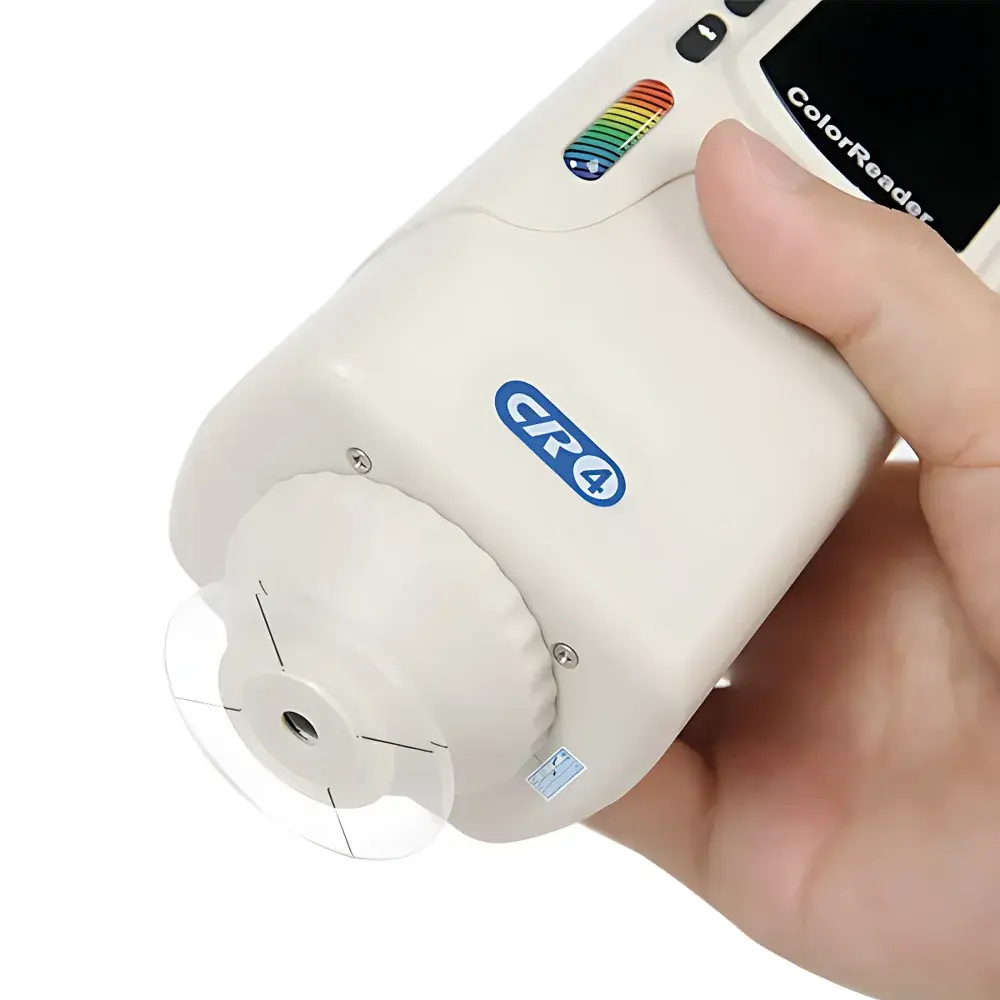
The CR4 accommodates flat, curved, textured, and matte surfaces via its Φ4 mm measurement aperture and SCI mode, which includes specular reflectance for accurate color assessment of coated substrates such as automotive paints, architectural coatings, and powder-coated metal parts. Its optical design conforms to ISO/CIE 15:2004, GB/T 3978–2008, and ASTM E308-22 for spectral data acquisition and color space transformation. While not certified to ISO/IEC 17025 or NIST-traceable calibration out-of-box, the instrument supports periodic user verification using the supplied calibration tile and enables documentation of calibration events within the MOBCCS app—facilitating internal GLP-aligned audit trails. It is suitable for routine QC applications where relative color consistency—not absolute metrological certification—is the primary requirement.
Software & Data Management
The MOBCCS mobile application (Android only) serves as the central hub for advanced color analysis and workflow integration. It provides access to proprietary and third-party color libraries—including RAL, Pantone, NCS, and industry-specific coating databases—as well as dynamic trending of seasonal and trend-driven color palettes updated by 3nh. Users may build and synchronize private cloud-based color libraries, annotate samples with metadata (batch ID, operator, timestamp), export CSV reports compliant with internal QA templates, and generate PDF inspection summaries. The app implements local data caching and encrypted Bluetooth transmission, supporting offline operation in factory-floor environments with intermittent connectivity. Audit-ready features include timestamped measurement logs and device identification tagging to ensure instrument traceability across multi-unit deployments.
Applications
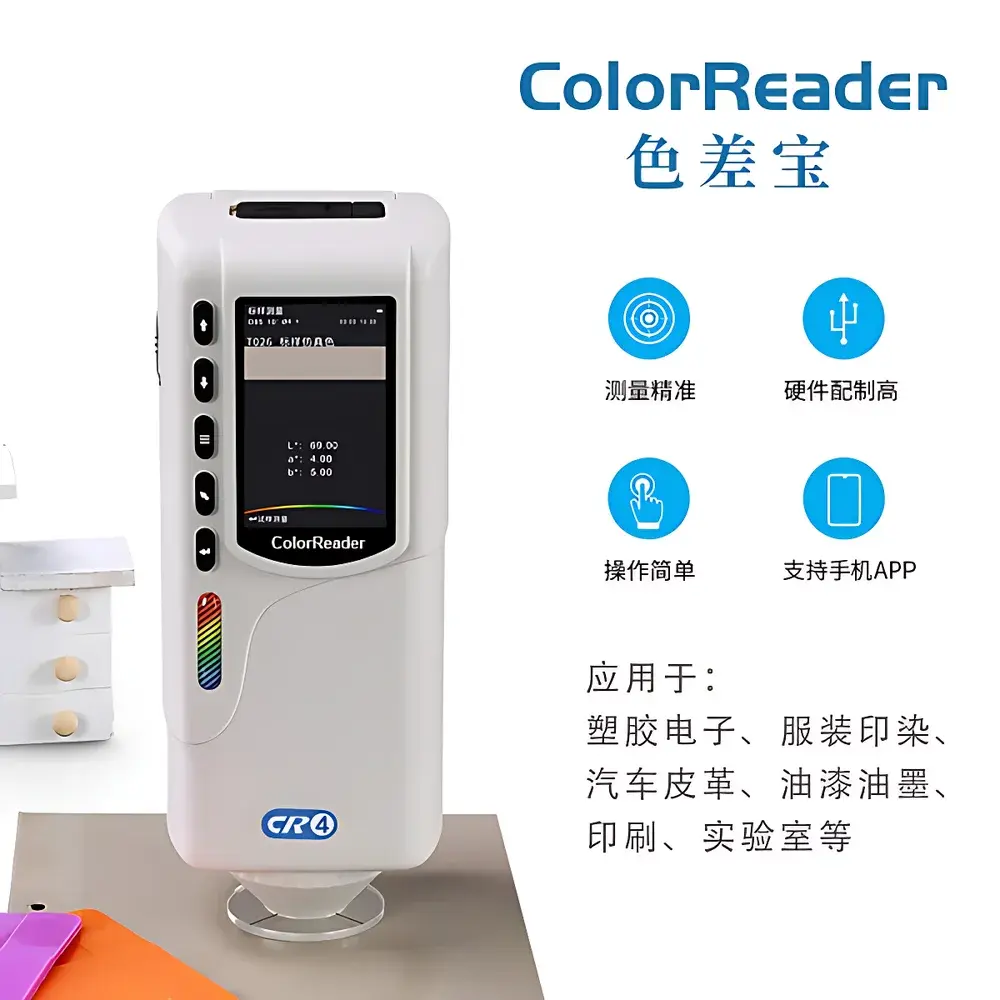
The CR4 is routinely deployed in paint formulation labs for batch-to-batch consistency checks; on production lines for incoming raw material verification (e.g., pigment dispersions, resin batches); in finishing shops for final coating inspection against master standards; and in R&D settings for rapid color matching iterations. Its portability enables field verification of touch-up paint compatibility on-site, while its Bluetooth-enabled data capture streamlines integration into MES and ERP systems via middleware APIs. In textile dye houses, it supports shade sorting of dyed fabrics prior to cutting; in plastic injection molding, it verifies color stability across mold cavities and shift cycles. The device is also used in supplier qualification programs where tier-1 OEMs require documented color deviation reporting aligned with internal specification limits (e.g., ΔE*ab < 0.5 or ΔE₀₀ < 0.3).
FAQ
What does “8°/d SCI” mean, and why is it important for coating measurement?
It refers to an 8° illumination angle with diffuse collection including specular component—ensuring consistent measurement of both glossy and matte finishes by capturing total reflectance. This geometry aligns with ISO 7724 and is critical for evaluating color appearance independent of surface texture.
Can the CR4 be used for measuring metallic or pearlescent paints?
While capable of basic L*a*b* capture, the CR4 lacks multi-angle geometry required for gonioapparent effect quantification. It is recommended for solid-color basecoats and non-effect topcoats only.
Is the instrument compliant with FDA 21 CFR Part 11 or GMP requirements?
No—CR4 does not support electronic signatures, audit trail logging, or role-based access control. It is intended for non-regulated QC use; validation must be performed per internal SOPs if deployed in regulated environments.
How often should the white calibration tile be cleaned or replaced?
Wipe gently with lens tissue and isopropyl alcohol before each use. Replace every 12–18 months or when visual inspection reveals scratches, discoloration, or inconsistent calibration results.
Does the CR4 support custom color difference formulas beyond ΔE*ab and ΔE₀₀?
No—only CIE 1976 (ΔE*ab) and CIEDE2000 (ΔE₀₀) are implemented in firmware and MOBCCS. Custom weighting or proprietary formulas require external post-processing.




