
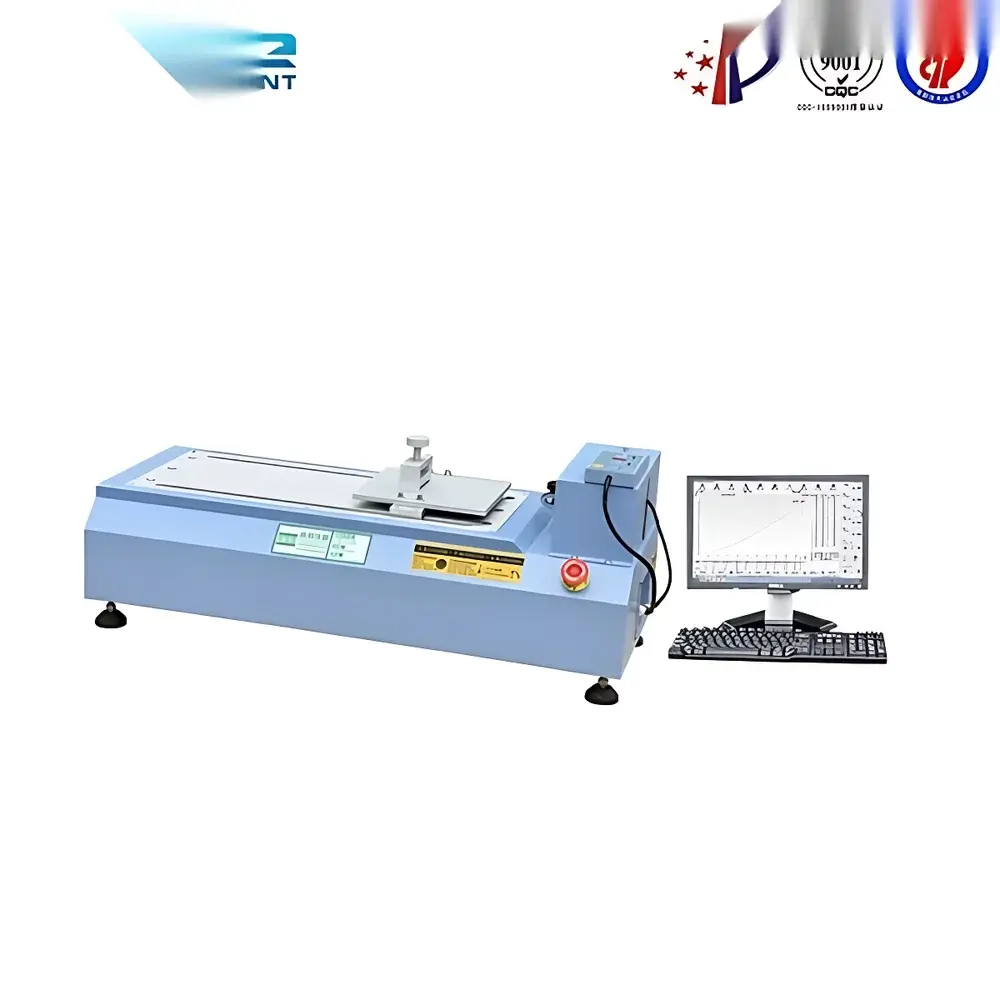
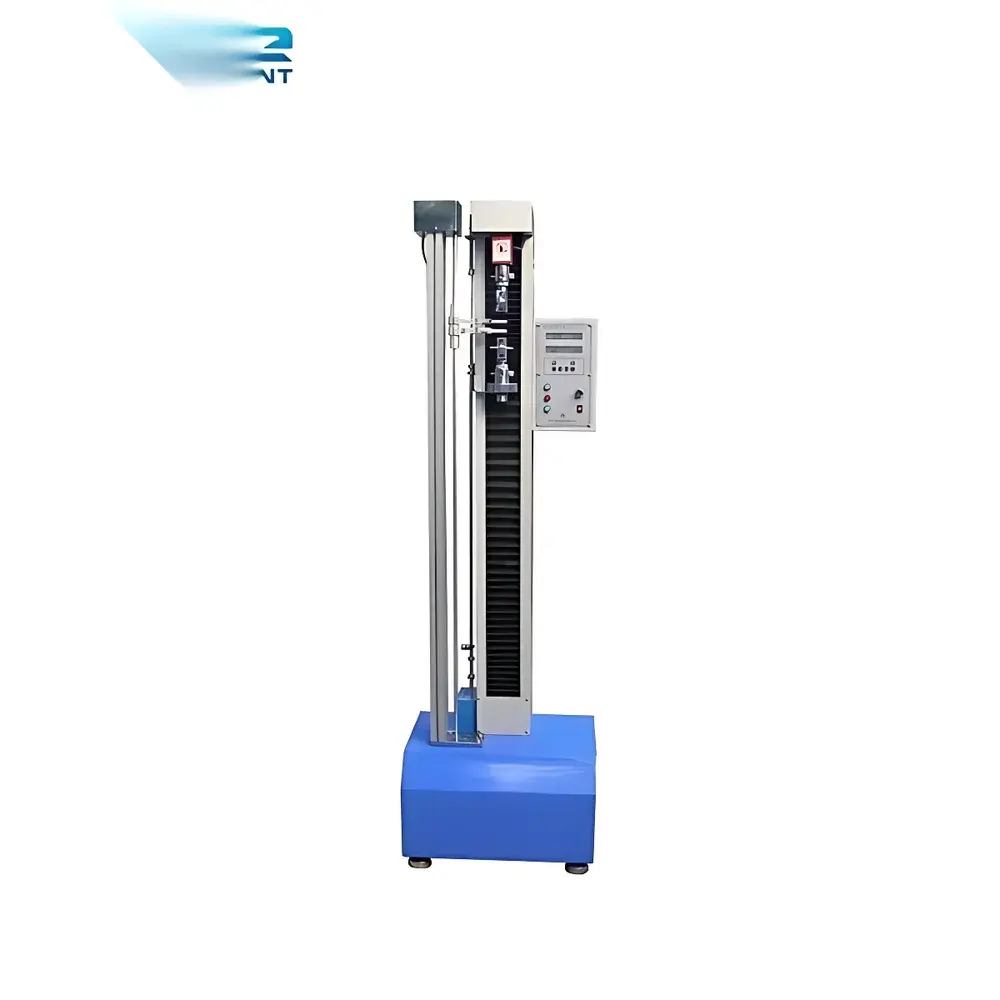
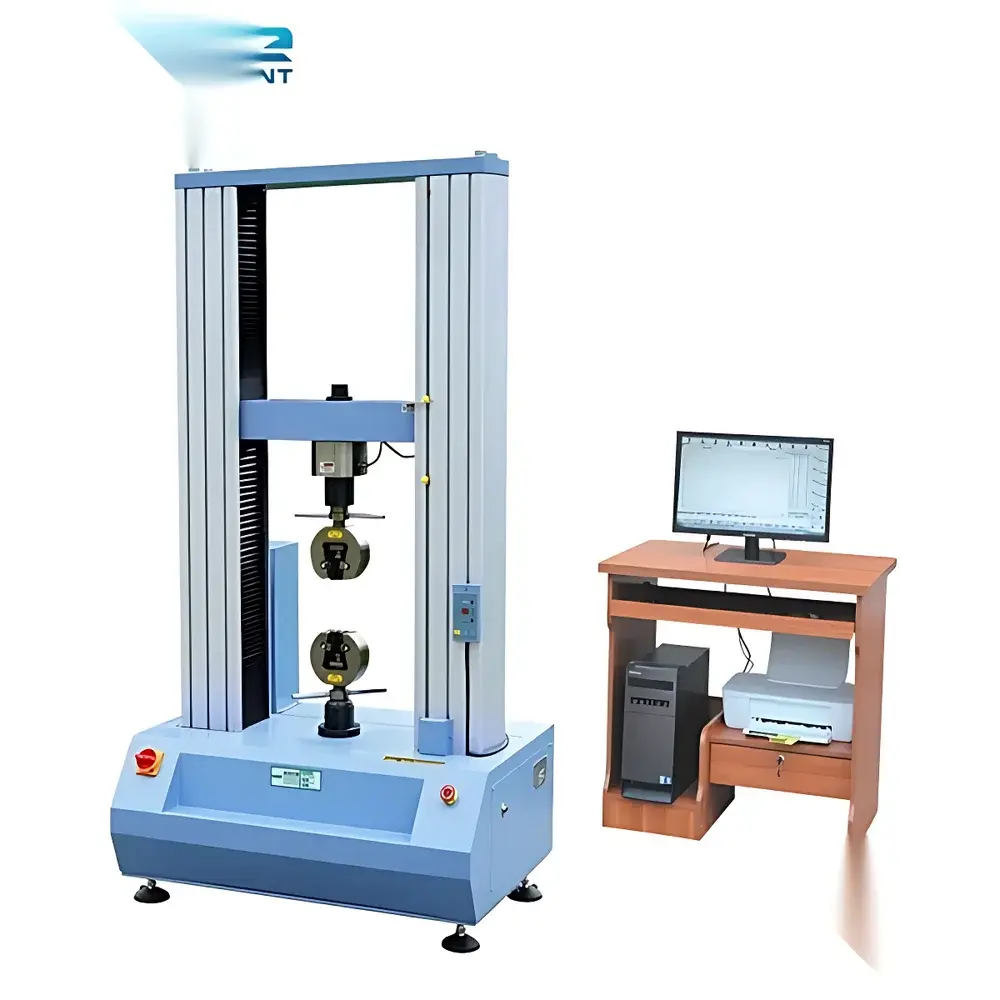
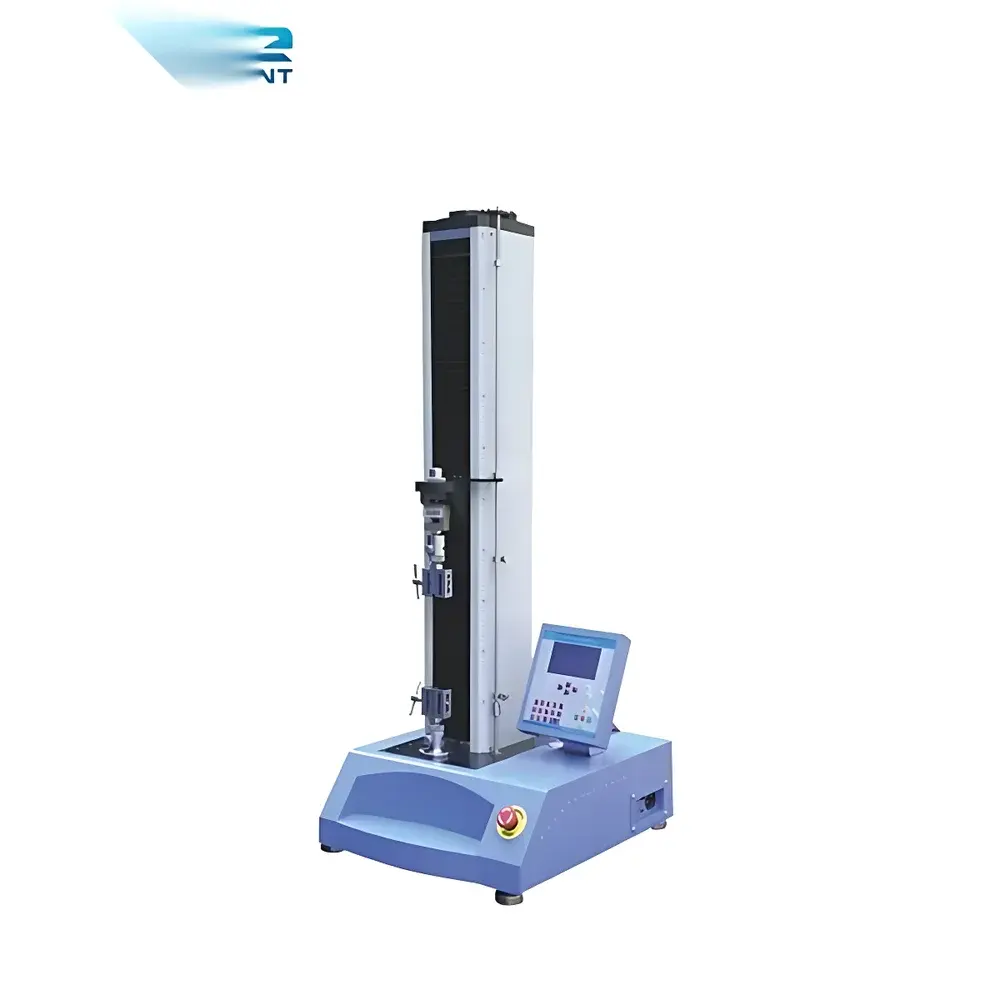
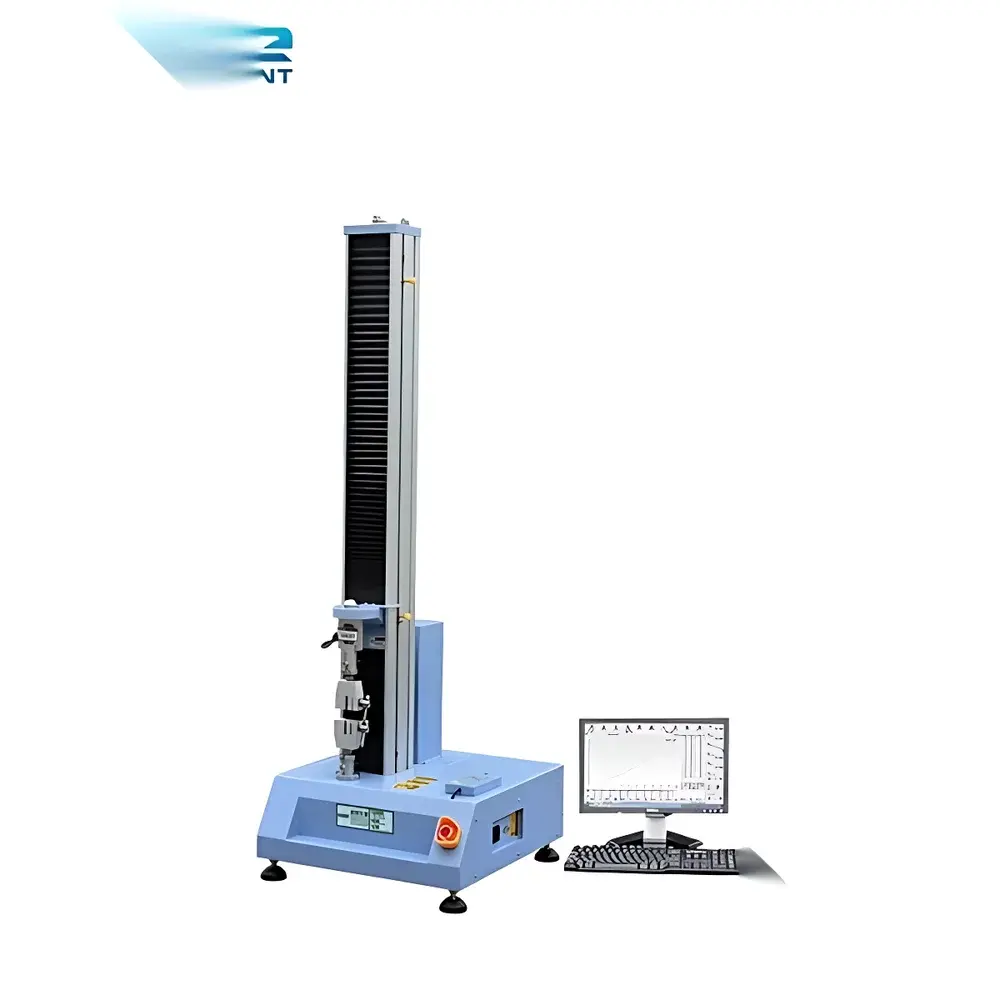
Computer-Controlled Servo-Driven Tensile Testing Machine
| Brand | OEM / Private Label |
|---|---|
| Origin | Imported |
| Supplier Type | Authorized Distributor |
| Price | USD 3,200 (FOB) |
| Load Cell Accuracy | ±0.03% FS |
| Dynamic Overload Capacity | 150% of rated capacity |
| Position Resolution | 1/100,000 full scale |
| Encoder Resolution | 2500 pulses/rev |
| Drive Motor | Panasonic AC servo motor |
| Motion System | Precision preloaded ball screw + linear guideways |
| Thermal Compensation | Built-in automatic temperature compensation |
| Safety Features | Stroke limit switches, overload alarm, break-stop function |
| Compliance | ASTM E4, ASTM D638, ISO 527, ISO 178, ISO 1183, GB/T 1040, GB/T 9341 |
Overview
The Computer-Controlled Servo-Driven Tensile Testing Machine is a precision electromechanical system engineered for static mechanical property characterization under uniaxial loading conditions. It operates on the principle of controlled displacement or load-rate application via closed-loop servo feedback, enabling high-fidelity execution of standardized tensile, compression, flexural, peel, shear, and tear tests per international materials testing protocols. Designed for laboratory and quality control environments, the system integrates real-time force-displacement data acquisition with deterministic motion control—ensuring repeatability, traceability, and metrological integrity across diverse material classes including thermoplastics, elastomers, composites, metallic wires, thin films, textiles, and biomedical polymers.
Key Features
- Panasonic AC servo motor coupled with a high-rigidity preloaded ball screw transmission system ensures smooth, low-noise, and backlash-free axial movement with sub-micron positioning resolution.
- High-stability load cell featuring hermetically sealed strain gauge technology, auto-compensated for thermal drift, delivering ±0.03% full-scale accuracy and 150% transient overload tolerance without zero drift or hysteresis degradation.
- Dual-channel optical encoder (2500 PPR) provides precise crosshead position feedback, synchronized with force sampling at up to 1 kHz for accurate strain-rate control in rate-dependent testing (e.g., ASTM D1434, ISO 527-3).
- Integrated hardware safety architecture includes mechanical stroke limit switches, real-time overload threshold monitoring, automatic break-stop functionality, and programmable upper/lower force limits to prevent sensor damage or specimen overextension.
- Modular software platform supports multi-step test profiles—including ramp-hold-relax, cyclic loading, and creep/stress relaxation—with configurable dwell times, slope rates, and termination criteria (e.g., max load, % elongation, fracture detection).
Sample Compatibility & Compliance
The system accommodates specimens ranging from ultra-thin polymer films (≥10 µm thickness) to structural metal rods (up to Ø25 mm), using interchangeable grips (pneumatic, wedge, vise, pin-and-socket) and environmental fixtures (room temperature only). All test routines comply with essential regulatory and industry standards: ASTM E4 (verification of force-measuring systems), ASTM D638 (tensile properties of plastics), ISO 527 (plastics—tensile testing), ISO 178 (flexural properties), ISO 1183 (density determination), and GB/T 1040 series (Chinese national standard for tensile testing). The instrument architecture supports GLP-compliant audit trails when paired with validated software modules meeting FDA 21 CFR Part 11 requirements for electronic records and signatures.
Software & Data Management
The embedded Windows-based control software enables real-time plotting of stress–strain, load–displacement, and modulus curves with adjustable scaling, curve smoothing, and derivative analysis. Raw data is saved in ASCII CSV format with metadata (operator ID, timestamp, calibration certificate ID, environmental conditions). Advanced features include automatic yield point detection (0.2% offset method), tangent/E-modulus calculation, elongation-at-break interpolation, and batch report generation with customizable templates compliant with ISO/IEC 17025 documentation standards. Data export supports direct integration into LIMS platforms via ODBC drivers or RESTful API endpoints.
Applications
This tensile tester serves as a foundational tool in R&D labs evaluating polymer formulation performance, QC departments verifying incoming raw material conformance (e.g., PP granules, PET film, carbon fiber prepreg), and manufacturing sites conducting first-article inspection of extruded tubing, woven safety harnesses, medical sutures, or lithium-ion battery electrode coatings. Typical use cases include: determining tensile strength and elongation of automotive interior trim materials per VW 50187; validating peel adhesion of pressure-sensitive tapes to ISO 8510-2; assessing flexural modulus of biodegradable packaging composites; and characterizing the necking behavior of thermoplastic elastomers under controlled strain rates.
FAQ
Does the system support ASTM D882 testing for thin plastic films?
Yes—the machine meets all positional resolution, speed stability, and grip alignment requirements specified in ASTM D882, including optional micro-grip configurations for specimens <1 mm wide.
Is calibration traceable to NIST or equivalent national metrology institutes?
Yes—load cells are supplied with factory calibration certificates traceable to NIST or PTB, and field recalibration services include accredited third-party verification per ISO/IEC 17025.
Can the software generate reports compliant with ISO/IEC 17025 clause 7.8.2 (reporting results)?
Yes—reports include uncertainty statements, equipment IDs, calibration dates, environmental parameters, and operator signatures, fulfilling mandatory documentation requirements.
What is the maximum crosshead speed range?
The standard configuration offers 0.001–500 mm/min, adjustable in 0.001 mm/min increments, with optional high-speed upgrade to 1000 mm/min for dynamic rupture testing.
Is remote diagnostics and firmware update capability available?
Yes—via secure TLS-encrypted Ethernet connection; remote support sessions require prior authorization and follow IEC 62443-3-3 cybersecurity guidelines.



