
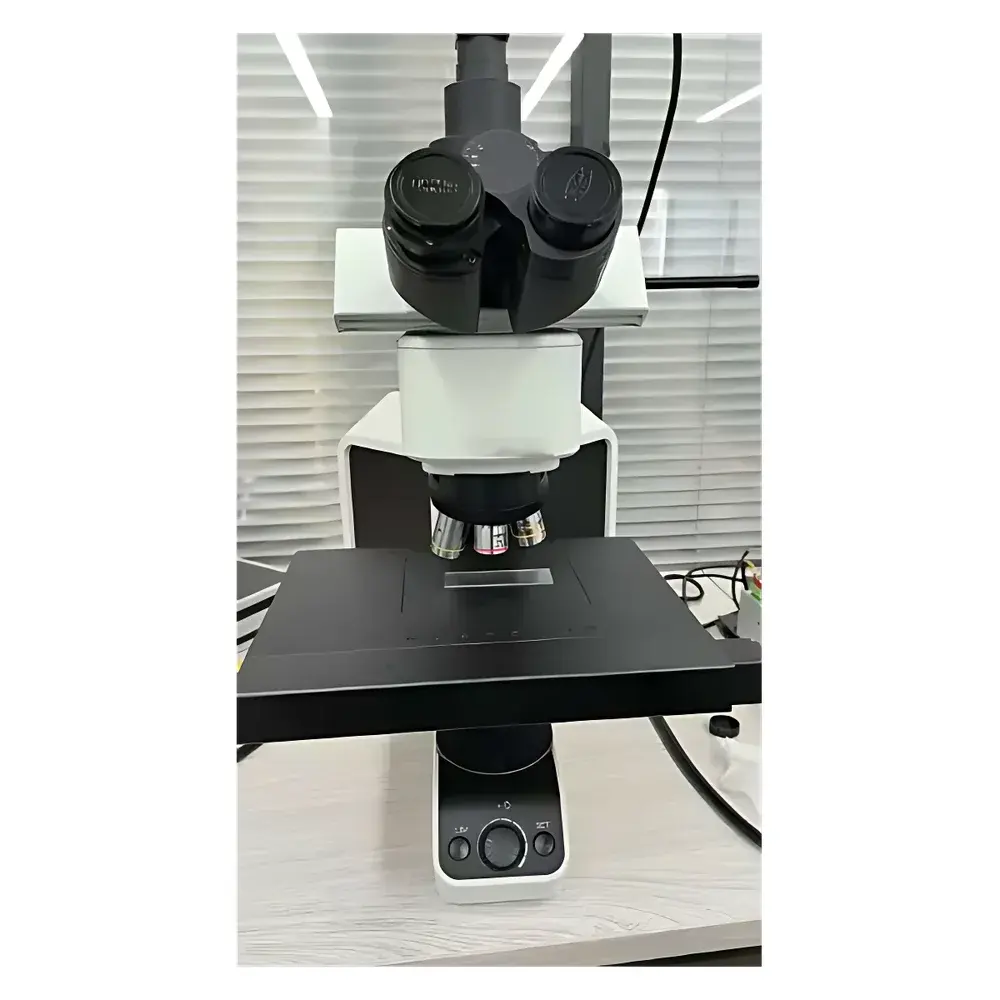
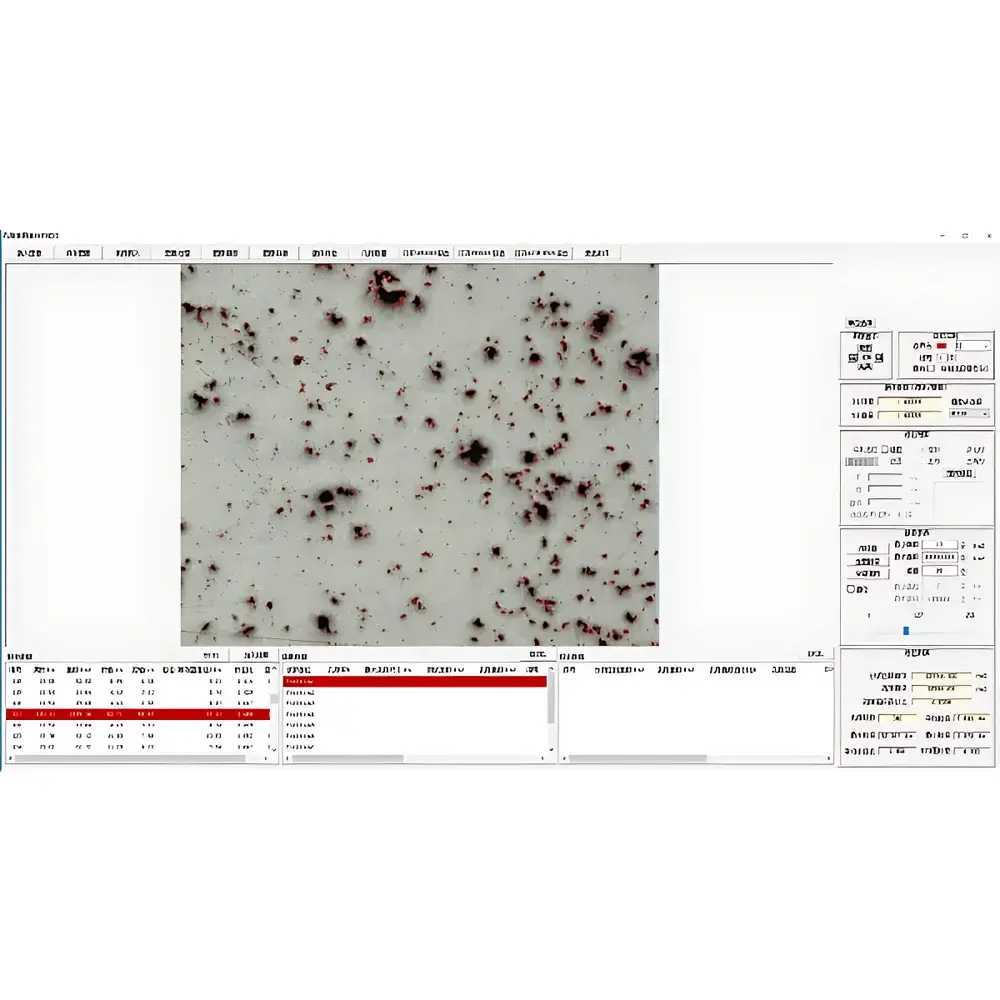
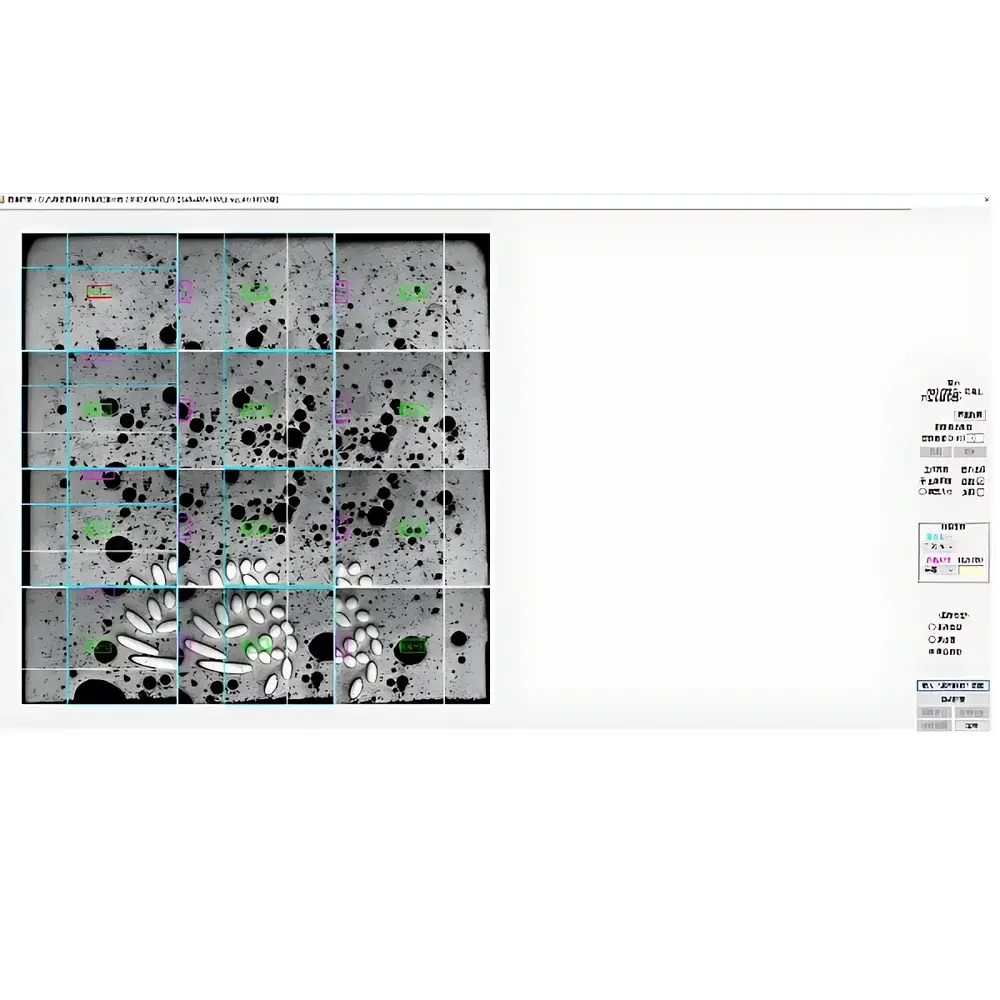
LEI-TECH LK-KXL2000 Pore Structure Analysis System
| Brand | LEI-TECH |
|---|---|
| Model | LK-KXL2000 |
| Origin | Tianjin, China |
| Manufacturer Type | Direct Manufacturer |
| Compliance Standards | VW 50093, VW 50097, ASTM E505 |
| Imaging Resolution | Up to 5 MP |
| Motorized Stage Travel | 70 × 70 mm |
| Stage Repeatability | ±5 µm |
| Minimum Step Resolution (16× microstepping) | 0.625 µm |
| Software Output Formats | DOCX, XLSX, PDF |
| Operating System | Windows 10 Enterprise |
Overview
The LEI-TECH LK-KXL2000 Pore Structure Analysis System is a dedicated optical image-based metrology platform engineered for quantitative porosity characterization of solid materials—including cast metals, sintered powders, ceramic substrates, polymer composites, and geological samples. It operates on the principle of high-resolution brightfield/darkfield or polarized light microscopy coupled with automated digital image segmentation and morphometric analysis. Unlike bulk measurement techniques (e.g., mercury intrusion porosimetry or gas pycnometry), the LK-KXL2000 delivers spatially resolved pore distribution data at the microstructural level—enabling correlation between local pore geometry (size, shape, connectivity) and macroscopic performance metrics such as mechanical strength, permeability, or thermal conductivity. The system is designed for integration with user-selected stereo or metallurgical microscopes, supporting both real-time acquisition and post-acquisition offline analysis workflows.
Key Features
- Motorized XY translation stage with 70 × 70 mm travel range, ±5 µm repeatability, and sub-micron positioning resolution (0.625 µm per step under 16× microstepping)
- Automated mosaic imaging: supports both hardware-synchronized (stage-controlled) and software-based (registration-driven) image stitching for large-area coverage without geometric distortion
- Comprehensive morphometric quantification: per-pore parameters include area, perimeter, major/minor axis length, aspect ratio, equivalent circular diameter, circularity, and Feret diameters
- Pre-configured compliance modules for automotive and aerospace quality standards: VW 50093 (porosity classification for aluminum die-cast parts), VW 50097 (multi-field statistical reporting), and ASTM E505 (standard test method for determining porosity in aluminum alloy castings)
- Flexible region-of-interest (ROI) definition using polygonal, rectangular, circular, elliptical, and freehand selection tools—with immediate localized porosity calculation upon ROI confirmation
- Integrated geometric measurement suite with annotation, unit customization (µm/mm/inch), calibration-aware scaling, and traceable measurement history export
Sample Compatibility & Compliance
The LK-KXL2000 accommodates flat, polished, or etched specimens up to 150 mm × 150 mm in footprint and ≤5 kg in mass. Compatible sample types include metallographic cross-sections (Al-Si alloys, Mg alloys, steel welds), powder metallurgy compacts, battery electrode coatings, filtration membranes, and additive manufacturing build plates. All analytical outputs comply with ISO/IEC 17025 documentation requirements when operated under defined calibration and validation protocols. Report generation adheres to audit-trail principles: each exported DOCX/XLSX/PDF file embeds timestamped metadata, operator ID, microscope magnification, pixel calibration factor, and thresholding parameters used during binary segmentation—supporting GLP and GMP-aligned quality assurance environments.
Software & Data Management
The proprietary PoreAnalysis Studio software provides a modular, workflow-driven interface with dual acquisition modes: live camera streaming synchronized with motorized stage control, or batch import of TIFF/JPEG stacks from external sources. Image preprocessing includes adaptive histogram equalization, noise suppression filters (non-local means), and dynamic threshold optimization (Otsu, IsoData, or manual). Analytical results are stored in an internal SQLite database with relational indexing by specimen ID, field position, and analysis date. Export modules generate fully editable reports containing summary statistics (mean pore area, standard deviation, pore density per mm²), classified porosity histograms (VW 50093 grade bands), and annotated micrographs with scale bars and measurement overlays. All report templates conform to industry-standard formatting conventions and support configurable corporate branding.
Applications
- Automotive foundry QA: verification of casting integrity per VW 50093 Grade A–D classification thresholds for engine blocks and transmission housings
- Aerospace component certification: statistical pore size distribution mapping across critical turbine blade investment castings
- Battery R&D: quantification of pore tortuosity and interconnectivity in Li-ion cathode coatings to inform electrolyte wetting models
- Additive manufacturing process development: layer-by-layer porosity tracking in laser powder bed fusion (LPBF) builds to correlate energy density with defect formation
- Geological core analysis: pore network topology assessment in shale reservoir analogs for permeability modeling
- Quality control in thermal spray coatings: detection of delamination-related voids and splat boundary porosity
FAQ
What microscope models are compatible with the LK-KXL2000 system?
The system interfaces with any stereo or upright metallurgical microscope equipped with a C-mount port and optional polarization capability. Common integrations include Olympus SZX series, Zeiss Stemi series, and Nikon SMZ series—provided the camera adapter matches the sensor format.
Can the software perform 3D pore reconstruction?
No—the LK-KXL2000 performs 2D planar analysis only. For volumetric pore characterization, users should pair it with serial sectioning or complementary CT scanning workflows.
Is FDA 21 CFR Part 11 compliance supported?
While the software does not include electronic signature modules out-of-the-box, its audit trail functionality (user log, parameter logging, immutable report exports) forms the foundational infrastructure required for Part 11 validation within regulated laboratories.
How is pixel-to-micron calibration performed?
Calibration is conducted using NIST-traceable stage micrometers or certified graticules; the software stores calibration factors per objective lens and saves them with project files to ensure measurement traceability across sessions.
Does the system support batch processing of multiple samples?
Yes—via the “Batch Analysis” module, users can define standardized ROIs, threshold settings, and report templates to process hundreds of images unattended with consistent output formatting.






