
English Product Name
| Brand | Other Brands |
|---|---|
| Origin | Imported |
| Manufacturer Type | Authorized Distributor |
| Price | USD 3,100 (approx.) |
| Temperature Range | –40°C to +150°C |
| Humidity Range | 20–98% RH |
| Compliance | GB/T 5170.2–1996, GB/T 5170.5–1996, GB 2423.1–1989, GB 2423.2–1989, GB 2423.22–1987, GB 10589–1989, GB 10592–1989, GB 11158–1989 |
Overview
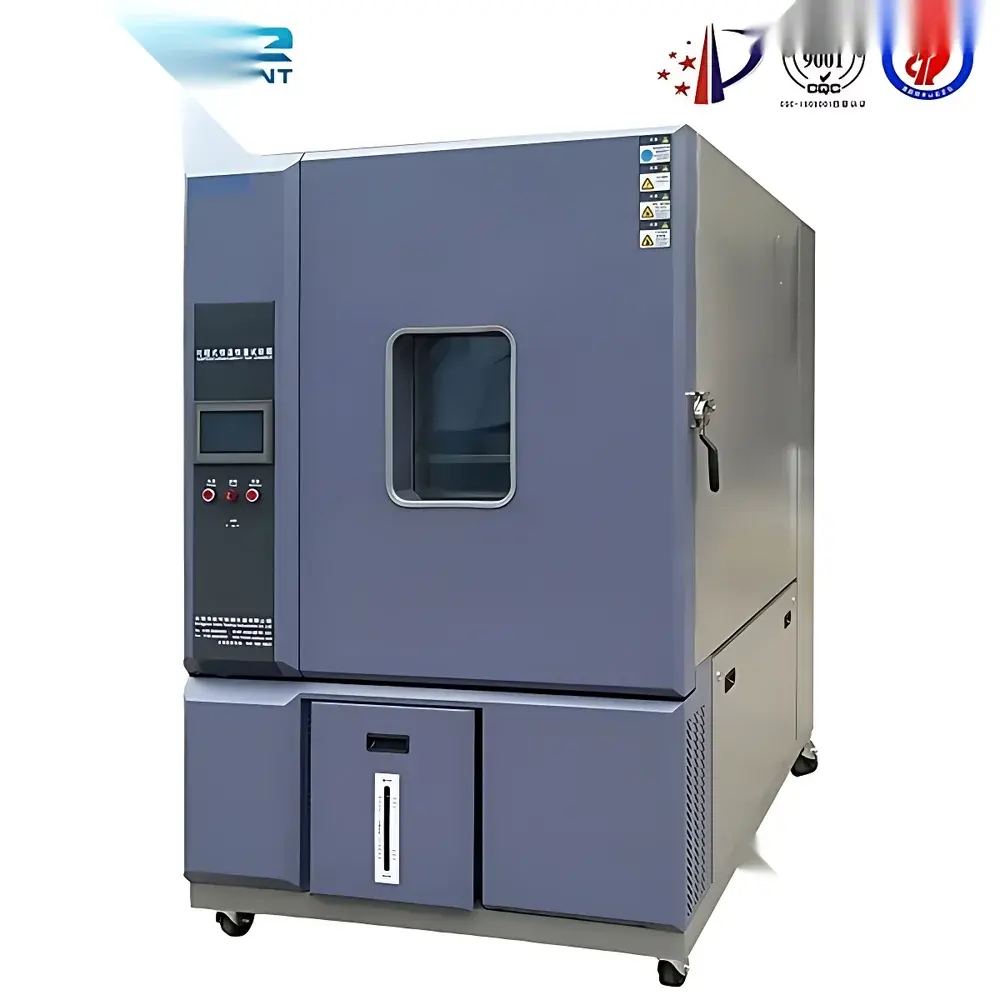
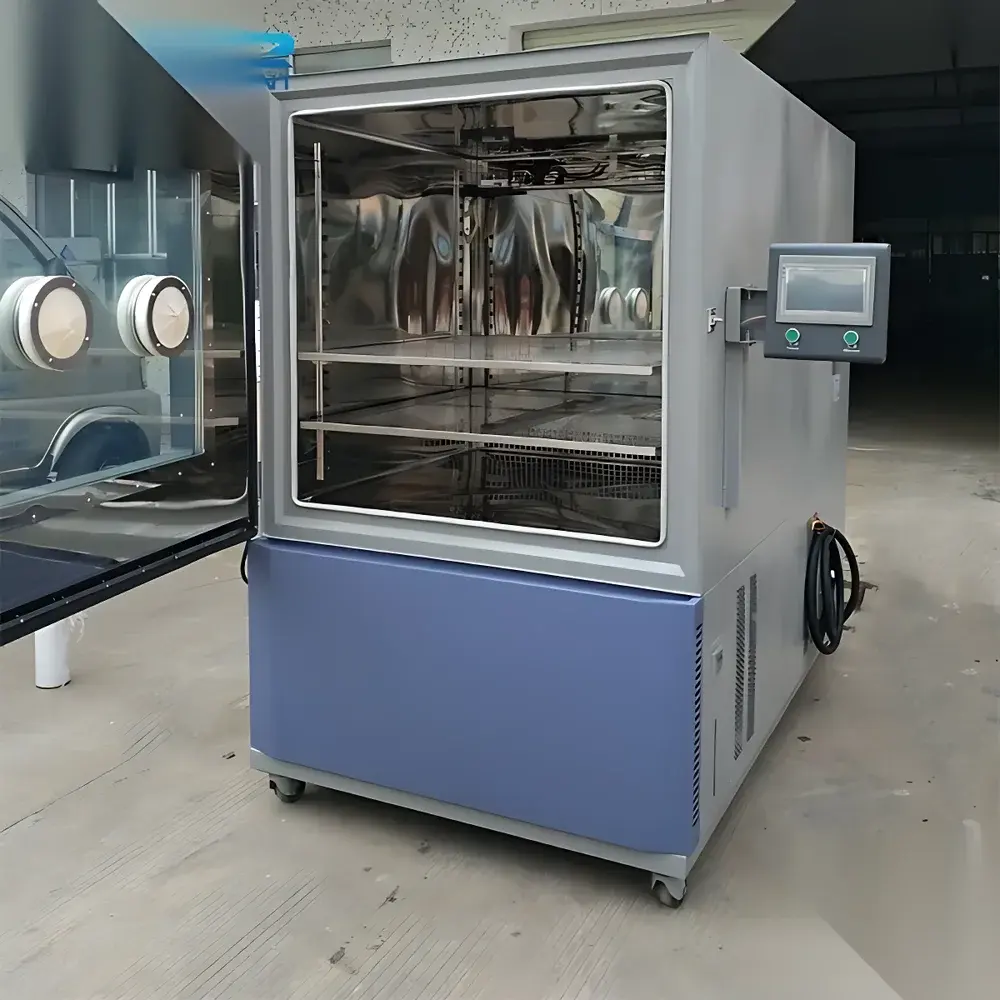
The Generic -40°C Temperature and Humidity Controlled Environmental Test Chamber is a precision-engineered environmental simulation system designed for rigorous reliability testing of electronic components, automotive parts, aerospace materials, and industrial packaging under controlled low-temperature and humidified conditions. Operating on the principle of forced-air convection with dual independent refrigeration and steam-based humidification circuits, this chamber delivers stable, reproducible thermal and hygrometric profiles across its full operational range (–40°C to +150°C; 20–98% RH). Its architecture integrates a balanced temperature and humidity control (BTHC) system utilizing PID-driven SSR modulation—ensuring dynamic equilibrium between heating/humidifying output and thermal/hygrometric losses. This enables sustained operation during extended test cycles without drift, meeting the metrological requirements defined in GB/T 5170.2 and GB/T 5170.5 for temperature and humidity uniformity, stability, and recovery time validation. The chamber is engineered for laboratory and industrial QA/QC environments where compliance with national and international environmental test standards is mandatory.
Key Features
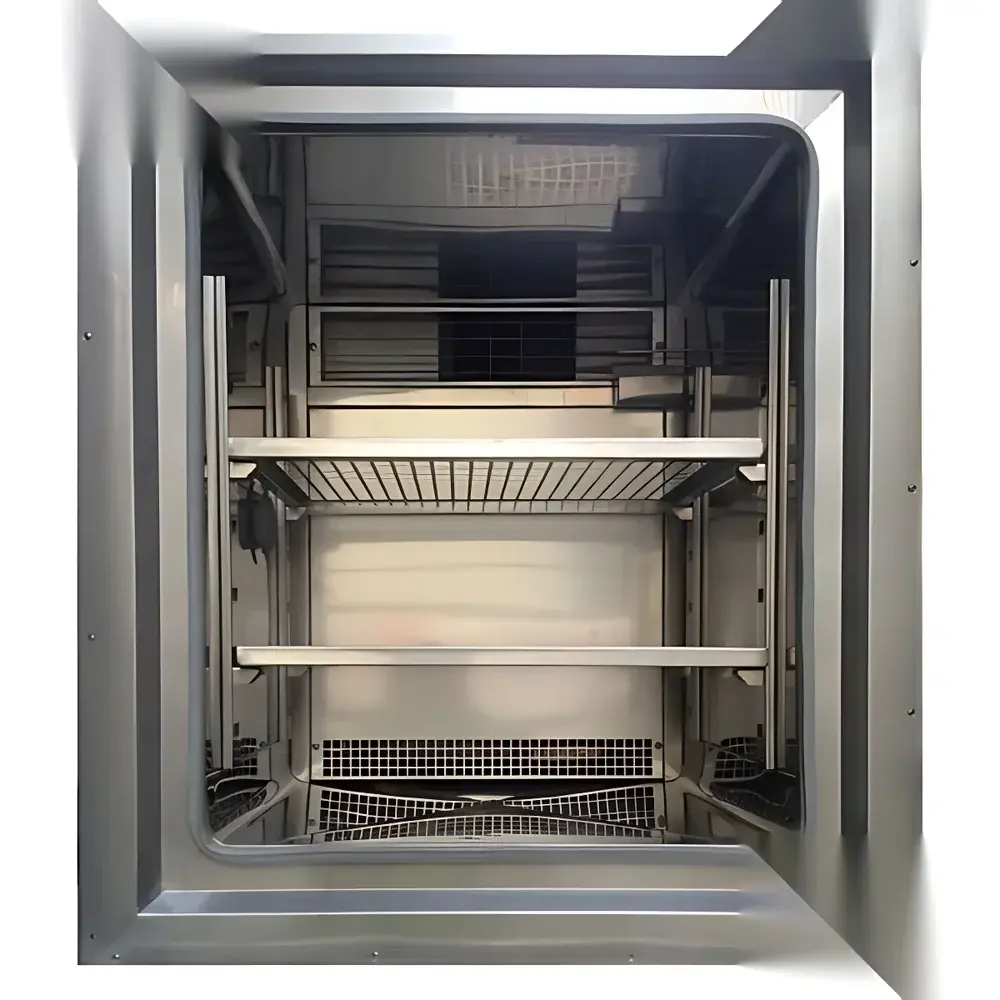
- Robust stainless-steel interior chamber with seamless welding and corrosion-resistant finish for long-term durability and ease of cleaning.
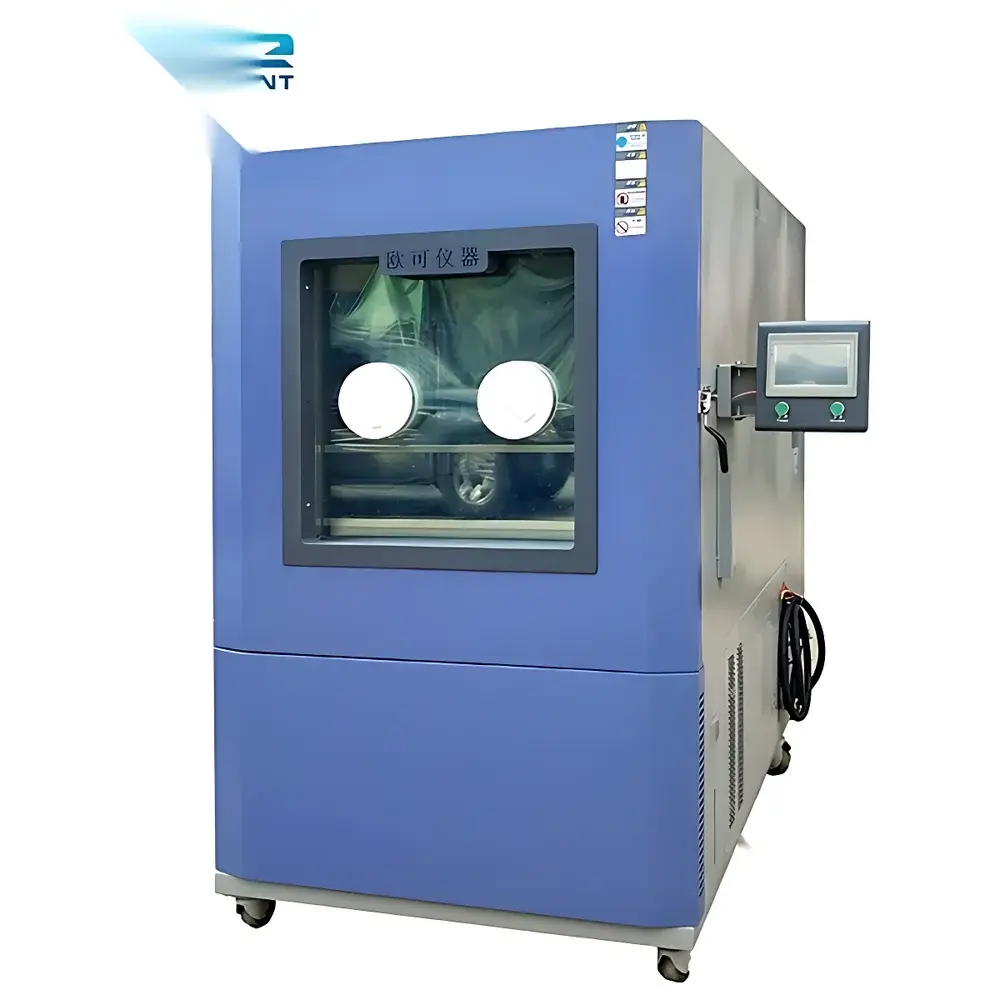
- Advanced touch-screen controller with multi-segment programmable ramp-soak profiles, real-time data logging, and intuitive navigation—designed for rapid operator training and minimal error risk.
- Balanced Temperature and Humidity Control (BTHC) architecture employing PID algorithms and solid-state relays (SSR) to synchronize heating, cooling, and humidification outputs—minimizing overshoot and ensuring ±0.5°C temperature stability and ±2.0% RH humidity accuracy (at 25°C/50% RH reference).
- Full-capillary refrigeration system with automatic capacity modulation—eliminating mechanical expansion valve hysteresis and enabling smoother, faster, and more repeatable temperature transitions than conventional thermostatic expansion systems.
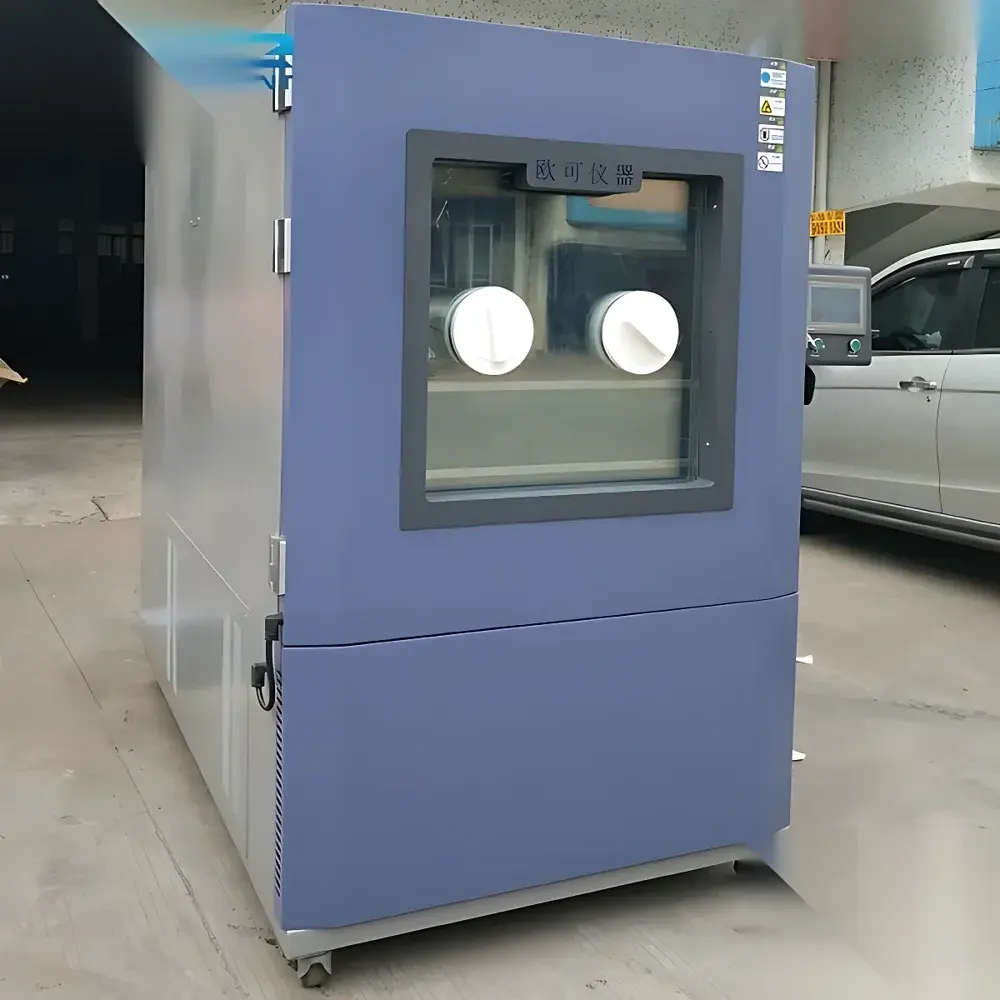
- Ergonomic arc-shaped front panel with flush-mounted, non-spring-loaded handles and reinforced double-glazed observation window for safe visual monitoring under extreme operating conditions.
- Cooling water interface compliant with inlet temperature 10–28°C and pressure 0.1–0.3 MPa—optimized for consistent condenser performance in ambient environments up to 31°C.
Sample Compatibility & Compliance
This chamber accommodates standard test specimens up to 1 m³ internal volume (customizable upon request), supporting both static load and dynamic cycling configurations. It is validated for use with non-explosive, non-corrosive, and non-outgassing samples per IEC 60068-2 series guidelines. All performance specifications—including temperature uniformity (±2.0°C), humidity uniformity (±3.0% RH), and recovery time (<15 min after door opening)—are measured per GB/T 5170.2–1996 and GB/T 5170.5–1996 protocols under no-load, 25°C ±6°C ambient conditions. The unit satisfies essential clauses of GB 2423.1 (cold test), GB 2423.2 (dry heat), GB 2423.22 (temperature change), and GB 10589 (low-temperature chamber design), making it suitable for GLP-compliant laboratories and manufacturing sites requiring traceable environmental qualification per ISO/IEC 17025 or IATF 16949 frameworks.
Software & Data Management
The integrated controller supports USB export of timestamped test logs (CSV format), including setpoint history, actual chamber values, alarm events, and system status flags. Optional RS-485/Modbus RTU or Ethernet TCP/IP interfaces enable integration into centralized MES or LIMS platforms. Audit trail functionality records all parameter modifications, user logins, and calibration actions—supporting FDA 21 CFR Part 11 readiness when paired with appropriate access controls and electronic signature workflows. Firmware updates are performed via secure USB media with version rollback capability and checksum verification.
Applications
- Accelerated aging of lithium-ion battery modules under sub-zero thermal stress and cyclic humidity exposure.
- Validation of seal integrity and material embrittlement in medical device packaging per ISO 11607.
- Thermal shock pre-conditioning of PCB assemblies prior to solderability or functional testing.
- Environmental screening of automotive ECUs according to ISO 16750-4 and GMW3172 cold-humidity endurance requirements.
- Stability testing of adhesives, coatings, and elastomers under combined low-temperature and high-humidity conditions.
FAQ
What is the meaning of “air average temperature change rate” specified in the technical documentation?
It refers to the mean rate of air temperature transition within the working chamber space—not the surface or core temperature change rate of the test specimen. Measured per GB/T 5170.2, this metric reflects chamber responsiveness under no-load conditions.
Can the chamber operate continuously at –40°C with 95% RH?
Yes, but sustained operation at extreme low-temperature/high-humidity combinations requires strict adherence to cooling water specifications (10–28°C, 0.1–0.3 MPa) and periodic defrost cycle management to prevent evaporator icing.
Is custom chamber sizing available?
Yes—walk-in and large-volume configurations (up to 50 m³) can be engineered to meet specific footprint, loading, and airflow requirements. Structural reinforcement and insulation upgrades are offered for ultra-low-temperature variants (e.g., –60°C or –70°C models).
Does the controller support remote monitoring via LAN or cloud?
Standard configuration includes local USB and RS-485; optional Ethernet module enables SNMP-based status polling and web-based interface access with TLS 1.2 encryption. Cloud connectivity requires on-premise gateway deployment per IT security policy.
How is traceability maintained for calibration and maintenance?
Each unit ships with a factory calibration certificate referencing NIST-traceable standards. Built-in calibration adjustment locks and electronic service logs ensure full auditability for ISO/IEC 17025 accreditation.



