
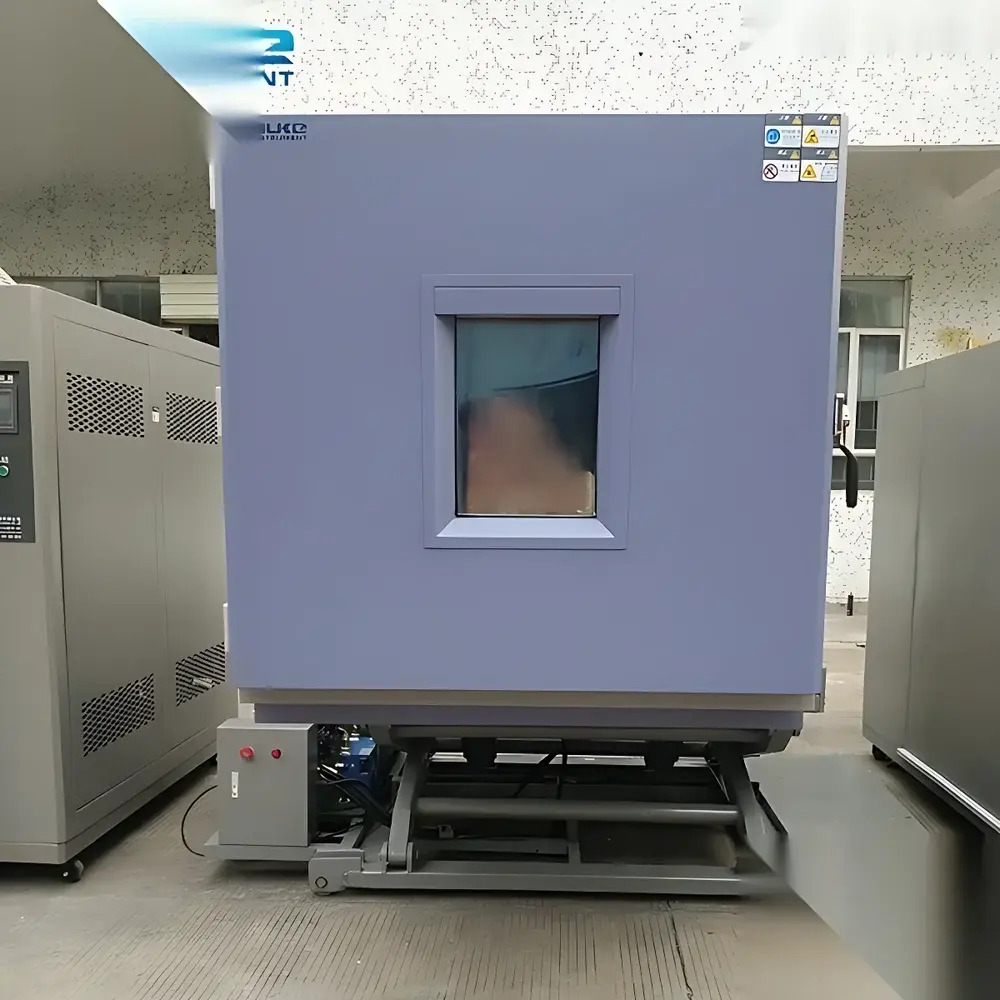
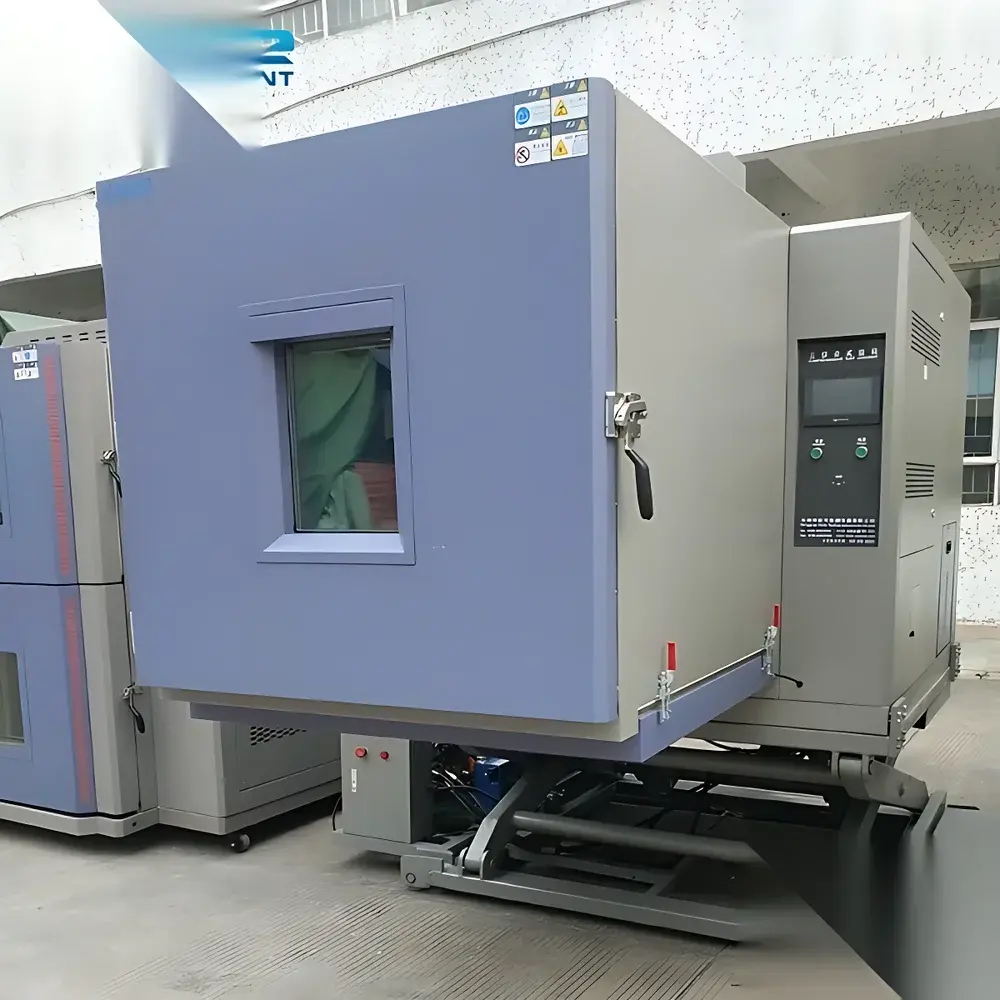
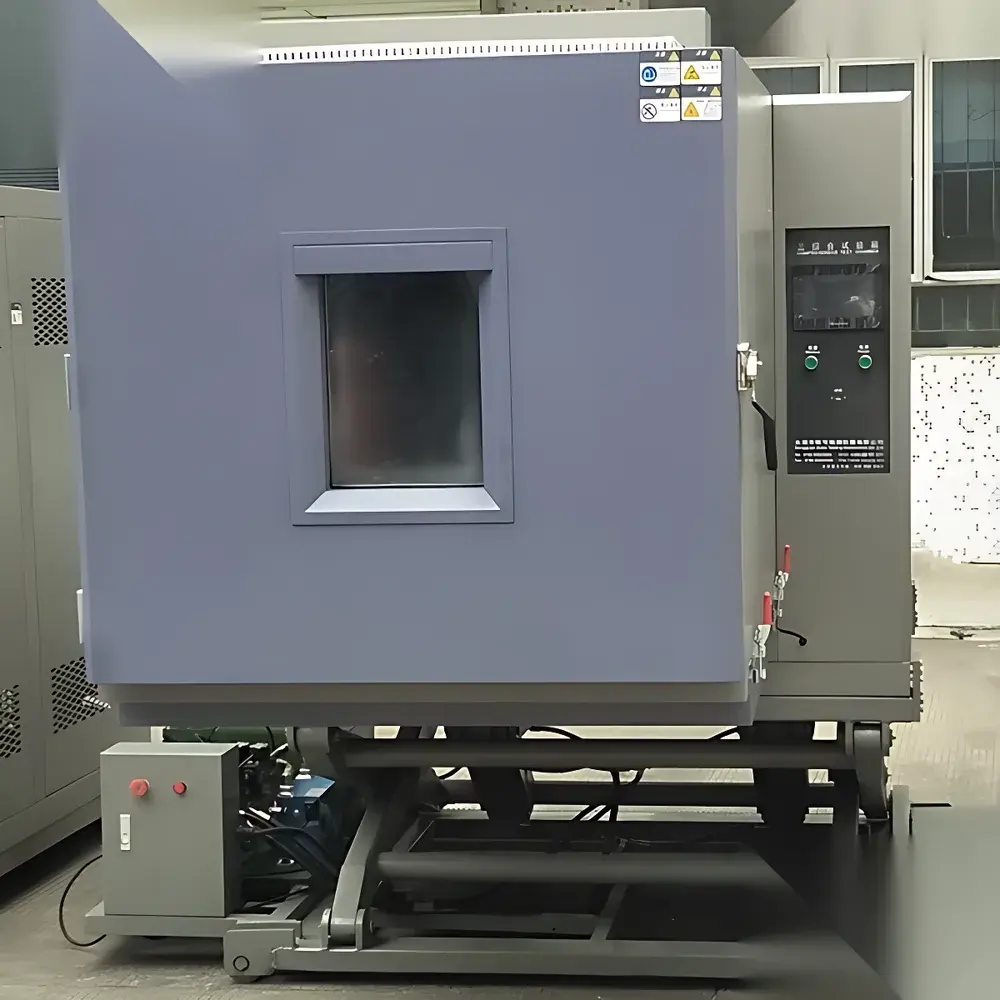
EOKE Combined Environmental Test Chamber for Temperature, Humidity, and Vibration Testing
| Brand | Other Brands |
|---|---|
| Origin | Imported |
| Manufacturer Type | Authorized Distributor |
| Temperature Range | -20°C to 150°C / -40°C to 150°C / -60°C to 150°C |
| Temperature Uniformity | ≤ ±2°C |
| Temperature Stability | ±0.5°C |
| Temperature Deviation | ≤ ±2°C |
| Ramp Rate | 0.7–1.0°C/min |
| Insulation Thickness | 100–120 mm |
| Viewing Window | Multi-layer tempered glass with conductive anti-fog film |
| Test Port | One Φ50 mm port on left side (customizable) |
Overview
The EOKE Combined Environmental Test Chamber is an integrated physical property testing system engineered for simultaneous or sequential application of temperature extremes, humidity control, and mechanical vibration—enabling rigorous reliability validation of components and assemblies under real-world transport and operational stress conditions. Unlike standalone thermal or vibration test systems, this tri-combined chamber operates on a unified control architecture that synchronizes environmental profiles (per ISO 16750-4, MIL-STD-810H Method 514.7, and IEC 60068-2-6/2-14) with programmable vibration spectra (sine, random, or shock). The chamber employs a dual-refrigeration cascade system for low-temperature capability down to –60°C, coupled with PID-controlled forced-air convection using high-efficiency, low-noise AC motors and multi-blade centrifugal impellers. Its structural design integrates thermally insulated SUS304 stainless steel interior walls, A3 carbon steel outer casing with electrostatic powder coating, and high-density fiberglass insulation (100–120 mm thickness) to ensure thermal stability and long-term repeatability across extended test cycles.
Key Features
- Triple-stress integration: Precise coordination of temperature, humidity (optional add-on), and electrodynamic or servo-hydraulic vibration input (configurable per customer specification)
- High-fidelity thermal performance: ±0.5°C temperature stability and ≤±2°C uniformity across working volume, validated per ASTM E742 and IEC 60068-3-5
- Optimized observation interface: Multi-layer laminated tempered glass viewport with embedded conductive film—prevents condensation and maintains optical clarity during rapid thermal transitions
- Sealed chamber integrity: Dual-lip high-tensile silicone gasket system at door interface ensures leak-tight operation under vacuum-assisted or pressurized test conditions
- Modular utility access: Standard Φ50 mm feedthrough port on left wall (with removable blanking plate), compatible with external power supplies, data acquisition lines, or sensor leads
- Robust mechanical architecture: Reinforced load-bearing base frame designed to accommodate vibration shakers up to 10 kN force rating without structural resonance coupling
Sample Compatibility & Compliance
The chamber accommodates test specimens up to 600 mm × 600 mm × 600 mm (W×D×H), supporting both benchtop and rack-mount configurations for electronics enclosures, PCB assemblies, automotive ECUs, aerospace avionics modules, and medical device housings. It complies with core regulatory frameworks governing product qualification—including ISO 9001:2015 process validation requirements, IATF 16949 clause 8.5.1.1 for production part approval (PPAP), and FDA 21 CFR Part 11–compliant audit trail functionality when paired with optional certified software. All thermal cycling profiles adhere to JEDEC JESD22-A104E (Temperature Cycling) and IPC-9701A (Performance Assessment of Solder Attachments), while vibration sequences conform to GR-63-CORE (NEBS) and SAE J1211 for automotive durability verification.
Software & Data Management
Control and monitoring are executed via a Windows-based HMI platform featuring real-time waveform overlay, multi-channel trend logging (≥16 analog/digital inputs), and event-triggered data capture. The system supports export of raw time-series datasets in CSV and TDMS formats for post-processing in MATLAB, Python (NumPy/Pandas), or commercial FEA tools. Optional GLP/GMP modules provide electronic signatures, user role-based permissions, and immutable audit trails compliant with 21 CFR Part 11 Annex 11 requirements. Calibration records—including temperature sensor NIST-traceable certificates and vibration transducer sensitivity verifications—are stored within the database with automatic expiration alerts.
Applications
This tri-combined test chamber serves critical roles in accelerated life testing (ALT), HALT/HASS development, supply chain qualification, and failure mode analysis. Typical use cases include: thermal-mechanical fatigue assessment of solder joints under cyclic vibration; validation of MEMS sensor drift under combined thermal gradient and broadband excitation; evaluation of polymer housing warpage during cold-start engine vibration; and verification of battery module integrity during EV drivetrain thermal shock + road-simulation vibration. It is widely deployed in Tier-1 automotive suppliers’ validation labs, semiconductor packaging R&D centers, and third-party certification bodies accredited to ISO/IEC 17025.
FAQ
What standards does this chamber support for combined environment testing?
It is configured to execute test plans aligned with MIL-STD-810H Method 520.3 (Combined Environments), IEC 60068-2-68 (Combined Temperature/Humidity/Vibration), and RTCA DO-160G Section 21 (Environmental Conditions and Test Procedures for Airborne Equipment).
Can humidity be added as a third stress variable?
Yes—humidification capability (5–98% RH, ±2% RH accuracy) is available as a factory-installed option with steam generator and corrosion-resistant stainless steel water reservoir.
Is remote monitoring supported?
Standard Ethernet (TCP/IP) and optional RS-485 Modbus RTU interfaces enable integration into centralized lab management systems and SCADA networks.
What is the maximum payload capacity for vibration testing?
With standard electrodynamic shaker integration, the system supports payloads up to 50 kg at 20 gpk (sine) or 10 grms (random), depending on frequency range and fixture mass.
Does the chamber include calibration documentation?
Each unit ships with a factory calibration report covering temperature sensors (Class A Pt100), chamber air velocity mapping, and vibration table flatness verification—all traceable to national metrology institutes.



