
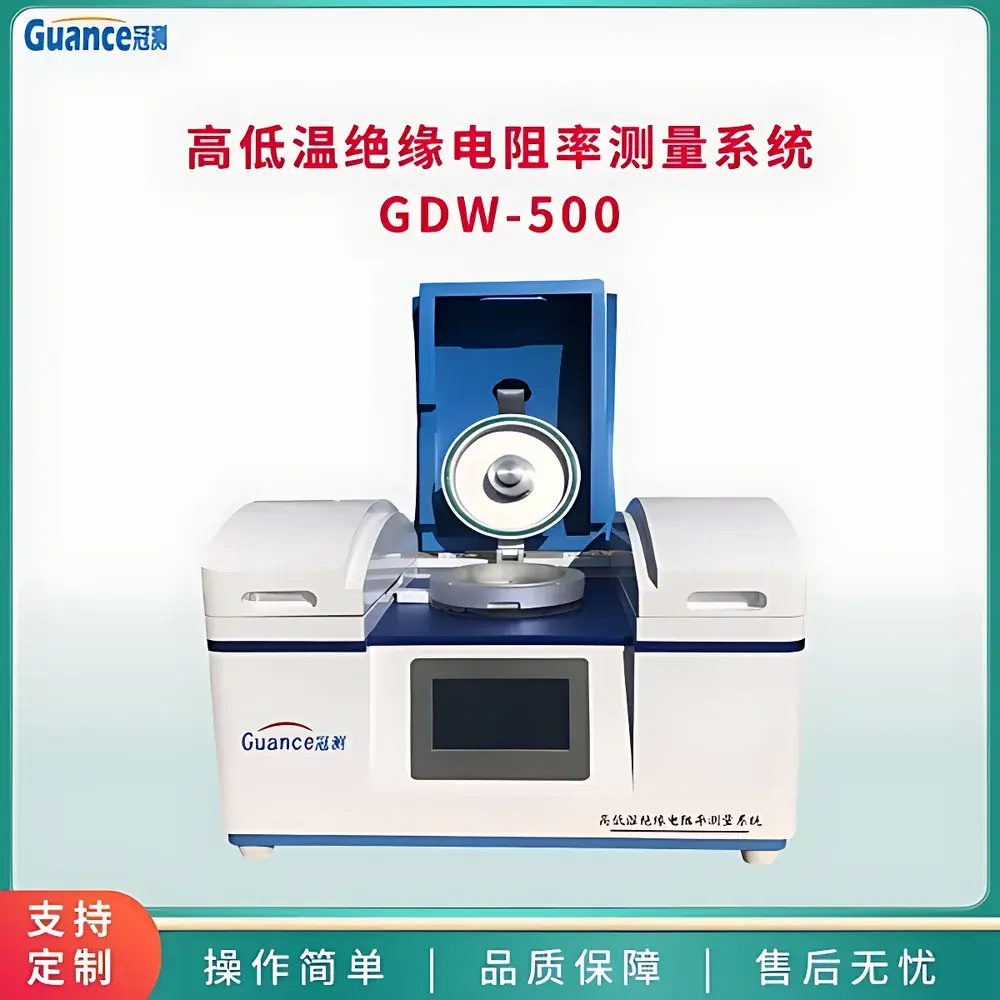
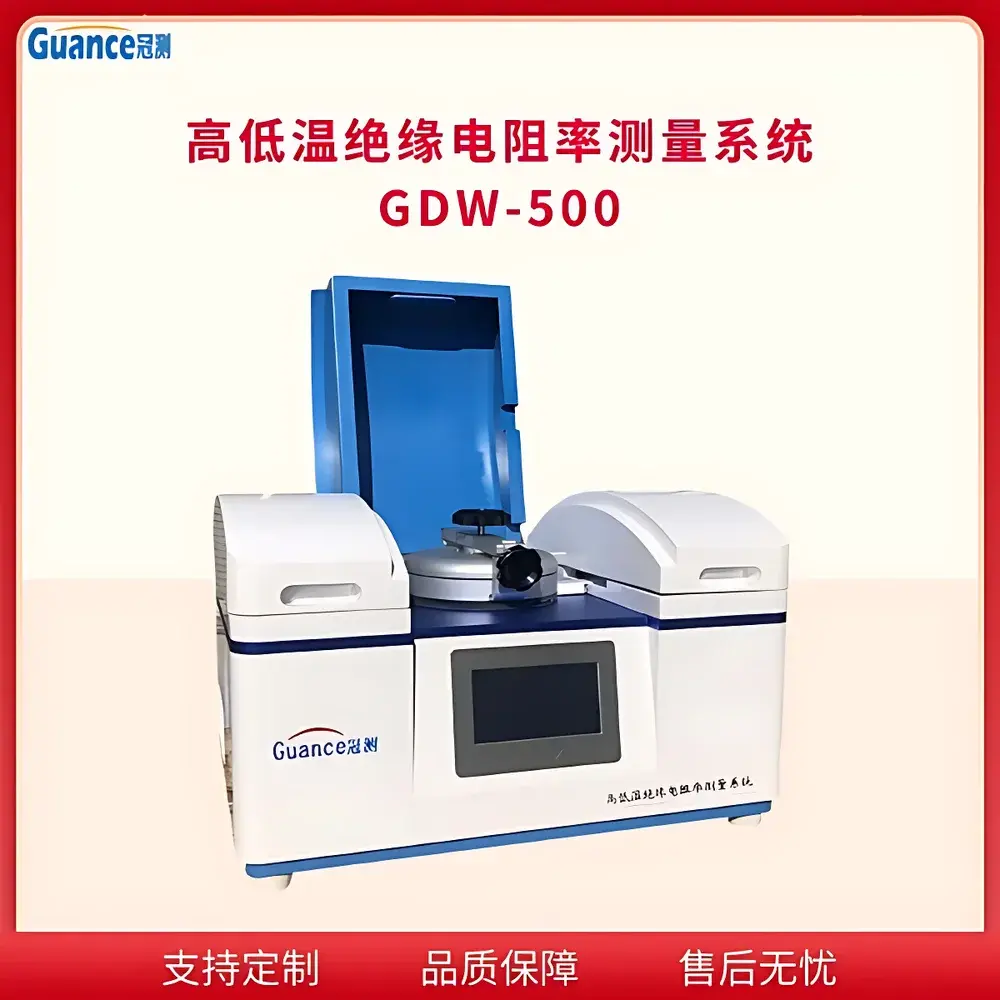
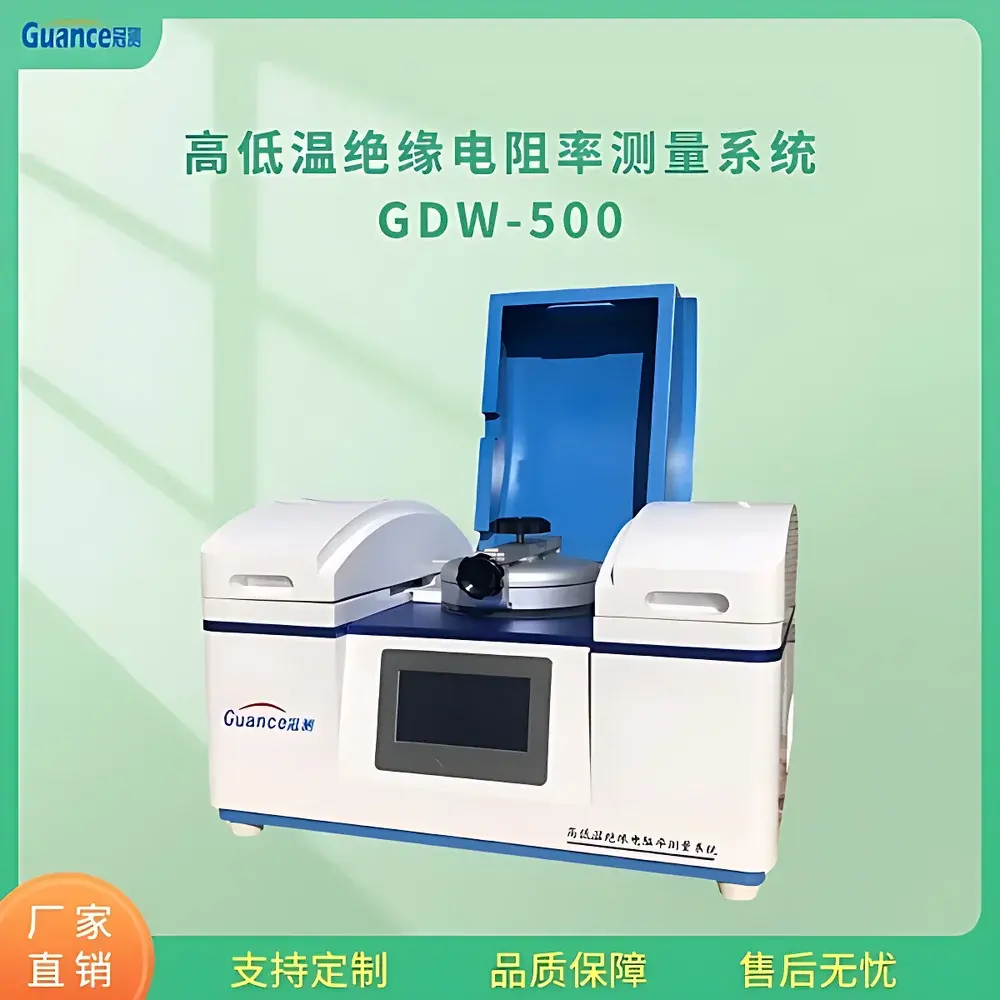
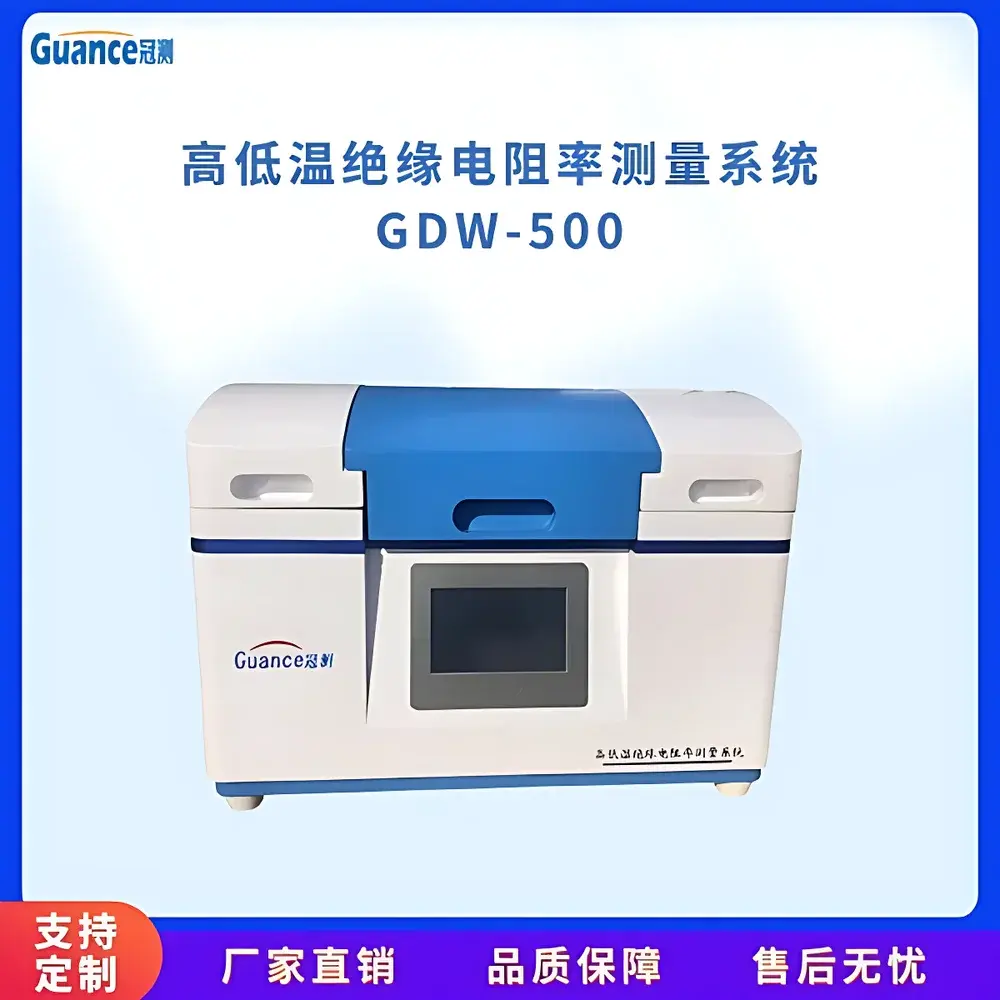
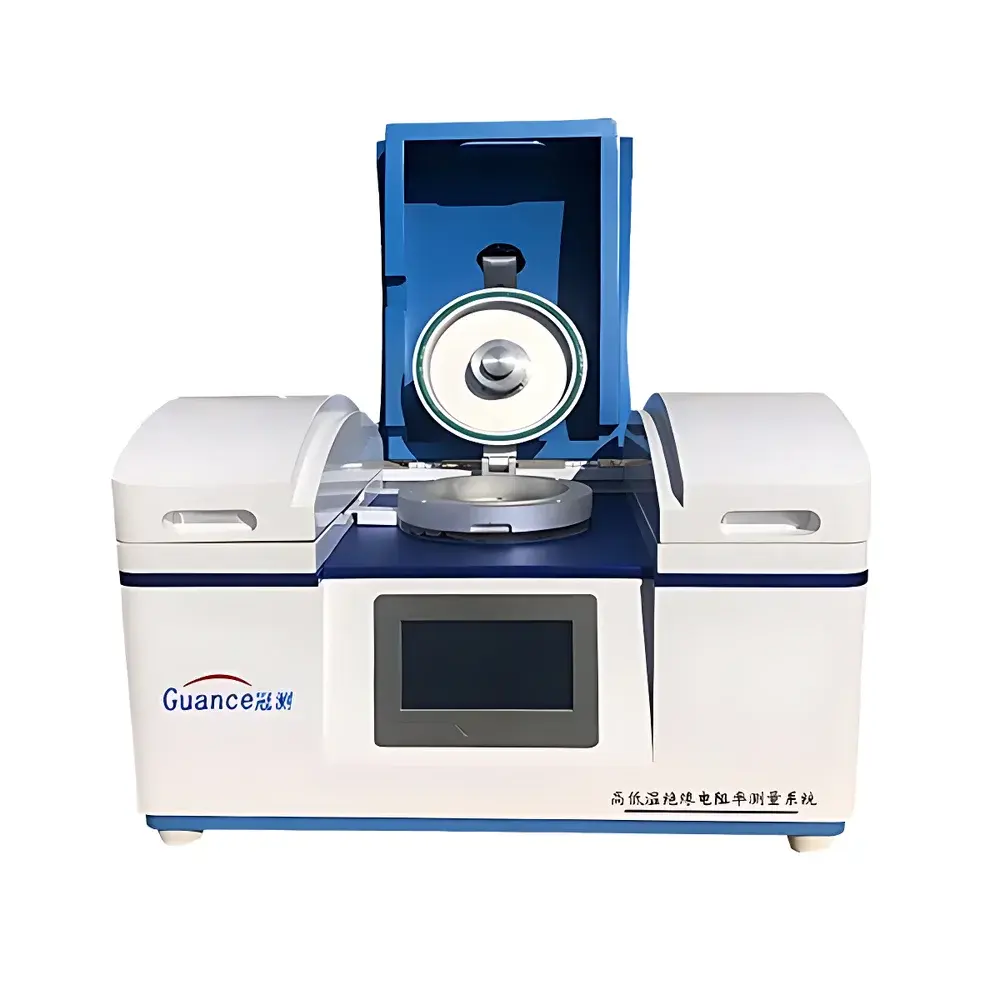
GuanCe Instruments GDW-500b High/Low-Temperature Dielectric Constant and Resistivity Measurement System
| Brand | GuanCe Instruments |
|---|---|
| Origin | Beijing, China |
| Manufacturer Type | Authorized Distributor |
| Country of Origin | China |
| Model | GDW-500b |
| Price | USD 1,850 (FOB) |
| Temperature Range | −160 °C to +500 °C |
| Temperature Stability | ±0.5 °C |
| Heating Method | Electric Cartridge Heater |
| Cooling Method | Liquid Nitrogen Cryogenic System |
| Electrode Material | Brass |
| Electrode Diameter | 25 mm |
| Test Frequency Range | 20 Hz – 2 MHz |
| Compliance | GB/T 1409–2006, GB/T 1693–2007, ASTM D150, IEC 60250 |
Overview
The GuanCe Instruments GDW-500b High/Low-Temperature Dielectric Constant and Resistivity Measurement System is an engineered solution for precise characterization of dielectric properties and volume resistivity of solid and semi-solid insulating materials across extreme thermal conditions. Based on the parallel-plate capacitor principle and impedance spectroscopy methodology, the system measures complex permittivity (ε* = ε′ − jε″), loss tangent (tan δ), capacitance (C), and DC/AC resistivity under controlled isothermal or temperature-swept conditions. It operates within a rigorously stabilized thermal environment—from cryogenic liquid nitrogen cooling (−160 °C) to high-temperature electric heating (+500 °C)—enabling quantitative analysis of thermally activated polarization mechanisms, interfacial relaxation (Maxwell–Wagner effects), and conduction processes in ceramics, polymers, metal oxides, glasses, and composite dielectrics.
Key Features
- Wide thermal operating range: −160 °C to +500 °C with ±0.5 °C closed-loop temperature stability, achieved via integrated liquid nitrogen cryostat and PID-controlled cartridge heaters
- High-resolution frequency-domain analysis: 20 Hz–2 MHz LCR measurement capability with selectable test speed modes (fast/medium/slow) to balance signal-to-noise ratio and acquisition time
- Standardized brass parallel-plate electrodes (25 mm diameter) designed for reproducible sample contact, minimal fringing field error, and compliance with ASTM D150 geometry requirements
- Dual-mode operation: ambient-temperature multi-frequency scanning and programmable temperature-ramped dielectric spectroscopy (dielectric temperature spectra and frequency spectra)
- Modular architecture supporting interchangeable electrode fixtures—including guarded three-terminal configurations—for volume resistivity (ρv) and surface resistivity (ρs) per IEC 62631-3-1
Sample Compatibility & Compliance
The GDW-500b accommodates rigid and semi-rigid dielectric specimens up to 25 mm in diameter and 10 mm thick, including sintered ceramics, polymer films, oxide coatings, glass substrates, and pressed powder compacts. Sample mounting follows standardized procedures defined in GB/T 1409–2006 (equivalent to IEC 60250) for permittivity and loss factor determination at power, audio, and radio frequencies. The system supports full traceability for GLP-compliant testing environments: all temperature setpoints, frequency points, and measured parameters are timestamped and logged with hardware-enforced audit trails. Data output conforms to ASTM E29 and ISO/IEC 17025 documentation requirements for calibration and uncertainty reporting.
Software & Data Management
The proprietary GDW-Control Suite provides real-time instrument orchestration and post-acquisition analysis. It enables automated sequence programming for temperature sweeps (e.g., −100 °C → +400 °C at 2 °C/min) combined with multi-point frequency acquisition at each isotherm. Raw data exports include CSV and XML formats compatible with MATLAB, Python (NumPy/Pandas), and OriginLab. Visualization modules generate 2D plots of ε′(f), ε″(f), tan δ(f), C(f), ρv(T), and Arrhenius-transformed conductivity (σ vs. 1/T). All software modules comply with FDA 21 CFR Part 11 requirements for electronic records and signatures when configured with user role-based access control and digital certificate authentication.
Applications
- Development and qualification of high-k dielectrics for microelectronics packaging and gate stack integration
- Thermal stability assessment of polymer electrolytes in solid-state batteries across operational temperature windows
- Phase transition detection in ferroelectric ceramics (e.g., BaTiO3, PZT) via dielectric anomaly mapping near Curie temperatures
- Quality control of insulating coatings on aerospace-grade alloys and turbine blade substrates
- Fundamental research into space-charge-limited conduction (SCLC) and hopping transport in amorphous oxide semiconductors
- Validation of aging models for high-voltage insulation systems used in wind turbine converters and EV traction inverters
FAQ
What standards does the GDW-500b support for dielectric measurements?
It fully implements GB/T 1409–2006, GB/T 1693–2007, ASTM D150, and IEC 60250 for permittivity and loss tangent determination.
Can the system measure both DC resistivity and AC dielectric response?
Yes—using the same electrode configuration, it performs simultaneous or sequential DC volume resistivity (per IEC 62631-3-1) and AC impedance spectroscopy.
Is liquid nitrogen handling integrated or external?
The cryostat uses an externally supplied liquid nitrogen dewar with automated flow regulation; no internal LN2 storage is required.
Does the software support automated compliance reporting for ISO/IEC 17025 labs?
Yes—audit logs, calibration certificates, environmental condition stamps, and operator ID tagging are embedded in every exported report.
What electrode options are available beyond the standard 25 mm brass pair?
Optional configurations include guarded electrodes for surface resistivity, spring-loaded contacts for fragile wafers, and high-temperature alumina-insulated probes rated to 600 °C.



