
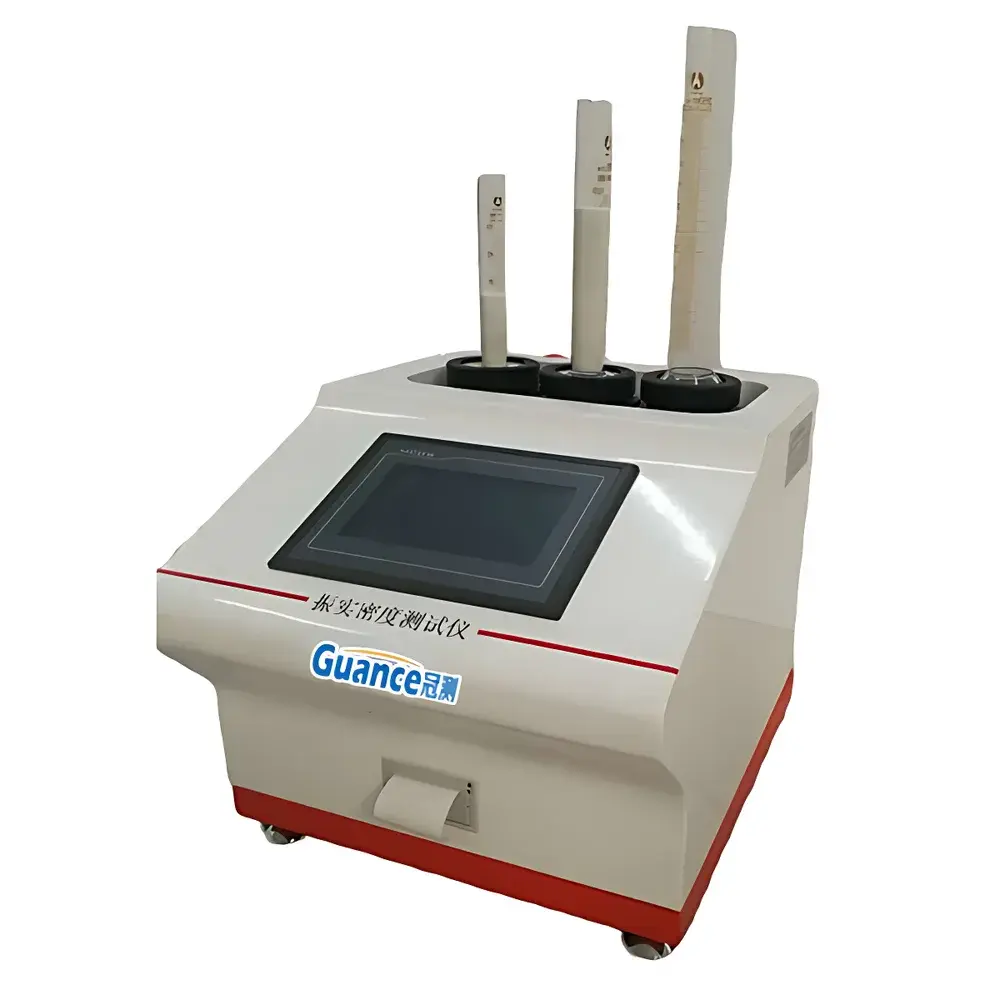
Guance ZS703 Tap Density Tester
| Brand | Guance Instruments |
|---|---|
| Origin | Beijing, China |
| Manufacturer Type | Authorized Distributor |
| Country of Origin | China |
| Model | ZS703 |
| Instrument Type | Tap Density Tester |
| Application Scope | General-purpose powder density measurement |
| Density Measurement Principle | Mechanical vibration compaction per ASTM D4781 / ISO 3953 / GB/T 5162 |
| Vibration Amplitude | 3 mm |
| Maximum Sample Weight | 500.00 g |
| Sample Volume Capacity | ≤ 250.00 mL |
| Repeatability | ≤ 1% RSD (n = 3) |
| Display | Digital LED |
| Power Consumption | 100 W |
| Test Modes | Up to three parallel determinations per cycle |
| Compliance | Fully aligned with GB/T 5162–2006, ISO 3953:1993, and ASTM D4781–22 |
Overview
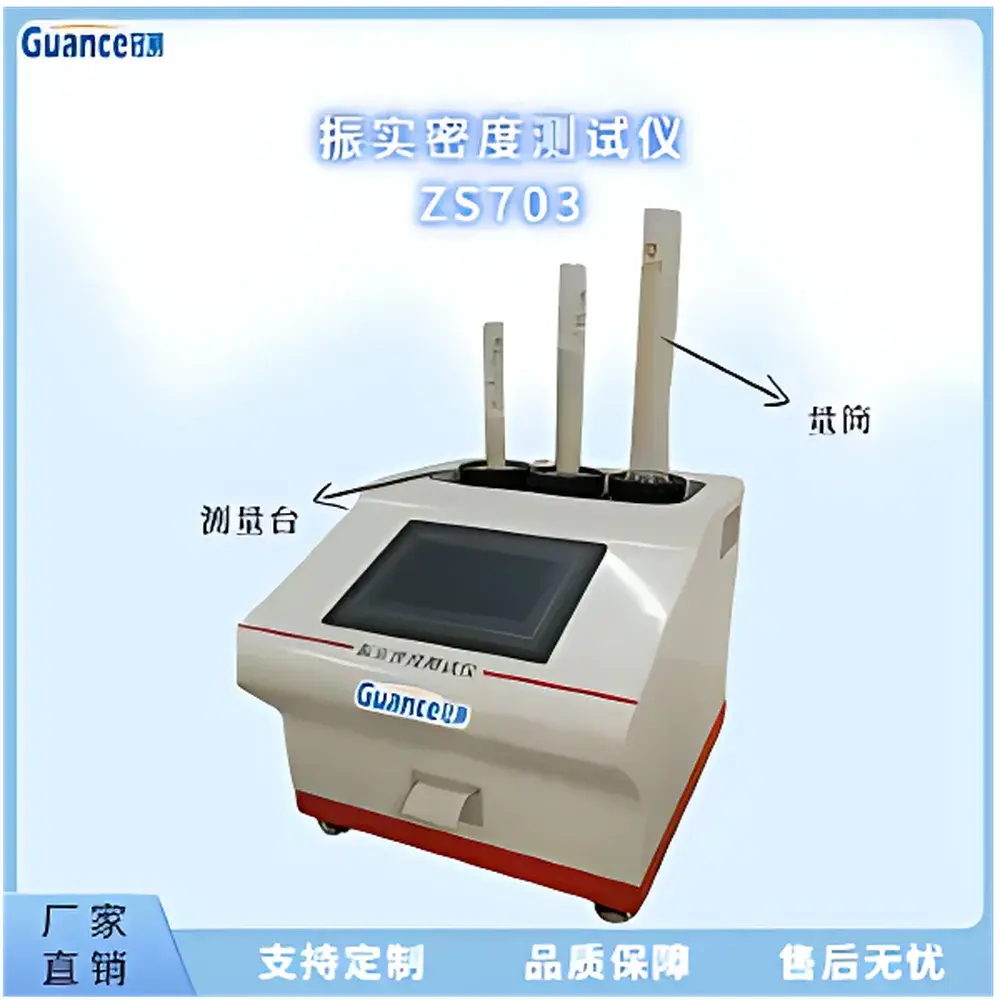
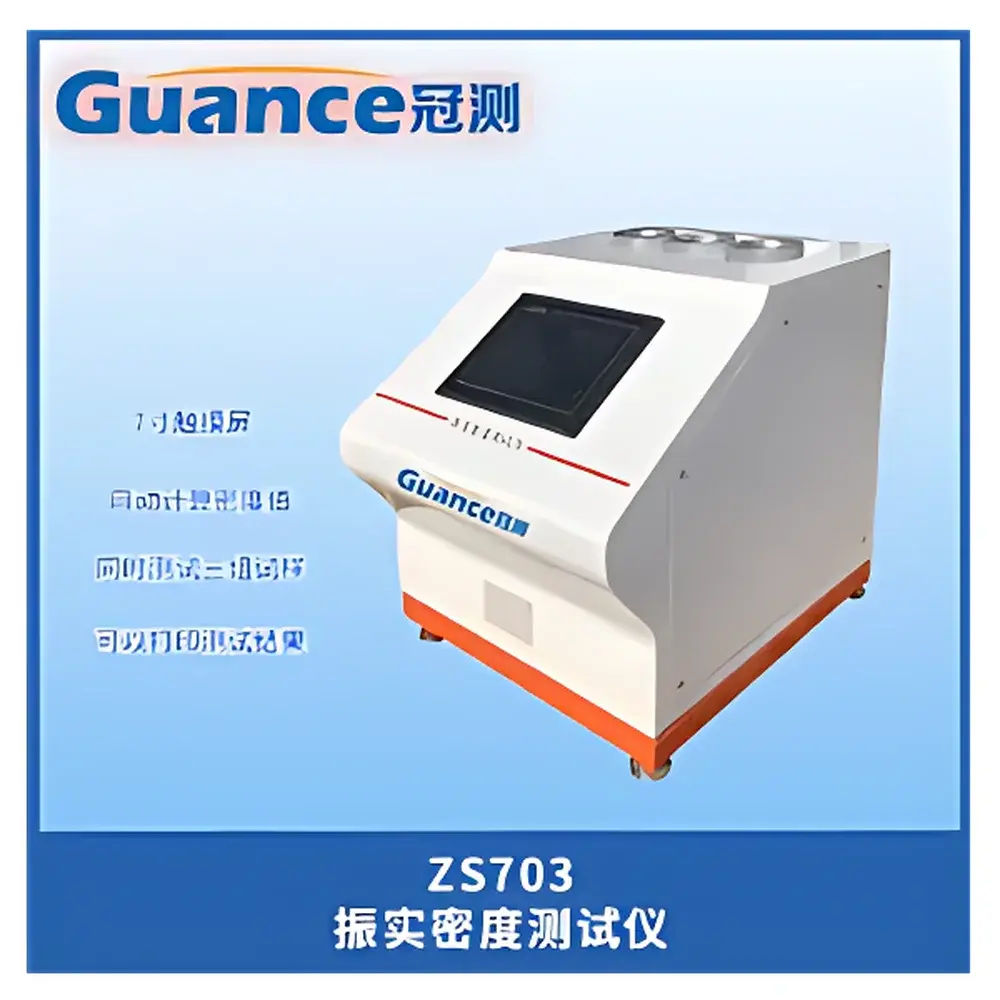
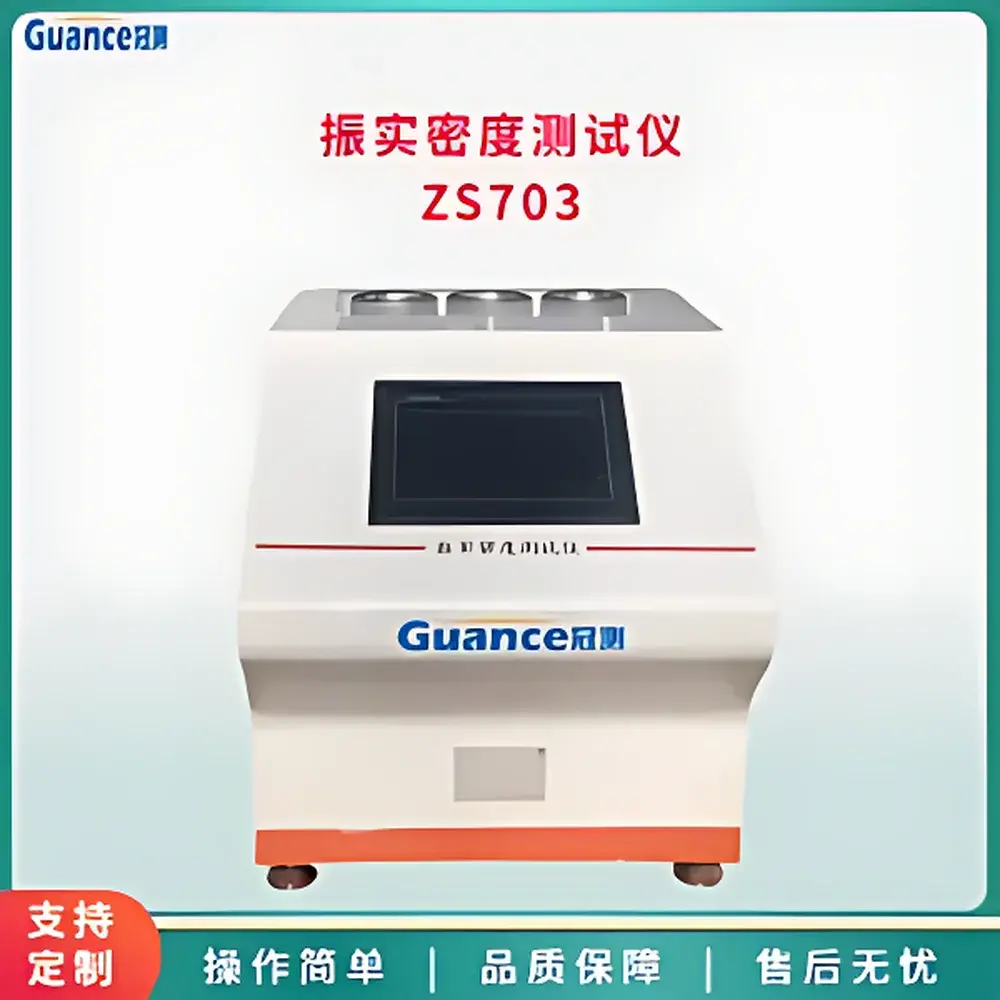
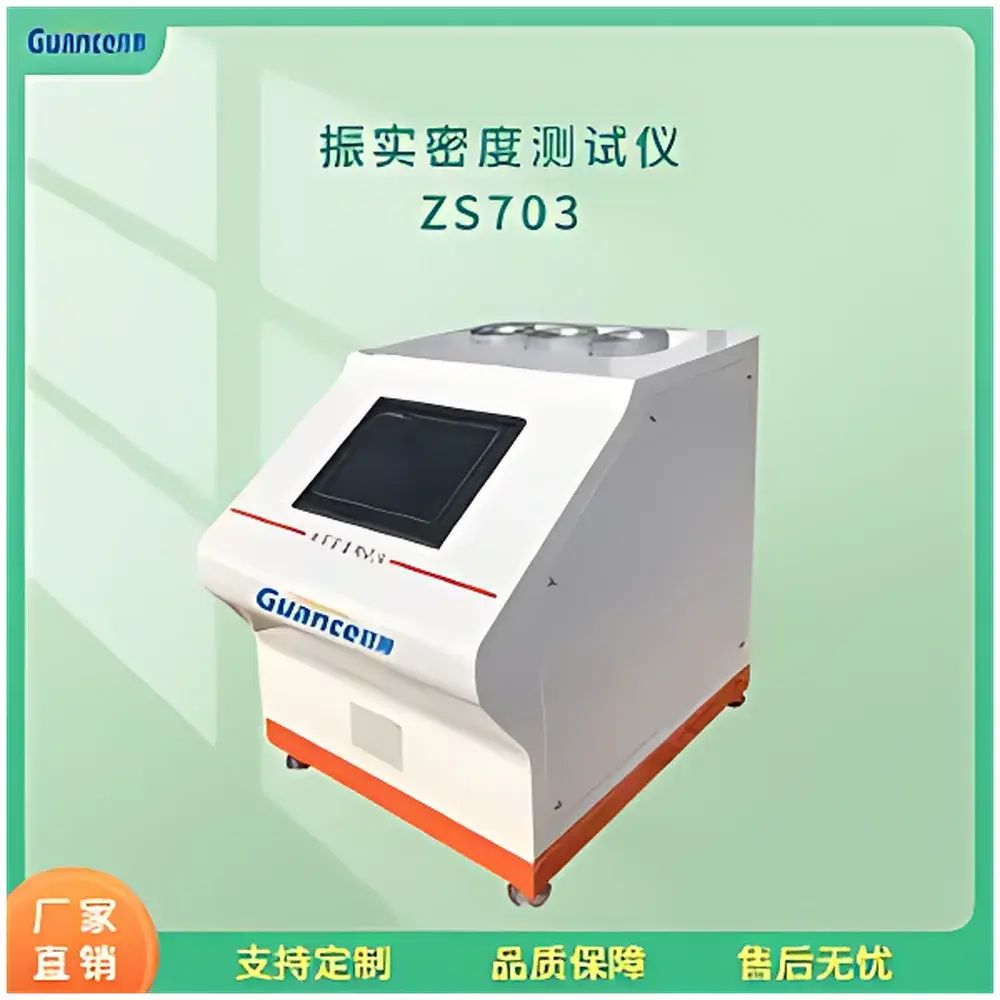
The Guance ZS703 Tap Density Tester is an engineered instrument designed for the standardized determination of tap density (also known as tapped density or settled density) of free-flowing powders and granular solids. It operates on the principle of controlled mechanical vibration—applying a fixed amplitude (3 mm) and consistent frequency to a vertically oriented sample container, inducing particle rearrangement and progressive densification under gravity. Unlike true density (measured via gas pycnometry) or bulk density (measured without compaction), tap density quantifies the volumetric packing efficiency of powders after reproducible mechanical settlement. This parameter is critical in pharmaceutical formulation development (e.g., capsule fill weight prediction), battery electrode slurry processing, metal powder sintering analysis, and additive manufacturing feedstock qualification. The ZS703 complies fully with GB/T 5162–2006, ISO 3953:1993, and ASTM D4781–22, ensuring traceable, inter-laboratory comparable results required for regulatory submissions and process validation.
Key Features
- Standardized mechanical tapping mechanism delivering precise 3 mm vertical stroke amplitude at regulated frequency—no manual intervention or operator-dependent force application.
- Digital LED display with real-time weight readout (up to 500.00 g capacity) and integrated volume calculation logic for immediate tap density derivation (g/mL).
- Triple-test capability: Simultaneous or sequential execution of up to three independent determinations within a single operational cycle, enhancing statistical robustness and throughput.
- Modular sample holder design accommodating standard cylindrical vessels (≤250.00 mL volume), compatible with stainless steel or glass graduated cylinders per ISO 3953 specifications.
- Low-power, thermally stable architecture (100 W nominal consumption) suitable for continuous operation in QC laboratories without auxiliary cooling or ventilation requirements.
- Compact footprint and portable form factor—designed for benchtop deployment in GMP-compliant environments, R&D labs, and contract testing facilities.
Sample Compatibility & Compliance
The ZS703 supports a broad spectrum of dry, non-cohesive to moderately cohesive powders—including but not limited to pharmaceutical excipients (lactose, microcrystalline cellulose), metal powders (stainless steel 316L, titanium Ti-6Al-4V), ceramic precursors (alumina, zirconia), polymer granules (PA12, PEEK), and food-grade starches. It excludes highly fibrous, hygroscopic, or electrostatically charged materials requiring preconditioning per ASTM D8178. All test procedures adhere strictly to the procedural rigor defined in ISO 3953:1993 (Clause 5: apparatus calibration; Clause 6: tapping sequence; Clause 7: density calculation). Data outputs satisfy GLP documentation requirements, including operator ID, timestamp, vessel ID, initial/final mass, tapped volume, and calculated density—enabling full audit trail reconstruction during FDA 21 CFR Part 11 or EU Annex 11 assessments.
Software & Data Management
While the ZS703 operates as a standalone hardware platform with embedded firmware, its measurement protocol is fully compatible with laboratory information management systems (LIMS) and electronic lab notebooks (ELN) via manual data entry or optional RS-232/USB interface (available upon request). Each test cycle generates a structured dataset compliant with ASTM E2500–22 guidelines for instrument qualification: repeatability verification (≤1% RSD across n=3 replicates), amplitude calibration log, and power supply stability record. Raw values—including tare mass, gross mass, net mass, and final tapped volume—are retained in non-volatile memory for ≥1000 cycles, supporting retrospective review without external storage dependency.
Applications
- Pharmaceutical solid dosage development: Correlating tap density with flowability (Hausner ratio, Carr index), predicting die-fill uniformity in tablet compression.
- Powder metallurgy QA: Verifying batch-to-batch consistency of atomized metal powders prior to hot isostatic pressing (HIP) or binder jetting.
- Battery material characterization: Assessing cathode/anode powder packing behavior for slurry rheology modeling and electrode calendering optimization.
- Food & nutraceuticals: Validating density-driven dosing accuracy in dry-blend manufacturing lines.
- Academic research: Supporting fundamental studies on granular physics, compaction kinetics, and interparticle friction coefficients.
FAQ
What standards does the ZS703 comply with?
It meets all physical and procedural requirements of GB/T 5162–2006, ISO 3953:1993, and ASTM D4781–22 for tap density measurement.
Can the ZS703 measure true density?
No—it measures only tap density. True density requires gas displacement pycnometry (e.g., ASTM D5550) or helium pycnometry.
Is calibration traceable to national standards?
Yes. The vibration amplitude (3 mm ±0.1 mm) and timing circuitry are verified using NIST-traceable displacement sensors and calibrated stopwatch protocols.
What is the minimum recommended sample mass?
While maximum capacity is 500.00 g, optimal precision is achieved with ≥100 g for most free-flowing powders per ISO 3953 guidance.
Does the instrument support automated data export?
Standard configuration includes manual recording; RS-232/USB connectivity and CSV export functionality are available as optional accessories.



