
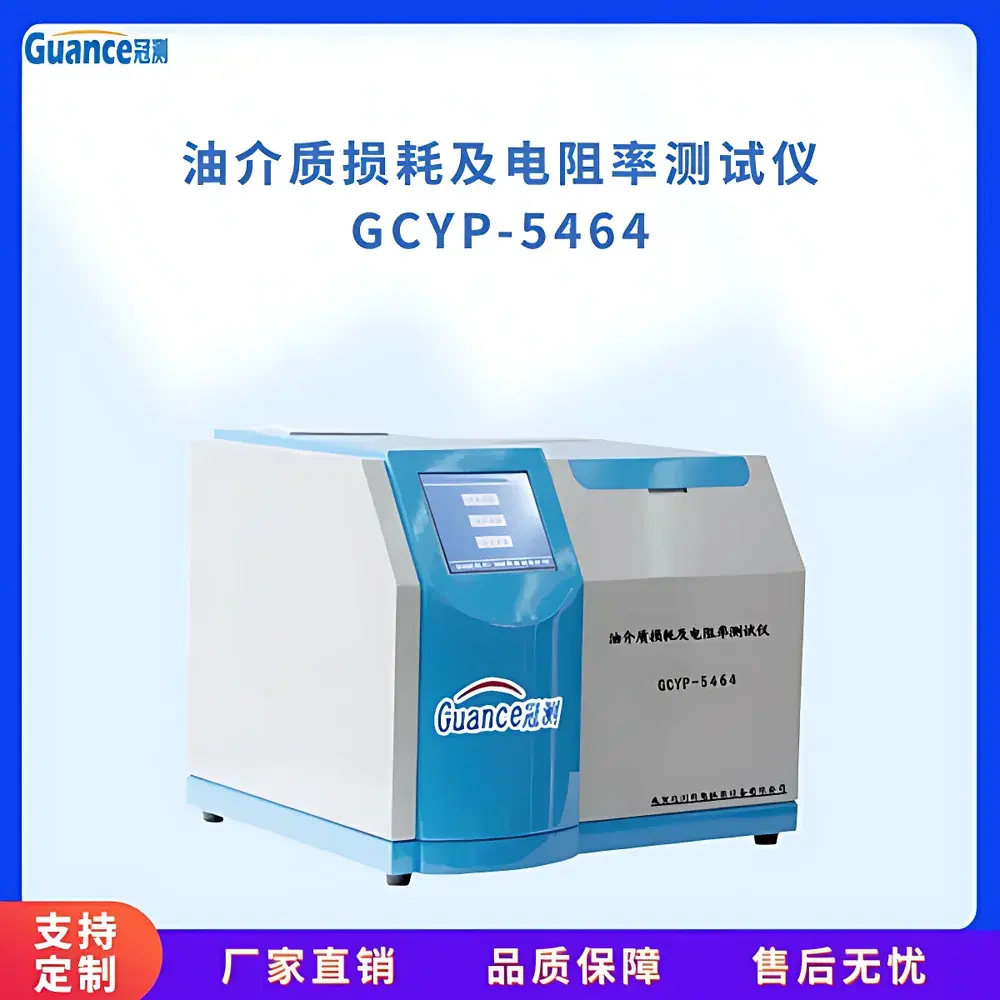
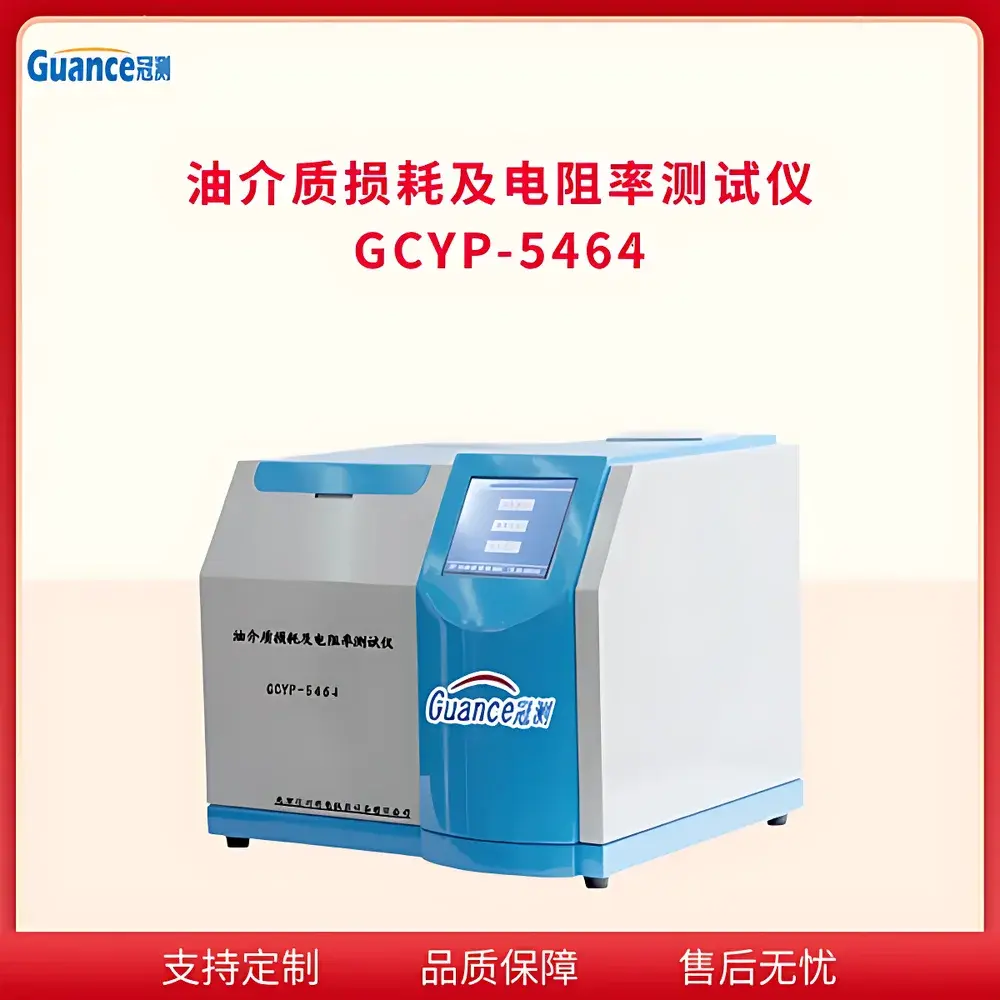
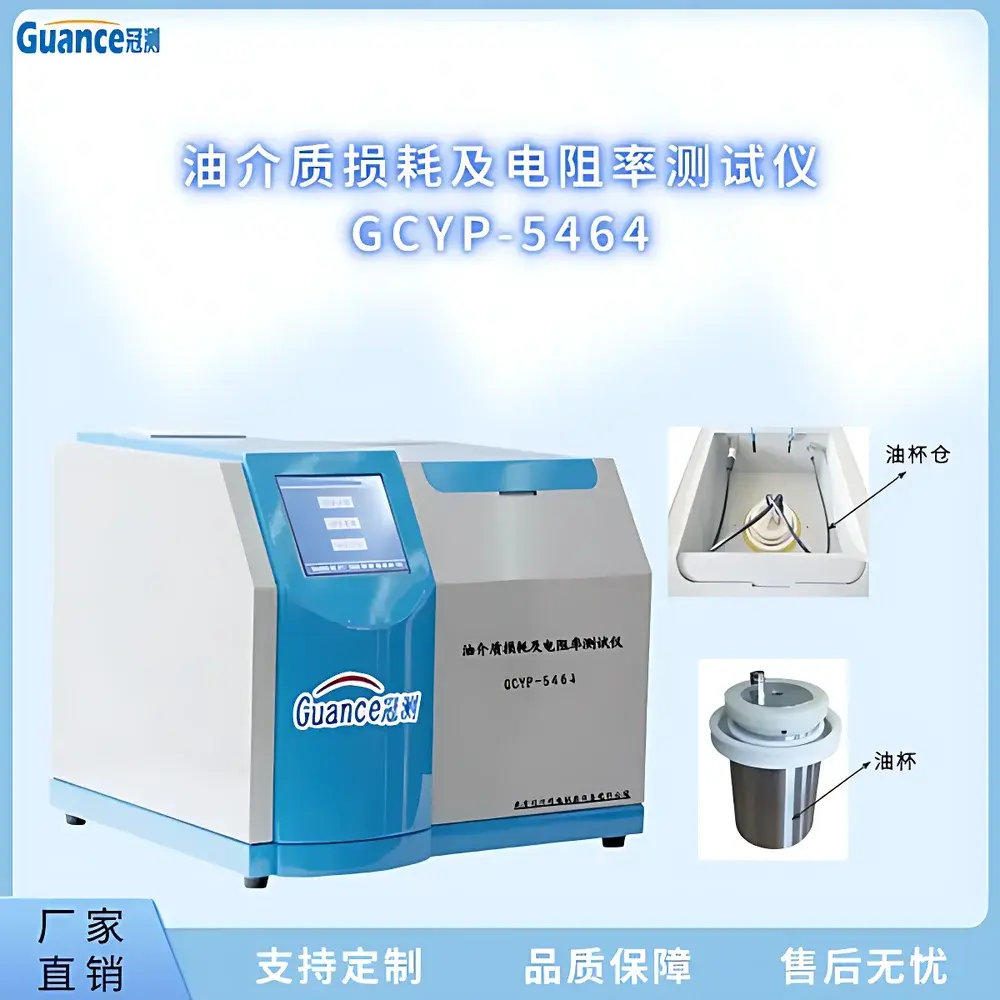
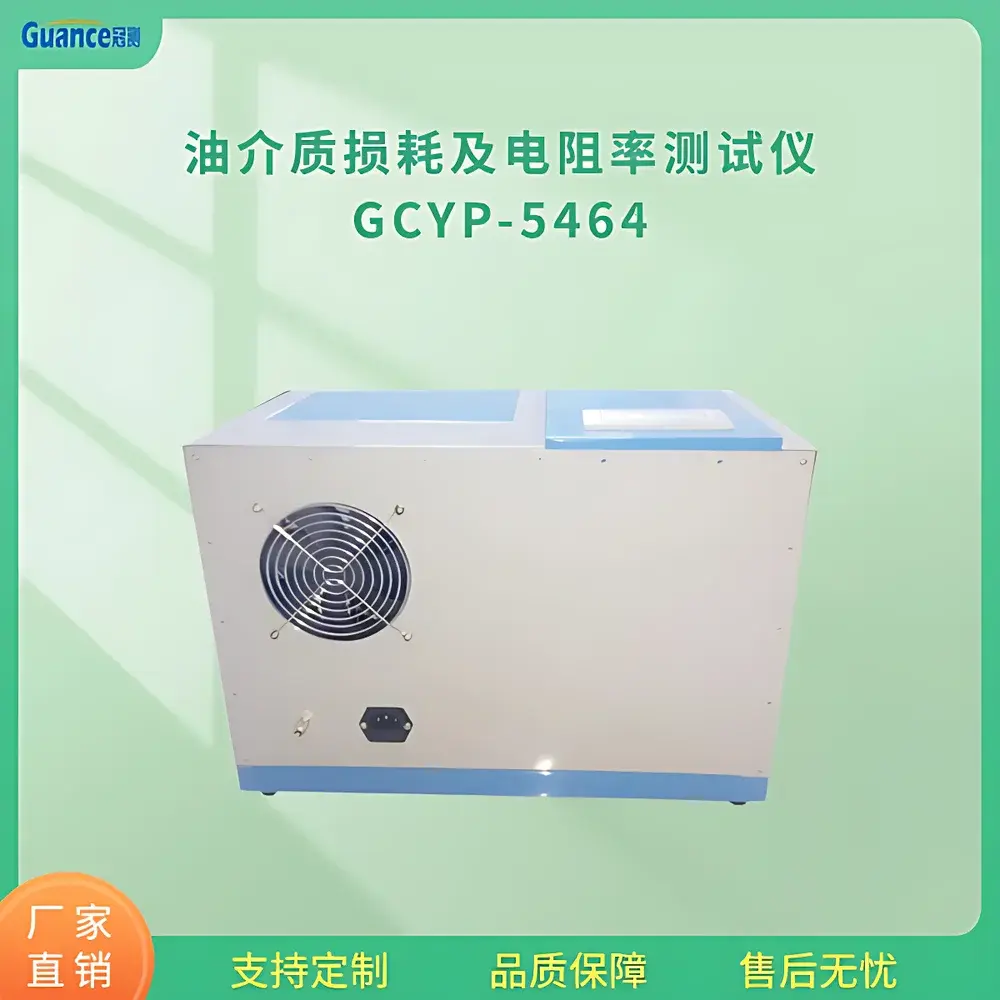
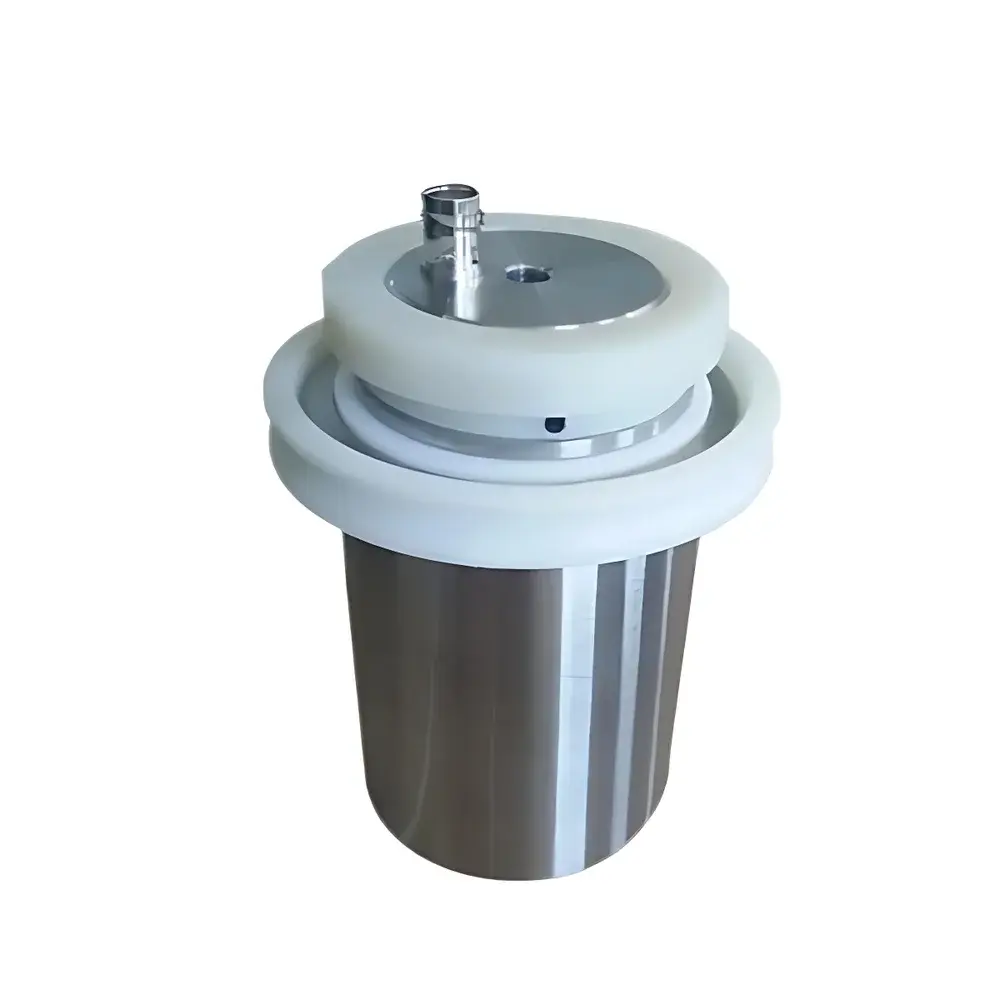
GuanCe GCYP-5464.4 Insulating Oil Dielectric Loss & Resistivity Analyzer
| Brand | GuanCe |
|---|---|
| Origin | Beijing, China |
| Manufacturer Type | Authorized Distributor |
| Country of Origin | China |
| Model | GCYP-5464.4 |
| Price | USD 1,980 (FOB Beijing) |
| Power Supply | AC 220 V ±10%, 50/60 Hz ±1% |
| Measurement Range | Capacitance 5–200 pF |
| Temperature Control Range | 40–120 °C |
| Temp. Accuracy | ±0.5 °C |
| AC Test Voltage | 200–2200 V (50 Hz, continuously adjustable) |
| DC Test Voltage | 0–500 V (continuously adjustable) |
| Resolution | Capacitance 0.01 pF |
| Power Consumption | 500 W |
| Dimensions | 460 × 370 × 330 mm |
| Weight | 25 kg |
Overview
The GuanCe GCYP-5464.4 Insulating Oil Dielectric Loss & Resistivity Analyzer is a fully integrated, microprocessor-controlled instrument engineered for precise, automated measurement of dielectric dissipation factor (tan δ), relative permittivity (εr), and DC volume resistivity of liquid insulating materials—primarily mineral oils, synthetic esters, and silicone-based dielectric fluids used in power transformers, circuit breakers, and high-voltage equipment. Designed in strict compliance with GB/T 5654–2007 (equivalent to IEC 60247:2013 and ASTM D924–21), the analyzer employs a three-electrode oil cup configuration with 2 mm inter-electrode spacing to minimize stray capacitance and surface leakage current effects. Its core measurement architecture combines a digitally synthesized 50 Hz AC excitation source, a high-stability SF6-filled reference capacitor, a precision high-resistance meter, and a regulated DC high-voltage source (0–500 V), all housed within a single robust chassis. The system utilizes real-time digital signal processing on an ARM9 platform to ensure repeatability and long-term stability under laboratory or field-service conditions.
Key Features
- Three-electrode test cell conforming to GB/T 5654–2007 and IEC 60247 geometry specifications (2 mm electrode gap, guard ring design) for accurate elimination of edge effects and surface conduction errors.
- Integrated mid-frequency induction heating system with PID temperature control, enabling rapid, uniform, and contactless oil heating from 40 °C to 120 °C (±0.5 °C accuracy); independent overtemperature protection via thermal cut-off relay at 120 °C.
- Stable SF6-filled three-terminal reference capacitor with negligible temperature/humidity drift—ensuring metrological integrity across extended operational cycles without recalibration.
- Full digital AC bridge architecture with automatic balancing, eliminating manual null adjustment; supports continuous AC voltage sweep from 200 V to 2200 V at nominal 50 Hz.
- Comprehensive safety interlocks: overvoltage, overcurrent, and HV short-circuit detection with sub-100 ms shutdown and visual/audio alert; real-time monitoring of temperature sensor integrity.
- 5.7-inch TFT color touch LCD with full Chinese GUI; built-in real-time clock; auto-storage of test records (date, time, parameters, results); direct thermal printing capability.
- Empty-cell calibration function to verify electrode cleanliness, alignment, and parasitic capacitance—critical for trace-level resistivity and permittivity calculations per ASTM D1169 and IEC 60167.
Sample Compatibility & Compliance
The GCYP-5464.4 is validated for use with standard dielectric liquids including inhibited mineral insulating oils (IEC 60296), natural and synthetic esters (IEC 62770), silicone fluids (ASTM D4652), and low-conductivity hydrocarbon solvents. It meets the physical and electrical requirements of GB/T 5654–2007, which aligns technically with IEC 60247:2013 (Measurement of relative permittivity, dielectric dissipation factor and d.c. resistivity of insulating liquids) and ASTM D924–21 (Standard Test Method for Dielectric Dissipation Factor of Electrical Insulating Liquids). While not certified to ISO/IEC 17025 for accredited testing, its design supports GLP-compliant documentation workflows—including timestamped result logs, operator ID fields (via optional USB keyboard), and audit-ready printouts. The instrument’s fixed 50 Hz excitation frequency satisfies national grid maintenance protocols requiring harmonized test conditions across substations.
Software & Data Management
The analyzer operates autonomously without PC dependency; however, test data (CSV-formatted) can be exported via USB flash drive for integration into LIMS or enterprise QA databases. Each stored record contains: test ID, sample ID, temperature setpoint & actual reading, AC/DC voltage applied, measured capacitance, εr, tan δ, resistivity, and pass/fail flag against user-defined limits. Internal memory retains up to 500 test sequences with timestamps. Firmware supports field-upgradable calibration coefficients and language packs (English, Chinese). No proprietary software installation is required—data files are natively readable in Excel or statistical analysis platforms. The system does not implement FDA 21 CFR Part 11 electronic signature functionality but provides full traceability through printed reports bearing instrument serial number, calibration due date, and operator notation field.
Applications
- Routine condition monitoring of transformer oil in utility substations and industrial plants.
- Acceptance testing of new insulating oils prior to equipment filling (per IEEE C57.106).
- Diagnostic evaluation of aging, oxidation, and moisture ingress in service-aged oils—where elevated tan δ (>0.5% at 90 °C) or reduced resistivity (<100 MΩ·m) indicate degradation.
- Quality assurance during oil reclamation and regeneration processes.
- Research-grade characterization of novel bio-based insulating fluids under controlled thermal stress.
- Supporting failure analysis investigations following internal arcing or thermal faults in HV apparatus.
FAQ
What standards does the GCYP-5464.4 comply with?
It is designed and verified per GB/T 5654–2007, which is technically equivalent to IEC 60247:2013 and aligned with ASTM D924–21 and ASTM D1169 for resistivity.
Can the instrument measure both AC and DC parameters simultaneously?
No—measurements are sequential: AC parameters (capacitance, εr, tan δ) are acquired first at user-set temperature and voltage, followed by DC resistivity after automatic polarity reversal and stabilization.
Is external calibration required annually?
The SF6 reference capacitor and internal HV sources are factory-calibrated; annual verification using NIST-traceable oil standards (e.g., IEC 60247 reference oils) is recommended for ISO/IEC 17025-aligned labs.
Does the system support multi-temperature profiling?
Yes—users may program up to five discrete temperature points (40–120 °C) and execute full AC/DC measurements at each step, generating temperature-dependent tan δ and resistivity curves.
What is the minimum sample volume required?
The standard three-electrode cup requires 40 mL of oil; optional mini-cups (not included) reduce volume to 15 mL for precious or limited samples.



