
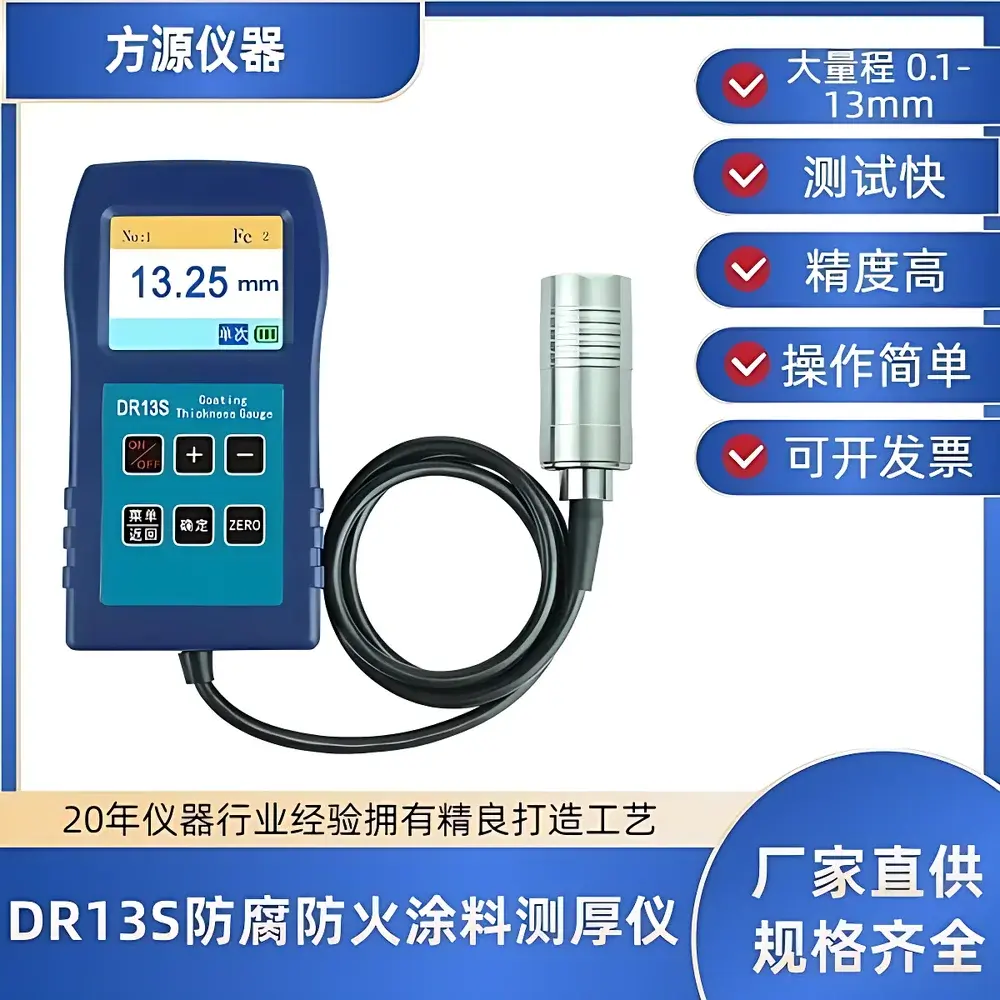
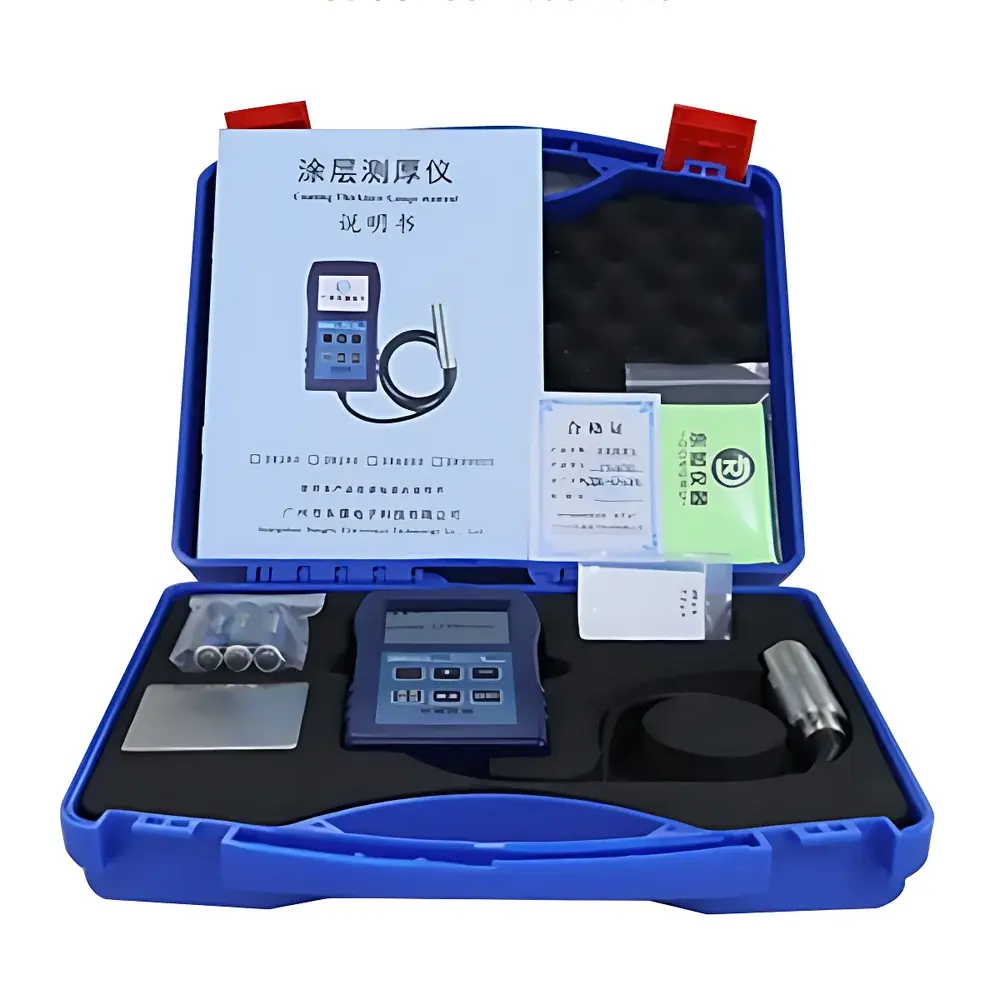
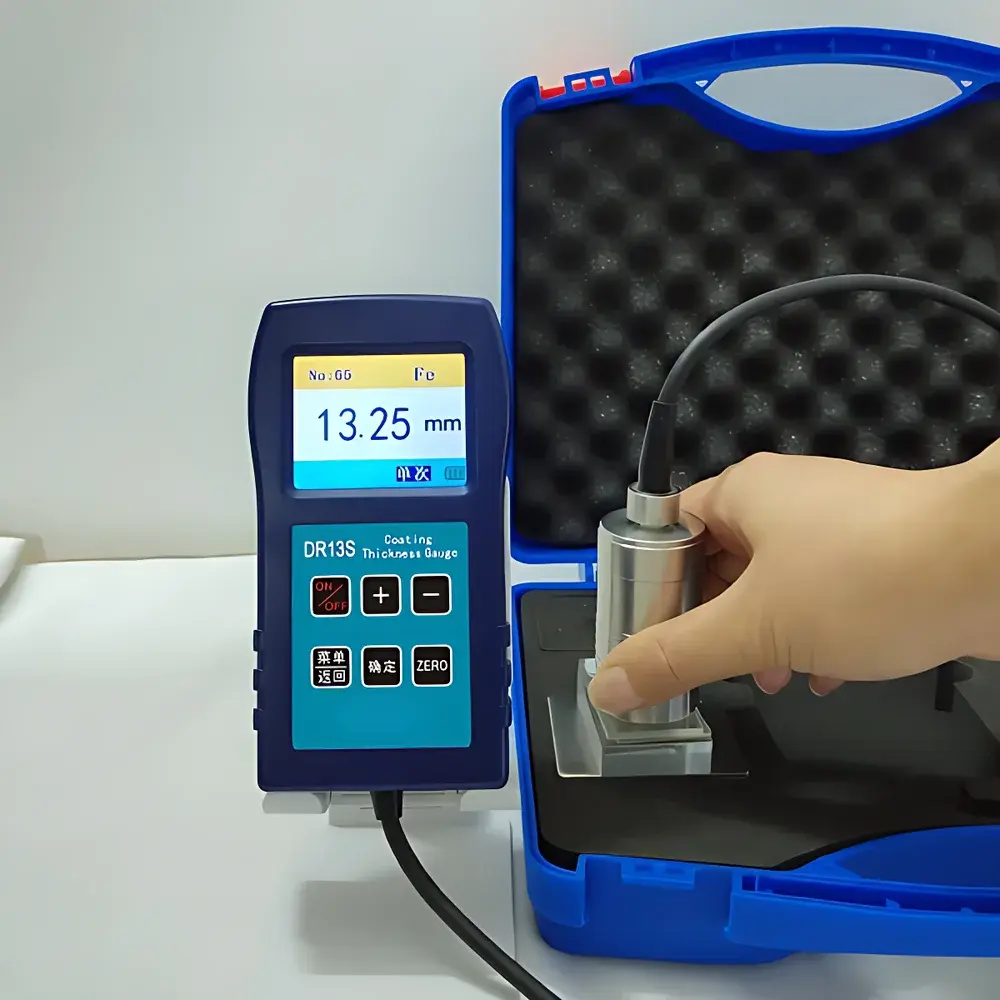
Fangyuan Instruments DR13S Dual-Mode Magnetic/Inductive Coating Thickness Gauge
| Brand | Fangyuan Instruments |
|---|---|
| Origin | Guangdong, China |
| Manufacturer Type | Authorized Distributor |
| Country of Manufacture | China |
| Model | DR13S |
| Measurement Range (Fe) | 0–6000 µm |
| Power Supply | 3 × AAA (1.5 V) batteries |
| Display | High-brightness LCD with backlight |
| Probe Type | Separated high-stability probe |
| Operating Mode | Single-measurement mode only |
| Compliance | Meets ISO 2178 & ISO 2360 requirements for non-destructive coating thickness measurement on ferrous and non-ferrous substrates |
| Unit Certification | CE-marked per EMC Directive 2014/30/EU and RoHS 2011/65/EU |
Overview
The Fangyuan Instruments DR13S is a handheld, dual-principle coating thickness gauge engineered for non-destructive measurement of non-conductive coatings on ferrous (e.g., steel, iron) and non-ferrous (e.g., aluminum, stainless steel, zinc) substrates. It operates simultaneously using magnetic induction (for ferrous base metals) and eddy current (for non-ferrous base metals), enabling rapid, operator-independent thickness assessment across industrial maintenance, quality control, and protective coating inspection workflows. Designed for field and shop-floor deployment, the DR13S delivers stable repeatability under variable ambient lighting and temperature conditions (operating range: 0–40 °C), with no calibration drift attributable to mechanical shock or battery voltage fluctuation. Its measurement principle adheres to the physical foundations defined in ISO 2178 (magnetic method) and ISO 2360 (eddy current method), ensuring metrological traceability when used with certified reference standards.
Key Features
- Dual-sensor architecture: Integrated magnetic induction and high-frequency eddy current sensing circuits enable automatic substrate recognition and seamless switching between Fe and non-Fe modes without manual selection.
- High-stability separated probe: The detachable probe features a wear-resistant ceramic tip and precision-ground pole piece geometry, minimizing hysteresis and thermal drift during repeated contact measurements.
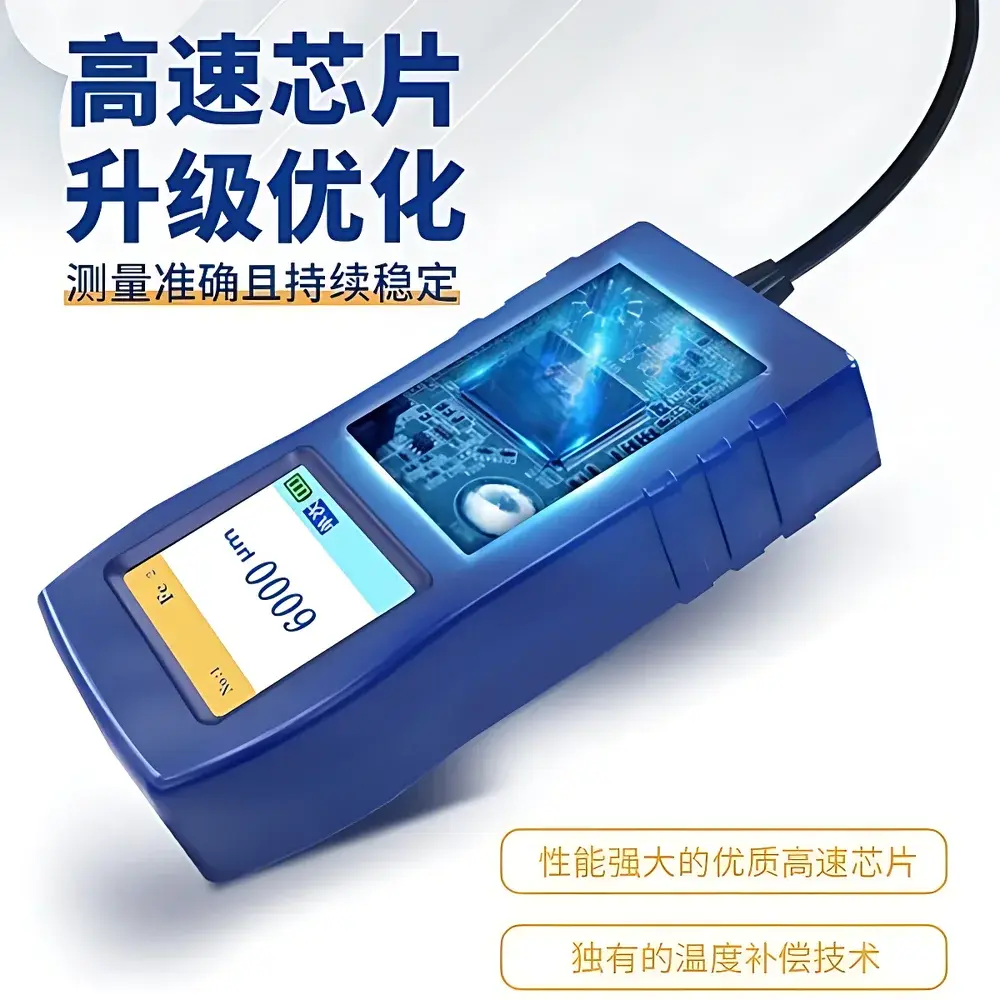
- Optimized human interface: Backlit monochrome LCD with 4-digit resolution provides clear numeric readout under low-light conditions; contrast and brightness are factory-optimized for long-term legibility.
- Low-power embedded design: Powered by three standard AAA alkaline cells, the device achieves ≥100 hours of continuous operation per battery set, with auto-power-off after 5 minutes of inactivity.
- Ruggedized tactile control: Sealed membrane keypad resists dust, moisture, and chemical splashes (IP54-rated enclosure), supporting use in abrasive environments such as shipyards, pipeline yards, and structural steel fabrication facilities.
- Zero-point stability: Internal zero calibration remains valid over extended periods; no daily recalibration required unless probe replacement or extreme thermal cycling occurs.
Sample Compatibility & Compliance
The DR13S is validated for use on flat, curved, and slightly irregular surfaces with minimum radius of curvature ≥15 mm. It measures organic coatings (epoxy, polyurethane, acrylic), metallic coatings (zinc, cadmium, chromium), fireproofing materials (intumescent paints, cementitious sprays), and corrosion-inhibiting systems (bituminous, coal-tar epoxy). Substrate thickness must exceed critical minimums—≥2 mm for ferrous bases and ≥1 mm for non-ferrous bases—to prevent backside interference. All measurements comply with ASTM D7091 (Standard Practice for Nondestructive Measurement of Dry Film Thickness of Nonmagnetic Coatings Applied to Ferrous Metals) and ISO 19840 (Paints and varnishes — Protective painting systems for offshore and related structures — Assessment of degree of rusting and preparation grades of steel substrates). Device firmware supports audit-ready operation under GLP/GMP-aligned QA protocols.
Software & Data Management
The DR13S operates as a standalone instrument with no onboard data logging or PC connectivity. However, its consistent single-shot output format (µm, no unit conversion) ensures compatibility with external QC documentation systems. Users may manually record readings into LIMS or Excel-based inspection logs using standardized templates aligned with ISO/IEC 17025 clause 7.7 (Reporting of results). For organizations requiring electronic records, the DR13S can be paired with third-party barcode-scanned ID tags (e.g., asset number, location code) to maintain traceability per FDA 21 CFR Part 11 Annex 11 principles when integrated into validated inspection workflows.
Applications
- Verification of dry film thickness (DFT) compliance for marine and offshore protective coating systems prior to commissioning.
- In-process quality assurance during galvanizing line audits, including post-passivation zinc layer verification on structural steel components.
- Fire-resistance system validation in commercial construction, where intumescent coating thickness directly correlates to rated fire endurance (e.g., UL 1709, EN 13381-8).
- Pre-paint surface preparation assessment: confirming removal of mill scale or old coating residues via comparative baseline measurements.
- Maintenance inspections of buried pipelines, storage tanks, and refinery vessels where corrosion under insulation (CUI) risk mandates periodic coating integrity checks.
FAQ
Does the DR13S require annual calibration certification?
Yes—while internal zero stability is robust, accredited third-party calibration against NIST-traceable shims (e.g., Foiltec or Helmut Fischer standards) is recommended every 12 months or after 5000 measurement cycles, whichever occurs first.
Can it measure coatings on stainless steel?
Yes, provided the stainless steel grade is non-magnetic (e.g., AISI 304, 316); magnetic grades (e.g., 430, 410) will trigger Fe-mode and yield inaccurate results.
Is the probe interchangeable with other Fangyuan models?
No—the DR13S uses a proprietary probe interface; cross-compatibility is not supported with DR6000 or DR21 series probes.
What is the minimum substrate thickness for accurate reading?
For ferrous substrates: ≥2.0 mm; for non-ferrous substrates: ≥1.0 mm. Thinner substrates may cause signal attenuation and non-linear response.
Does it support statistical calculation (e.g., mean, std dev)?
No—this is a single-read instrument without memory or statistical functions. Statistical analysis must be performed externally using recorded datasets.



