
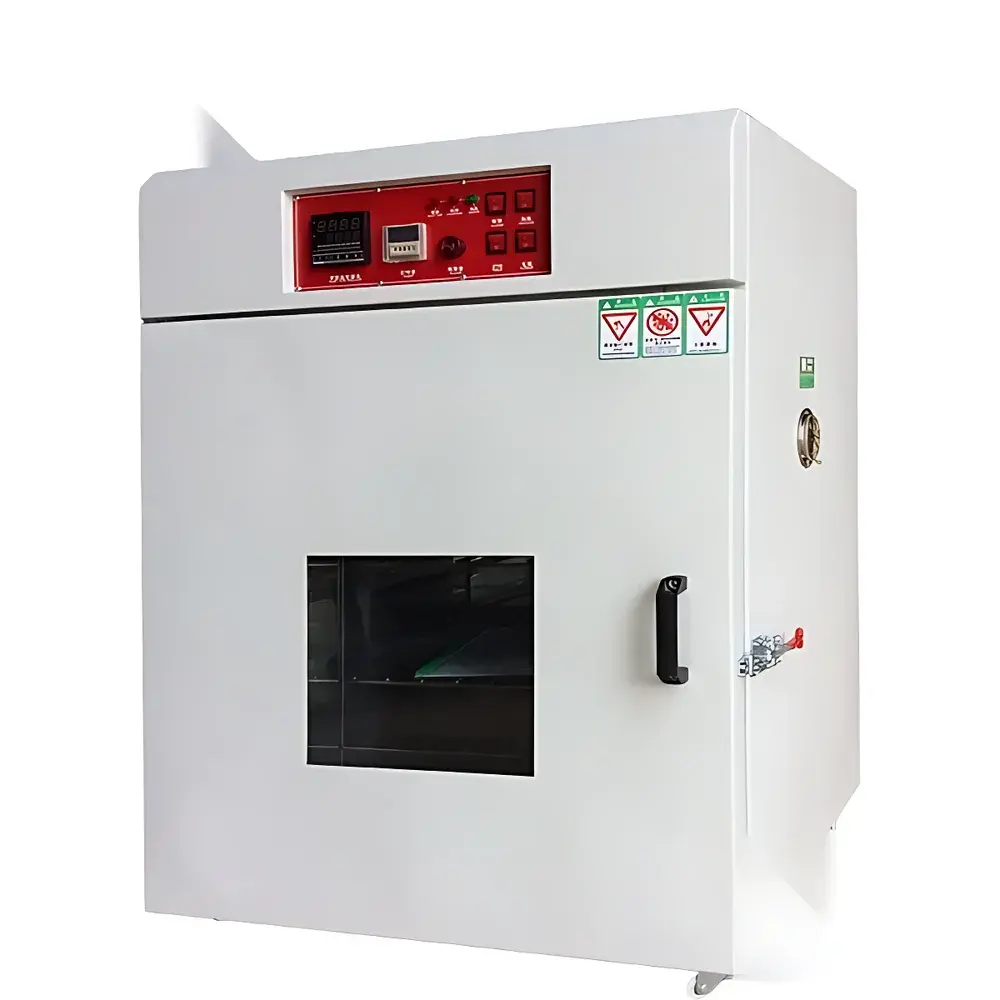
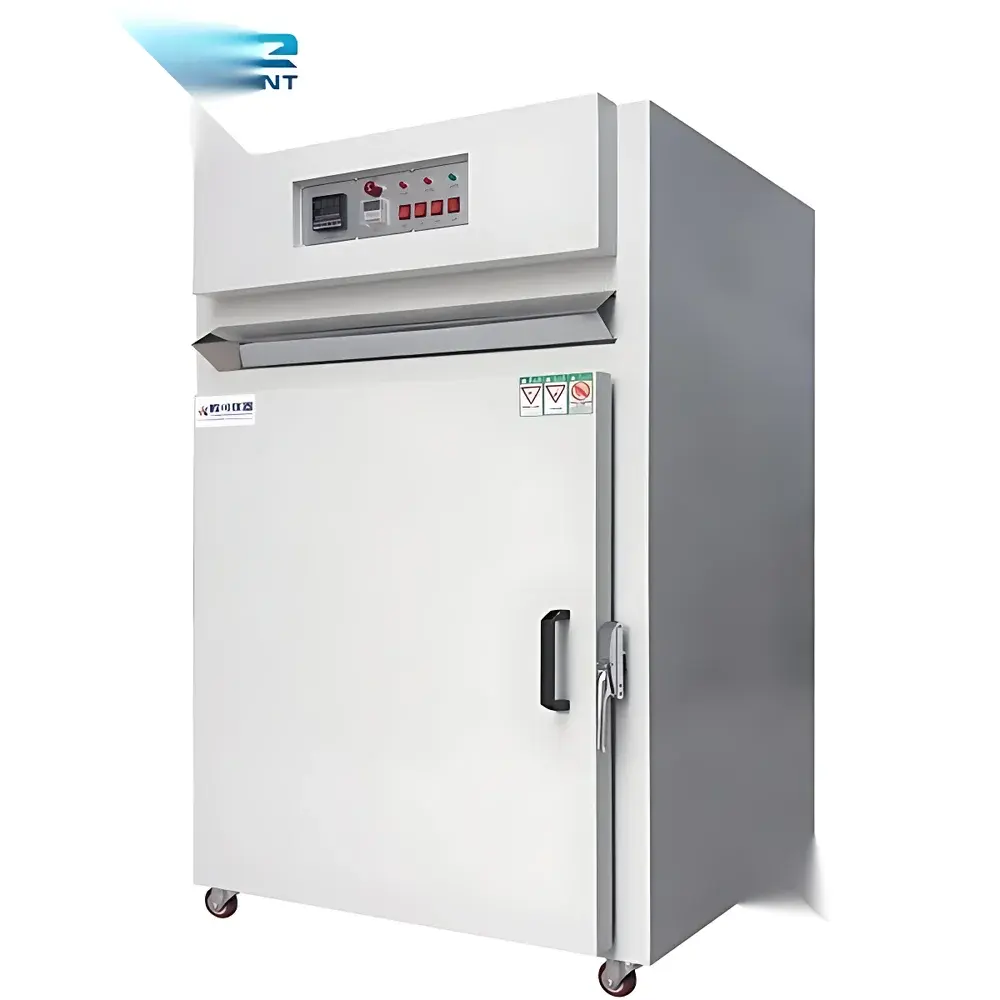
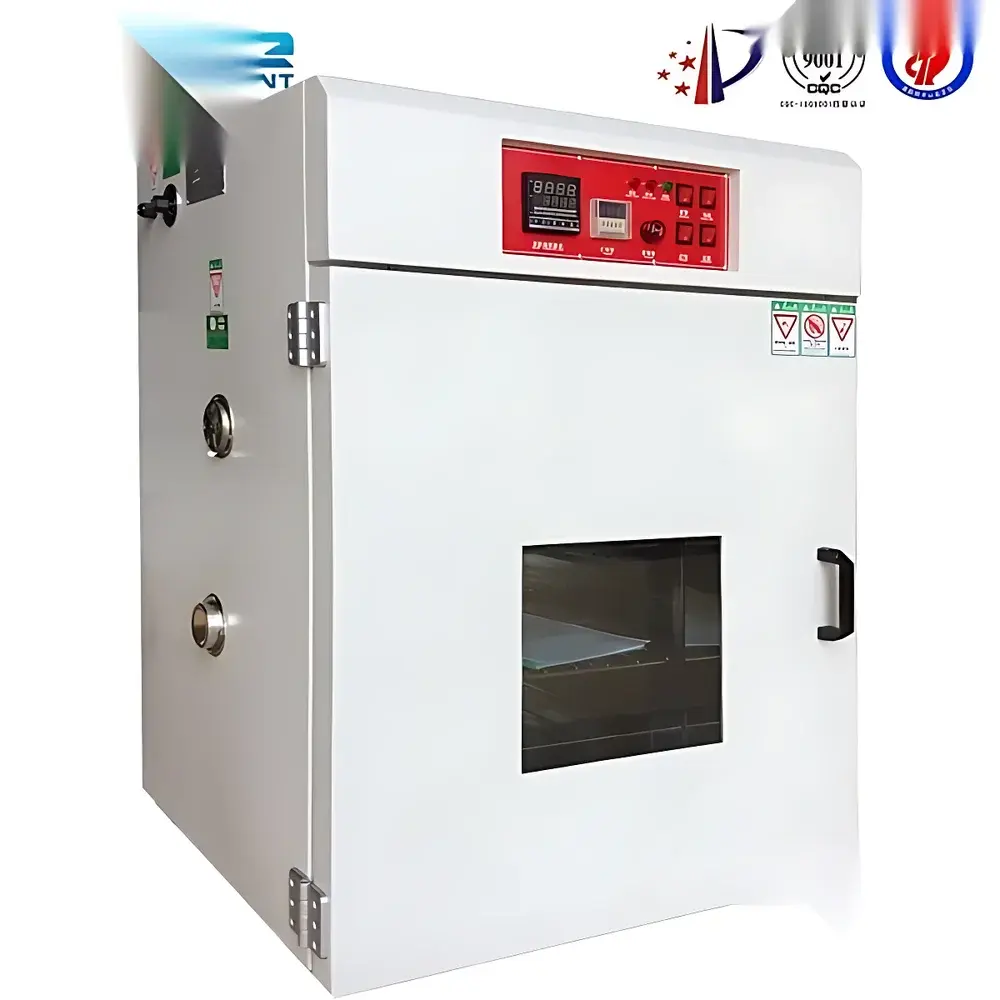
High Temperature Aging Test Chamber
| Brand | Other Brands |
|---|---|
| Origin | Imported |
| Manufacturer Type | General Distributor |
| Price | USD 920 (FOB) |
| Temperature Range | Ambient +20°C to 500°C |
| Chamber Construction | External SECC steel with powder-coated finish |
| Insulation | Rigid polyurethane foam + glass fiber (walls & door) |
| Air Circulation | Forced horizontal airflow via high-temp resistant centrifugal fan |
| Heating System | PID + SSR controlled far-infrared Ni-Cr alloy heaters (2 kW × 1) |
| Safety | Dual-stage overtemperature protection, automatic load cutoff, thermal fuse |
| Compliance | Designed per GB/T 2423.2-2008 (IEC 60068-2-2:2007 equivalent) |
| Control Interface | Digital PID controller with auto-tuning, real-time temperature display, and deviation alarm |
Overview
The High Temperature Aging Test Chamber is a precision-engineered environmental test system designed for accelerated thermal aging, stability assessment, and performance validation of materials and components under sustained elevated temperatures. Operating on the principle of forced convection heating within a thermally insulated enclosure, it maintains stable, uniform thermal conditions across the working chamber—critical for evaluating thermal degradation, dimensional stability, insulation integrity, and long-term reliability in accordance with internationally recognized test protocols. This chamber is not a general-purpose drying oven; rather, it is purpose-built for laboratory-grade thermal stress testing in aerospace, automotive electronics, power electronics packaging, polymer formulation R&D, and quality assurance laboratories where reproducible, traceable, and standards-compliant thermal exposure is mandatory.
Key Features
- Temperature range from ambient +20°C up to 500°C—engineered for both short-term thermal shock simulation and extended-duration aging cycles.
- Forced horizontal airflow architecture ensures ≤±1.5°C temperature uniformity (measured at 5 points per IEC 60068-3-5) across the usable chamber volume, minimizing thermal gradients that compromise test validity.
- Dual-layer insulation comprising rigid polyurethane foam (core) and high-density glass fiber (perimeter and door) delivers low thermal leakage and high energy efficiency—even at maximum operating temperature.
- PID + Solid-State Relay (SSR) digital temperature control system with auto-tuning capability enables rapid ramping, precise setpoint maintenance (±0.5°C steady-state accuracy), and adaptive compensation for load-induced thermal inertia.
- Robust mechanical construction: external A3 carbon steel (1.2 mm thickness, CNC-formed and electrostatically powder-coated); internal chamber lined with food-grade SUS304 stainless steel—resistant to oxidation, corrosion, and outgassing at high temperatures.
- Integrated safety architecture includes primary overtemperature cut-off (adjustable limit), secondary thermal fuse, and automatic power disconnection under abnormal load conditions—fully compliant with IEC 61000-4-5 surge immunity and EN 61010-1 safety requirements.
Sample Compatibility & Compliance
This chamber accommodates a broad spectrum of sample types—including printed circuit boards (PCBs), battery cells, elastomeric seals, adhesives, composite laminates, and semiconductor packages—without introducing contamination or catalytic surface reactions. The inert SUS304 interior, absence of volatile organic binders in insulation, and non-catalytic heating elements ensure material-neutral thermal exposure. It is explicitly designed and verified to meet the procedural and performance criteria outlined in GB/T 2423.2–2008 (identical to IEC 60068-2-2:2007), covering Test Bb (non-heating) and Test Bd (heating with load). While not certified to UL or CSA as a standalone appliance, its electrical and thermal design adheres to the fundamental safety and measurement traceability principles required for GLP-compliant test environments and ISO/IEC 17025-accredited laboratories.
Software & Data Management
The standard configuration features a front-panel digital controller with real-time temperature readout, programmable ramp-soak profiles (up to 99 segments), data logging via RS485 interface (Modbus RTU protocol), and optional analog output (4–20 mA) for integration into centralized SCADA or LIMS platforms. Optional PC-based software provides time-stamped CSV export, calibration certificate generation, audit trail logging (meeting FDA 21 CFR Part 11 requirements when paired with user-defined electronic signatures), and comparative analysis of multiple test runs. All temperature records are timestamped with millisecond resolution and include sensor ID, setpoint, actual value, and deviation—enabling full traceability for internal QA audits or third-party certification reviews.
Applications
- Accelerated life testing of encapsulants, conformal coatings, and potting compounds used in automotive ECUs and avionics modules.
- Thermal aging validation of lithium-ion battery separators and cathode materials per UN 38.3 thermal abuse protocols.
- Stress screening of passive components (capacitors, resistors) and active semiconductors prior to burn-in qualification.
- Material compatibility testing for high-temperature gasketing, fire-resistant cables, and aerospace-grade composites.
- Pre-conditioning of samples prior to mechanical testing (e.g., tensile strength after thermal soak) in accordance with ASTM D618 or ISO 291 conditioning guidelines.
- Validation of thermal management solutions—including heat sinks, thermal interface materials (TIMs), and vapor chambers—under sustained operational loads.
FAQ
What standards does this chamber comply with?
It is engineered to meet the test condition accuracy, uniformity, and procedural fidelity requirements of GB/T 2423.2–2008 and its international counterpart IEC 60068-2-2:2007.
Can the chamber be customized for non-standard internal dimensions?
Yes—custom internal volume, shelf configurations, and port placements (e.g., for thermocouple feedthroughs or gas purging) are available upon engineering review and quotation.
Is remote monitoring supported?
Standard RS485 Modbus RTU enables integration with building management systems (BMS) or custom LabVIEW/Python-based monitoring dashboards.
What is the typical lead time for delivery?
Standard models ship within 4–6 weeks ex-factory; custom configurations require 8–10 weeks following final mechanical drawing approval.
Does the unit include calibration documentation?
A factory-assembled NIST-traceable calibration certificate (covering temperature uniformity and controller accuracy at three points: 100°C, 250°C, and 450°C) is provided with each shipment.



