
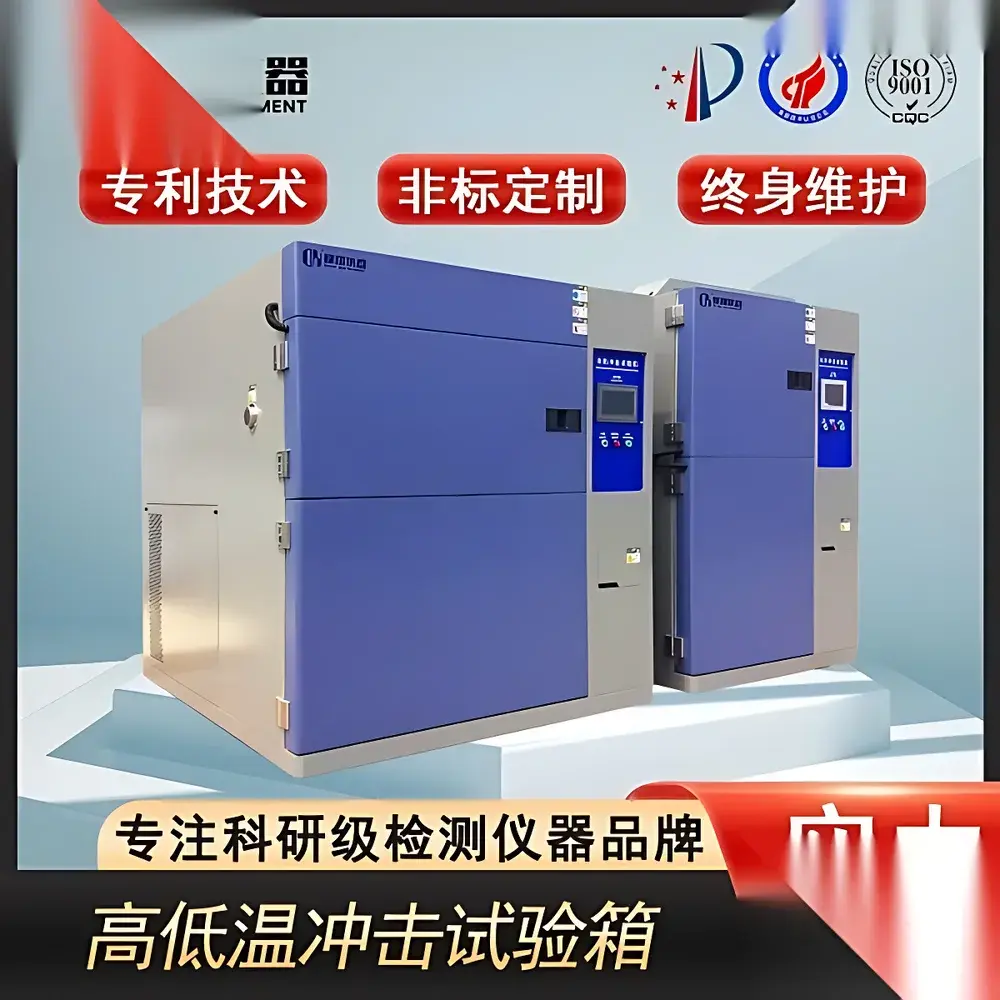
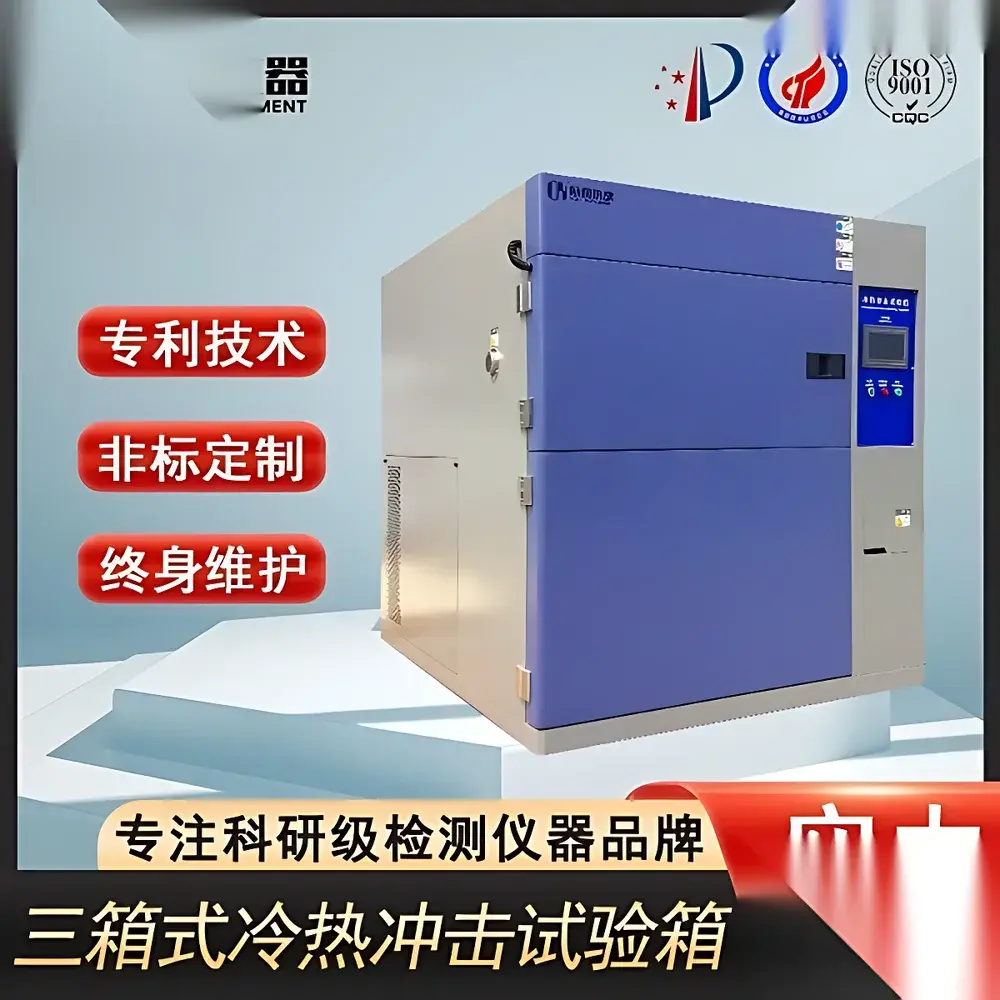
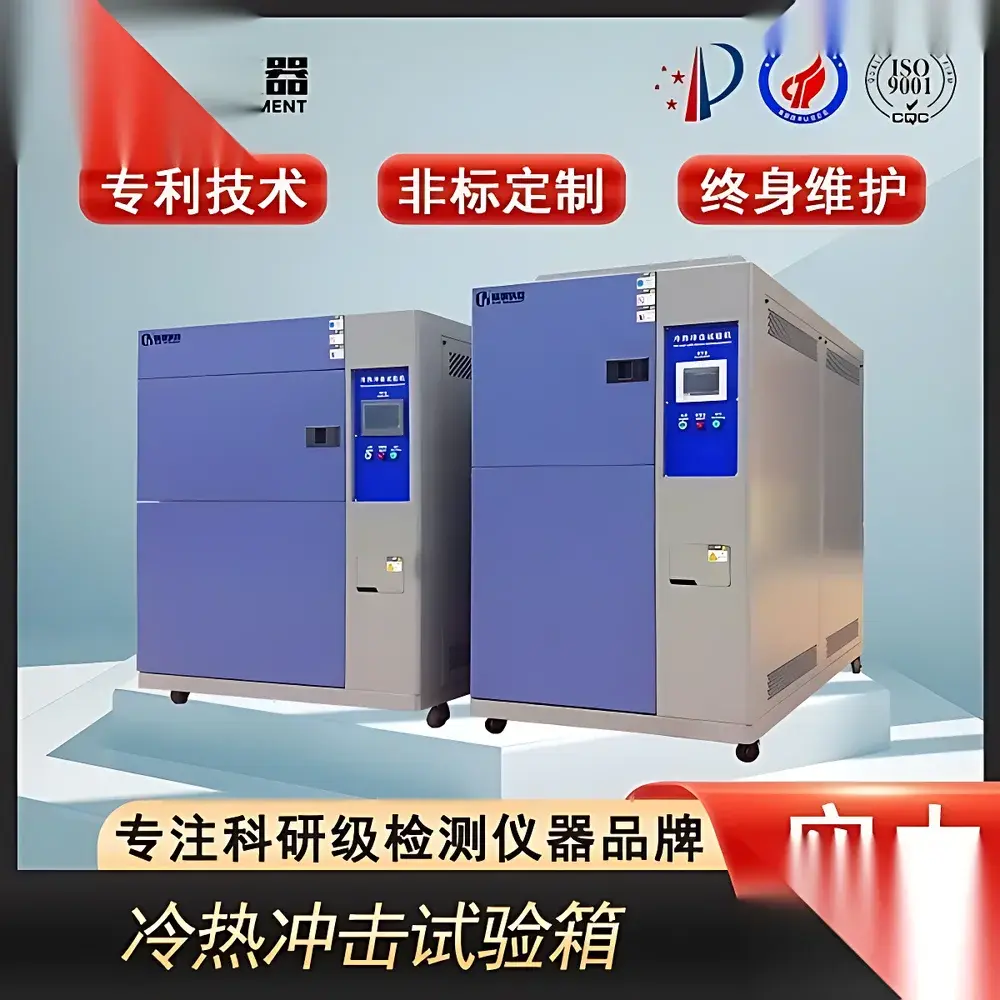
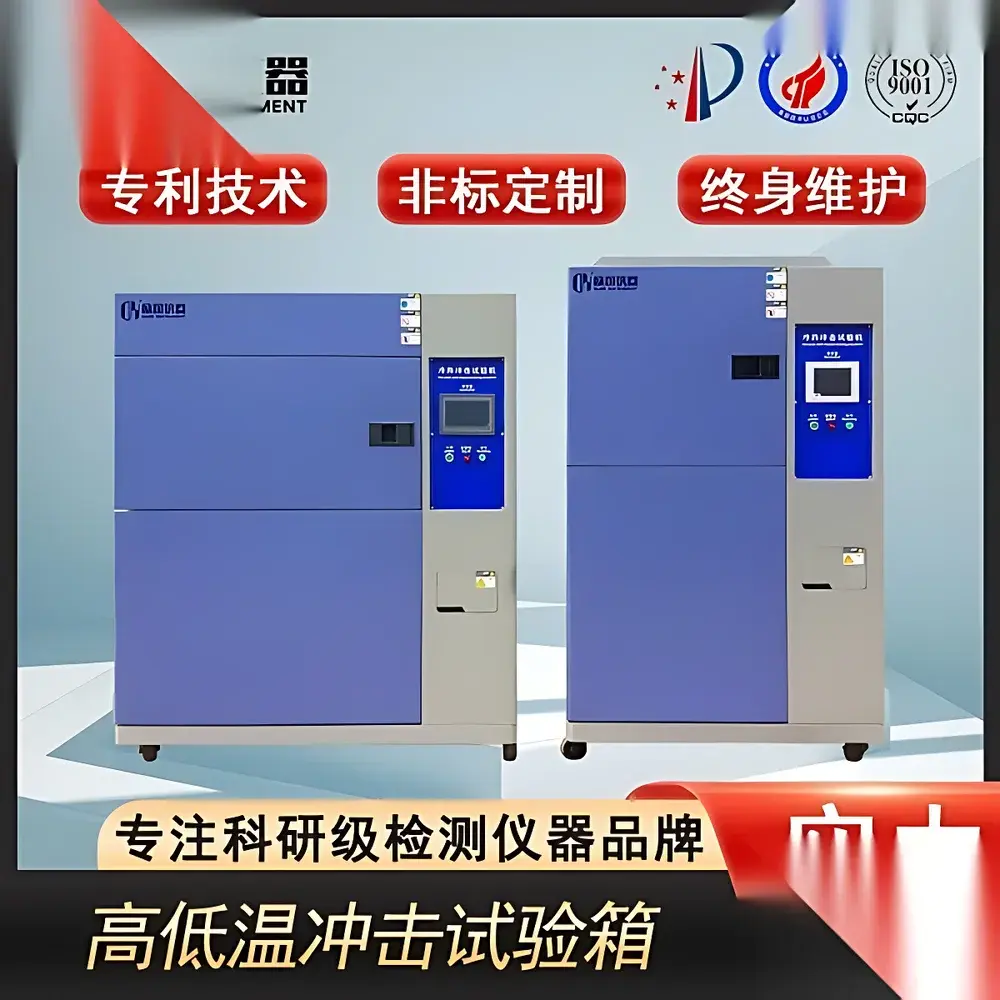
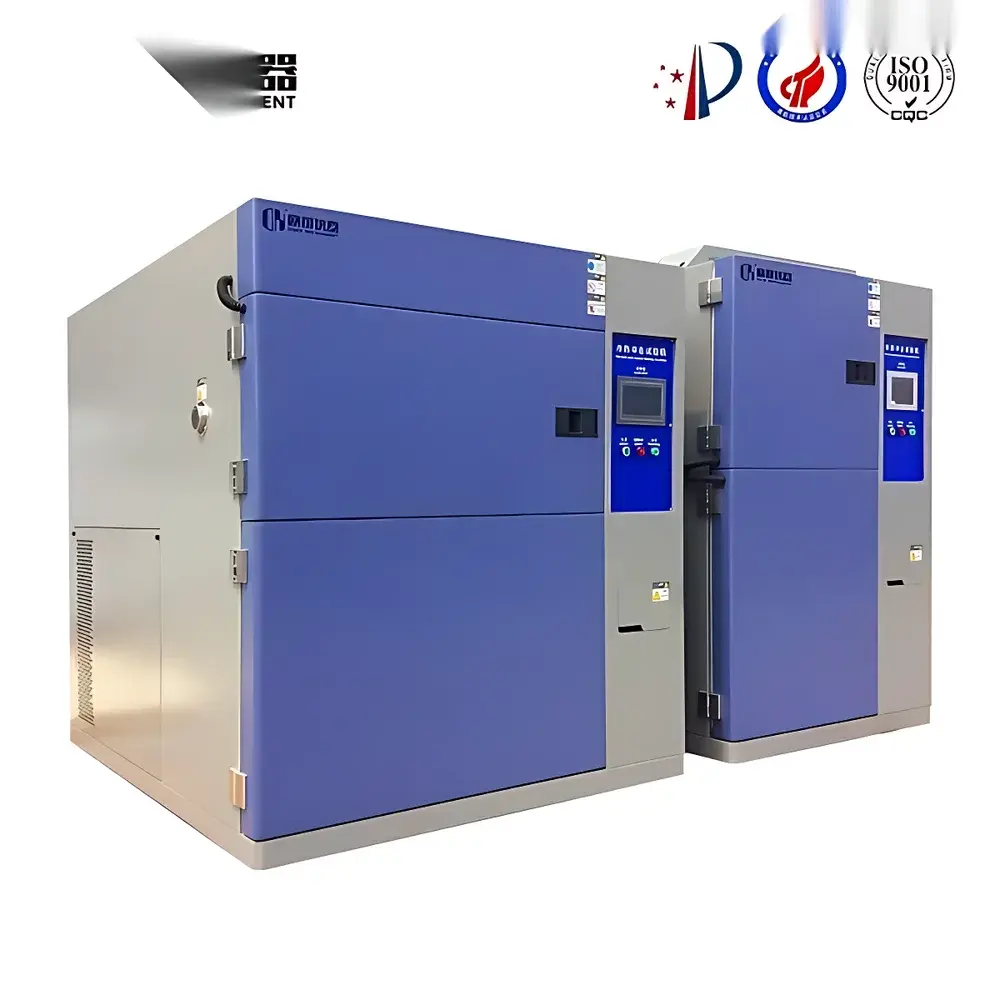
Thermal Shock Test Chamber – Dual- or Tri-Zone Configuration
| Brand | Other Brands |
|---|---|
| Origin | Imported |
| Manufacturer Type | Authorized Distributor |
| Price | USD 11,200 (FOB) |
Overview
The Thermal Shock Test Chamber is an engineered environmental test system designed to evaluate the reliability and structural integrity of materials and components under rapid, repetitive transitions between extreme high and low temperatures. Operating on the principle of controlled thermal cycling—either via dual-zone (hot/cold chambers with specimen transfer) or tri-zone (separate hot soak, cold soak, and test chambers) architecture—the chamber subjects specimens to abrupt temperature shifts typically ranging from −65 °C to +180 °C, with transition times as short as 10–15 seconds between zones. This methodology replicates real-world thermal stress conditions encountered during aerospace deployment, automotive powertrain operation, or electronics field use, where differential expansion coefficients across material interfaces can induce microcracking, solder joint fatigue, delamination, or seal failure. Unlike steady-state temperature chambers, thermal shock testing emphasizes transient response and cumulative damage mechanisms, making it essential for qualification per military, industrial, and international reliability standards.
Key Features
- Dual- or tri-zone configuration options: Dual-zone systems utilize a motorized basket mechanism for rapid specimen transfer; tri-zone designs eliminate mechanical movement by maintaining independent hot and cold reservoirs and a neutral test zone—enhancing repeatability and reducing vibration-induced artifacts.
- Precision-controlled temperature profiles: Programmable ramp rates (e.g., 10–30 °C/min), dwell time flexibility (1–999 minutes per phase), and cycle count capability up to 9999 cycles support rigorous qualification protocols.
- High-stability refrigeration and heating subsystems: Cascade refrigeration for sub-zero performance down to −70 °C; electric resistance heating with PID-controlled SSR output ensures stable high-temperature holds up to +200 °C.
- Insulated stainless-steel interior with non-corrosive chamber walls and reinforced observation window for real-time visual monitoring without thermal leakage.
- Integrated safety interlocks including over-temperature cut-off, refrigerant pressure monitoring, door-open detection, and emergency stop circuit compliant with IEC 61000-6-2/6-4 EMC requirements.
Sample Compatibility & Compliance
The chamber accommodates specimens up to 500 mm × 500 mm × 500 mm (W×D×H) in standard configurations, with custom cavity sizes available upon request. Compatible with metallic alloys (aluminum, titanium, stainless steel), polymer composites (epoxy, PEEK, polyimide), PCB assemblies, encapsulated sensors, and hermetically sealed optoelectronic modules. Fully compliant with major thermal shock and temperature change test standards, including: ASTM D5229/D5229M (low-temperature impact resistance), IEC 60068-2-14 (Test N: Change of Temperature), MIL-STD-810H Method 503.5 (Temperature Shock), GJB 150.5A-2012 (China MIL-STD equivalent), GB/T 2423.22–2012 (Temperature Change), and SJ/T 10187–1991 (Single-Chamber Thermal Cycling). Designed to support GLP-compliant validation documentation packages, including IQ/OQ protocols and traceable calibration records per ISO/IEC 17025.
Software & Data Management
Equipped with a Windows-based control interface featuring intuitive touch-screen HMI, the system supports full-cycle logging at 1-second intervals, with data export in CSV and Excel-compatible formats. Embedded audit trail functionality meets FDA 21 CFR Part 11 requirements for electronic records and signatures when configured with user-level access control, password-protected parameter modification, and immutable event logs. Optional Ethernet/IP or Modbus TCP connectivity enables integration into centralized MES or LIMS platforms for automated test reporting, remote monitoring, and SPC trend analysis across multi-chamber deployments.
Applications
- Aerospace component qualification: Testing turbine blade coatings, composite airframe joints, and avionics enclosures for thermal cycling endurance.
- Automotive electronics validation: Assessing ECU housings, battery management systems, and ADAS sensor modules under simulated under-hood and winter-start conditions.
- Microelectronics reliability screening: Identifying early-life failures in wafer-level packaging, flip-chip interconnects, and MEMS devices.
- Medical device sterilization compatibility: Evaluating material stability after repeated autoclave-to-freeze cycles in reusable surgical instruments.
- Research & development labs: Supporting DOE-driven studies on coefficient of thermal expansion (CTE) mismatch, interfacial adhesion degradation, and glass transition behavior in thermosets.
FAQ
What is the difference between thermal shock and temperature cycling?
Thermal shock involves rapid transitions (<30 seconds) between extreme temperature extremes to induce mechanical stress via differential expansion; temperature cycling uses slower ramps and longer dwells to assess long-term aging effects.
Can this chamber perform ramp-and-soak profiles?
Yes—the controller supports multi-step programs with programmable ramp rates, dwell durations, and loop counts, enabling both shock and gradual thermal cycling protocols.
Is calibration certification included?
Standard delivery includes factory calibration with NIST-traceable temperature sensors; ISO/IEC 17025-certified calibration reports are available as an optional service.
What maintenance is required for long-term reliability?
Recommended quarterly inspection of refrigerant levels, condenser coil cleaning, door gasket integrity verification, and annual verification of thermocouple accuracy using dry-well calibrators.
Does the system meet CE or UKCA marking requirements?
Yes—fully compliant with EU Machinery Directive 2006/42/EC, Electromagnetic Compatibility Directive 2014/30/EU, and Low Voltage Directive 2014/35/EU; CE Declaration of Conformity supplied with shipment.



