
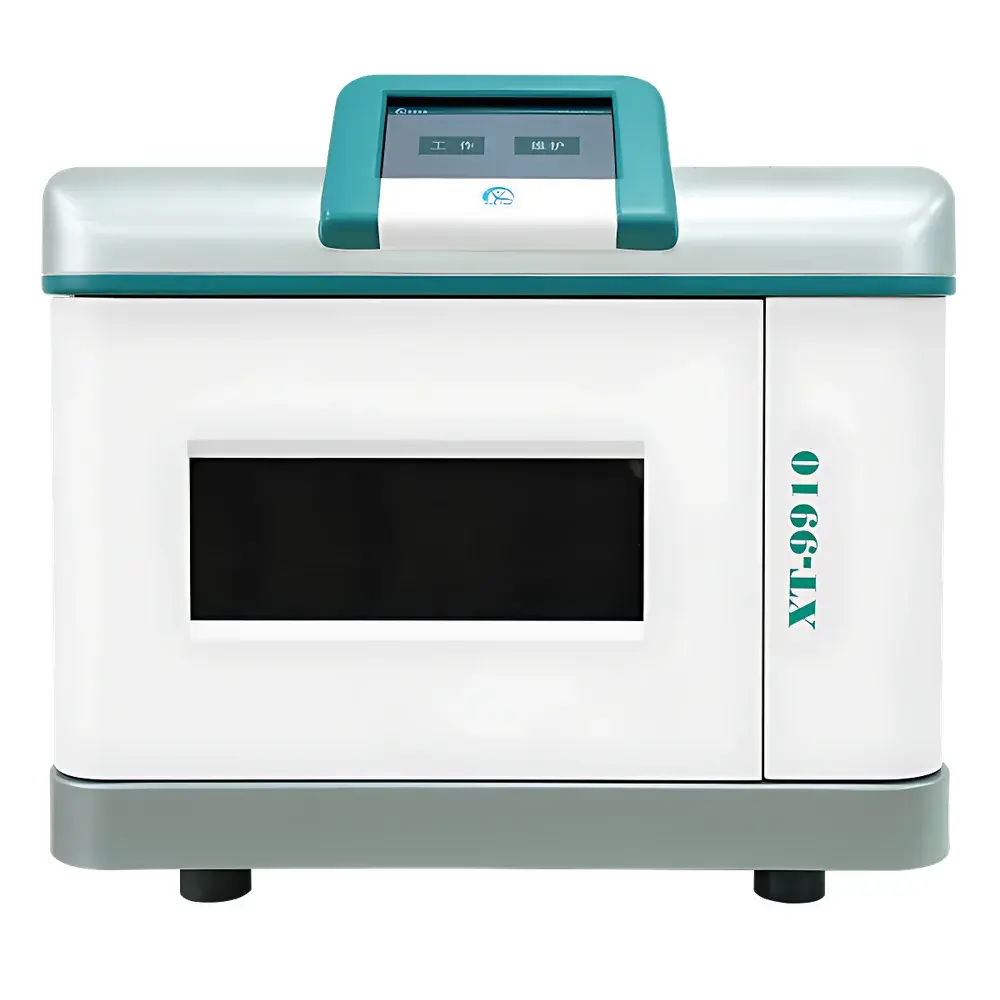
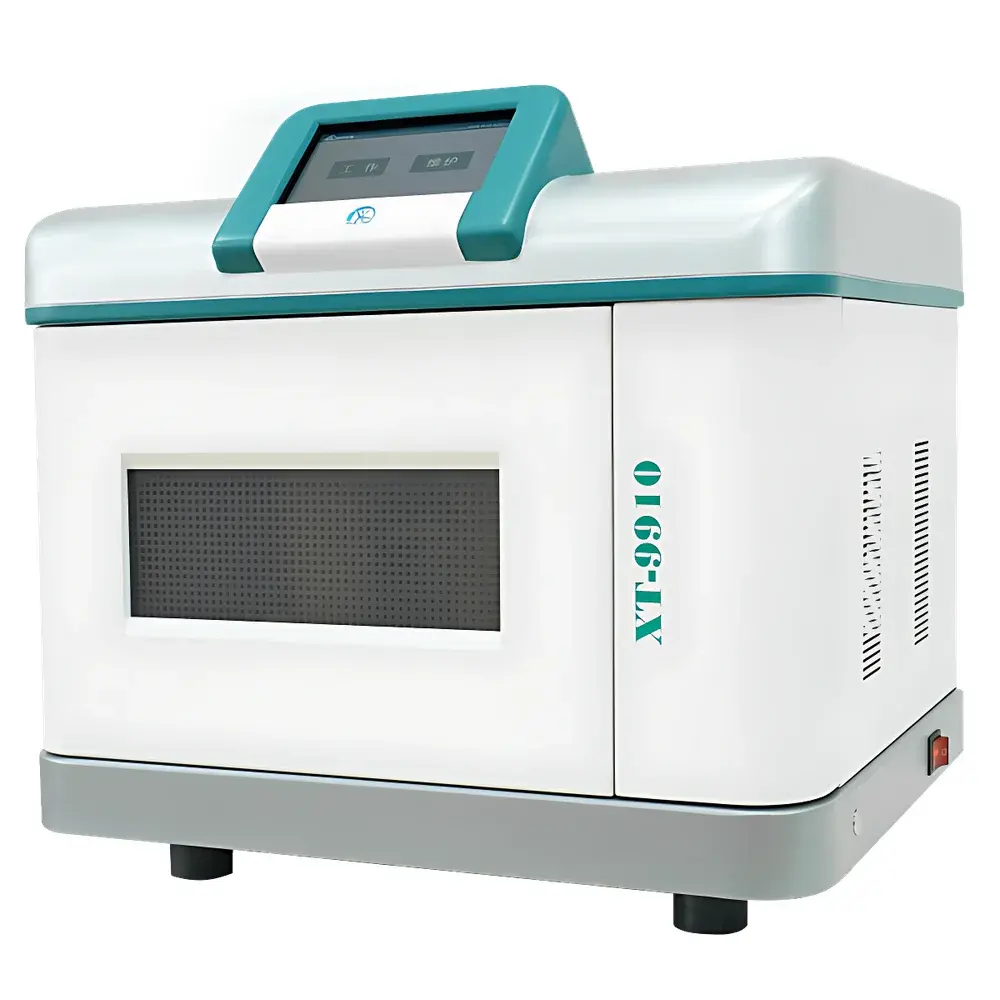
Raykol XT-9910 Sealed Intelligent Microwave Digestion & Extraction System
| Brand | Raykol |
|---|---|
| Origin | Shanghai, China |
| Manufacturer Type | Direct Manufacturer |
| Country of Origin | China |
| Model | XT-9910 |
| Sample Capacity | 6 or 8 Vessels |
| Microwave Source | 2450 MHz Variable-Frequency Magnetron |
| Max Temperature | 300 °C |
| Temp Measurement Accuracy | ±0.1 °C |
| Temp Control Stability | ±1 °C |
| Temp Uniformity | ±1 °C |
| Max Pressure | 6 MPa |
Overview
The Raykol XT-9910 Sealed Intelligent Microwave Digestion & Extraction System is an industrial-grade, fully automated platform engineered for high-efficiency, reproducible sample preparation in regulated and research-intensive laboratories. It operates on the principle of controlled microwave energy absorption by polar molecules (e.g., H₂O, HNO₃, HCl) within sealed reaction vessels—enabling rapid, uniform heating under elevated temperature and pressure conditions. Unlike open-vessel or reflux-based digestion methods, the XT-9910’s hermetic cavity design sustains precise thermobaric control throughout the entire digestion cycle, significantly reducing acid consumption, minimizing volatile element loss (e.g., As, Hg, Se), and improving recovery rates for trace metals and organic analytes. Its dual-mode capability supports both closed-vessel microwave-assisted digestion (MAD) and microwave-assisted extraction (MAE), making it suitable for elemental analysis (ICP-OES, ICP-MS, AAS), organic contaminant screening (GC-MS, LC-MS), and leaching studies per regulatory protocols.
Key Features
- Industrial-grade stainless-steel cavity with reinforced structural integrity and electromagnetic shielding compliant with IEC 61000-4-3 EMC standards.
- Variable-frequency 2450 MHz magnetron delivering stable, adjustable power output (0–1600 W) with real-time power feedback and automatic compensation for load variation.
- Non-contact mid-infrared temperature sensing system: proprietary TFM-penetrating optical sensor array continuously scans surface temperature of each vessel contents—delivering true solution temperature (not vessel wall temperature), with ±0.1 °C accuracy and dynamic curve logging.
- Individual-vessel pressure monitoring and active pressure regulation: each PTFE-TFM/PEEK composite vessel integrates a rupture-disk safety mechanism coupled with real-time pressure feedback loop, enabling per-vessel pressure hold at user-defined setpoints up to 6 MPa.
- Side-swing safety door with floating buffer mechanism: mechanically decouples under overpressure (>6.5 MPa) to release minor excess gas without full door ejection—meeting ISO 17025 mechanical safety expectations for operator protection.
- High-capacity corrosion-resistant exhaust system: 200 m³/h centrifugal blower with chemically inert ducting and activated carbon filtration ensures continuous removal of acidic vapors and heat during digestion, extending vessel lifetime and maintaining lab air quality.
- Modular sample loading: vessels inserted individually—no need to rotate or lift full turntable—reducing ergonomic strain and contamination risk during high-throughput workflows.
Sample Compatibility & Compliance
The XT-9910 accommodates standard 55 mL and 100 mL microwave digestion vessels (TFM-lined, PEEK outer body) compatible with EPA Methods 3051A, 3052, ASTM D5511, ISO 11466, and GB/T 22915–2008. It supports digestion matrices including soil, sludge, biological tissue, polymer ash, catalyst residues, and silicate-rich geological samples. All safety-critical firmware logic—including temperature override, pressure cutoff, and fault-triggered emergency cooling—is independently validated and documented per GLP audit requirements. The system meets CE Machinery Directive 2006/42/EC, IEC 61010-1 electrical safety standards, and includes optional 21 CFR Part 11-compliant electronic signature and audit trail modules for regulated environments.
Software & Data Management
The XT-9910 features a 10.1-inch capacitive touchscreen interface running Raykol’s proprietary Digilab OS v4.2. Users can define, store, and recall up to 100 multi-stage digestion methods—with independent ramp/hold parameters for temperature, pressure, and power per stage. Real-time graphical displays include synchronized temperature/pressure/time curves, power delivery history, and vessel-specific status indicators. Data export is supported via USB 3.0 and Ethernet (TCP/IP), with CSV and XML formats compatible with LIMS integration. Optional IoT module enables remote method deployment via secure cloud API, encrypted data synchronization to private SaaS instances, and over-the-air firmware updates—all logged with timestamped operator ID and change history for full traceability.
Applications
- Environmental labs: heavy metal quantification in soils, sediments, and wastewater sludge per EPA SW-846.
- Food & feed testing: total arsenic, cadmium, lead, and mercury analysis in cereals, dairy, and animal feed using AOAC 999.10 and ISO 17294-2.
- Materials science: dissolution of ceramic composites, battery cathode materials, and refractory oxides prior to ICP-MS analysis.
- Petrochemical QA/QC: Ni/V determination in crude oil and catalysts following ASTM D5762.
- Cosmetics & pharmaceuticals: residual catalyst screening in APIs and heavy metal profiling in pigments per USP /.
- Geological exploration: rare earth element (REE) extraction from monazite and bastnäsite ores under controlled redox conditions.
FAQ
What safety certifications does the XT-9910 hold?
The system complies with CE (2006/42/EC Machinery Directive), IEC 61010-1 (Safety Requirements for Electrical Equipment), and RoHS 2011/65/EU. Optional factory-installed validation packages support IQ/OQ documentation per GMP Annex 15.
Can the XT-9910 be integrated into an existing LIMS environment?
Yes—via configurable RESTful API or direct database push (ODBC/JDBC), supporting structured metadata tagging (sample ID, method name, operator, timestamp, digest yield). Audit logs are retained for ≥12 months.
Is method transfer possible between different Raykol microwave platforms?
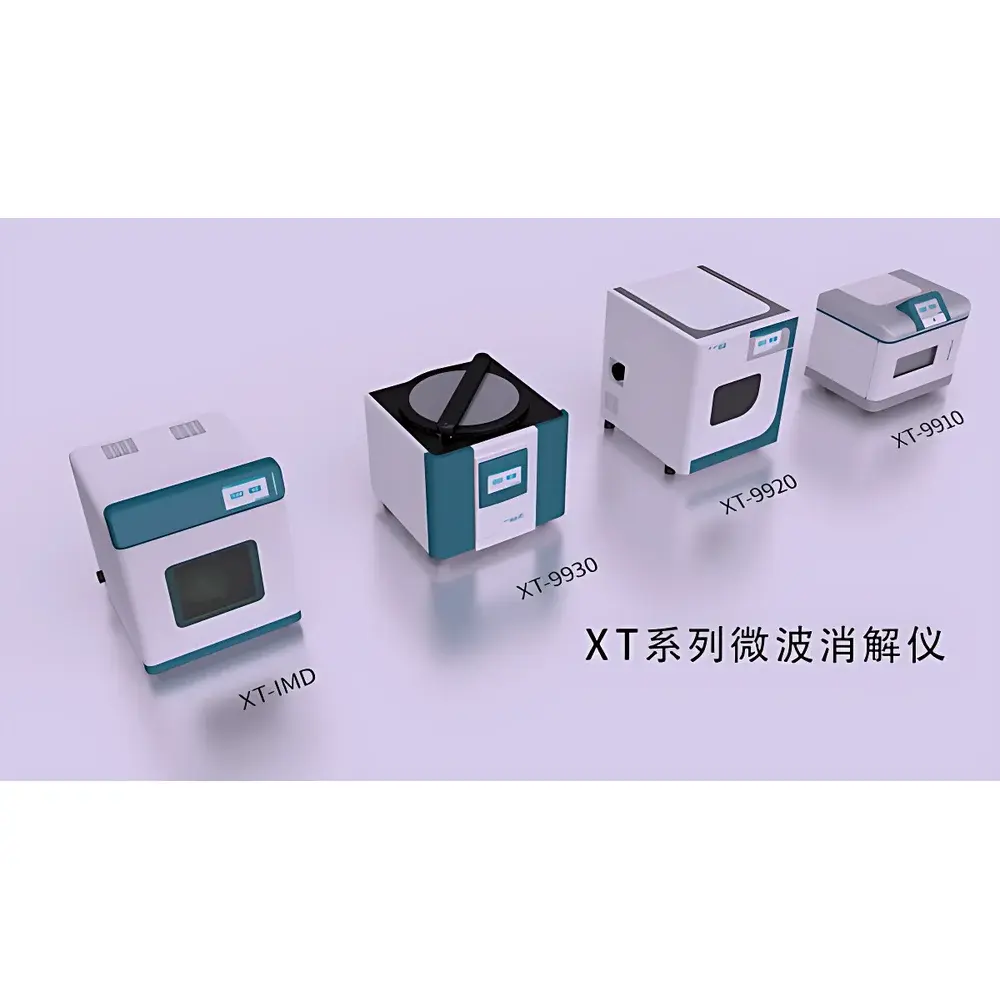
Method files (.rmd) are backward-compatible across Raykol’s XT-series (XT-9900, XT-9910, XT-9920), though vessel geometry and max pressure limits must be verified prior to execution.
Does the system support unattended overnight operation?
Yes—equipped with automatic post-digestion cooling, end-of-method acoustic/visual alerts, and thermal cut-off if ambient cabinet temperature exceeds 45 °C. Remote monitoring via IoT dashboard is available.
How often does the infrared temperature sensor require calibration?
Factory calibration is performed pre-shipment; field verification is recommended annually using NIST-traceable blackbody reference sources (e.g., Fluke 4180). Built-in self-diagnostic checks run at boot-up and every 24 hours during idle state.



