
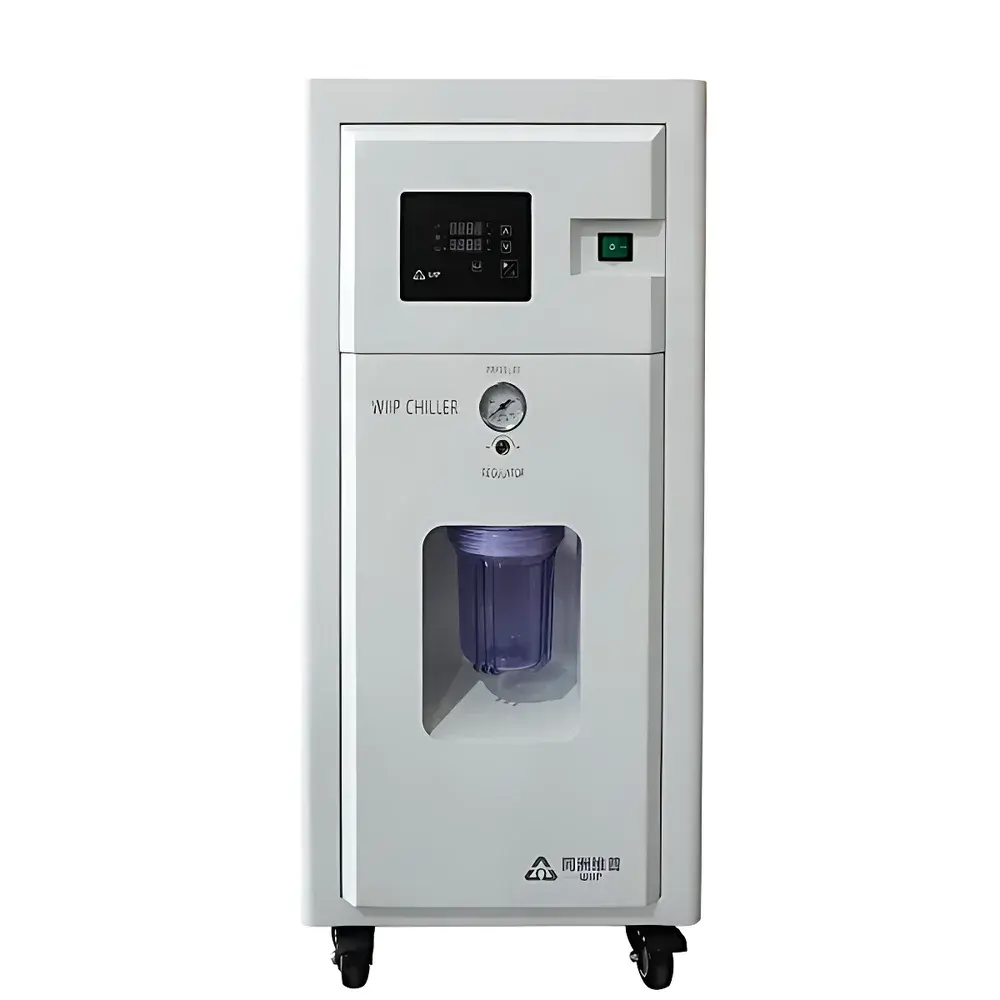
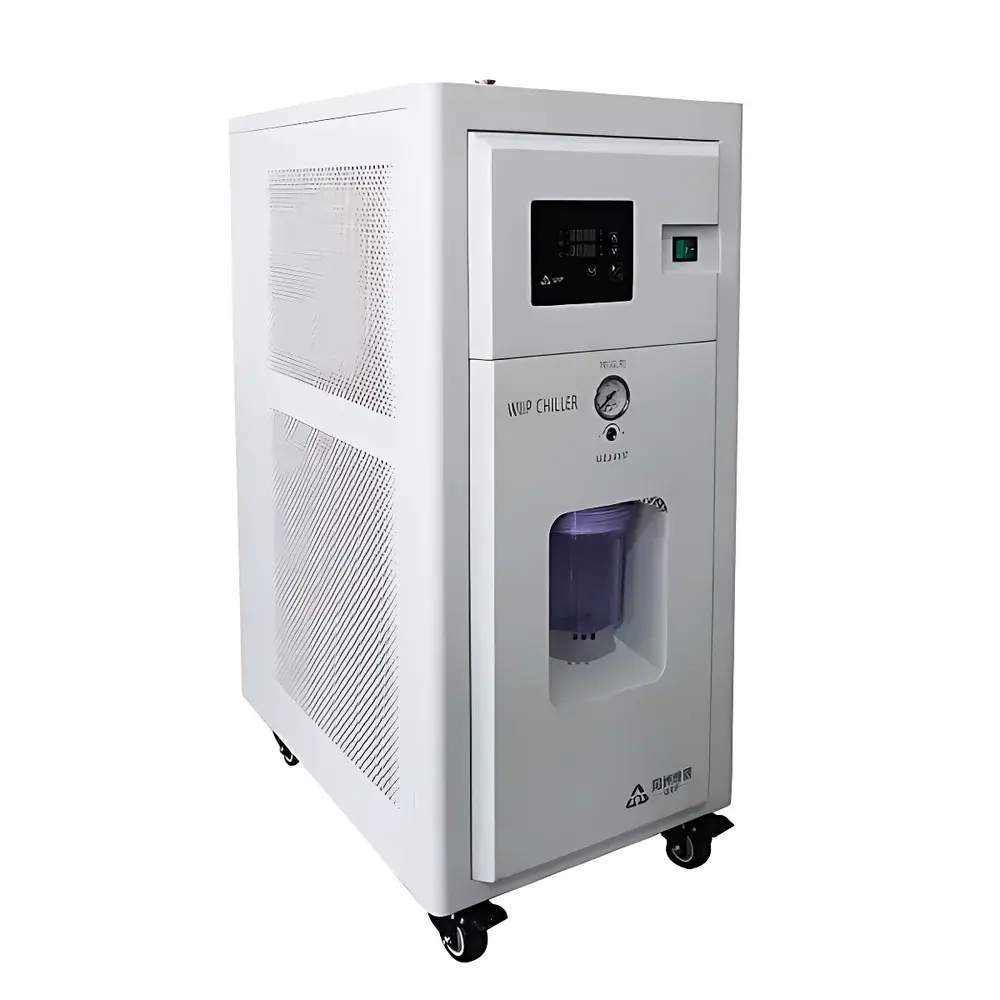
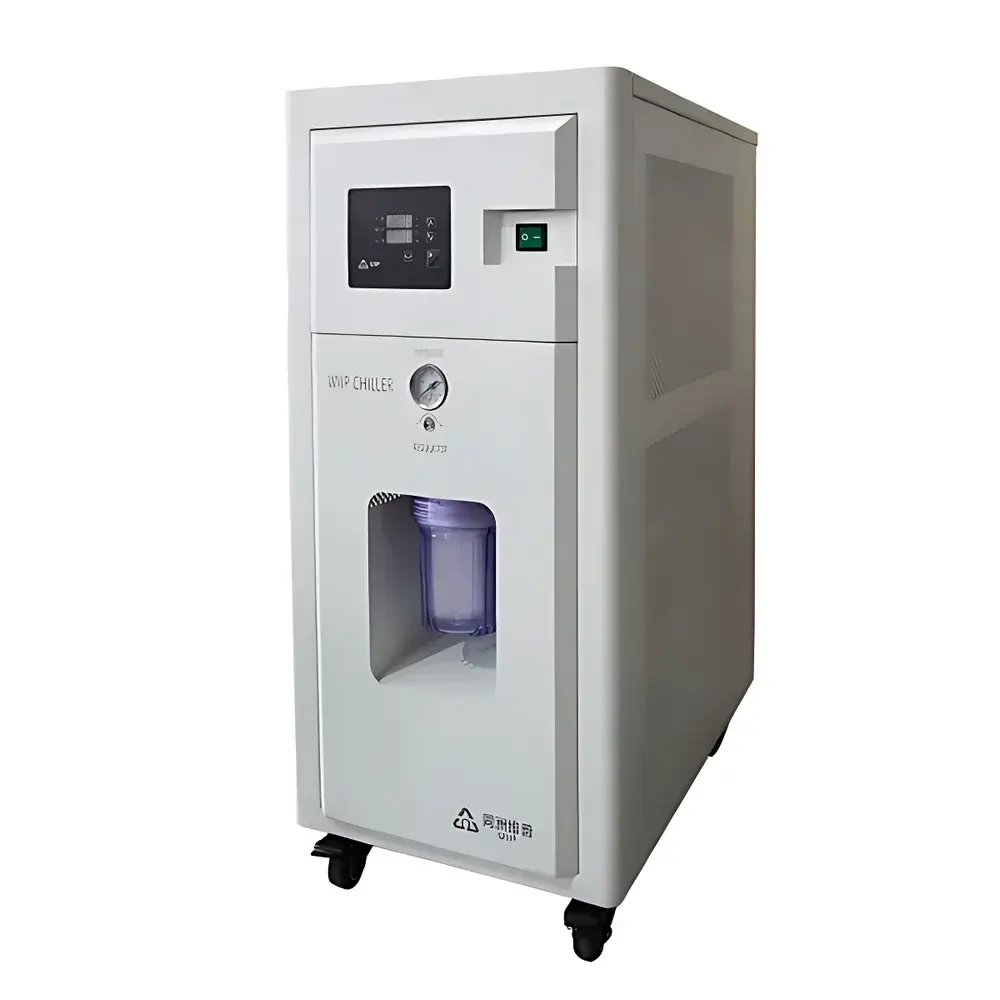
Tongzhou Weipu H2 Circulating Chiller for ICP-OES
| Brand | Tongzhou Weipu |
|---|---|
| Origin | Beijing, China |
| Manufacturer Type | Direct Manufacturer |
| Product Category | Domestic |
| Model | H2 Circulating Chiller for ICP-OES |
| Instrument Type | Integrated Unit |
| Cooling Method | Water-Cooled |
| Temperature Control Range | −40 °C to 95 °C |
| Cooling Capacity | 900 W to 6400 W |
| Temperature Stability | ±0.1 °C to ±0.3 °C |
Overview
The Tongzhou Weipu H2 Circulating Chiller is an integrated, water-cooled temperature control system engineered specifically for high-precision thermal management of analytical instruments requiring stable, continuous coolant delivery. Designed to meet the stringent thermal load and stability demands of inductively coupled plasma optical emission spectrometers (ICP-OES), this chiller employs a closed-loop refrigeration architecture based on vapor-compression thermodynamics with environmentally compliant R-410A or R-134a refrigerant (model-dependent). Its operational range spans −40 °C to +95 °C, enabling both cryogenic pre-cooling and high-temperature stabilization—critical for plasma torch cooling, RF generator heat dissipation, and nebulizer gas conditioning in ICP-OES systems. The unit integrates a corrosion-resistant stainless-steel reservoir, multi-stage filtration, and real-time monitoring of flow rate, pressure differential, and coolant temperature—ensuring uninterrupted operation under variable thermal loads typical of sequential or simultaneous multi-element analysis workflows.
Key Features
- Integrated vertical chassis design minimizing laboratory footprint while optimizing internal airflow and service accessibility
- Low-RPM, large-diameter axial fan assembly reducing acoustic emissions to ≤58 dB(A) at 1 m—essential for quiet laboratory environments
- Dual-stage fluid conditioning: particulate filtration (≤5 µm) followed by activated carbon and ion-exchange media to prevent scaling, biofilm formation, and conductivity drift in recirculated deionized water
- Comprehensive safety architecture including dry-run protection, overtemperature cutoff, low-flow alarm, high-pressure shutdown, and leak detection via level sensor redundancy
- CE-marked construction compliant with EN 61000-6-3 (EMC) and EN 61000-6-2 (immunity); designed for global power inputs (100–240 VAC, 50/60 Hz) with automatic voltage recognition
- Modular refrigeration circuit with hermetic scroll compressor, microchannel condenser, and thermostatic expansion valve for high coefficient of performance (COP) across full load range
Sample Compatibility & Compliance
The H2 chiller is validated for continuous duty cycles with ICP-OES platforms from major manufacturers including Agilent, Thermo Fisher Scientific, PerkinElmer, and Shimadzu. It maintains coolant specifications required per ASTM D1193 Type II water standards when used with recommended deionized water feedstock. System-level compliance includes adherence to ISO/IEC 17025:2017 clause 6.4.3 (environmental conditions for testing), and supports GLP/GMP traceability through configurable audit logs. While not inherently FDA 21 CFR Part 11 compliant as a standalone device, its digital interface enables integration into validated instrument networks where electronic records and signature controls are managed at the host software layer.
Software & Data Management
Equipped with an embedded 4.3-inch TFT touchscreen HMI supporting multilingual UI (English, German, French, Chinese), the H2 provides real-time visualization of setpoint, actual temperature, flow rate (L/min), compressor run time, and error history. RS-485 Modbus RTU and optional Ethernet TCP/IP interfaces allow bidirectional communication with laboratory information management systems (LIMS) or instrument control software. All operational parameters—including temperature ramp profiles, alarm thresholds, and maintenance timers—are programmable and stored with timestamped event logging. Data export is supported via USB flash drive in CSV format for external QA review and trend analysis.
Applications
Beyond primary deployment with ICP-OES, the H2 chiller serves as a thermally stable coolant source for atomic absorption spectrometers (AAS), inductively coupled plasma mass spectrometers (ICP-MS), scanning electron microscopes (SEM), glovebox inert-atmosphere systems, RF plasma etchers, direct-reading optical emission spectrometers (OES), Kjeldahl nitrogen analyzers, high-power diode-pumped solid-state (DPSS) lasers, and benchtop jacketed reactors. Its wide temperature span and scalable cooling capacity make it suitable for both single-instrument point-of-use cooling and small-scale multi-device distribution loops (with optional manifold kits).
FAQ
What is the recommended coolant type for the H2 chiller when used with ICP-OES?
Deionized water with resistivity ≥1 MΩ·cm is standard; glycol-water mixtures (up to 30% v/v propylene glycol) may be used for sub-zero operation, provided compatibility is confirmed with the connected instrument’s OEM specifications.
Does the H2 support remote monitoring via network protocols?
Yes—RS-485 Modbus RTU is standard; optional Ethernet module enables HTTP API access and SNMP v3 integration for centralized infrastructure monitoring.
How often does the water filter require replacement under continuous ICP-OES operation?
Filter cartridges should be replaced every 6 months or after 3000 operating hours, whichever occurs first; usage log tracking is automated within the HMI.
Can the H2 maintain ±0.1 °C stability during rapid plasma ignition transients?
Yes—the PID-controlled refrigeration loop with adaptive gain scheduling compensates for thermal surges up to 2.5 kW/s, verified per IEC 60068-2-14 change-of-temperature testing.
Is validation documentation available for IQ/OQ/PQ protocols?
Factory-generated test reports (including temperature uniformity mapping, cooling capacity verification, and alarm response validation) are supplied; site-specific PQ execution requires user-defined acceptance criteria aligned with instrument OEM guidelines.



