
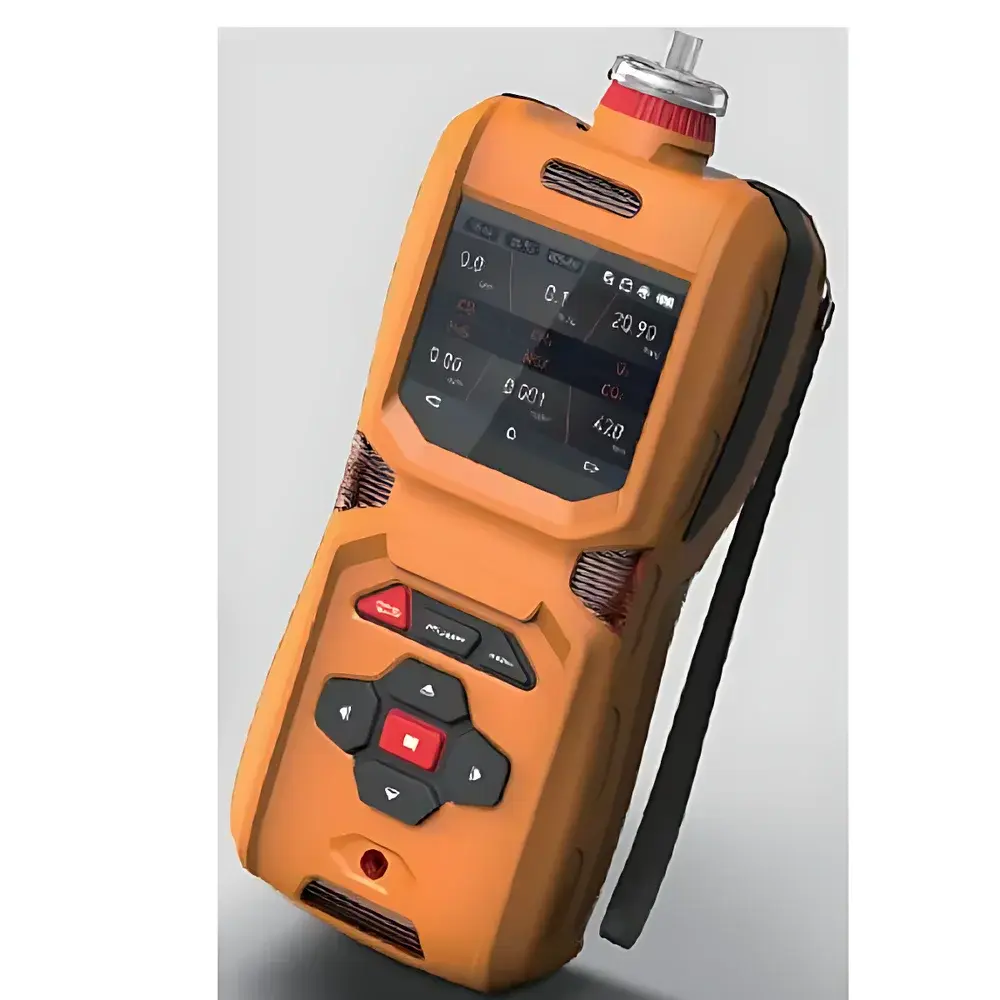
ADEV FS-2 Portable Hydrogen and Ammonia Gas Detector
| Origin | Italy |
|---|---|
| Manufacturer Type | Authorized Distributor |
| Origin Category | Imported |
| Model | FS-2 |
| Instrument Type | Portable |
| Detectable Gases | H₂, NH₃ |
| Response Time | ≤5 s |
| Measurement Accuracy | ±1 ppm (for NH₃ and H₂ at low-range configurations) |
| Measurement Ranges | 0–10 ppm / 0–100 ppm / 0–1000 ppm (user-selectable per gas channel) |
Overview
The ADEV FS-2 Portable Hydrogen and Ammonia Gas Detector is an intrinsically safe, field-deployable multi-gas monitoring instrument engineered for real-time, quantitative detection of hydrogen (H₂) and ammonia (NH₃) in ambient air and process streams. Utilizing electrochemical sensor technology with temperature-compensated signal processing, the FS-2 delivers high reproducibility and long-term stability under variable environmental conditions. Designed to meet international safety and metrological standards—including IEC 60079-0 (explosive atmospheres), EN 50104 (gas detectors for NH₃), and EN 61000-6-3 (EMC immunity)—the device supports continuous occupational exposure monitoring, leak detection in industrial facilities, and compliance verification in chemical storage, fertilizer production, hydrogen refueling stations, and semiconductor fabrication environments.
Key Features
- Intrinsically safe design certified to ATEX/IECEx Zone 1 and compliant with China’s CMC Metrological License requirements;
- Dual-channel electrochemical sensing architecture with independent calibration for H₂ and NH₃, supporting simultaneous real-time measurement;
- Integrated sampling pump with dual-stage filtration (hydrophobic membrane + particulate filter) enabling reliable operation in high-humidity (>95% RH) and high-dust environments;
- Extended sampling capability: ≥10 m hose length supported via optimized negative/positive pressure tolerance (–0.5 to +2 bar);
- 2.5-inch high-resolution color LCD with graphical menu navigation, displaying real-time concentration, temperature, relative humidity, battery status, alarm flags, and unit selection (ppm, mg/m³, %LEL, %Vol, ppb, PPHM);
- 5500 mAh polymer lithium-ion battery with 5-level state-of-charge indication, overcharge/overdischarge/short-circuit/thermal protection, and hot-swap USB charging compatibility;
- Multi-modal alarm system: audible (≥85 dB), visual (RGB LED indicators), haptic vibration, and on-screen alert with configurable thresholds (low/high/interval/weighted average);
- Zero-point auto-tracking and multi-point span calibration (up to 5 target points) ensure measurement linearity and minimize drift over extended deployment cycles;
- Operating temperature range: –40 °C to +70 °C with built-in thermal compensation; IP66-rated enclosure for dust-tight and water-jet resistant performance.
Sample Compatibility & Compliance
The FS-2 is validated for direct sampling of ambient air, stack emissions, and compressed gas lines. With optional high-temperature sampling accessories—such as cooled probe handles or pre-conditioning systems—the instrument accommodates flue gas analysis up to 800 °C. All sensor modules conform to ISO 12032 (performance requirements for electrochemical gas sensors) and are traceable to NIST-certified reference standards. The device supports audit-ready data integrity through GLP/GMP-aligned logging: calibration history, fault records, maintenance logs, sensor lifetime tracking, and next-calibration due date alerts. It meets regulatory expectations for workplace exposure monitoring per OSHA PELs, ACGIH TLVs®, and EU Directive 2017/164 (indicative occupational exposure limit values).
Software & Data Management
- Onboard memory capacity: standard 100,000 data points (expandable upon request);
- Flexible storage modes: real-time logging, time-triggered intervals (1 s–24 h), or event-driven capture (alarm-only);
- Data retrieval via USB 2.0 or RS232 serial interface; infrared communication available as optional module;
- PC-based software provides trend visualization, statistical analysis (min/max/avg), report generation (PDF/CSV), and regulatory export templates aligned with ISO 17025 documentation requirements;
- Full data recovery functionality: selective or bulk restoration of deleted entries; password-protected user access levels;
- Compliant with FDA 21 CFR Part 11 requirements when used with validated software configuration—supporting electronic signatures, audit trails, and secure data archiving.
Applications
The ADEV FS-2 serves critical roles across multiple sectors requiring precise, portable H₂ and NH₃ quantification. In energy infrastructure, it verifies hydrogen purity and detects fugitive emissions at electrolyzer sites, pipelines, and fueling depots. Within agrochemical manufacturing and cold storage facilities, it safeguards personnel against NH₃ toxicity during synthesis, transport, and refrigeration system maintenance. Environmental consultants deploy the unit for ambient air quality surveys near wastewater treatment plants or livestock operations. Research laboratories utilize its multi-unit scalability and standardized output for method validation studies under ISO 16000-23 (indoor air—determination of ammonia). Its robustness and regulatory alignment make it suitable for third-party inspection agencies conducting statutory compliance audits.
FAQ
What gases does the FS-2 detect by default?
The standard configuration detects hydrogen (H₂) and ammonia (NH₃) simultaneously. Up to five gases can be configured optionally.
Can the FS-2 operate in extreme temperatures or humid conditions?
Yes—it operates from –40 °C to +70 °C and includes active humidity compensation. Its IP66 rating and integrated hydrophobic filter enable stable performance at >95% RH.
Is the device certified for use in hazardous locations?
Yes. It carries ATEX/IECEx Zone 1 certification and complies with GB 3836.1–2010 (China’s explosion-proof standard) and CMC metrological approval.
How is calibration performed and how often is it required?
Calibration uses certified gas standards and supports single- or multi-point adjustment. Recommended frequency is every 6 months or after exposure to sensor-poisoning compounds (e.g., silicones, sulfides).
Does the FS-2 support regulatory reporting for occupational health compliance?
Yes—its audit trail, timestamped data logging, and export formats align with OSHA, EU-OSHA, and ISO 45001 documentation frameworks. Optional software enables Part 11-compliant electronic records.







