
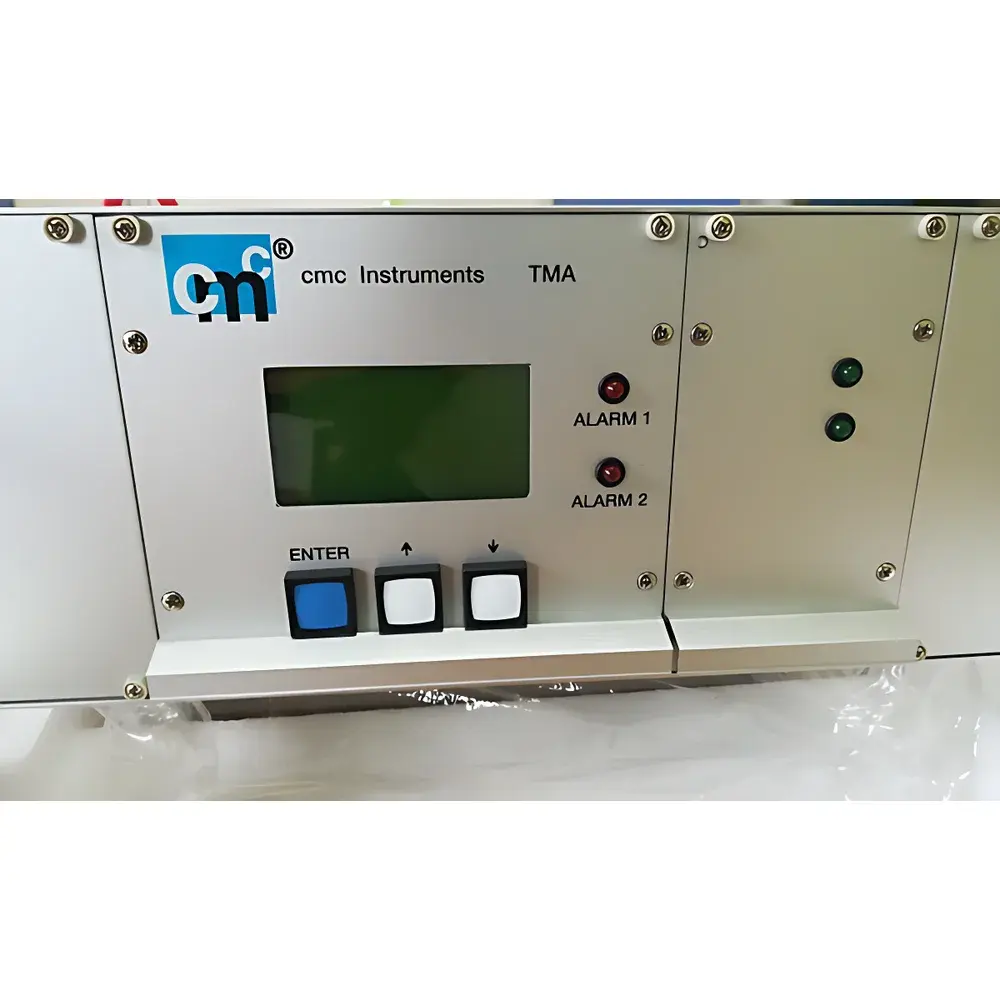
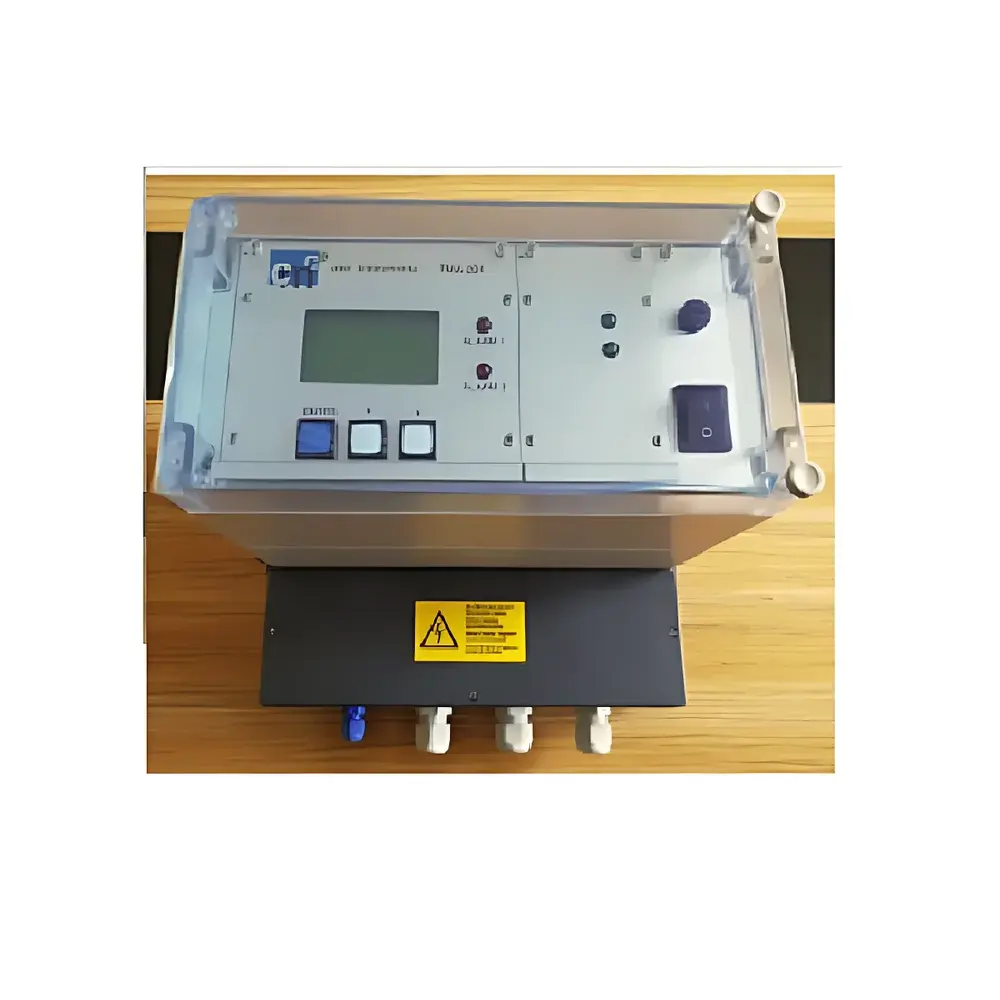
CMC-TW-H2O Online Dew Point Analyzer System
| Origin | Beijing, China |
|---|---|
| Manufacturer Type | Authorized Distributor |
| Origin Category | Domestic (China) |
| Model | CMC-TW-H2O |
| Price Range | USD 14,000 – 28,000 |
| Product Type | Online Dew Point Analyzer |
| Measurement Principle | Electrolytic (P2O5 Sensor) |
| Operating Temperature | −20 °C to +50 °C |
| Accuracy | ±1 ppmv H₂O (in dry gas matrix) |
| Repeatability | ±1 ppmv H₂O |
| Sample Flow Rate | 20 NL/h (nominal) |
| Pressure Regulation | Dual-stage stainless steel pressure regulators (1.0 MPa inlet → 0.1 MPa sensor inlet) |
| Filtration | 320TP fully sealed PTFE membrane filter (0.1 µm pore size) |
| Drainage Architecture | Dual three-way valve + precision needle valve purge system for liquid water removal |
Overview
The CMC-TW-H2O Online Dew Point Analyzer System is an industrial-grade, electrolytic moisture measurement platform engineered for continuous, high-precision trace moisture monitoring in compressed gases, purified nitrogen lines, semiconductor process gases, and high-purity utility streams. It employs a phosphorus pentoxide (P2O5) sensor operating on the principle of quantitative electrolysis: water vapor molecules are absorbed onto a hygroscopic P2O5 film deposited on dual platinum electrodes; upon application of a DC bias, the absorbed water undergoes stoichiometric electrolysis (H2O → 2H+ + ½O2 + 2e−), generating a current directly proportional to the water concentration. This amperometric response delivers inherent linearity, long-term stability, and immunity to common interferents such as CO2, hydrocarbons, or inert gases—making it suitable for ISO 8573-1 Class 1–2 compressed air certification and ASTM D6673 compliance in critical gas purity validation.
Key Features
- Electrolytic P2O5 sensor with ±1 ppmv accuracy and repeatability across full 0.1–100 ppmv measurement range
- Integrated dual-stage pressure regulation system: primary stainless steel regulator reduces pipeline pressure to 1.0 MPa; secondary regulator precisely conditions sample gas to 0.1 MPa at sensor inlet
- Dedicated liquid water management architecture featuring two independently actuated three-way valves and dual precision needle valves for real-time condensate separation without interrupting measurement continuity
- 320TP fully sealed PTFE filtration module (0.1 µm absolute rating) resistant to aggressive solvents, acids, and particulates—ensuring sensor protection in harsh industrial environments
- Active nitrogen purge capability via dedicated three-way valve path for instrument cabinet pressurization and sensor preservation during standby or maintenance cycles
- Full-system blow-down protocol enabling automated sensor protection: controlled N2 sweep reduces residual moisture to <200 ppmv prior to shutdown, mitigating sensor hydration drift and electrolyte degradation
Sample Compatibility & Compliance
The CMC-TW-H2O is validated for use with non-corrosive, non-condensing gases including nitrogen, argon, helium, oxygen (≤21% v/v), synthetic air, and dry compressed air. It is incompatible with chlorine, ammonia, hydrogen sulfide, or solvent-saturated streams due to P2O5 film poisoning. The system complies with IEC 61000-6-2 (immunity) and IEC 61000-6-4 (emissions) for industrial electromagnetic environments. Its measurement methodology aligns with ISO 8573-3 Annex B (electrolytic method) and supports audit-ready documentation per FDA 21 CFR Part 11 when integrated with compliant data acquisition software. All wetted materials—PTFE, 316L stainless steel, and borosilicate glass—are certified per USP Class VI and meet GMP cleanroom material compatibility requirements.
Software & Data Management
The analyzer outputs a calibrated 4–20 mA analog signal proportional to ppmv H₂O, compatible with standard DCS/PLC systems. Optional RS-485 Modbus RTU interface enables integration into centralized SCADA platforms for real-time trending, alarm logging (high/low limits, sensor fault, flow loss), and automated report generation. Data integrity features include timestamped event logs (valve actuation, purge initiation, calibration triggers), configurable hold-last-value behavior during signal interruption, and non-volatile memory retention of >10,000 measurement records. When paired with validated third-party software, the system supports electronic signatures, change control tracking, and audit trail export meeting GLP and ISO/IEC 17025 documentation standards.
Applications
- Monitoring moisture in bulk nitrogen supply lines for semiconductor photolithography tools (target: <1 ppmv)
- Verification of dryer performance in pharmaceutical compressed air systems (ISO 8573-1 Class 2.2.1)
- In-line verification of glovebox atmosphere integrity in battery electrode manufacturing
- Quality assurance of SF6 insulation gas in high-voltage switchgear (IEC 60480 compliance)
- Process gas purity control in specialty chemical synthesis reactors requiring sub-ppmv H₂O specification
FAQ
What sample preparation is required before initiating measurement?
A minimum 1–2 minute purge through the drainage configuration is mandatory to evacuate condensed water and particulates. Only after visual confirmation of dry, particle-free gas flow should the three-way valves be switched to the measurement path.
Can the system operate continuously without manual intervention?
Yes—the dual-valve drainage architecture and automated N2 purge sequence enable unattended 24/7 operation; however, scheduled sensor verification every 90 days is recommended per ISO/IEC 17025 best practices.
Is calibration traceable to NIST or other national standards?
The electrolytic sensor is factory-calibrated against gravimetrically prepared NIST-traceable moisture standards (NIST SRM 2825); certificate of calibration includes uncertainty budget per GUM guidelines.
What maintenance intervals apply to the PTFE filter and electrolyte cell?
The 320TP PTFE filter requires replacement every 6 months in typical industrial service; the P2O5 electrolyte cell has a nominal service life of 18–24 months under continuous operation at <10 ppmv average exposure.
Does the system support hazardous area installation?
Not intrinsically safe by default; optional ATEX/IECEx-certified barrier kits (Zone 1/21) are available for field installation—consult technical documentation for explosion-proof enclosure compatibility.




